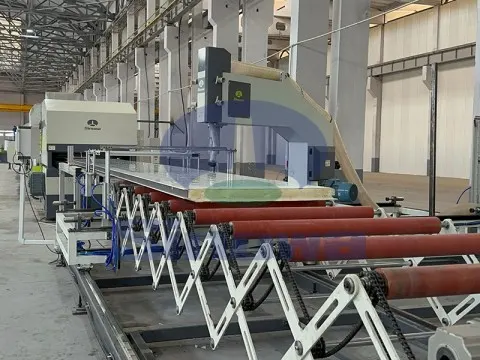
PUF Sandwich Panel Production Line
Publication Date: Oct 6, 2026
The PUF sandwich panel production line is an integrated automated manufacturing system for producing high-performance polyurethane foam sandwich panels. It integrates multiple processing procedures to achieve continuous, efficient production of insulated building panels with stable structural and thermal properties.
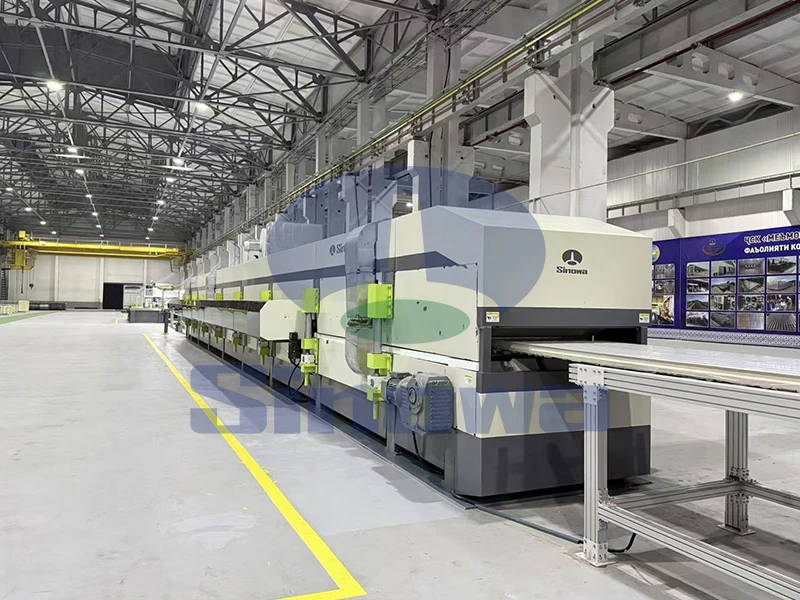
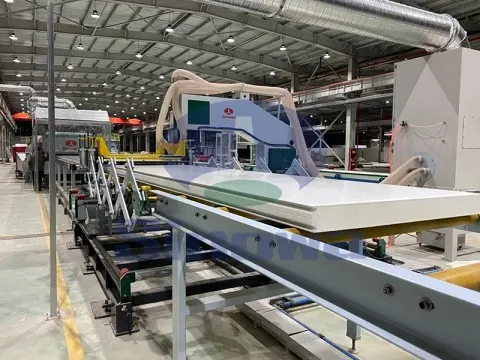
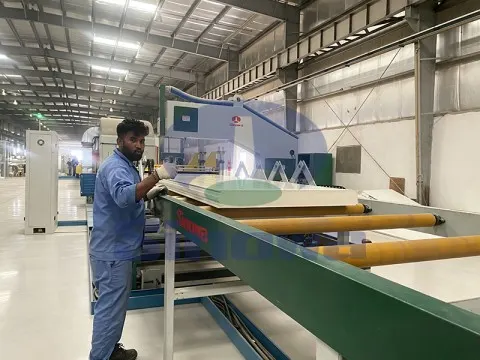
The overall structure of a modern PUF sandwich panel production line is composed of a series of interconnected automated units that work in synergy to complete the full manufacturing cycle of sandwich panels. Each functional module is precisely configured to handle specific production links, ensuring seamless material transmission and processing without manual intervention in mainstream operations. The core structural components include an uncoiling unit, surface pretreatment system, roll forming equipment, high-precision foaming and mixing system, double-belt laminating conveyor, fixed-length cutting device, cooling system, and automatic stacking mechanism. This modular design not only simplifies daily maintenance and equipment debugging but also endows the production line with strong operational stability. Different functional units are adjusted according to the structural parameters of target panels, realizing flexible production of panels with different thicknesses and surface specifications. The integrated layout effectively reduces production space occupation while improving the overall continuity of the production process, laying a solid foundation for large-scale and standardized panel manufacturing in the construction and insulation industry.
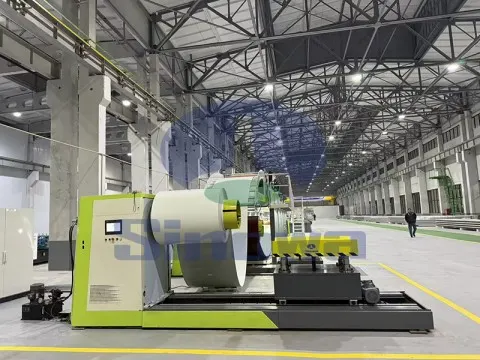
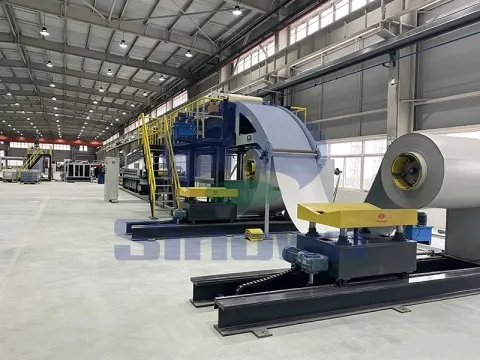
Raw material preparation and feeding are the preliminary foundational procedures of the entire PUF sandwich panel production process, which directly affect the uniformity and finished quality of subsequent products. The production line supports continuous feeding of coiled surface materials, including color steel plates, aluminum plates and other decorative and protective substrates. The uncoiling unit adopts automatic tension control technology to ensure stable material release without deviation, wrinkling or stretching, maintaining the flatness of surface materials throughout the feeding process. Before formal molding, all surface materials will go through a complete pretreatment process, including surface dust and oil removal, fine cleaning and uniform preheating treatment. The cleaning process eliminates surface impurities that may affect bonding performance, while preheating stabilizes the surface temperature of the substrate, creating optimal conditions for the subsequent foaming and bonding reaction of PUF core materials. In terms of core material preparation, polyol and isocyanate, the two main raw materials for polyurethane foam, are stored in independent sealed storage tanks, with auxiliary additives including foaming agents, curing agents and stabilizers stored separately to avoid chemical reaction failure caused by raw material mixing in advance.
Surface roll forming is a key process that shapes the outer contour and structural rigidity of PUF sandwich panels. After pretreatment, the flat coiled substrates are automatically conveyed to the roll forming unit, which is equipped with multiple groups of precision rolling dies arranged in an orderly manner. Through gradual multi-pass rolling extrusion, the flat plate is processed into various required corrugated or flat plate structures, realizing the standardized shaping of panel surfaces. The rolling speed and pressure of the forming unit can be intelligently adjusted according to different substrate thicknesses and panel design requirements, ensuring consistent forming accuracy of each batch of products. During the forming process, the equipment is equipped with real-time deviation correction and size detection devices to avoid dimensional errors caused by material transmission deviation or equipment vibration. Qualified formed surface materials are continuously transported to the next process, while unqualified semi-finished products will be automatically identified and isolated. This process not only optimizes the appearance and structural firmness of the panel surface but also enhances the overall compression resistance and weather resistance of the finished sandwich panel, adapting to diverse application scenarios of building enclosure structures.
The high-precision metering and mixing system is the core functional component that determines the core performance of PUF sandwich panels. The system adopts fully automatic quantitative feeding technology to accurately transport polyol, isocyanate and various auxiliary additives from storage tanks to the mixing head through precision metering pumps. All material proportions are intelligently controlled by the system, effectively avoiding performance differences caused by manual proportioning errors. The internal structure of the mixing head is designed for high-speed turbulent mixing, which can fully blend all raw materials in an instant to form a uniform and stable polyurethane mixed liquid. The entire mixing process is carried out in a closed environment with constant temperature and pressure control, which stabilizes the chemical reaction activity of raw materials and ensures the consistency of foam raw material properties in each production cycle. Reasonable mixing parameter setting can effectively prevent the occurrence of incomplete mixing or local material concentration deviation, laying a key foundation for the formation of uniform, dense and defect-free foam core layers in subsequent foaming processes.
Online foaming and pouring is the most critical reaction process in PUF sandwich panel production, responsible for forming the thermal insulation core layer of the panel. The uniformly mixed polyurethane liquid is evenly poured between the upper and lower formed surface substrates through a movable pouring head that moves horizontally at a constant speed. The pouring trajectory and flow rate are precisely calibrated to ensure that the liquid material completely covers the gap between the upper and lower plates without dead angles or material accumulation. After pouring, the liquid polyurethane undergoes rapid physical expansion and chemical cross-linking reactions under constant temperature conditions, gradually filling the entire interlayer space. With the progress of the reaction, the material forms a fine and uniform closed-cell foam structure, which endows the panel with excellent thermal insulation, sound insulation and shock absorption performance. The foaming reaction speed is matched with the operating speed of the production line to ensure that the foaming process is fully completed before entering the laminating stage, avoiding incomplete foaming or excessive expansion that affects the flatness and structural stability of the panel.
Double-belt laminating and shaping is the key procedure to finalize the overall structure and dimensional accuracy of PUF sandwich panels. After the foaming material is initially expanded, the semi-finished panel enters the closed double-belt conveyor system, where the upper and lower high-strength conveyor belts form a fixed and adjustable spacing constraint according to the preset panel thickness. The conveyor belt can effectively resist the expansion pressure generated by the foam curing reaction, ensuring that the panel maintains uniform thickness and flat surface during the curing process. The continuous forward conveying of the double belt drives the panel to move forward steadily, completing the integration and bonding of the upper and lower substrates and the foam core layer in the closed shaping space. The constant pressure and constant temperature working environment inside the laminating unit promotes sufficient curing and bonding of the foam material, forming an integrated composite structure with tight combination between layers. This process eliminates internal gaps and delamination problems of the panel, greatly improving the overall structural strength and service durability of the finished product.
Fixed-length cutting and edge trimming processes realize the standardized sizing and neat appearance of finished PUF sandwich panels. After completing laminating and primary curing, the continuous long-strip panel is conveyed to the cutting unit, which adopts high-precision servo cutting technology to complete fixed-length cutting according to customized size parameters. The cutting tool features sharp and stable operation, ensuring smooth and flat cutting sections without burrs, cracks or material deformation. Meanwhile, the edge trimming device automatically trims the excess edge materials on both sides of the panel to unify the overall width specification of the product. The entire cutting and trimming process is automatically controlled by the system, with real-time size calibration function to ensure that the dimensional error of each finished panel is controlled within a tiny range. The equipment can flexibly switch cutting parameters to adapt to different length and width requirements of engineering applications, meeting the personalized production needs of different construction projects while maintaining high production efficiency.
Post-curing and surface finishing treatment further optimize the comprehensive performance and appearance quality of PUF sandwich panels. The cut panels are transported to the intelligent cooling and curing area for natural and auxiliary constant-temperature curing, which fully releases the internal stress of the foam core layer and further stabilizes the bonding performance between the core layer and the surface substrate. Sufficient curing treatment can effectively avoid panel deformation, warping or layer separation during later use. In terms of surface finishing, the production line is equipped with fine surface detection and polishing devices to remove tiny scratches and burrs on the panel surface, ensuring smooth and neat surface texture. For panels used in special environments, the finishing process also includes surface protective treatment to enhance the weather resistance, corrosion resistance and stain resistance of the outer substrate. This refined post-processing procedure greatly improves the overall grade and application adaptability of finished products, making the panels suitable for various complex construction environments.
Automatic inspection and stacking packaging are the final links of the PUF sandwich panel production line, realizing standardized product output and orderly storage. The intelligent detection unit conducts comprehensive non-destructive inspection on finished panels, focusing on detecting core layer compactness, bonding firmness, surface flatness and dimensional accuracy. The system automatically screens out unqualified products and records defect data to provide data support for subsequent production parameter optimization. Qualified products are automatically transported to the stacking unit, which adopts precise mechanical positioning stacking technology to neatly stack panels according to fixed specifications, avoiding extrusion damage between products. After stacking, the equipment completes automatic film wrapping and edge protection packaging, which can effectively prevent dust, moisture and mechanical damage during product transportation and storage. The whole process realizes unmanned automatic operation, greatly improving packaging efficiency and product consistency, and facilitating subsequent transportation, storage and on-site construction.
The technological advantages and application value of the PUF sandwich panel production line are fully reflected in its high efficiency, stability and product performance diversity. The fully automated continuous production mode greatly reduces manual operation errors and labor costs, while significantly improving production efficiency and output capacity. The precise parameter control system ensures that each batch of panels has stable thermal insulation performance, structural strength and bonding quality, with consistent product quality. The production line features strong flexible production capacity, which can adjust production parameters to manufacture panels with different thicknesses, surface materials and structural types to meet the construction needs of industrial plants, cold storage buildings, public facility enclosure structures and other scenarios. In addition, the closed production process reduces material waste and environmental pollution in the production process, meeting the development requirements of energy-saving and environmentally friendly building material manufacturing, and providing high-quality core materials for modern energy-saving building construction.
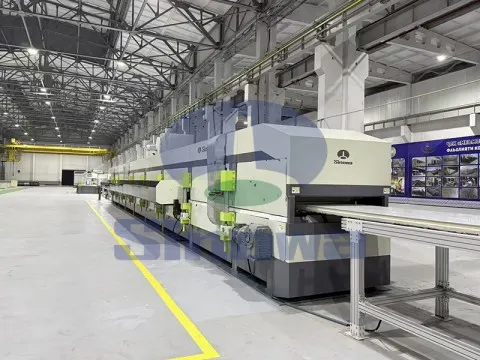
Gallery of PUF Sandwich Panel Production Line
Tags: puf sandwich panel production line, puf sandwich panel production line manufacturer, puf sandwich panel production line supplier, china puf sandwich panel production line, puf sandwich panel production line for sale
https://www.sandwichpanelmachinery.com/tags/puf-sandwich-panel-production-line.html
Related Informations