How To Solve Dimensional Deviation Of Panels From PUF Sandwich Panel Production Line?
Publication Date: Oct 6, 2026
Dimensional deviation is a prevalent quality defect in PUF sandwich panel production, including uneven thickness, width error and panel warping.
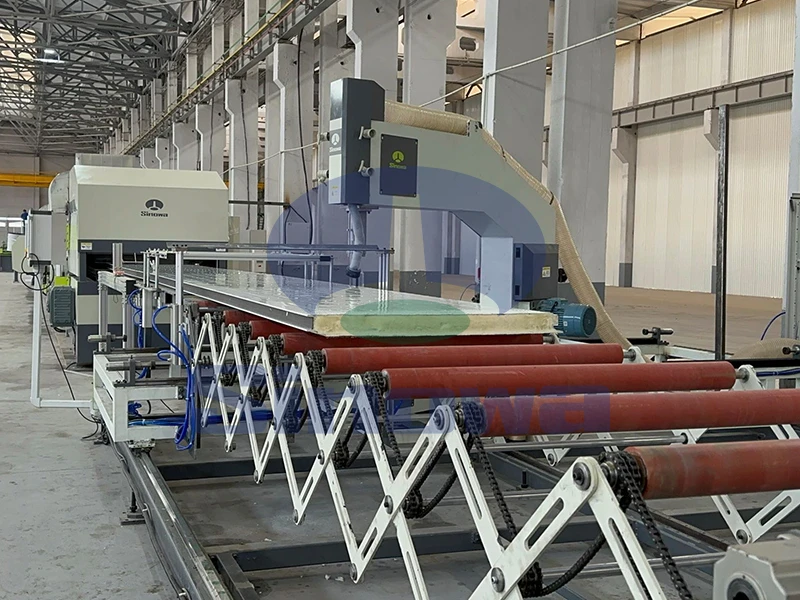
Dimensional deviation in PUF sandwich panels primarily manifests as inconsistent thickness across panel surfaces, subtle width and length discrepancies, and irregular warping or bending after molding, which severely undermines the assembly compatibility and overall performance of finished panels. Most deviations do not stem from single-factor failure but accumulate from tiny fluctuations in continuous production links, making intermittent and irregular defects hard to detect through routine spot checks. In long-term line operation, minor equipment misalignment, unstable material reaction states and improper process parameter matching will gradually amplify dimensional errors, leading to large-scale unqualified products. To fundamentally resolve this issue, production teams must abandon passive defect remediation and establish a full-process precision control system covering raw material pretreatment, foaming reaction, laminating molding and post-curing cooling. Each production link needs targeted parameter calibration and state monitoring to eliminate deviation sources at the source and maintain consistent panel dimensional uniformity in mass continuous production.
Unstable raw material properties are one of the core fundamental causes of PUF panel dimensional deviation, with polyurethane foam raw materials being the most influential factor. The reaction activity, viscosity and foaming expansion ratio of polyol and isocyanate raw materials directly determine the core thickness and structural stability of sandwich panels. When the mixing ratio of the two raw materials deviates slightly, or the raw material temperature fluctuates repeatedly before injection, the foaming speed and curing degree of polyurethane will be uneven. Excessively low isocyanate content leads to insufficient crosslinking density of the foam structure, resulting in delayed shrinkage after panel molding and subsequent thickness reduction and surface depression. Conversely, excessive isocyanate without matched catalysis will form brittle internal cell structures, causing local micro-cracks and irregular dimensional deformation during cooling and stress release. In addition, residual air in raw material delivery pipelines and inconsistent raw material density will disrupt uniform foaming, leading to uneven local expansion and inconsistent panel thickness in different areas. Standardizing raw material storage, preheating and mixing processes, and maintaining stable raw material activity are the primary prerequisites for controlling dimensional deviation.
Precision errors and abnormal operation of production line equipment are the main direct causes of panel dimensional deviation in continuous production. The laminator system plays a decisive role in panel molding, and long-term operation will cause subtle drift in the gap between upper and lower conveyor belts. Even millimeter-level gap deviation will lead to obvious thickness differences in finished panels, as uneven belt gaps result in inconsistent compression on the foaming polyurethane core layer. Meanwhile, uneven pressure distribution of the laminator belt will cause partial over-compression or under-compression of the panel, forming local thin or thick areas. Wear of conveyor rollers, aging bearings and misaligned transmission shafts will lead to unsmooth belt operation and fluctuating conveying speed. Mismatched conveying speed will disrupt the matching rhythm of foaming expansion and belt traction, making the foam unable to form a uniform and stable structure within the effective molding time. In addition, deviation of the foam pendulum spraying mechanism will cause uneven lateral feeding of raw materials, resulting in inconsistent foam density on both sides of the panel and subsequent warping deformation. Regular equipment calibration, wear part replacement and operation state correction are essential to eliminate equipment-induced dimensional errors.
Unreasonable foaming process parameter settings are key intermediate factors triggering dimensional deviation of PUF sandwich panels. Polyurethane foaming is a dynamic physical and chemical reaction process, and parameters such as injection pressure, reaction temperature and curing time directly affect foam molding quality. Unstable injection pressure will lead to uneven raw material output per unit time, causing inconsistent foam filling volume in different panel sections and forming thickness deviation. Production lines often face temperature fluctuation problems in the foaming working area; excessively high ambient temperature accelerates local foaming reaction, leading to premature curing and insufficient expansion of partial foam, while low temperature slows down the reaction, resulting in incomplete curing and easy post-production shrinkage. Moreover, unreasonable setting of foaming curing time will leave residual internal stress inside the panel. If the panel enters the cooling and cutting process before full crosslinking and curing, internal stress will be released unevenly, causing panel bending, warping and dimensional distortion. Optimizing and locking foaming process parameters according to real-time production conditions can effectively reduce reaction-induced dimensional instability.
Base plate pretreatment defects also induce subsequent dimensional deviation of finished PUF sandwich panels. The metal base plates used for panel production will generate internal stress and micro-wrinkles during coiling, transportation and storage. If these defects are not eliminated through effective leveling treatment before composite molding, the residual stress will be released during the foaming and heating process, causing overall warping and local unevenness of the panel. In addition, inconsistent tension control during base plate unwinding will lead to uneven stretching of the base plate, resulting in inconsistent flatness of the upper and lower plate surfaces after lamination, which further drives uneven compression of the intermediate foam core and forms dimensional thickness deviation. Insufficient surface cleaning of the base plate will also leave tiny impurities on the bonding surface, affecting the uniform bonding between the base plate and foam core. Local poor bonding will cause inconsistent stress transmission during molding and cooling, triggering partial deformation and dimensional deviation of the panel. Standardizing base plate pretreatment procedures and ensuring flat and stress-free base plate feeding can effectively avoid induced dimensional defects.
Unstandardized cooling and post-molding processing is an easily overlooked cause of late-stage dimensional deviation of PUF panels. After leaving the laminator, newly molded panels have not completely completed internal stress release and structural stabilization, and the foam core is still in a slow curing state. Rapid cooling or uneven cooling in the post-molding stage will cause inconsistent shrinkage rates of the panel surface and core layer, forming bending deformation and dimensional errors. Many production lines have unstable cooling belt conveying speed and uneven distribution of cooling air volume, leading to large temperature differences in different parts of the same panel. Local rapid cooling causes shrinkage depression, while slow cooling areas have excessive expansion, resulting in overall irregular dimensional fluctuation. In addition, premature cutting and stacking of panels before complete curing will cause extrusion deformation between panels, affecting length and width dimensional accuracy. Establishing a graded and uniform cooling system and standardizing post-molding transfer and curing procedures can effectively solve late-stage panel dimensional deviation problems.
Scientific equipment calibration and regular maintenance are core technical means to solve PUF panel dimensional deviation. Enterprises need to formulate a systematic daily, weekly and monthly calibration mechanism for key production equipment. For the laminator, the gap between upper and lower belts must be detected and calibrated in real time to ensure consistent gap spacing in all lateral and longitudinal positions, eliminating thickness deviation caused by uneven compression. The conveying system needs regular detection of roller levelness, belt tightness and transmission stability to correct speed fluctuation and axis misalignment in a timely manner. The foam metering and spraying system requires regular calibration of metering pump flow rate, injection pressure and pendulum swing accuracy to ensure uniform and stable raw material mixing and feeding. Meanwhile, worn parts such as bearings, seals and transmission belts should be replaced regularly to avoid precision attenuation caused by equipment aging. Daily equipment operation records and defect tracking logs need to be established to summarize deviation rules and realize predictive maintenance, fundamentally reducing equipment-induced dimensional defects.
Precise raw material ratio control and pretreatment optimization can effectively improve the dimensional stability of PUF sandwich panels. Production personnel need to strictly control the mixing proportion of polyol and isocyanate, and conduct regular sampling and testing of raw material activity to avoid reaction deviation caused by raw material performance attenuation. Before production, raw materials should be preheated to a constant temperature to ensure consistent viscosity and reaction activity of each batch of materials, eliminating foaming differences caused by temperature fluctuation. It is necessary to install stable pressure regulation devices on raw material delivery pipelines to avoid output fluctuation caused by pipeline pressure instability, and regularly exhaust air from pipelines to prevent air doping from disrupting foam uniformity. In addition, raw material storage environments should maintain constant temperature and humidity to avoid material deterioration and performance changes caused by environmental fluctuations. Stable raw material performance provides a consistent reaction foundation for continuous production, which is crucial for maintaining long-term dimensional uniformity of panels.
Intelligent process parameter locking and real-time monitoring are effective measures to reduce dynamic dimensional deviation in continuous production. Traditional manual parameter adjustment is prone to human error and cannot respond to subtle real-time changes in production status. Installing real-time monitoring modules for key parameters such as foaming temperature, injection pressure, conveying speed and cooling air volume can realize automatic data collection and abnormal early warning. After debugging out the optimal production parameters matching the current raw material state and environmental conditions, the core parameters can be locked through the system to avoid arbitrary adjustment by operators. The system can automatically fine-tune local parameters according to real-time production data to offset tiny fluctuations in the production process. At the same time, real-time thickness and flatness detection equipment can be installed on the production line to dynamically monitor panel dimensional data, immediately alarm and adjust parameters when small deviations are found, preventing small errors from accumulating into large-scale quality defects.
Standardized production operation management and staff professional training are important guarantees for long-term control of panel dimensional deviation. Most subtle dimensional deviations are closely related to non-standard manual operations in daily production. Enterprises need to formulate unified and detailed operating procedures for each production link, including raw material feeding, parameter debugging, equipment startup and shutdown, and post-molding panel processing, to standardize every operation step. Operators should receive professional pre-job training to master the judgment standards of abnormal production states and targeted parameter adjustment methods, avoiding blind operation and empirical misoperation. Daily production quality inspection should add dimensional sampling frequency, conduct multi-point thickness and flatness detection on each batch of panels, and establish quality data files to track deviation changes. Regular production summary meetings should be held to analyze deviation causes, optimize operation processes, and form a closed-loop management mechanism of discovery, adjustment and summary, so as to continuously reduce the incidence of dimensional deviation.
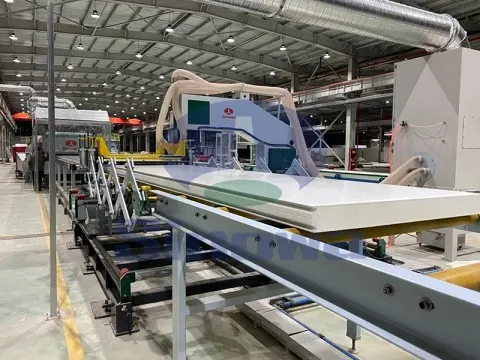
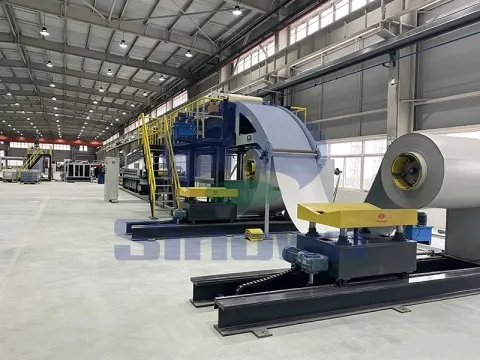
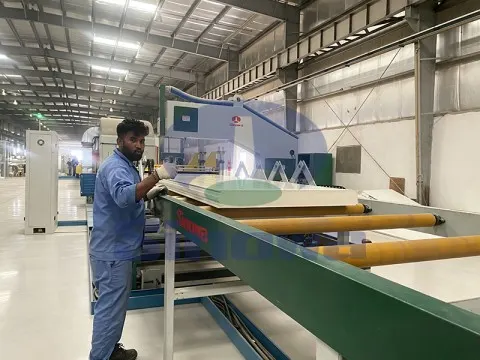
Gallery of PUF Sandwich Panel Production Line
Tags: puf sandwich panel production line, puf sandwich panel production line manufacturer, puf sandwich panel production line supplier, china puf sandwich panel production line, puf sandwich panel production line for sale
-
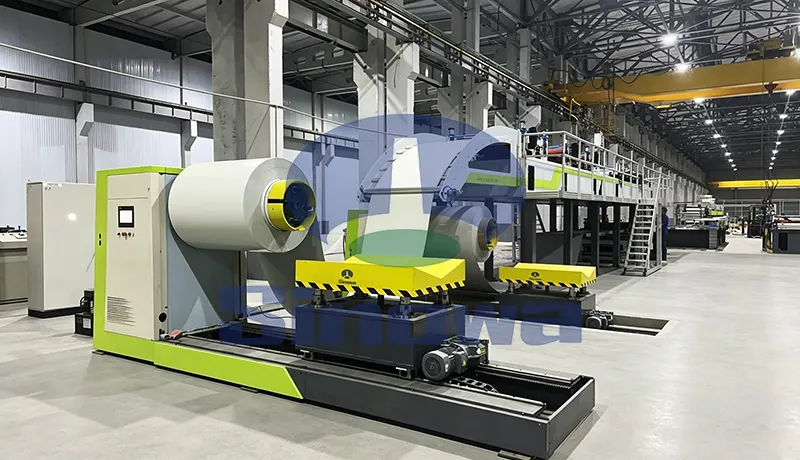
The PU sandwich panel line is a core production setup for making high-performance building insulation panels. This professional PU sandwich panel production line features automated operation to streamline the whole manufacturing process efficiently. Every component of the polyurethane sandwich panel line is precisely calibrated to ensure consistent panel thickness and structural stability. A well-maintained polyurethane sandwich panel production line can greatly boost production efficiency while reducing manual operation errors. The continuous PU sandwich panel line adapts to diverse production demands for different panel sizes and surface styles. With advanced molding technology, the PIR sandwich panel line produces panels with excellent heat preservation and sound insulation properties. Stable running of the PIR sandwich panel production line guarantees reliable product quality for various construction and industrial application scenarios.
-
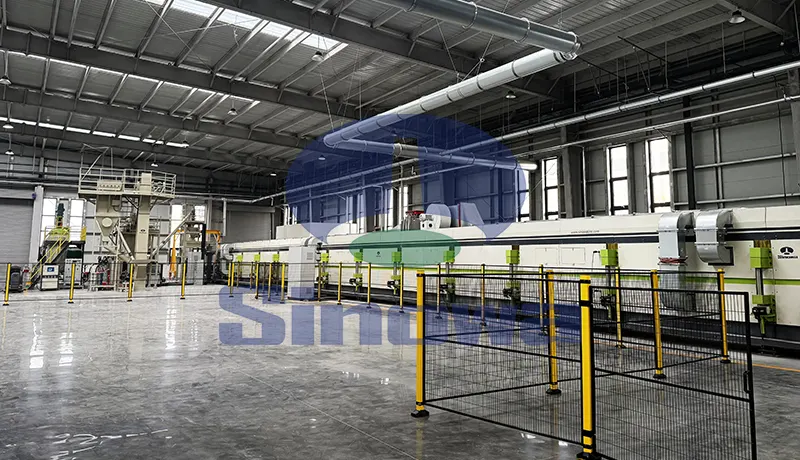
A phenolic insulation board production line serves as the core equipment for manufacturing high-performance thermal insulation building materials. This phenolic insulation panel production line integrates material mixing, foaming, molding and cutting processes to ensure continuous and stable production efficiency. Every operational link of the insulation board production line is precisely calibrated to produce uniform and durable insulation boards. The automated design of the insulation panel production line effectively reduces manual intervention and improves product consistency. Proper maintenance of the phenolic board production line can greatly extend its service life and maintain steady production output. With optimized structural design, the phenolic panel production line adapts to various production demands and delivers high-quality finished products for thermal insulation engineering applications.
-
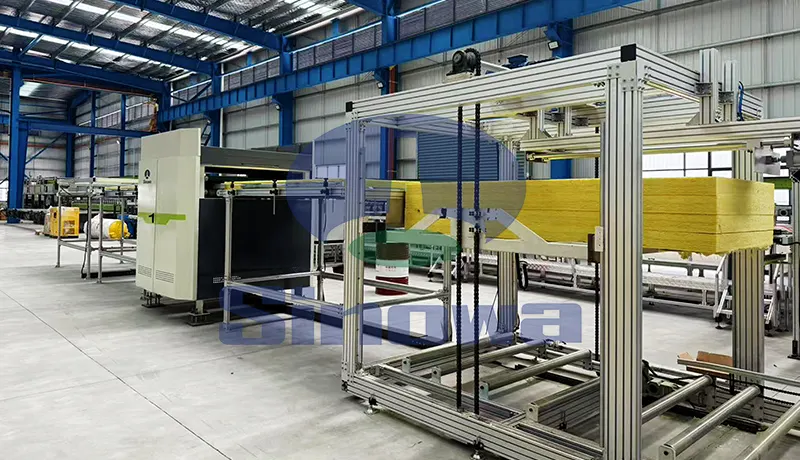
A professional rockwool sandwich panel line serves as the core equipment for producing high-performance building panels. This rockwool sandwich panel production line integrates feeding, laminating and forming processes to ensure stable and efficient production. The well-structured rock wool sandwich panel line can process raw rockwool materials into panels with excellent thermal and sound insulation properties. Operators can adjust the running parameters of the rock wool sandwich panel production line to manufacture panels of different thicknesses and specifications. The automated design of the mineral wool sandwich panel production line greatly reduces manual operation errors and improves product consistency. Regular maintenance of the mineral wool sandwich panel line is essential to sustain long-term operational efficiency and guarantee qualified finished panels for diverse construction applications.