How To Eliminate Bubble Defects On PU Sandwich Panel Line Panels?
Publication Date: Sep 30, 2026
Bubble defects are common quality issues on panels produced by the PU sandwich panel line, compromising panel flatness, structural stability and thermal insulation performance.
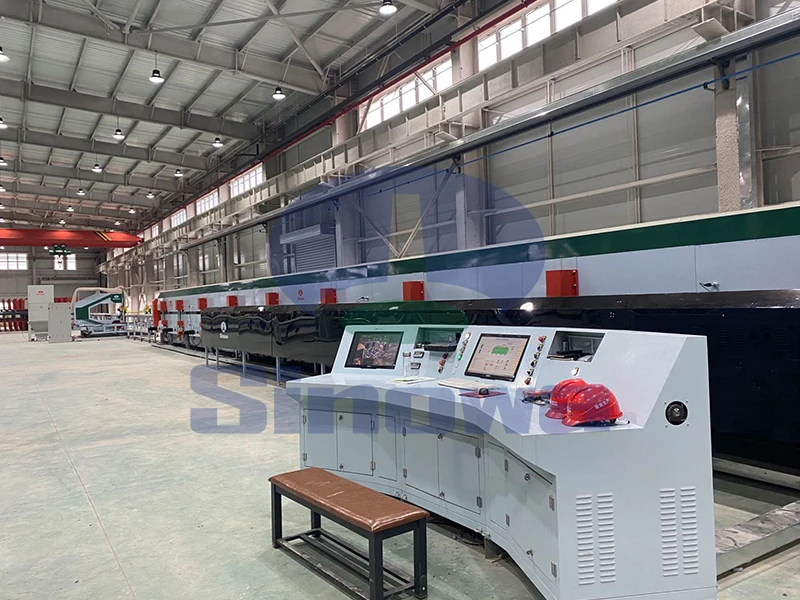
Bubble defects emerging on finished panels from the PU sandwich panel line mainly appear as tiny surface blisters, internal hollow voids and layered air pockets between the PU foam core and metal surface layers. These flaws not only ruin the visual uniformity of panel products but also weaken the overall structural tightness and thermal insulation effects, greatly reducing product usability and service life. Most bubble problems stem from the superposition of raw material status, equipment operation parameters, production environment and process operation errors in the continuous production process of the PU sandwich panel line. Unlike occasional accidental defects, batch bubble issues are usually linked to unstable process control rather than individual operational mistakes. To fundamentally solve this problem, manufacturers must conduct targeted troubleshooting from the entire production chain, starting with raw material pretreatment, equipment debugging, parameter matching, environmental control and post-process curing management, and establish standardized operating procedures to avoid repeated defect occurrence.
Unqualified raw material status is one of the primary inducements of bubble defects on the PU sandwich panel production line. Polyol and isocyanate, the core raw materials for PU foam synthesis, have strict requirements for moisture content and purity. Excessive moisture in polyol will trigger extra chemical reactions during foaming, generating redundant gas that cannot be discharged in time and forms enclosed bubbles inside the foam core. Meanwhile, impurities such as dust, oil stains and residual release agents mixed in raw materials will destroy the uniform reaction state of PU materials, leading to inconsistent local foaming speed and isolated bubble clusters on panels. In daily production of the PU sandwich panel line, raw material storage and pretreatment management are often overlooked. Long-term open storage causes raw materials to absorb ambient moisture, while incomplete raw material filtering before feeding leaves tiny impurities. To eliminate such bubbles, producers need to implement sealed storage for all PU raw materials, regularly detect moisture and purity indicators, and install precise filtering devices on the feeding pipeline to ensure clean and dry raw materials enter the reaction system, laying a foundation for uniform and dense foam molding.
Insufficient or uneven material mixing is another key factor leading to bubble defects in PU sandwich panel manufacturing line products. The static mixer of the production line undertakes the core task of mixing polyol and isocyanate evenly. Once the mixer is blocked, worn or installed improperly, the two raw materials cannot fully fuse in the set proportion and speed. Partial material proportion imbalance will cause inconsistent foaming reaction intensity: areas with insufficient reaction produce tiny voids, while over-reacted parts generate excessive gas that accumulates into large bubbles. In addition, unstable mixing pressure during continuous operation of the PU sandwich panel line will lead to fluctuating material output, resulting in intermittent mixing dead zones. Many production teams only conduct simple daily cleaning of the mixer and ignore regular internal component inspection and replacement. To optimize mixing effects and eliminate bubble defects, it is necessary to formulate a regular maintenance mechanism for the mixer, regularly check internal pipeline smoothness and component integrity, and monitor real-time mixing pressure to maintain stable and sufficient mixing power, ensuring all raw materials undergo full and uniform chemical reaction before foaming molding.
Mismatched production line speed and foaming reaction time easily induce residual bubble defects on PU sandwich panel machinery panels. The foaming and curing of PU foam follow a fixed chemical reaction cycle, including rapid foaming, expansion filling and slow curing shaping. The operating speed of the PU sandwich panel line must precisely match the reaction rhythm of PU materials. If the line speed is too fast, the foam cannot complete full expansion and air discharge before lamination pressing, and residual air in the cavity will be sealed inside the panel to form permanent bubbles. Conversely, excessively low line speed leads to advanced local foam curing, making it impossible for subsequent expanded foam to fill gaps evenly and creating hollow voids. In actual production, frequent speed adjustment to pursue output often breaks the matching balance between process parameters and material reaction characteristics. Producers need to conduct repeated debugging according to conventional panel thickness and raw material formula, determine the optimal stable line speed range, and avoid random speed changes during batch production, so that the foam can complete natural defoaming and uniform filling before lamination, effectively reducing bubble generation.
Unreasonable lamination pressure and gap setting are important mechanical causes of bubble defects in PU sandwich panel machine production. The lamination pressing section of the PU sandwich panel line is responsible for compacting the foam core and bonding it closely with surface layers, while squeezing out excess air in the molding cavity. Too low pressing pressure fails to fully compress the foam and discharge internal air, leaving scattered tiny bubbles inside the panel. Excessively high pressure will cause rapid extrusion of unreacted foam materials, resulting in uneven local material distribution and closed air pockets at panel edges. In addition, an inappropriate nip gap between upper and lower pressing equipment will affect the overall stress uniformity of the panel. An overlarge gap leads to insufficient compaction, while an undersized gap causes local foam extrusion deformation and air trapping. It is essential to set targeted lamination pressure and gap parameters based on different panel specifications, maintain consistent pressure output in the entire pressing area, and regularly calibrate pressing equipment to ensure stable and uniform mechanical action, thus realizing thorough air discharge and dense foam molding.
Abnormal curing temperature in the heating zone directly triggers thermal foaming bubbles on PU sandwich panel making line panels. The continuous curing furnace of the PU sandwich panel line adopts multi-zone gradient heating to promote complete polymerization and curing of PU foam. Unbalanced temperature distribution in the furnace, such as local overheating or low temperature areas, will disrupt the unified foaming reaction speed. Local overheating causes rapid violent foaming of partial PU materials, generating a large amount of instant gas that cannot escape, forming surface bulges and internal bubbles. Low temperature areas lead to slow reaction and incomplete curing, leaving tiny voids inside the foam core. Many production lines have inconsistent temperature parameters in independent heating zones, lacking real-time monitoring and adjustment mechanisms. Producers need to optimize the gradient heating setting of the curing furnace, form a low-temperature pre-foaming, medium-temperature uniform expansion and constant-temperature curing heating sequence, keep the temperature difference of each heating zone within a reasonable range, and avoid instantaneous high-temperature impact on materials, ensuring stable and ordered foam reaction to eliminate temperature-induced bubble defects.
Uncontrolled production workshop environment indirectly aggravates bubble defects on PU sandwich panel manufacturing machinery panels. Ambient temperature, humidity and air cleanliness have a subtle impact on the foaming quality of PU materials. Excessively high air humidity increases the moisture content on the surface of metal skin materials and in the production environment, which reacts with PU raw materials during foaming to generate extra gas and form bubbles. Too high or too low ambient temperature will change the initial reaction speed of PU materials, breaking the original process parameter balance and causing uneven foaming and air trapping. Meanwhile, floating dust and suspended particles in the air may adhere to the surface layer or mixed materials, becoming nucleation points for bubble generation. For the PU sandwich panel line operating continuously in open workshops, environmental control is easily neglected. Standardized environmental management should be implemented, including constant temperature and humidity adjustment, regular workshop dust removal, and isolation of humid and dusty areas, to create a stable production environment and reduce external interference-induced bubble defects.
Improper operation in the feeding and injection stage is a common human-induced cause of bubble defects in PU sandwich panel manufacturing line products. Accurate and stable material injection volume is the premise of uniform foam filling. Insufficient injection volume leads to incomplete cavity filling, leaving hollow voids and bubble gaps inside the panel. Excessive injection volume causes excessive foam expansion, and redundant materials squeeze the internal air to form closed bubble clusters. In addition, unstable feeding speed and intermittent material supply will cause discontinuous foaming, resulting in layered air pockets inside the panel. Operators sometimes adjust injection parameters arbitrarily according to experience without combining panel thickness and material characteristics, leading to parameter mismatch. Standardized operation guidelines should be formulated for the PU sandwich panel line, requiring operators to set precise injection volume and feeding speed according to product specifications, conduct real-time monitoring of material injection status, and avoid manual operation errors, ensuring full and uniform foam filling of the panel cavity without residual air gaps.
Lack of regular equipment maintenance and parameter calibration leads to recurring bubble defects on the PU sandwich panel production line. Long-term continuous operation will cause wear of pipeline components, aging of pressure sensors and deviation of temperature control systems. Slightly blocked feeding pipelines cause unstable material delivery, worn mixers reduce mixing uniformity, and inaccurate temperature and pressure sensors lead to wrong parameter adjustment, all of which induce batch bubble problems. Most production lines only conduct equipment maintenance when obvious failures occur, lacking daily inspection and regular calibration mechanisms. To maintain long-term stable product quality, enterprises need to establish a full-cycle equipment maintenance system for the PU sandwich panel line, conduct daily inspection of feeding, mixing, pressing and heating systems, regularly calibrate all precision sensors, replace worn aging parts in a timely manner, and eliminate potential equipment failures that may cause bubble defects from the source.
Effective post-production inspection and targeted defect remediation can further reduce bubble defect rates of PU sandwich panel line panels. Even with standardized front-end process control, occasional tiny bubbles may still appear due to subtle environmental and equipment fluctuations. Establishing a comprehensive post-inspection mechanism helps discover minor bubble defects in a timely manner and avoid unqualified products entering the finished product area. Inspectors need to check panel surfaces for blisters and use professional tools to detect internal voids and air pockets, recording defect locations and sizes to trace corresponding production process problems. For tiny surface bubbles, targeted repair and smoothing treatment can be carried out with professional foam fillers; for panels with large-area internal bubbles, they need to be reworked to ensure product qualification. Meanwhile, summarize defect data regularly, optimize process parameters and operation standards of the PU sandwich panel line, and form a closed-loop quality management system to continuously reduce bubble defect probability.
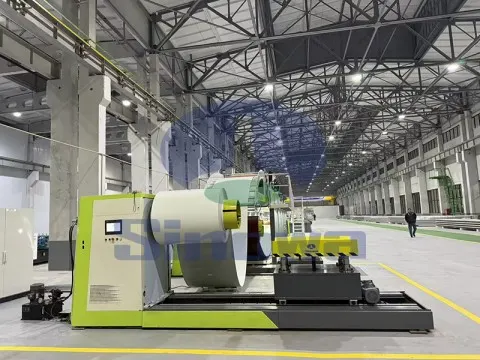
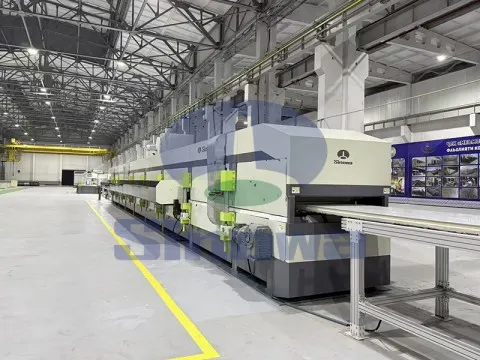
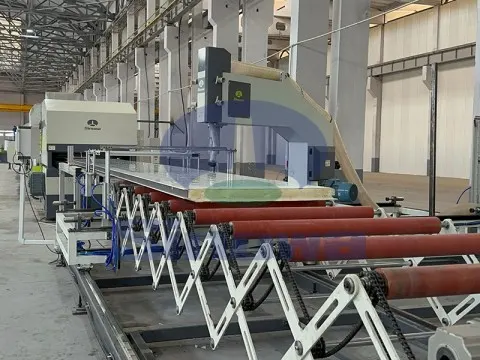
Gallery of PU Sandwich Panel Line
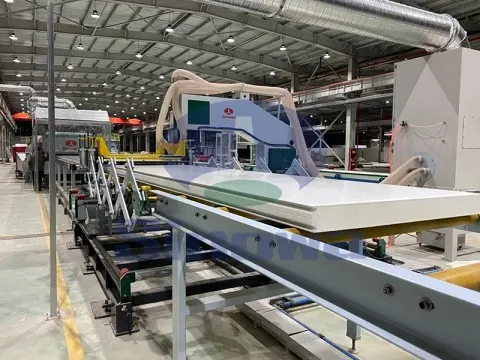
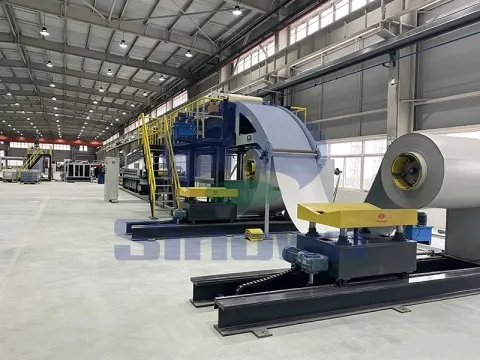
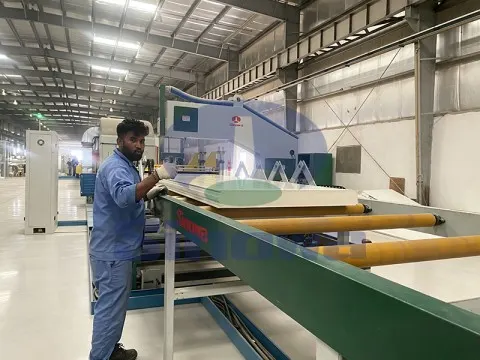
Tags: pu sandwich panel line, pu sandwich panel line manufacturer, pu sandwich panel line supplier, china pu sandwich panel line, pu sandwich panel line for sale
-
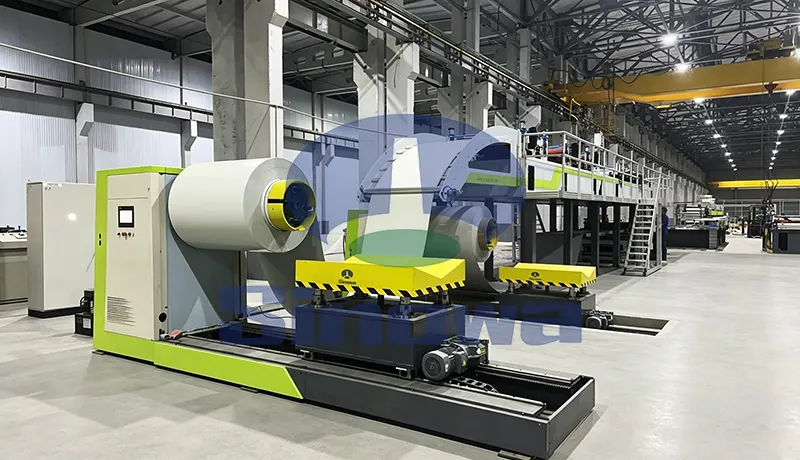
The PU sandwich panel line is a core production setup for making high-performance building insulation panels. This professional PU sandwich panel production line features automated operation to streamline the whole manufacturing process efficiently. Every component of the polyurethane sandwich panel line is precisely calibrated to ensure consistent panel thickness and structural stability. A well-maintained polyurethane sandwich panel production line can greatly boost production efficiency while reducing manual operation errors. The continuous PU sandwich panel line adapts to diverse production demands for different panel sizes and surface styles. With advanced molding technology, the PIR sandwich panel line produces panels with excellent heat preservation and sound insulation properties. Stable running of the PIR sandwich panel production line guarantees reliable product quality for various construction and industrial application scenarios.
-
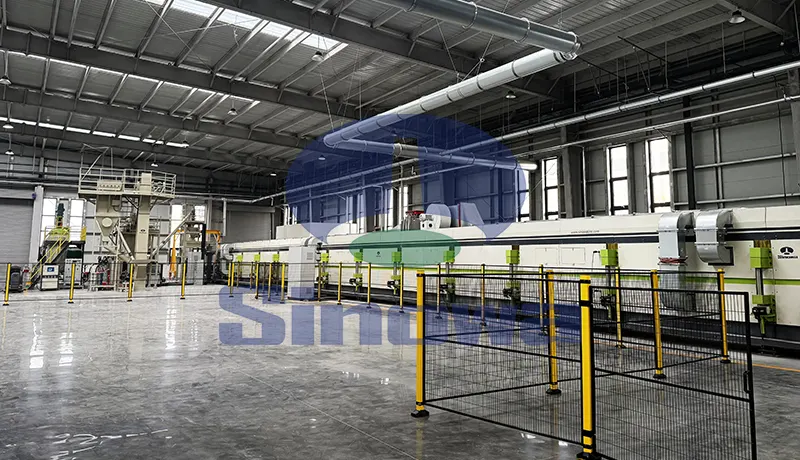
A phenolic insulation board production line serves as the core equipment for manufacturing high-performance thermal insulation building materials. This phenolic insulation panel production line integrates material mixing, foaming, molding and cutting processes to ensure continuous and stable production efficiency. Every operational link of the insulation board production line is precisely calibrated to produce uniform and durable insulation boards. The automated design of the insulation panel production line effectively reduces manual intervention and improves product consistency. Proper maintenance of the phenolic board production line can greatly extend its service life and maintain steady production output. With optimized structural design, the phenolic panel production line adapts to various production demands and delivers high-quality finished products for thermal insulation engineering applications.
-
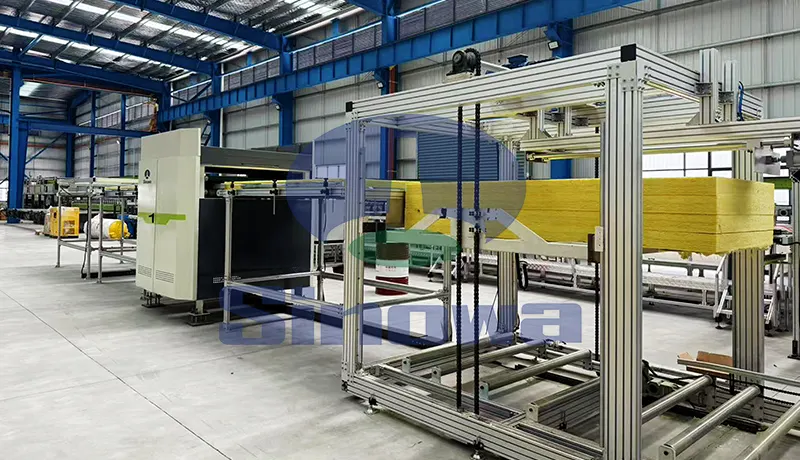
A professional rockwool sandwich panel line serves as the core equipment for producing high-performance building panels. This rockwool sandwich panel production line integrates feeding, laminating and forming processes to ensure stable and efficient production. The well-structured rock wool sandwich panel line can process raw rockwool materials into panels with excellent thermal and sound insulation properties. Operators can adjust the running parameters of the rock wool sandwich panel production line to manufacture panels of different thicknesses and specifications. The automated design of the mineral wool sandwich panel production line greatly reduces manual operation errors and improves product consistency. Regular maintenance of the mineral wool sandwich panel line is essential to sustain long-term operational efficiency and guarantee qualified finished panels for diverse construction applications.