What Is The Raw Material For PIR Sandwich Panel Making Machine?
Publication Date: Sep 23, 2026
PIR sandwich panel making machines rely on a systematic mix of structural surface materials, core chemical raw materials, and functional auxiliary materials. All raw materials are specially selected to match automated production processes, ensuring finished panels have stable insulation, structural strength and durability for diverse building applications.
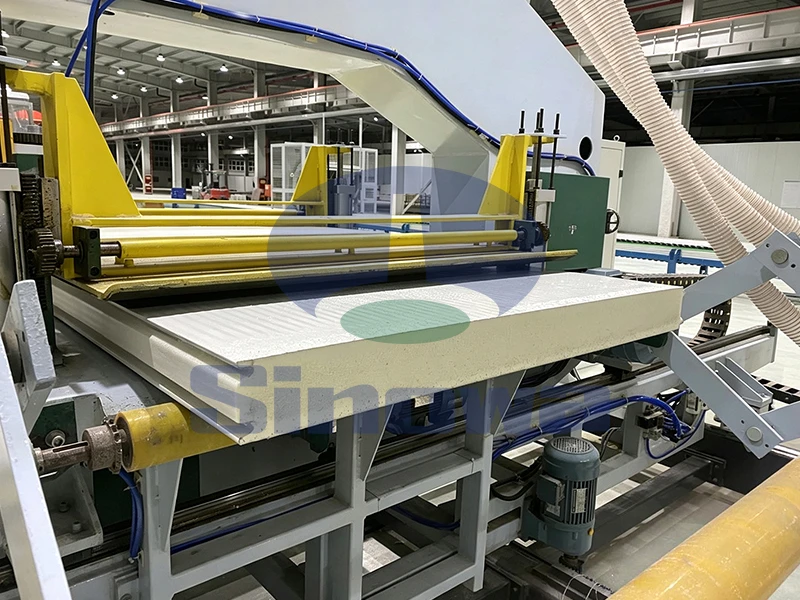
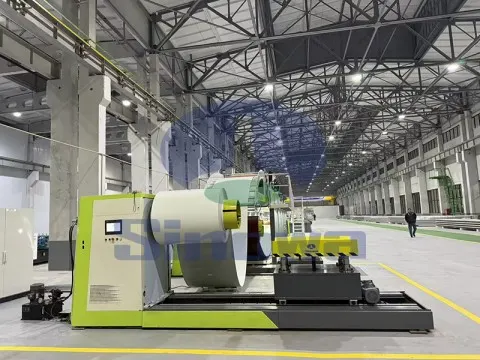
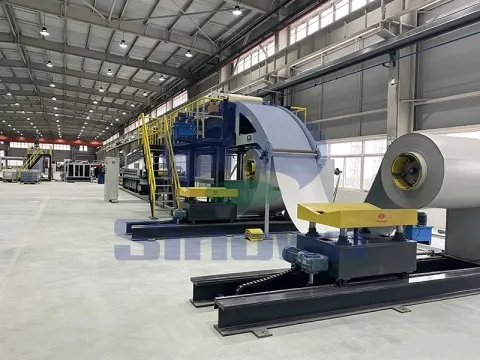
The most fundamental structural raw materials for PIR sandwich panel production machines are metal coil substrates, which form the upper and lower outer protective layers of finished panels. These metal coils are mainly color-coated galvanized steel or aluminum coils, featuring smooth surface flatness, excellent tensile resistance and outstanding corrosion resistance. In automated machine operation, continuous metal coils are fed into the production line through uncoiling and leveling devices, undergoing continuous rolling and shaping without intermittent breaks. The uniform thickness and surface coating of metal coils directly determine the flatness, weather resistance and overall structural rigidity of the final sandwich panels. This type of raw material needs to maintain stable physical properties during high-speed mechanical processing to avoid surface deformation or coating peeling, which is essential for consistent panel quality in mass production.
Polyisocyanate is a core chemical raw material exclusively used for the PIR foam core synthesis in sandwich panel machine production. Unlike ordinary polyurethane formulations, PIR production requires a higher proportion of polyisocyanate to trigger unique cross-linking chemical reactions during foaming. When processed by the machine’s high-pressure dosing and mixing system, this material reacts with matched polyols to form a dense closed-cell foam structure. The chemical purity and activity of polyisocyanate directly affect the foam’s thermal stability and structural compactness. Stable molecular activity ensures the machine can achieve uniform foaming density across the entire panel surface, preventing hollow areas or uneven core thickness that would compromise the panel’s insulation and mechanical performance in long-term use.
Special polyether polyol tailored for PIR foam production serves as another indispensable core raw material for the processing machine. This material acts as the key reaction partner of polyisocyanate, adjusting the foaming speed, cell structure and hardness of the PIR core layer. Professional polyol formulas for PIR production feature optimized molecular structures that adapt to the machine’s automated constant-temperature foaming environment. During machine operation, precise metering pumps deliver polyol in accurate proportions to mix with isocyanate, realizing controllable foaming and curing. High-quality polyol effectively enhances the foam’s dimensional stability, avoiding shrinkage or deformation of the core layer after panel molding, and lays a foundation for the finished panel’s long-term structural stability.
Flame retardant additives are vital functional auxiliary raw materials matched with PIR sandwich panel making machines, endowing finished panels with excellent fire resistance. These additives are uniformly blended into the core chemical raw materials before machine foaming processing, and they will not affect the normal foaming and curing reaction of PIR foam. The automated batching system of the production machine can evenly disperse flame retardant components in the foam raw materials at a fixed ratio. After high-temperature curing and molding, the additives form a protective flame-retardant structure inside the closed-cell foam, effectively inhibiting flame spread and reducing heat release. This raw material is specially optimized for mechanical continuous production, ensuring stable flame-retardant performance of each batch of panels without affecting production efficiency.
Foaming agents are essential auxiliary raw materials that cooperate with PIR panel making machines to form the unique closed-cell foam structure. These materials vaporize rapidly under the temperature and pressure conditions set by the production machine, generating uniform tiny air holes inside the mixed chemical raw materials. The type and dosage of foaming agents are precisely matched with the machine’s foaming parameters to ensure consistent cell size and density of PIR foam. Reasonable foaming agent application greatly reduces the thermal conductivity of the core layer, improving the panel’s thermal insulation performance. Meanwhile, stable foaming reaction avoids excessive bubble expansion or collapse, ensuring the compact and uniform internal structure of the PIR core layer produced by the machine.
Adhesive raw materials are used in PIR sandwich panel machine production to realize firm bonding between metal surface layers and PIR foam core layers. Special high-strength structural adhesives adapted to automated production lines are selected for this process, featuring fast curing speed and strong adhesion. In the machine’s automatic gluing process, adhesives are evenly coated on the inner surface of shaped metal coils through precise spraying devices. The adhesives can quickly form a stable bonding layer under the machine’s constant-temperature pressing and curing environment, tightly combining metal layers and foam core into an integrated structure. This raw material effectively prevents delamination between panel layers in subsequent use, improving the overall structural integrity and service life of finished sandwich panels.
Surface protective film materials are supporting raw materials for PIR sandwich panel machine finishing procedures. These transparent flexible films are automatically pasted on the outer surface of metal panels by the machine’s film laminating device after panel molding and trimming. The protective films have good tensile resistance and fitting performance, which can fully cover the flat surface of finished panels without wrinkles or gaps. During production, transportation and installation, the films isolate dust, scratches and chemical corrosion on the panel surface. This raw material is designed to adapt to the machine’s high-speed laminating process, with moderate adhesion strength to ensure easy peeling without residual glue, maintaining the smooth and intact appearance of panel coatings.
Curing auxiliary agents are special raw materials that assist PIR sandwich panel machines to complete rapid foam curing and molding. These agents can accelerate the cross-linking and solidification reaction of PIR chemical raw materials under the machine’s set temperature conditions, shortening the curing cycle and improving production efficiency. The automated dosing system of the machine can add curing agents in precise proportions to avoid insufficient curing or excessive brittleness of foam caused by improper dosage. Proper use of curing agents makes the PIR foam core form a stable three-dimensional network structure in a short time, enhancing the core layer’s hardness, compression resistance and dimensional stability, and enabling the machine to realize continuous and efficient batch production.
Anti-aging additives are functional raw materials added to PIR core materials for long-term performance optimization in machine production. These additives are fully mixed into PIR foam raw materials in the early batching stage of the production line, evenly distributed in the foam structure after mechanical foaming and curing. They can effectively resist the aging phenomena such as thermal oxidation and ultraviolet erosion that may occur during long-term use of panels. Adapted to the machine’s continuous production process, the additives do not change the original foaming performance of PIR raw materials, while significantly improving the weather resistance and service life of finished panels, making the products suitable for various complex outdoor and indoor application environments.
Density conditioning agents are fine-tuning raw materials for PIR sandwich panel machine production, used to stabilize the foam density of finished panels. In automated production, these agents cooperate with the machine’s precision batching and foaming system to adjust the viscosity and reaction rate of PIR mixed raw materials. They effectively avoid density differences between different parts of the panel caused by unstable mechanical foaming pressure or temperature fluctuations. Uniform foam density ensures consistent thermal insulation, compression resistance and overall performance of each panel produced by the machine, realizing standardized and high-quality mass production of PIR sandwich panels.
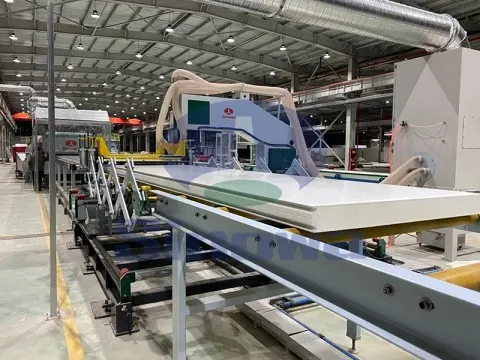
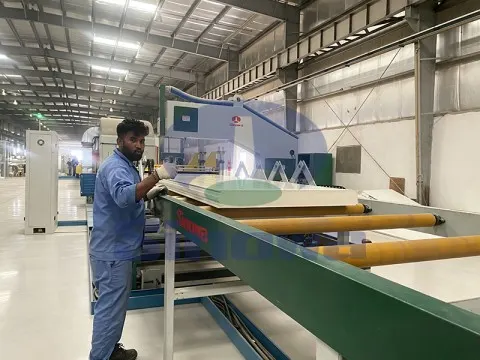
Gallery of PIR Sandwich Panel Making Machine
Tags: pir sandwich panel making machine, pir sandwich panel making machine manufacturer, pir sandwich panel making machine supplier, china pir sandwich panel making machine, pir sandwich panel making machine for sale
-
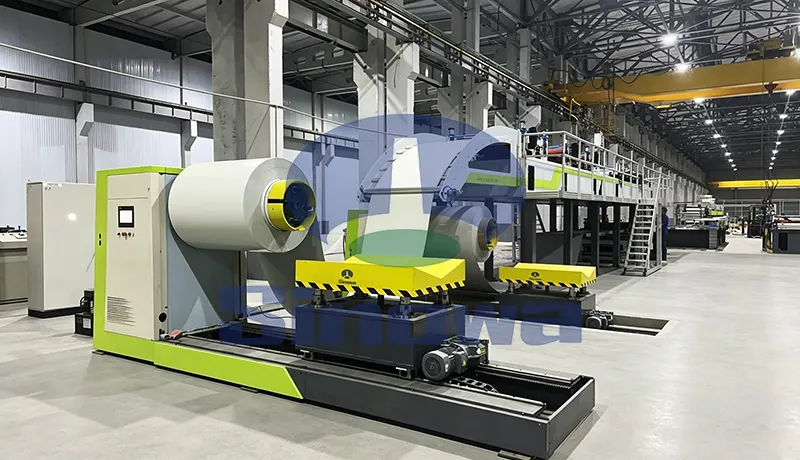
The PU sandwich panel line is a core production setup for making high-performance building insulation panels. This professional PU sandwich panel production line features automated operation to streamline the whole manufacturing process efficiently. Every component of the polyurethane sandwich panel line is precisely calibrated to ensure consistent panel thickness and structural stability. A well-maintained polyurethane sandwich panel production line can greatly boost production efficiency while reducing manual operation errors. The continuous PU sandwich panel line adapts to diverse production demands for different panel sizes and surface styles. With advanced molding technology, the PIR sandwich panel line produces panels with excellent heat preservation and sound insulation properties. Stable running of the PIR sandwich panel production line guarantees reliable product quality for various construction and industrial application scenarios.
-
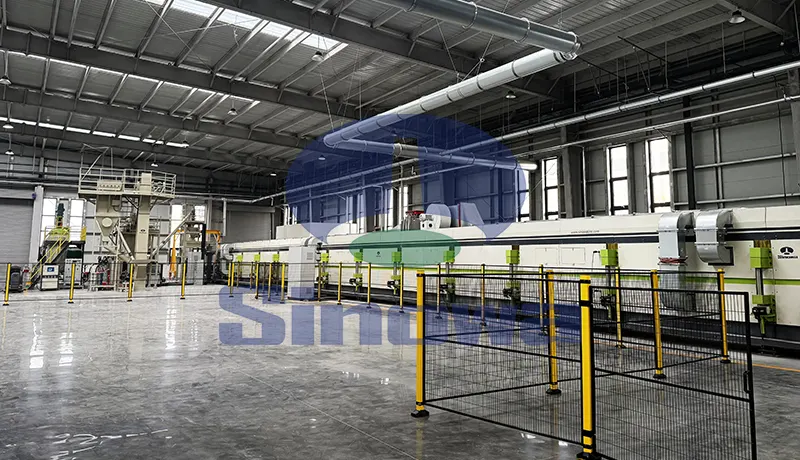
A phenolic insulation board production line serves as the core equipment for manufacturing high-performance thermal insulation building materials. This phenolic insulation panel production line integrates material mixing, foaming, molding and cutting processes to ensure continuous and stable production efficiency. Every operational link of the insulation board production line is precisely calibrated to produce uniform and durable insulation boards. The automated design of the insulation panel production line effectively reduces manual intervention and improves product consistency. Proper maintenance of the phenolic board production line can greatly extend its service life and maintain steady production output. With optimized structural design, the phenolic panel production line adapts to various production demands and delivers high-quality finished products for thermal insulation engineering applications.
-
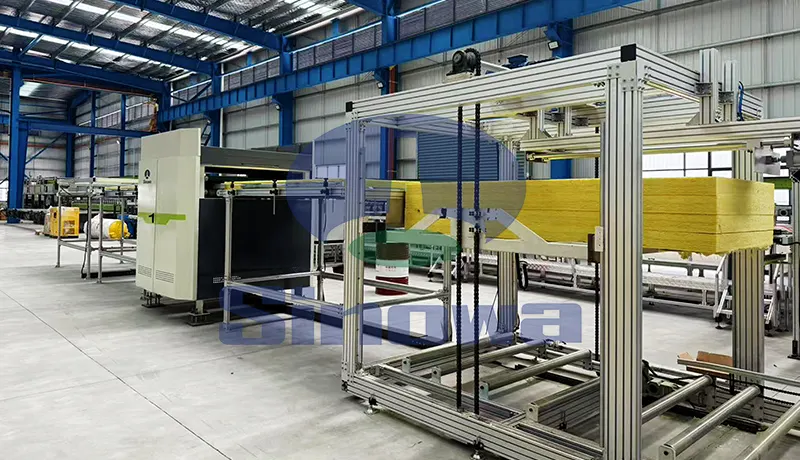
A professional rockwool sandwich panel line serves as the core equipment for producing high-performance building panels. This rockwool sandwich panel production line integrates feeding, laminating and forming processes to ensure stable and efficient production. The well-structured rock wool sandwich panel line can process raw rockwool materials into panels with excellent thermal and sound insulation properties. Operators can adjust the running parameters of the rock wool sandwich panel production line to manufacture panels of different thicknesses and specifications. The automated design of the mineral wool sandwich panel production line greatly reduces manual operation errors and improves product consistency. Regular maintenance of the mineral wool sandwich panel line is essential to sustain long-term operational efficiency and guarantee qualified finished panels for diverse construction applications.