How to Improve Bonding Strength of Rock Wool Sandwich Panel Production Line Finished Boards?
Publication Date: Sep 27, 2026
Bonding strength is the core performance index of finished rock wool sandwich panels, directly determining their structural stability and service life.
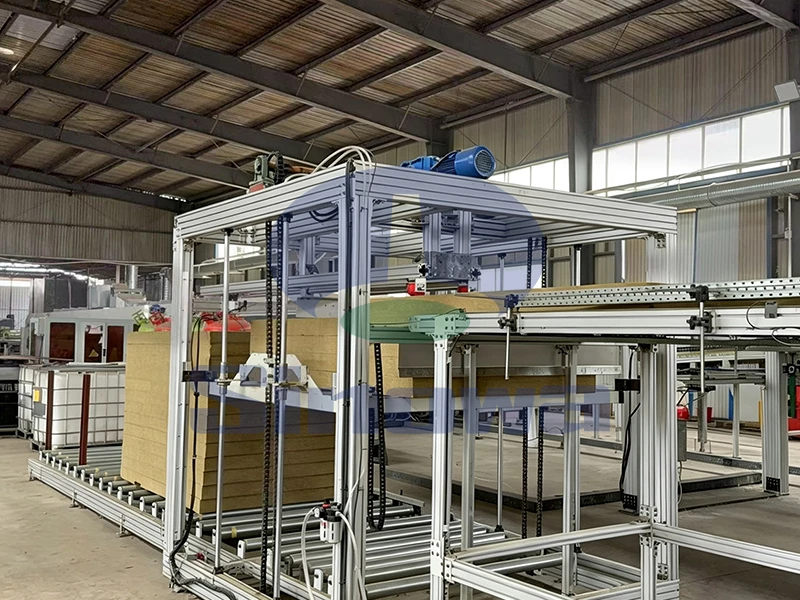
The surface condition of rock wool core materials is the foundational factor affecting the overall bonding strength of sandwich panels. Raw rock wool fibers feature inert surface characteristics with smooth and dense local structures, which greatly reduce molecular compatibility with adhesive materials and easily form weak bonding interfaces during composite processing. In actual production, untreated rock wool surfaces often lead to incomplete adhesive infiltration and insufficient fiber-adhesive combination force. Implementing professional surface modification treatment for rock wool cores can effectively change the surface tension and microscopic morphology of fibers. Non-contact surface treatment technology can activate the rock wool surface without damaging its internal fiber structure, forming tiny rough textures and active molecular groups. These structural changes significantly improve the adsorption and fusion ability of adhesives, laying a solid foundation for tight bonding between the rock wool core and surface plates, and fundamentally reducing the risk of interfacial delamination of finished panels.
Reasonable selection and scientific matching of adhesives play a decisive role in improving the bonding performance of rock wool sandwich panels. Rock wool is a porous fibrous material with strong water and glue absorption capacity, which puts forward higher requirements for the viscosity, fluidity and curing characteristics of composite adhesives. Adhesives with single performance or mismatched parameters often cause problems such as insufficient glue coating, poor penetration and incomplete curing. High-performance polymer adhesives with good molecular compatibility with both metal surface plates and rock wool fibers should be selected in production. It is necessary to dynamically adjust adhesive formulas according to rock wool density and panel application scenarios to balance fluidity and viscosity. Appropriate fluidity enables the adhesive to fully penetrate into rock wool fiber gaps, while moderate viscosity avoids excessive glue loss and starved bonding joints. Optimized adhesive matching can maximize the bonding tension between different structural layers of the panel and improve overall bonding firmness.
Precise control of adhesive coating processes is an essential link to stabilize and enhance panel bonding strength. Traditional manual gluing and fixed-quantity spraying methods often result in uneven glue distribution, local missing coating or excessive glue accumulation, which cause inconsistent bonding strength of different panel areas and hidden dangers of partial peeling. Modern automated closed-loop adhesive supply and spraying systems can achieve quantitative, uniform and dynamic adjustable coating operations. The system can intelligently adjust spraying volume, spraying speed and spraying range according to the actual size and core material parameters of each panel. Full coverage of the bonding interface is ensured without redundant glue accumulation, realizing zero dead-angle coating. Standardizing the coating process and unifying operation parameters for each production batch eliminate bonding quality differences caused by manual operation errors, making the bonding force of finished panels more uniform and stable in mass production.
Optimization of pressing and heating curing processes is crucial for forming high-strength bonding structures of rock wool sandwich panels. After the rock wool core, adhesive and surface plates are initially compounded, stable pressure and temperature environments are required to promote complete adhesive reaction and tight fitting of structural layers. Unstable pressing pressure will lead to inconsistent fitting tightness: insufficient pressure causes gaps between layers and poor bonding, while excessive pressure squeezes out effective adhesive and destroys rock wool fiber structures. Reasonable heating temperature and constant temperature curing time can ensure full cross-linking reaction of adhesive molecules. In production, the double-belt pressing and heating integrated system can be used to maintain continuous and uniform pressure and constant temperature throughout the curing stage. Fine-tuning pressure parameters, heating gradient and curing duration according to panel thickness and core material specifications can completely cure the adhesive, form dense molecular bonding layers, and greatly improve the shear and peel resistance of panel bonding surfaces.
Edge sealing process optimization effectively makes up for the weak bonding defects at the edge of rock wool sandwich panels. The edge area of panels is the most vulnerable part of bonding failure in daily use, as the exposed fiber structure at the rock wool edge is prone to moisture absorption and loose combination, leading to edge delamination and cracking. The integrated PU foam edge sealing system can be deployed immediately after core material positioning and before formal pressing and curing. The high-performance edge sealing materials undergo chemical reactions to form closed-cell rigid foam structures, which achieve seamless molecular bonding with both metal surface plates and rock wool core fibers. This edge sealing structure completely wraps the loose rock wool fibers at the panel edge, blocks external moisture and air intrusion, and enhances the overall tightness of edge bonding. Optimizing the edge sealing spraying range and material dosage can eliminate edge bonding dead zones, significantly improving the edge structural stability and overall bonding strength of finished panels.
Strict control of raw material quality consistency provides basic guarantee for stable bonding performance of finished panels. The quality fluctuation of rock wool core materials and metal surface plates will directly interfere with the bonding effect of composite structures. Rock wool cores with uneven fiber density, loose local structure or excessive impurity content will lead to inconsistent glue absorption and poor stress uniformity during bonding. Metal plates with unclean surface oil stains, dust and oxide layers will isolate the adhesive from the base material, greatly reducing interfacial bonding force. Establishing standardized raw material screening and pre-treatment procedures in production is necessary. Rock wool cores with uniform fiber distribution and stable compactness are selected, and surface cleaning and polishing treatment are carried out for metal plates to remove all surface barriers affecting bonding. Keeping raw material performance consistent for each production batch avoids bonding quality fluctuations caused by raw material differences.
Scientific adjustment of production line operating parameters adapts to diverse panel specifications and optimizes bonding effects. Different thicknesses, densities and structural designs of rock wool sandwich panels require matched production parameters to achieve the best bonding state. Fixed parameter settings for all panel types will lead to poor adaptation and insufficient bonding performance for special specifications. Production personnel need to formulate targeted parameter schemes according to panel structural characteristics, including adhesive spraying interval, preheating temperature before pressing, pressing speed and cooling shaping time. Reasonable preheating treatment can soften rock wool fibers and activate adhesive activity in advance, improving the fusion efficiency of structural layers. Moderate pressing speed ensures slow and uniform fitting of each layer to avoid internal bubble generation. Gradual cooling shaping after curing can eliminate internal stress of panels, prevent bonding interface cracking caused by stress release, and further consolidate bonding strength.
Elimination of internal bubble and gap defects in composite structures is a key measure to improve effective bonding area. Tiny bubbles and micro gaps between the rock wool core, adhesive layer and surface plates are common invisible defects in production, which greatly reduce the effective bonding area and become stress concentration points. Under external force and temperature changes, these tiny defects will gradually expand and cause layer separation. Optimizing the production composite process can effectively reduce defect generation. The automated lamination and pressing system can exhaust internal air in real time during the fitting process of each structural layer. Adjusting the adhesive fluidity enables the glue to fully fill the micro gaps of rock wool fibers and eliminate hollow structures inside the bonding layer. Strictly controlling the dust-free environment of the production workshop avoids particle impurities mixed in the bonding interface. Maximizing the effective bonding area of the panel structural layer significantly improves the overall bearing capacity and bonding firmness.
Standardized batch production quality monitoring helps sustain stable high bonding strength of finished panels. Many bonding strength problems are caused by unmeasured parameter deviations and non-standard operation in continuous production. Relying solely on manual visual inspection cannot identify potential hidden dangers such as insufficient adhesive curing and weak local bonding. Building a complete in-process monitoring system is essential to track key production parameters in real time, including adhesive mixing ratio, actual coating thickness, pressing pressure stability and curing temperature duration. Recording and archiving batch production data facilitates traceability of quality problems and timely adjustment of production parameters. Regular sampling and testing of bonding performance during production can timely detect subtle quality fluctuations, eliminate unqualified products in advance, and ensure that all finished panels maintain stable and excellent bonding strength.
Optimization of post-production curing and storage environments further consolidates the bonding performance of finished rock wool sandwich panels. The initial bonding structure of newly produced panels is not completely stable, and inappropriate post-processing environments will affect the final curing effect of adhesives. High humidity environment will make rock wool absorb moisture and reduce interfacial adhesion, while drastic temperature changes will cause inconsistent thermal expansion and contraction of different structural materials, leading to bonding interface loosening. After production, finished panels should be placed in a dry, constant temperature and well-ventilated environment for sufficient static curing to promote complete aging and stabilization of the adhesive molecular structure. Standardizing panel stacking methods to avoid excessive extrusion and local stress concentration can prevent artificial damage to the bonding structure. Scientific post-production management can fully release the bonding potential of optimized production processes and ensure long-term stable bonding strength of finished panels in subsequent use.
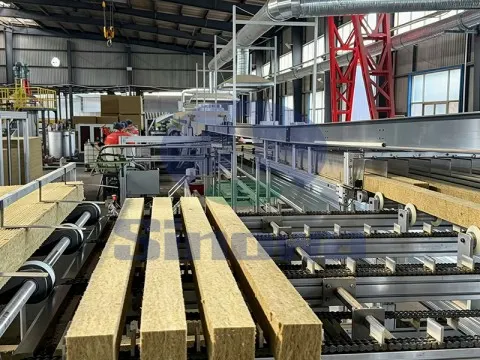
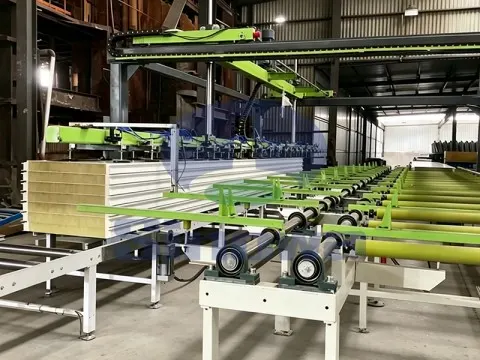
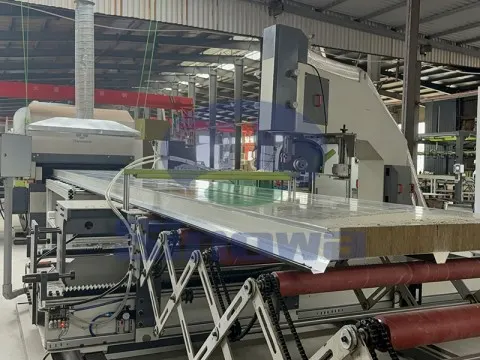
Gallery of Rock Wool Sandwich Panel Production Line
Tags: rock wool sandwich panel production line, rock wool sandwich panel production line manufacturer, rock wool sandwich panel production line supplier, china rock wool sandwich panel production line, rock wool sandwich panel production line for sale
-
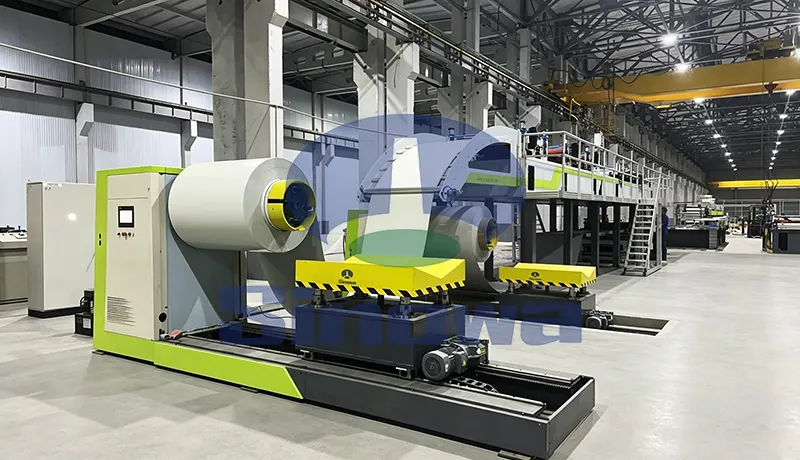
The PU sandwich panel line is a core production setup for making high-performance building insulation panels. This professional PU sandwich panel production line features automated operation to streamline the whole manufacturing process efficiently. Every component of the polyurethane sandwich panel line is precisely calibrated to ensure consistent panel thickness and structural stability. A well-maintained polyurethane sandwich panel production line can greatly boost production efficiency while reducing manual operation errors. The continuous PU sandwich panel line adapts to diverse production demands for different panel sizes and surface styles. With advanced molding technology, the PIR sandwich panel line produces panels with excellent heat preservation and sound insulation properties. Stable running of the PIR sandwich panel production line guarantees reliable product quality for various construction and industrial application scenarios.
-
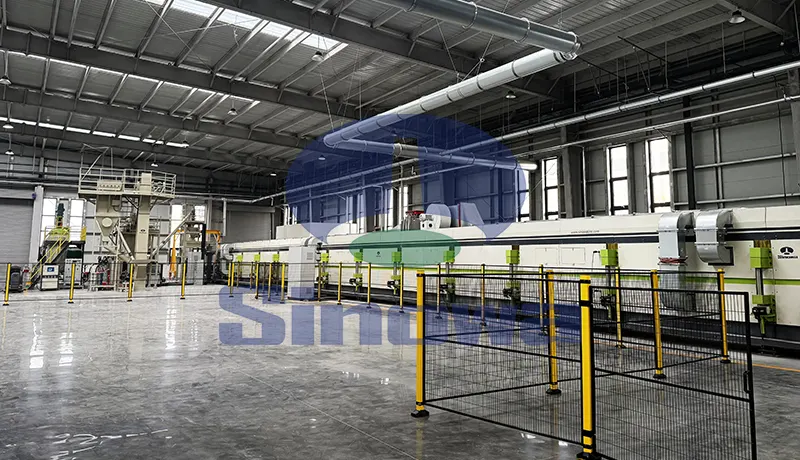
A phenolic insulation board production line serves as the core equipment for manufacturing high-performance thermal insulation building materials. This phenolic insulation panel production line integrates material mixing, foaming, molding and cutting processes to ensure continuous and stable production efficiency. Every operational link of the insulation board production line is precisely calibrated to produce uniform and durable insulation boards. The automated design of the insulation panel production line effectively reduces manual intervention and improves product consistency. Proper maintenance of the phenolic board production line can greatly extend its service life and maintain steady production output. With optimized structural design, the phenolic panel production line adapts to various production demands and delivers high-quality finished products for thermal insulation engineering applications.
-
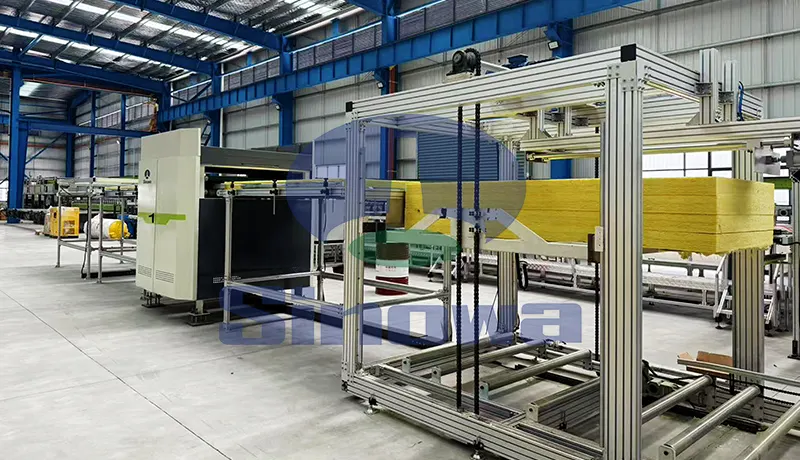
A professional rockwool sandwich panel line serves as the core equipment for producing high-performance building panels. This rockwool sandwich panel production line integrates feeding, laminating and forming processes to ensure stable and efficient production. The well-structured rock wool sandwich panel line can process raw rockwool materials into panels with excellent thermal and sound insulation properties. Operators can adjust the running parameters of the rock wool sandwich panel production line to manufacture panels of different thicknesses and specifications. The automated design of the mineral wool sandwich panel production line greatly reduces manual operation errors and improves product consistency. Regular maintenance of the mineral wool sandwich panel line is essential to sustain long-term operational efficiency and guarantee qualified finished panels for diverse construction applications.