Why Does Delamination Occur On Panels From Rock Wool Sandwich Panel Production Line
Publication Date: Sep 27, 2026
Delamination of rock wool sandwich panels during production refers to the separation between metal surface sheets and rock wool cores. This common manufacturing defect stems from improper process control, material defects, and equipment errors, undermining panel structural stability and service performance.
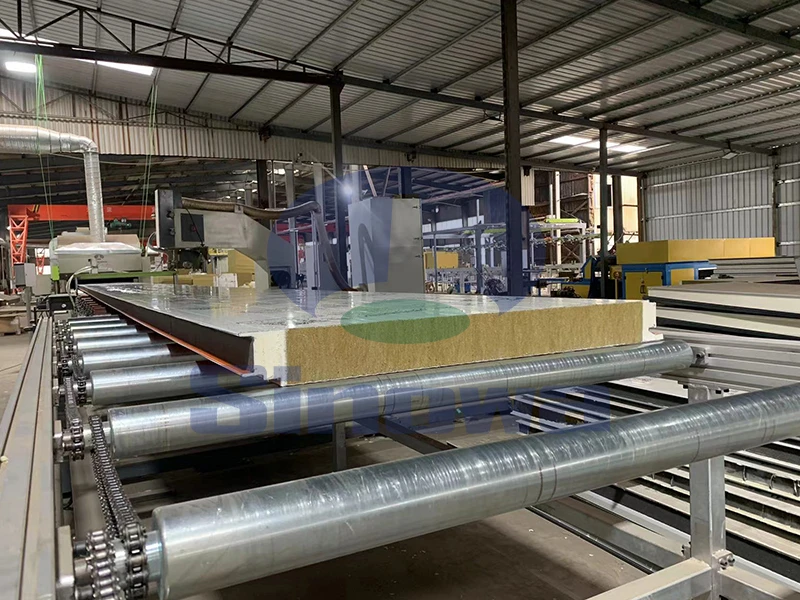
Unqualified adhesive application is one of the most prevalent triggers of panel delamination in rock wool sandwich panel production. The bonding agent serves as the critical bridge connecting the rigid metal skin and the porous rock wool core, and any irregularities in its usage will directly break the integral structure of the panel. Insufficient adhesive coverage leaves partial areas of the rock wool core and metal sheet completely unbonded, forming invisible hollow gaps inside the panel. In contrast, excessive adhesive coating leads to glue accumulation and uneven thickness, which creates internal stress during the subsequent pressing process. Additionally, inappropriate open time of the adhesive severely weakens bonding effects. If the interval between glue coating and lamination is too long, the adhesive surface will oxidize and lose viscosity, failing to form a tight bond. Even minor inconsistencies in glue distribution across the production line can gradually expand into large-scale delamination after panel molding and cooling.
Poor surface pretreatment of raw materials greatly increases the risk of delamination in mass production. Both metal surface sheets and rock wool cores require standardized surface cleaning before lamination, yet overlooked details often cause bonding failure. Metal sheets usually carry fine dust, oil stains, and oxide layers formed during storage and transportation, which reduce surface energy and prevent effective adhesion with adhesives. For rock wool cores, residual fiber dust and loose particle fragments on the surface are more problematic. These tiny impurities act as isolation layers between the core material and adhesive, blocking molecular combination. In continuous production lines, rapid operating speeds often lead to simplified cleaning procedures, where incomplete dust removal and unremoved oil contaminants remain on material surfaces. Such hidden defects do not show immediately after production but gradually develop into obvious delamination under slight external pressure or temperature changes.
Improper mixing ratio of two-component adhesives is a key internal factor causing persistent delamination problems. Structural adhesives used for rock wool sandwich panel lamination rely on accurate proportioning of different components to complete chemical cross-linking and form high-strength bonding layers. Deviations from the standard mixing ratio will completely destroy the curing performance of the glue. Excess curing agent leads to brittle adhesive layers that are prone to cracking and peeling after curing, while insufficient curing agent results in incomplete cross-linking, leaving the glue layer soft and low in adhesion. Long-term continuous operation of production equipment may cause minor deviations in the automatic metering system, which are easy to ignore in daily inspection. Moreover, uneven manual or mechanical mixing leads to local concentration differences of adhesive components, creating partial weak bonding areas. These weak areas cannot withstand internal stress generated during panel shaping, eventually causing layered separation between materials.
Unstable pressing pressure during the lamination process directly induces uneven bonding and subsequent delamination. The lamination pressing procedure determines the tightness of combination between metal sheets and rock wool cores, and stable and uniform pressure is essential for integral panel molding. Many production lines face pressure fluctuation issues caused by equipment aging or parameter misadjustment. Insufficient overall pressing pressure cannot fully extrude redundant air between materials and fails to make the adhesive penetrate the fine gaps of rock wool fibers, resulting in loose bonding interfaces. Local pressure imbalance is more harmful, as excessive pressure in partial areas crushes the porous structure of rock wool cores, while low-pressure areas retain gaps and unbonded zones. Inconsistent pressure distribution makes the internal stress of the panel uneven after molding, and stress concentration points will gradually tear the bonding interface, forming delamination defects during follow-up handling and storage.
Abnormal curing temperature and insufficient curing time are major culprits of latent delamination defects. Adhesive curing is a temperature-dependent chemical reaction that requires matched temperature conditions and enough time to complete cross-linking and stabilize bonding strength. In actual production, improper temperature setting of the heating system often occurs, with excessively low temperature slowing down the curing reaction and leaving the adhesive in an under-cured state. Even if the panel looks intact after leaving the production line, the uncured glue layer cannot provide stable bonding force. Meanwhile, pursuing production efficiency often leads to shortened curing dwell time. When panels are separated from the pressing and heating device before the adhesive completes full cross-linking, the bonding strength cannot reach the standard requirement. Temperature unevenness on the platen surface also creates partial cold spots, causing inconsistent curing degrees of different panel areas and forming hidden delamination risks.
Moisture contamination of raw materials and production environment severely damages bonding performance and causes delamination. Rock wool is a highly hygroscopic porous material that easily absorbs moisture from humid production air or damp storage environments. Excess moisture remaining in rock wool fibers will react with the adhesive, destroying its chemical composition and reducing viscosity. Moisture also forms tiny water films on the contact surface between the core material and adhesive, isolating effective bonding. In addition, humid production workshops increase the moisture content on the surface of metal sheets, leading to poor adhesion between metal and glue. During panel curing, internal moisture evaporates to form tiny air bubbles, which expand with temperature changes, squeezing the bonding interface and causing layered separation. Long-term accumulation of moisture damage will gradually expand local delamination to large-area peeling.
Defective rock wool core material quality fundamentally weakens the overall bonding stability of sandwich panels. Low-quality rock wool cores have loose internal fiber structures and poor fiber binding force, with a large number of floating fibers and voids on the surface. These structural defects make it impossible for the adhesive to form a firm combination with the core material. When external force or environmental changes act on the panel, the loose fiber layer inside the rock wool core will separate first, further driving the delamination between the core material and metal sheet. Moreover, uneven density of rock wool cores leads to inconsistent stress resistance of different parts of the panel. High-density areas bear excessive pressure during pressing, while low-density areas have insufficient bonding contact. Long-term structural imbalance will destroy the integral bonding state and induce continuous delamination defects in finished panels.
Mechanical misalignment and operational errors in continuous rockwool sandwich panel production lines cause structural stress delamination. The assembly and conveying systems of the production line require precise alignment to ensure uniform stress on panels during molding. Misaligned conveying belts, offset pressing platens, and inaccurate positioning fixtures will force the metal sheet and rock wool core to be laminated in a skewed state. This forced assembly generates persistent internal structural stress inside the panel. After production is completed, the panel will release residual stress slowly, which pulls the bonding interface and causes edge or local delamination. In addition, improper manual operations such as forced correction of panel positions during production will artificially damage the initially formed bonding interface, leaving irreversible delamination hidden dangers inside the finished product.
Thermal stress circulation in post-production environment triggers delayed delamination of qualified-looking panels. Even if panels complete normal bonding and curing on the production line, drastic temperature changes in storage, transportation and application environments will cause inconsistent thermal expansion and contraction of metal sheets and rock wool cores. Metal materials have a much higher thermal expansion coefficient than rock wool, leading to different deformation amplitudes of the two materials under the same temperature change. This deformation difference generates cyclic shear stress on the bonding interface. Long-term repeated stress impact will gradually fatigue the adhesive layer, causing micro-cracks on the bonding surface. These tiny cracks continue to expand under continuous thermal cycling, eventually developing into obvious delamination and peeling, which seriously affects the flatness and structural integrity of the panels.
Lack of real-time process monitoring and quality inspection loopholes amplify delamination defects in batch production. In automated rockwool board production lines, minor parameter deviations and subtle equipment abnormalities are difficult to detect in a timely manner without precise monitoring mechanisms. Slight fluctuations in adhesive flow, pressing pressure and curing temperature will accumulate over continuous production, forming batch delamination problems. Routine sampling inspection often ignores latent micro-delamination defects that cannot be identified by visual observation. Uninspected defective products flow out from the production line, and their internal bonding defects gradually deteriorate under subsequent environmental effects. Perfect production quality management requires full-process monitoring of each lamination link, and the absence of standardized inspection procedures is an important human factor leading to frequent delamination failures.
Gallery of Rock Wool Sandwich Panel Production Line
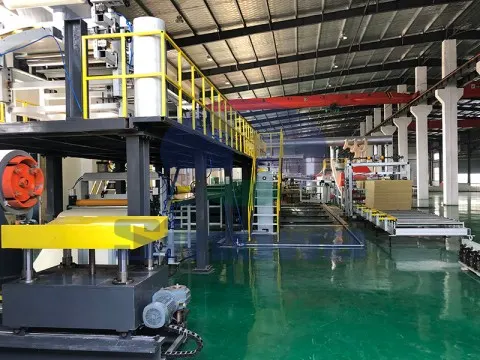
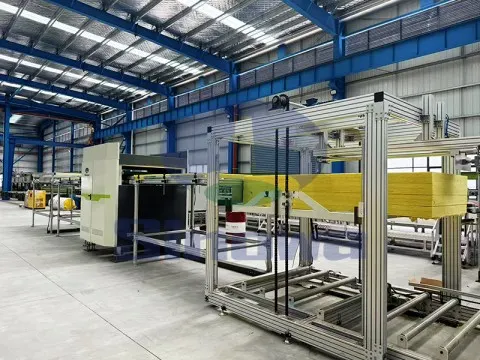
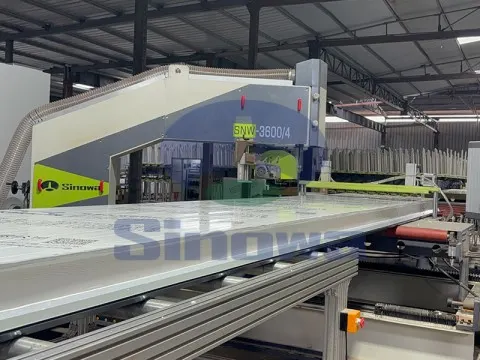
Tags: rock wool sandwich panel production line, rock wool sandwich panel production line manufacturer, rock wool sandwich panel production line supplier, china rock wool sandwich panel production line, rock wool sandwich panel production line for sale
-
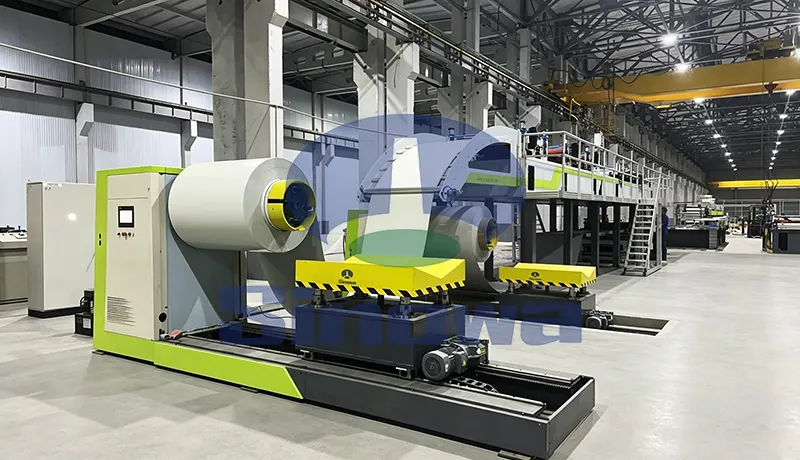
The PU sandwich panel line is a core production setup for making high-performance building insulation panels. This professional PU sandwich panel production line features automated operation to streamline the whole manufacturing process efficiently. Every component of the polyurethane sandwich panel line is precisely calibrated to ensure consistent panel thickness and structural stability. A well-maintained polyurethane sandwich panel production line can greatly boost production efficiency while reducing manual operation errors. The continuous PU sandwich panel line adapts to diverse production demands for different panel sizes and surface styles. With advanced molding technology, the PIR sandwich panel line produces panels with excellent heat preservation and sound insulation properties. Stable running of the PIR sandwich panel production line guarantees reliable product quality for various construction and industrial application scenarios.
-
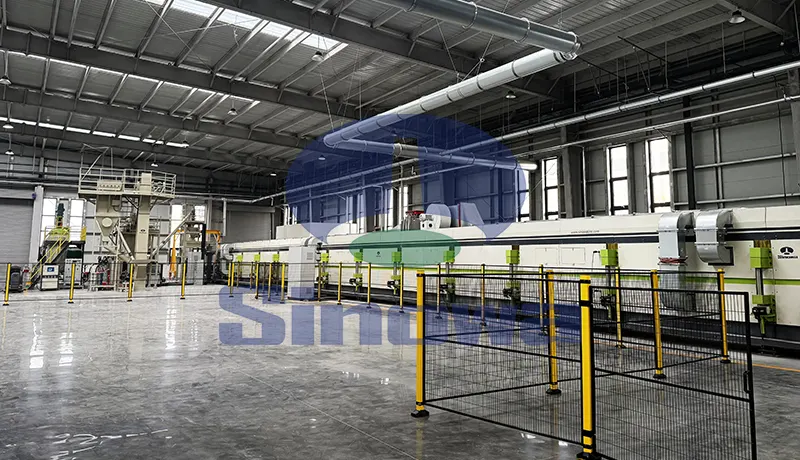
A phenolic insulation board production line serves as the core equipment for manufacturing high-performance thermal insulation building materials. This phenolic insulation panel production line integrates material mixing, foaming, molding and cutting processes to ensure continuous and stable production efficiency. Every operational link of the insulation board production line is precisely calibrated to produce uniform and durable insulation boards. The automated design of the insulation panel production line effectively reduces manual intervention and improves product consistency. Proper maintenance of the phenolic board production line can greatly extend its service life and maintain steady production output. With optimized structural design, the phenolic panel production line adapts to various production demands and delivers high-quality finished products for thermal insulation engineering applications.
-
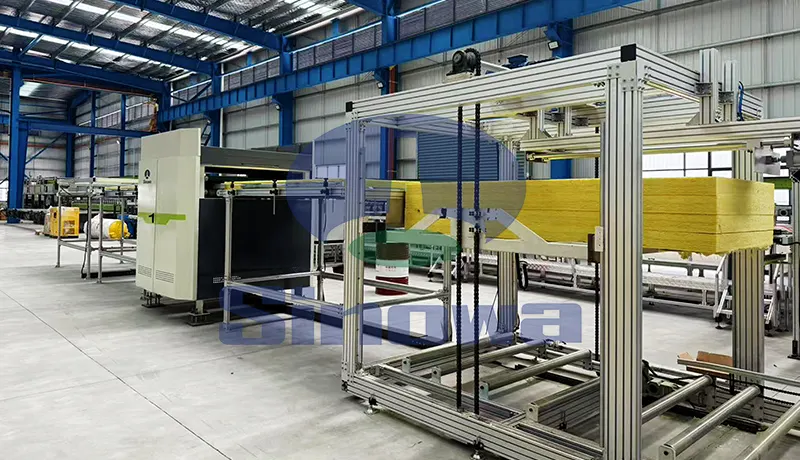
A professional rockwool sandwich panel line serves as the core equipment for producing high-performance building panels. This rockwool sandwich panel production line integrates feeding, laminating and forming processes to ensure stable and efficient production. The well-structured rock wool sandwich panel line can process raw rockwool materials into panels with excellent thermal and sound insulation properties. Operators can adjust the running parameters of the rock wool sandwich panel production line to manufacture panels of different thicknesses and specifications. The automated design of the mineral wool sandwich panel production line greatly reduces manual operation errors and improves product consistency. Regular maintenance of the mineral wool sandwich panel line is essential to sustain long-term operational efficiency and guarantee qualified finished panels for diverse construction applications.