Why Does The Phenolic Insulation Board Production Line Suffer From Unstable Foaming Density?
Publication Date: Sep 27, 2026
Unstable foaming density is a common and tricky quality issue in phenolic insulation board production. This problem stems from chemical reaction fluctuations, equipment operation deviations, process parameter mismatches and raw material condition changes, which undermine product consistency and overall performance stability.
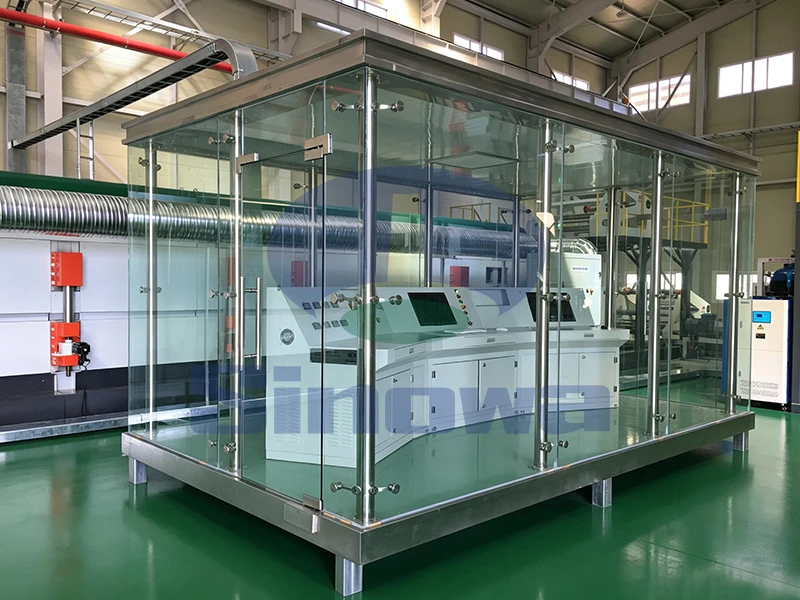
Raw material proportion deviation is one of the core causes of unstable foaming density in phenolic insulation board production. Phenolic foam formation relies on the precise coordination of phenolic resin, foaming agents, curing agents and surfactants, and tiny dosage errors will break the balanced foaming reaction system. In continuous production, slight fluctuations in the feeding volume of each component often occur due to unstable feeding pressure and minor metering equipment errors. Excessive foaming agent will generate excessive gas in the reaction process, forming oversized foam cells and reducing the overall density of the board. Insufficient foaming agent leads to incomplete foaming, dense internal structure and abnormally high product density. Meanwhile, uneven addition of curing agents will cause inconsistent curing speed of different material parts, making some areas foam fully while others solidify in advance, resulting in obvious density differences on the surface and inside of finished boards.
Fluctuations in raw material physical properties also greatly affect foaming density stability. The viscosity of phenolic resin changes with storage time and ambient temperature, and resin with excessive viscosity will hinder the uniform diffusion of foaming gas, causing local gas accumulation and irregular foam cell distribution. In contrast, resin with too low viscosity cannot lock foaming gas effectively, leading to gas overflow and insufficient foaming expansion. In addition, the activity of foaming agents and curing agents will decline after long-term storage or exposure to humid air. The reduced chemical activity makes the foaming reaction unable to proceed according to the preset state, resulting in inconsistent foaming multiples in different production batches. Even with fixed feeding ratios, variable raw material properties will directly trigger repeated fluctuations in product density.
Unstable production temperature is a key environmental factor inducing foaming density deviation. The foaming and curing reaction of phenolic materials is a typical exothermic chemical process extremely sensitive to temperature changes. When the production environment or equipment temperature is too high, the material reacts rapidly in a short time, and the instantaneous gas generation rate far exceeds the curing forming speed. A large number of foam cells burst before the structure is fixed, forming voids and loose areas, which lowers the local density of the board. If the temperature is too low, the chemical reaction activity of raw materials decreases, the foaming speed slows down, and the curing speed lags seriously. The unfixed foam structure is prone to shrinkage under gravity, leading to increased overall density and uneven internal density distribution. Continuous temperature fluctuations in the production workshop will make each section of the production line have different reaction states, causing batch density instability.
Inadequate raw material mixing uniformity leads to localized foaming differences and overall density instability. Uniform mixing of phenolic resin with various additives is the prerequisite for consistent foaming reaction. In actual production, unreasonable mixing speed and insufficient mixing time often lead to uneven distribution of foaming agents and curing agents in the resin matrix. Some material areas gather more additives to produce sufficient and uniform foaming, forming low-density areas, while other areas lack effective additives, resulting in weak foaming and high-density solid areas. In addition, residual tiny bubbles in the mixed materials will also affect the foaming effect. These inherent bubbles will expand abnormally during the secondary foaming process, destroying the regular foam cell structure and making the density of different parts of the board irregular and uncontrollable.
Equipment operation failure and parameter drift are important mechanical causes of unstable foaming density. Long-term continuous operation of phenolic insulation board production line equipment will lead to gradual wear of feeding pumps, pipelines and mixing components, resulting in unstable material conveying speed and intermittent material supply. Discontinuous material supply will cause the material ratio of each foaming unit to deviate, breaking the stable foaming state. Moreover, the preset process parameters of the equipment will drift with operating time, including mixing speed, material output and reaction time. Without timely parameter calibration, the equipment will operate in an abnormal state for a long time. Minor mechanical vibration during operation will also affect the uniform spreading and forming of foaming materials, leading to inconsistent density of the board along the length and width directions.
Unreasonable material curing time matching will trigger foaming density imbalance. The foaming process of phenolic insulation boards includes gas generation expansion and structural curing shaping, and the two processes need accurate time matching to form stable and uniform foam structure. Excessively short curing time makes the foam structure not fully shaped, and the newly formed foam cells are easy to shrink and deform under external pressure and gravity, resulting in increased product density and uneven cell size. Excessively long curing time will cause excessive reaction of partial materials, the cell wall structure becomes brittle and easy to crack, internal gas overflows, and local density decreases abnormally. In continuous sandwich panel assembly line production, inconsistent operating speed of each process section will lead to variable curing time of materials, further amplifying the fluctuation range of foaming density.
Ambient humidity changes in the production workshop interfere with foaming reaction stability and cause density deviation. Phenolic foaming raw materials have certain hygroscopicity, and excessive air humidity will make the materials absorb moisture in the air during feeding and mixing processes. The absorbed moisture will change the viscosity of the resin and dilute the effective concentration of additives, slowing down the foaming reaction rate and reducing foaming expansion multiple. In a dry production environment, the moisture inside the materials volatilizes rapidly, resulting in excessive local gas generation and irregular foam cell expansion. Frequent humidity changes in the workshop will make the material moisture content in different production stages inconsistent, leading to obvious density differences between different batches of products and poor overall stability of foaming quality.
Uneven material spreading and forming process causes regional density differences of finished boards. After the mixed raw materials are output from the equipment, they need to be evenly spread on the base material for integral foaming and forming. Unsmooth discharge ports and unreasonable spreading thickness will lead to uneven material accumulation in different areas. Thick material layers have slow internal heat dissipation, violent internal reactions and large foaming expansion range, forming low-density areas. Thin material layers dissipate heat quickly, react mildly and have insufficient foaming, resulting in relatively high density. In addition, inconsistent running speed of the forming roller will make the material bearing pressure unstable during forming, some areas are excessively squeezed to reduce foam pores and increase density, while some areas have loose structure and low density, seriously affecting the overall density uniformity of the board.
Post-forming aging differences aggravate the instability of foaming density. The phenolic foam structure will undergo subtle changes within a certain period after production. Unaged boards have unfirm internal cell walls, and residual unreacted substances will continue to react, causing secondary slight expansion or shrinkage of the foam structure. If the aging environment is not unified, with differences in temperature, humidity and ventilation conditions, boards produced in the same batch will have different aging degrees. Some boards shrink slightly to increase density, while others expand slightly to decrease density. Without standardized aging management, the initial uniform foaming density will gradually produce deviations after placement, resulting in unstable final product density.
Improper daily maintenance and process management of the phenolic panel production line lead to long-term repeated foaming density problems. Many unstable density issues are caused by accumulated minor problems that are not dealt with in time. Long-term uncleaned residual materials in equipment pipelines will mix into new materials, affecting the purity and ratio of raw materials. Unregular calibration of metering equipment leads to long-term cumulative errors in feeding volume. In addition, irregular adjustment of process parameters by operators according to production experience will break the stable production state. Scientific and standardized daily management can effectively avoid most artificial and equipment-induced foaming density fluctuations, while inadequate management will make the unstable foaming problem persistent and difficult to eradicate.
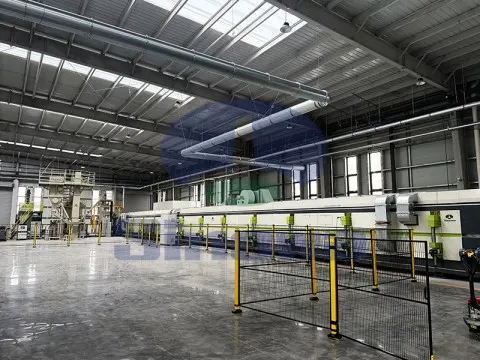
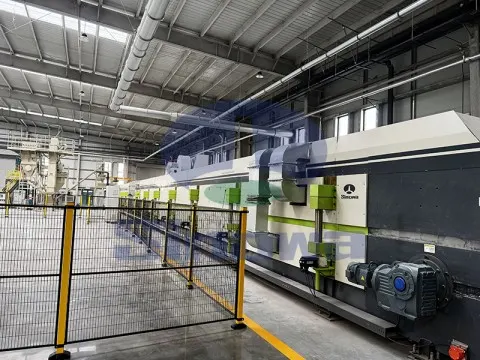
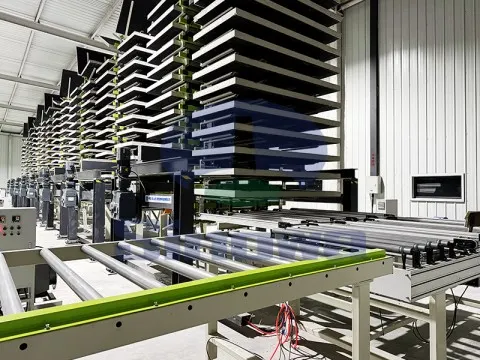
Gallery of Phenolic Insulation Board Production Line
Tags: phenolic insulation board production line, phenolic insulation board production line manufacturer, phenolic insulation board production line supplier, china phenolic insulation board production line, phenolic insulation board production line for sale
-
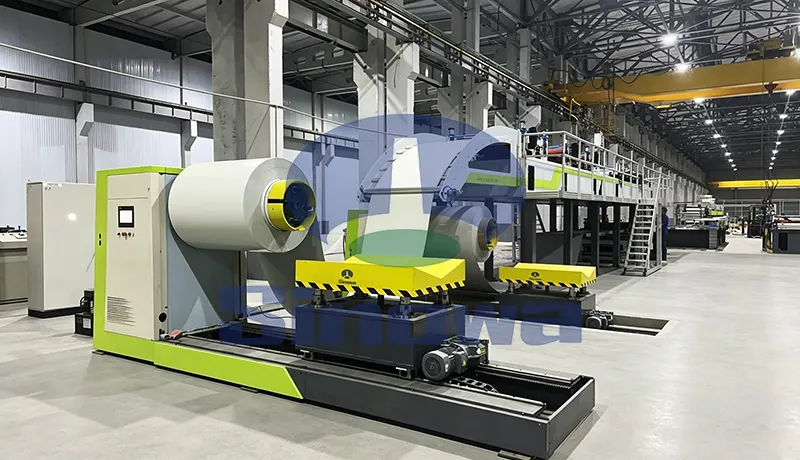
The PU sandwich panel line is a core production setup for making high-performance building insulation panels. This professional PU sandwich panel production line features automated operation to streamline the whole manufacturing process efficiently. Every component of the polyurethane sandwich panel line is precisely calibrated to ensure consistent panel thickness and structural stability. A well-maintained polyurethane sandwich panel production line can greatly boost production efficiency while reducing manual operation errors. The continuous PU sandwich panel line adapts to diverse production demands for different panel sizes and surface styles. With advanced molding technology, the PIR sandwich panel line produces panels with excellent heat preservation and sound insulation properties. Stable running of the PIR sandwich panel production line guarantees reliable product quality for various construction and industrial application scenarios.
-
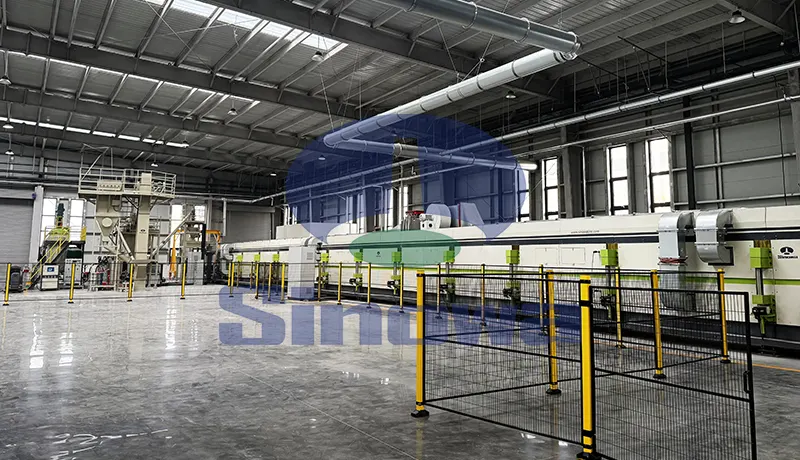
A phenolic insulation board production line serves as the core equipment for manufacturing high-performance thermal insulation building materials. This phenolic insulation panel production line integrates material mixing, foaming, molding and cutting processes to ensure continuous and stable production efficiency. Every operational link of the insulation board production line is precisely calibrated to produce uniform and durable insulation boards. The automated design of the insulation panel production line effectively reduces manual intervention and improves product consistency. Proper maintenance of the phenolic board production line can greatly extend its service life and maintain steady production output. With optimized structural design, the phenolic panel production line adapts to various production demands and delivers high-quality finished products for thermal insulation engineering applications.
-
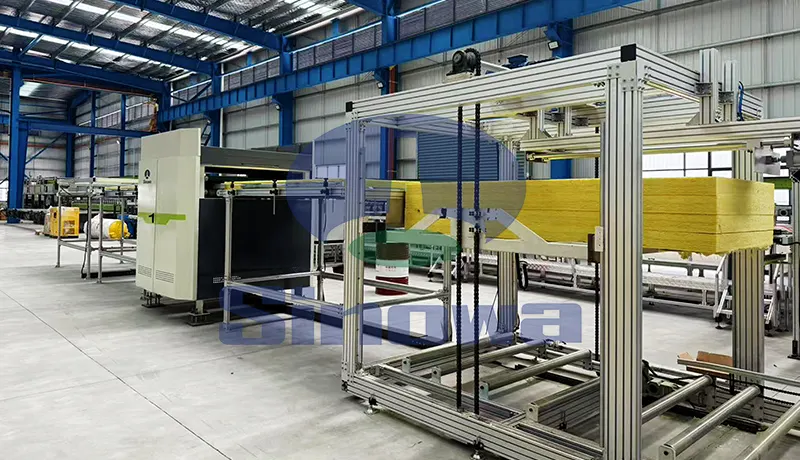
A professional rockwool sandwich panel line serves as the core equipment for producing high-performance building panels. This rockwool sandwich panel production line integrates feeding, laminating and forming processes to ensure stable and efficient production. The well-structured rock wool sandwich panel line can process raw rockwool materials into panels with excellent thermal and sound insulation properties. Operators can adjust the running parameters of the rock wool sandwich panel production line to manufacture panels of different thicknesses and specifications. The automated design of the mineral wool sandwich panel production line greatly reduces manual operation errors and improves product consistency. Regular maintenance of the mineral wool sandwich panel line is essential to sustain long-term operational efficiency and guarantee qualified finished panels for diverse construction applications.