Steel Face PU Sandwich Panel Line
Publication Date: Sep 27, 2026
The steel face PU sandwich panel line is an integrated automatic production system designed for continuous manufacturing of composite insulation panels. It combines mechanical molding, chemical foaming and constant-temperature curing to produce durable, heat-insulating panels for diverse construction applications.
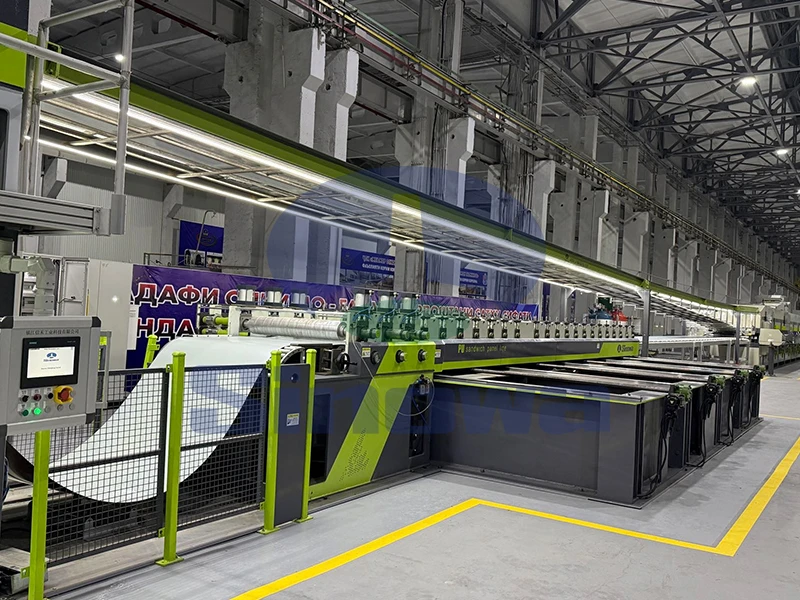
The core design concept of the steel face PU sandwich panel line focuses on automated continuous production, which integrates multiple independent processing units into a seamless production flow. This integrated structure effectively eliminates intermittent operation gaps that exist in traditional batch production modes, greatly improving overall production efficiency and product consistency. The whole production process is driven by synchronized mechanical and electrical control systems, ensuring that each processing procedure operates in precise coordination. Every functional module, from raw material conveying to final panel shaping, is optimized to adapt to long-term uninterrupted operation. The equipment is engineered to balance operational stability and production flexibility, enabling it to adapt to different panel specifications while maintaining consistent production quality. Such systematic design makes the production line a reliable solution for large-scale manufacturing of high-performance composite building panels.
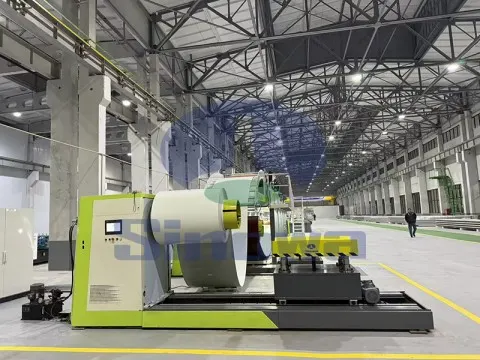
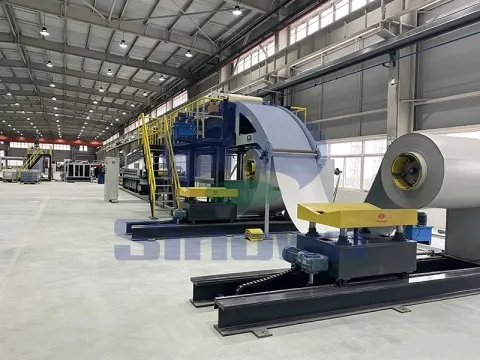
Raw material pretreatment serves as the foundational procedure of the entire production process, directly influencing the surface quality and structural performance of finished panels. The production line is equipped with automatic unwinding and tension adjustment units for steel coil materials, which steadily release steel sheets and maintain uniform tension throughout conveying. Professional surface leveling and cleaning structures remove surface dust, impurities and subtle deformations of steel sheets, creating a clean and flat base for subsequent composite bonding. In addition, the system features automatic deviation correction functions to prevent steel sheet offset and wrinkling during high-speed operation. Precise pretreatment operations ensure that the steel face materials maintain stable physical conditions, laying a solid foundation for tight combination with PU foam core materials and avoiding quality defects caused by uneven raw material processing.
Steel sheet profiling is a key shaping process that endows steel face panels with structural characteristics and assembly adaptability. After pretreatment, flat steel sheets are conveyed into precision roller profiling units composed of multiple groups of profiling rollers. These roller sets conduct gradual cold pressing and shaping on steel sheets, processing flat raw materials into structured plates with specific edge grooves and geometric contours. The gradual molding mode avoids excessive local stress on steel sheets, effectively preventing cracking and deformation during shaping. All profiling parameters are precisely controlled to ensure consistent dimensional accuracy of each steel sheet. The shaped structural edges enable tight splicing and assembly between panels in later construction, improving the overall sealing and structural stability of building enclosure systems.
PU raw material mixing and pouring is the core link that determines the thermal insulation and bonding performance of sandwich panels. The production line adopts high-pressure automatic mixing equipment to process two core chemical raw materials for PU foam. The system accurately meters different raw materials according to fixed proportions and delivers them to the high-pressure mixing cavity. Under high-pressure stirring, raw materials achieve uniform and full fusion to form homogeneous liquid foam mixture. The mixed liquid is evenly poured onto the surface of the lower profiled steel sheet through an adjustable pouring nozzle. The pouring speed, flow rate and coverage range are dynamically adjusted according to production speed and panel thickness, ensuring uniform distribution of PU raw materials and avoiding local hollowing or uneven density of the foam core layer.
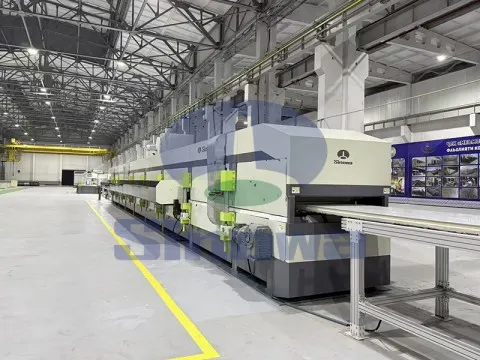
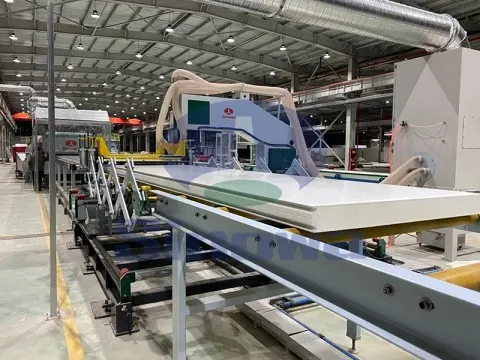
Closed composite pressing and foaming molding is a critical stage for the integration of steel face and PU core materials. After PU liquid pouring, the upper and lower profiled steel sheets with intermediate foam materials are sent into the double-belt pressing unit. This unit forms a closed molding cavity with adjustable thickness, which precisely controls the overall thickness of the sandwich panel. With stable mechanical pressure, the upper and lower steel faces fit closely with the foaming PU material, restricting the free expansion of foam to form a compact and uniform core structure. The synchronous operation of upper and lower conveyor belts ensures consistent conveying speed, avoiding relative displacement between steel sheets and foam materials. This process realizes preliminary composite molding of the panel and lays the groundwork for subsequent curing and solidification.
Constant-temperature curing system is essential for stabilizing the internal structure and comprehensive performance of sandwich panels. The pressing unit is equipped with an integrated constant-temperature heating and heat preservation structure, which provides a stable temperature environment for PU foam polymerization reaction. In the constant-temperature cavity, the poured PU liquid completes full foaming, cross-linking and curing reactions, gradually transforming from liquid state into solid porous foam structure. The stable temperature environment ensures uniform reaction degree of the entire foam core layer, avoiding performance differences caused by uneven curing. Moderate and lasting temperature action optimizes the bonding force between PU foam and steel sheet surface, realizing seamless composite integration of steel face and foam core, and greatly improving the overall structural firmness of the panel.
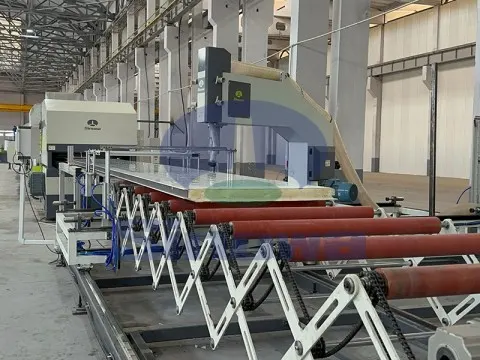
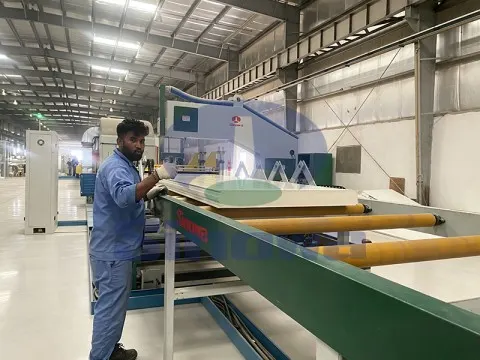
Precision cutting and sizing process realizes the standardized finishing of finished panel dimensions. After complete curing and molding, continuous integrated panel blanks are conveyed to the flying saw cutting unit. This automatic cutting system supports programmable length setting, which can flexibly adjust cutting specifications according to different usage requirements. The high-speed cutting tool features precise positioning and stable cutting performance, ensuring flat and smooth panel sections without burrs or deformation. The cutting operation is synchronized with the production line conveying speed, realizing dynamic online cutting without stopping production. This non-stop cutting mode effectively improves production continuity, while accurate dimensional control ensures the interchangeability and assembly accuracy of finished panels in practical application scenarios.
Surface protection and post-processing procedures further optimize the finished panel quality and service performance. After cutting and sizing, qualified panels will go through surface inspection and auxiliary processing links. The production line is equipped with automatic film covering devices, which attach protective films on the steel face surface to prevent scratch, oxidation and pollution during transportation and installation. Meanwhile, minor edge trimming and deburring operations are carried out to eliminate tiny defects generated in the previous processes. These post-processing steps effectively improve the surface finish of panels and enhance their corrosion resistance and wear resistance. Standardized post-processing operations unify the appearance quality of finished products and extend the overall service life of steel face PU sandwich panels.
Automatic stacking and discharging system realizes efficient collection and orderly output of finished panels. The processed qualified panels are automatically transported to the stacking platform through the conveying system. The intelligent stacking device precisely completes layered stacking and arrangement of panels according to set rules, ensuring neat and stable stacking state. The system can adapt to different panel sizes and weights, with stable operation and low failure rate. Automatic stacking replaces manual handling, greatly reducing labor investment and avoiding panel damage caused by manual operation errors. Orderly stacked finished panels are convenient for subsequent packaging, transportation and storage, improving the overall efficiency of finished product management and supporting large-scale batch production.
The operational advantages and application value of the steel face PU sandwich panel line are prominent in modern building material manufacturing. The fully automated production mode reduces manual intervention in the whole process, effectively lowering human error and stabilizing product quality. The produced panels integrate excellent thermal insulation, sound insulation, weather resistance and structural strength, adapting to various building enclosure and thermal insulation scenarios. The continuous production feature greatly improves output efficiency and reduces unit production cost. With flexible parameter adjustment, the line can meet diversified specification demands, making it a highly adaptable and cost-effective production solution for the green building material industry.
Gallery of Steel Face PU Sandwich Panel Line
Tags: steel face pu sandwich panel line, steel face pu sandwich panel line manufacturer, steel face pu sandwich panel line supplier, china steel face pu sandwich panel line, steel face pu sandwich panel line for sale
https://www.sandwichpanelmachinery.com/blog/steel-face-pu-sandwich-panel-line.html
-
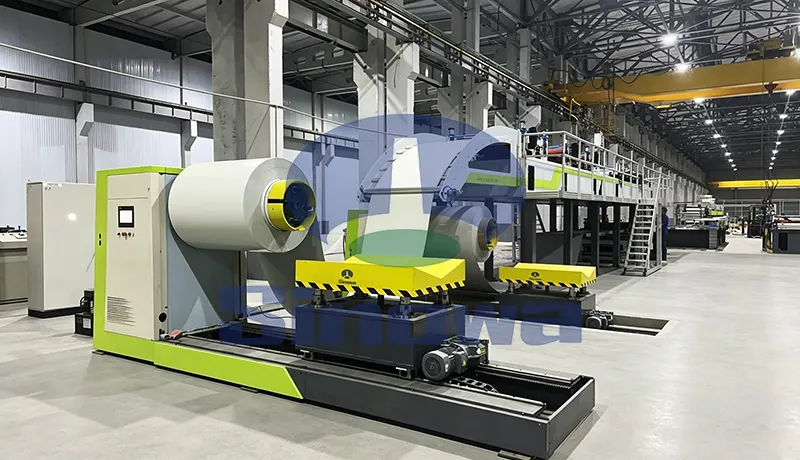
The PU sandwich panel line is a core production setup for making high-performance building insulation panels. This professional PU sandwich panel production line features automated operation to streamline the whole manufacturing process efficiently. Every component of the polyurethane sandwich panel line is precisely calibrated to ensure consistent panel thickness and structural stability. A well-maintained polyurethane sandwich panel production line can greatly boost production efficiency while reducing manual operation errors. The continuous PU sandwich panel line adapts to diverse production demands for different panel sizes and surface styles. With advanced molding technology, the PIR sandwich panel line produces panels with excellent heat preservation and sound insulation properties. Stable running of the PIR sandwich panel production line guarantees reliable product quality for various construction and industrial application scenarios.
-
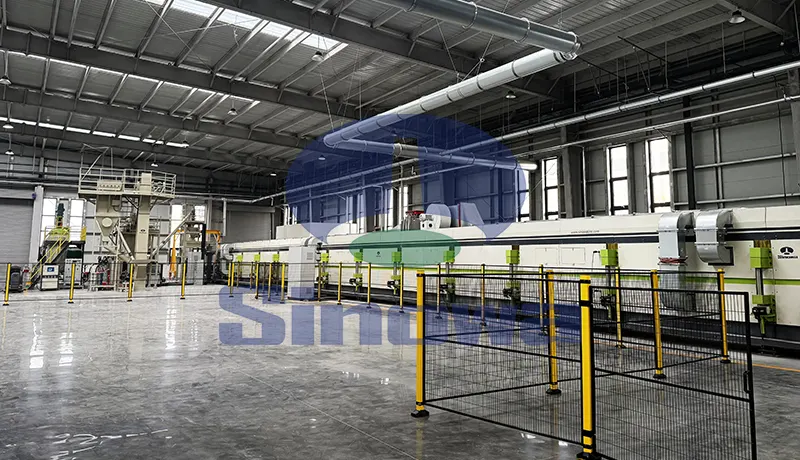
A phenolic insulation board production line serves as the core equipment for manufacturing high-performance thermal insulation building materials. This phenolic insulation panel production line integrates material mixing, foaming, molding and cutting processes to ensure continuous and stable production efficiency. Every operational link of the insulation board production line is precisely calibrated to produce uniform and durable insulation boards. The automated design of the insulation panel production line effectively reduces manual intervention and improves product consistency. Proper maintenance of the phenolic board production line can greatly extend its service life and maintain steady production output. With optimized structural design, the phenolic panel production line adapts to various production demands and delivers high-quality finished products for thermal insulation engineering applications.
-
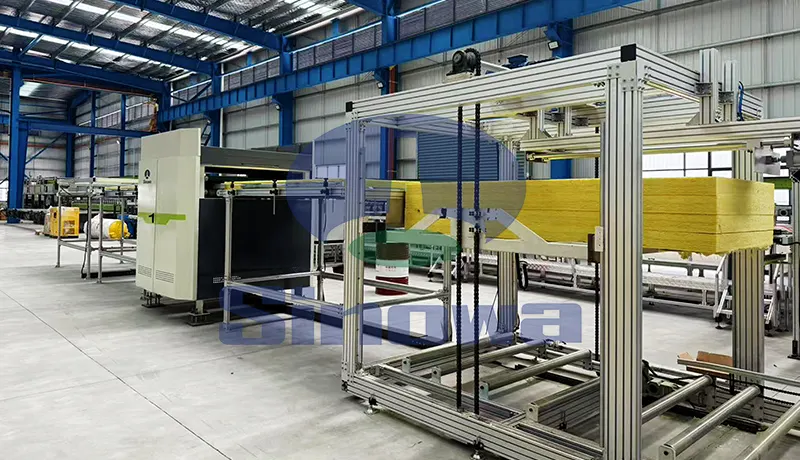
A professional rockwool sandwich panel line serves as the core equipment for producing high-performance building panels. This rockwool sandwich panel production line integrates feeding, laminating and forming processes to ensure stable and efficient production. The well-structured rock wool sandwich panel line can process raw rockwool materials into panels with excellent thermal and sound insulation properties. Operators can adjust the running parameters of the rock wool sandwich panel production line to manufacture panels of different thicknesses and specifications. The automated design of the mineral wool sandwich panel production line greatly reduces manual operation errors and improves product consistency. Regular maintenance of the mineral wool sandwich panel line is essential to sustain long-term operational efficiency and guarantee qualified finished panels for diverse construction applications.