High Density Phenolic Insulation Panel Line
Publication Date: Sep 27, 2026
High density phenolic insulation panel line is an integrated manufacturing system for premium thermal insulation panels. It integrates raw material processing, thermosetting forming and finishing procedures to produce compact, high-performance panels for diverse insulation and construction scenarios.
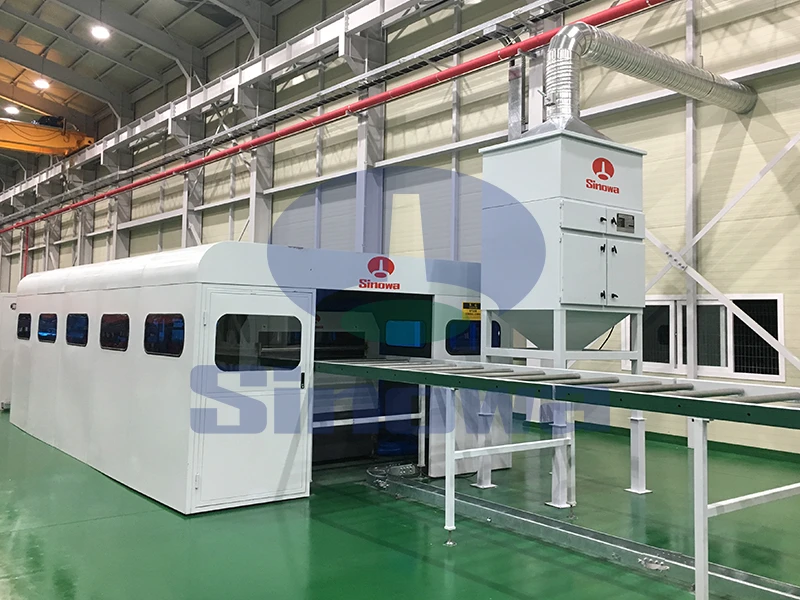
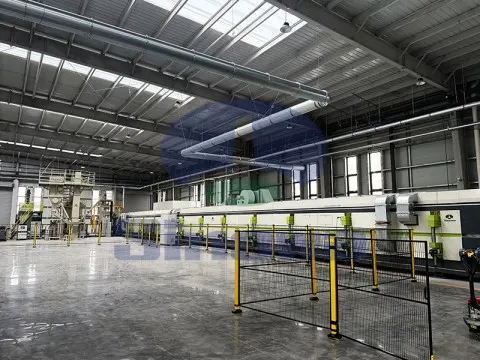
The high density phenolic insulation panel line represents an advanced integrated manufacturing solution dedicated to the mass production of high-performance rigid insulation panels. Unlike conventional insulation board production equipment, this specialized production system is optimized for phenolic resin thermosetting molding, focusing on enhancing the density uniformity and structural compactness of finished panels. The entire production workflow is fully streamlined, covering precise raw material proportioning, automatic material feeding, constant-temperature foaming, high-pressure curing, and accurate post-processing trimming. Each functional module is closely coordinated to eliminate inconsistent product quality caused by manual operation errors. By fine-tuning core production parameters, the line effectively boosts the internal density of phenolic panels, laying a solid foundation for their superior mechanical strength and stable insulation performance. This systematic production mode ensures every batch of finished products maintains consistent structural stability and functional uniformity.
Raw material pretreatment is the foundational core process of the high density phenolic insulation panel production line, which directly determines the basic performance of finished panels. The line is equipped with professional material mixing and refining units that realize the scientific proportioning of phenolic resin, curing agents, foaming additives and auxiliary materials. During the processing, the system adopts closed-loop stirring and filtering technology to fully fuse all raw materials and remove impurity particles that may affect panel compactness. Uniform material mixing avoids local density differences and performance defects in subsequent molding. Meanwhile, the intelligent temperature control system in the pretreatment module stabilizes the activity of phenolic resin, ensuring the foaming and curing reactions proceed in an orderly manner. Standardized raw material pretreatment effectively improves the utilization rate of raw materials, reduces production waste, and creates reliable preconditions for the production of high-density, high-stability insulation panels.
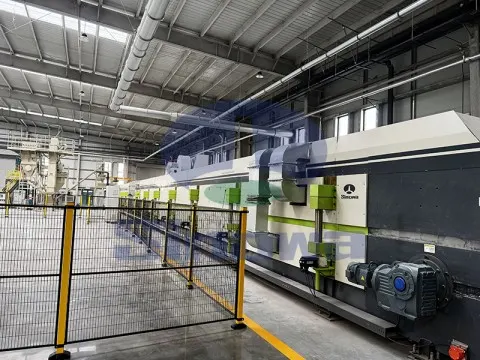
Precision foaming and constant-temperature curing are the key molding procedures of the entire insulation board production line and the core links to realize high-density characteristics of phenolic panels. After raw material pretreatment, the mixed materials are automatically transported to the sealed foaming cavity, where the line adopts low-speed and uniform foaming technology to avoid excessive bubble expansion and internal hollowing. This controlled foaming mode forms a fine and uniform cellular structure inside the panel, greatly improving the compactness and overall density of the product. Subsequently, the panels enter the multi-stage constant-temperature curing area, where gradient temperature adjustment is used to promote sufficient thermosetting reaction of phenolic resin. Slow and stable curing eliminates internal stress of the panels, prevents later deformation and cracking, and further consolidates the dense internal structure. The precise control of foaming and curing processes endows the panels with durable thermal insulation and structural stability.
High-pressure composite forming is a unique advantage process of the high density phenolic insulation panel line, distinguishing it from ordinary phenolic panel production equipment. The line is fitted with hydraulic high-pressure pressing units that apply uniform and stable pressure to semi-finished panels during the molding process. Continuous high-pressure extrusion compresses the internal cellular structure moderately, effectively increasing the bulk density of the panels and significantly enhancing their compression resistance and impact resistance. In the composite forming stage, the line can realize seamless bonding between the phenolic core material and various surface protective layers. The integrated pressing and forming process ensures the surface layers and core material fit closely without gaps or delamination. This integrated molding technology greatly improves the overall structural rigidity of the panels, making them adaptable to complex installation and long-term service environments.
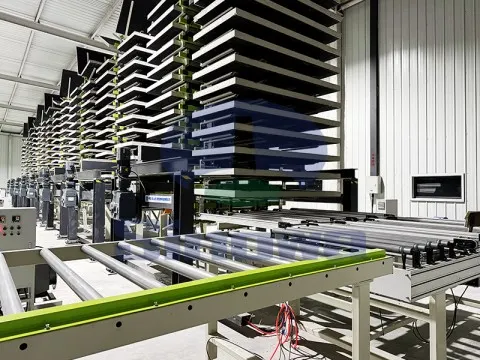
Automatic trimming and fine finishing processes ensure the dimensional accuracy and surface quality of high-density phenolic insulation panels. After curing and forming, the semi-finished panels are automatically conveyed to the finishing module, where integrated cutting, edge trimming and surface polishing equipment completes precise processing. The intelligent positioning system achieves millimeter-level cutting accuracy, effectively avoiding dimensional deviation and edge burrs common in traditional manual processing. The edge trimming process optimizes the flatness of panel edges, facilitating seamless splicing and installation in subsequent engineering applications. Surface polishing removes residual impurities and uneven parts on the panel surface, improving surface flatness and adhesion performance. The standardized finishing process unifies the appearance and size specifications of finished products, meeting the fine construction requirements of various application scenarios.
The high density phenolic board production line features intelligent parameter adjustment and stable operational performance, supporting flexible production of diversified products. The core control system of the line adopts automated program setting, which can accurately adjust production parameters such as material ratio, foaming time, curing temperature and molding pressure according to different product thicknesses and density requirements. This flexible adjustment capability enables the equipment to produce phenolic panels with different density grades and size specifications, covering diversified market demands. In addition, the line is equipped with real-time monitoring sensors to track production status and product quality indicators throughout the process. Once abnormal parameter fluctuations occur, the system will automatically make fine adjustments or issue prompt reminders, effectively reducing defective product rates and ensuring long-term stable and efficient operation of the production line.
Products manufactured by the high density phenolic insulation panel manufacturing line possess excellent comprehensive performance, with prominent advantages in thermal insulation and structural stability. The high-density compact cellular structure of the panels greatly reduces air convection and heat transfer, achieving efficient and stable thermal insulation effect and effectively reducing energy consumption in building and industrial temperature control. Compared with ordinary low-density phenolic panels, high-density products have higher structural strength, stronger compression resistance and better dimensional stability, and will not deform or sag after long-term use. Meanwhile, the panels have good moisture resistance, and their dense internal structure can effectively block moisture penetration, maintaining stable insulation performance in humid environments. These superior properties make the products stand out in the field of thermal insulation materials.
Fire safety performance is another key highlight of panels produced by the high density phenolic insulation panel line. The optimized thermosetting molding process and refined raw material formula endow the finished panels with excellent flame retardant properties. When encountering high temperature or open fire, the panels will not burn violently or produce a large amount of toxic smoke, and can form a protective carbonized layer on the surface to isolate air and prevent flame spread. The high-density structural design further enhances the high-temperature resistance of the panels, avoiding structural collapse caused by high-temperature baking. This reliable fire safety performance greatly improves the safety level of buildings and industrial facilities, providing effective fire protection guarantee for various engineering applications and making the products suitable for high-safety requirement scenarios.
The high density phenolic insulation panel production line has a wide range of application value, and its finished products cover multiple fields such as architectural energy saving, industrial equipment insulation and HVAC systems. In the construction field, the panels can be used for exterior wall insulation, roof heat preservation and building partition insulation, helping optimize building energy consumption and improve indoor temperature stability. In industrial production, they serve as insulation and anti-corrosion baffles for mechanical equipment, as well as thermal insulation materials for industrial pipelines and storage facilities. In HVAC systems, the panels are widely applied in ventilation duct insulation of commercial buildings, medical facilities and data centers. The diverse application scenarios fully reflect the strong adaptability and practicality of products from this production line.
With the continuous upgrading of energy-saving and environmental protection requirements in the insulation material industry, the high density phenolic insulation panel line shows broad development prospects. The production line adheres to green manufacturing concepts, with low energy consumption and low pollution during the production process, and the finished panels are environmentally friendly and recyclable, conforming to the development trend of sustainable construction. Its automated and intelligent production mode effectively improves production efficiency and product consistency, replacing traditional backward manual and semi-automatic production modes. As the market demand for high-performance, high-stability insulation materials continues to grow, this professional production line will become the core equipment for phenolic insulation panel manufacturing, promoting the iterative upgrading of the entire insulation material industry.
Gallery of High Density Phenolic Insulation Panel Line
Tags: high density phenolic insulation panel line, high density phenolic insulation panel line manufacturer, high density phenolic insulation panel line supplier, china high density phenolic insulation panel line, high density phenolic insulation panel line for sale
https://www.sandwichpanelmachinery.com/blog/high-density-phenolic-insulation-panel-line.html
-
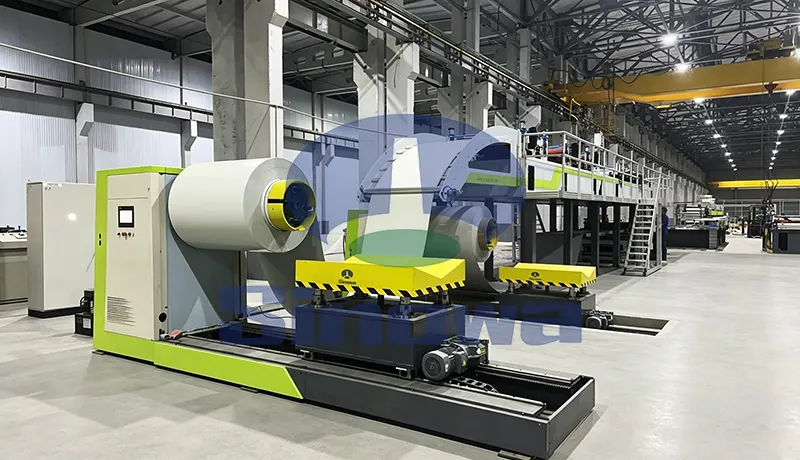
The PU sandwich panel line is a core production setup for making high-performance building insulation panels. This professional PU sandwich panel production line features automated operation to streamline the whole manufacturing process efficiently. Every component of the polyurethane sandwich panel line is precisely calibrated to ensure consistent panel thickness and structural stability. A well-maintained polyurethane sandwich panel production line can greatly boost production efficiency while reducing manual operation errors. The continuous PU sandwich panel line adapts to diverse production demands for different panel sizes and surface styles. With advanced molding technology, the PIR sandwich panel line produces panels with excellent heat preservation and sound insulation properties. Stable running of the PIR sandwich panel production line guarantees reliable product quality for various construction and industrial application scenarios.
-
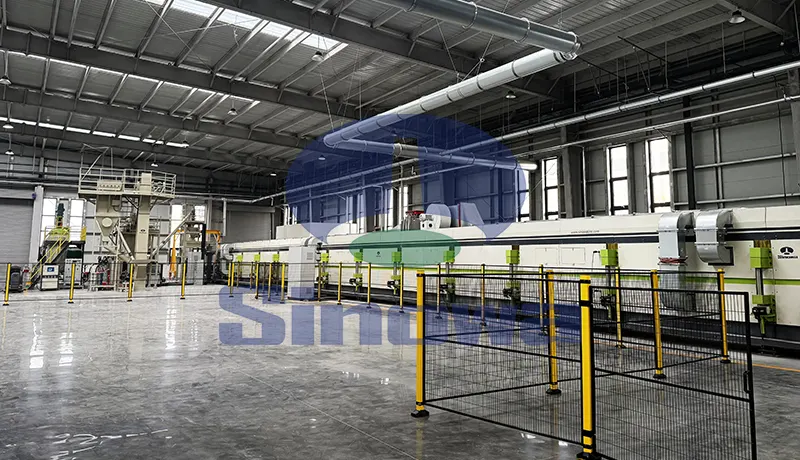
A phenolic insulation board production line serves as the core equipment for manufacturing high-performance thermal insulation building materials. This phenolic insulation panel production line integrates material mixing, foaming, molding and cutting processes to ensure continuous and stable production efficiency. Every operational link of the insulation board production line is precisely calibrated to produce uniform and durable insulation boards. The automated design of the insulation panel production line effectively reduces manual intervention and improves product consistency. Proper maintenance of the phenolic board production line can greatly extend its service life and maintain steady production output. With optimized structural design, the phenolic panel production line adapts to various production demands and delivers high-quality finished products for thermal insulation engineering applications.
-
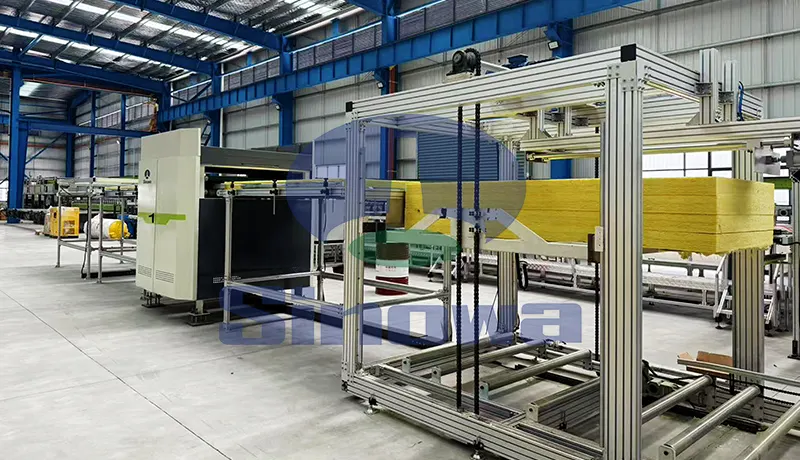
A professional rockwool sandwich panel line serves as the core equipment for producing high-performance building panels. This rockwool sandwich panel production line integrates feeding, laminating and forming processes to ensure stable and efficient production. The well-structured rock wool sandwich panel line can process raw rockwool materials into panels with excellent thermal and sound insulation properties. Operators can adjust the running parameters of the rock wool sandwich panel production line to manufacture panels of different thicknesses and specifications. The automated design of the mineral wool sandwich panel production line greatly reduces manual operation errors and improves product consistency. Regular maintenance of the mineral wool sandwich panel line is essential to sustain long-term operational efficiency and guarantee qualified finished panels for diverse construction applications.