
Sandwich panel forming machines support a wide thickness range of panel production tailored to diverse construction needs.
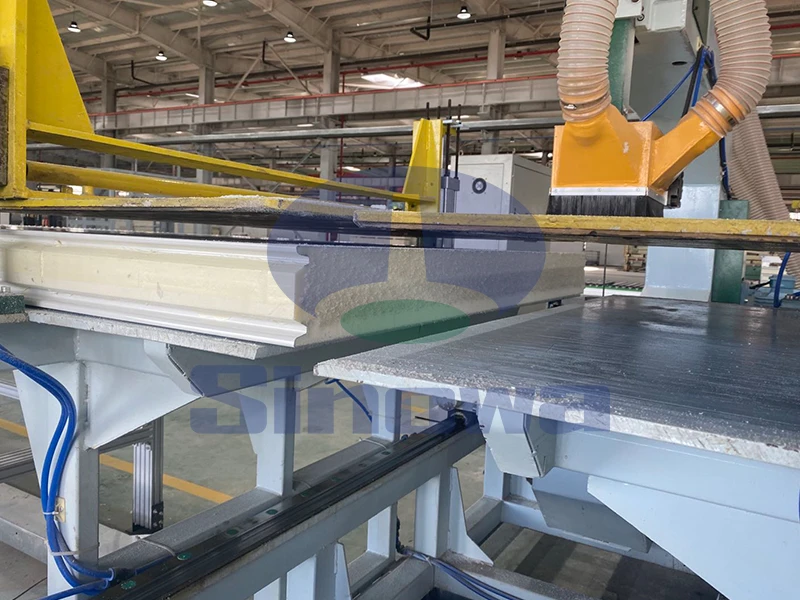
The operational thickness range of sandwich panel making machines is the core parameter that determines their application scope in modern building material production. In general, standard integrated production equipment is designed to adapt to flexible thickness adjustments to meet the demands of different architectural scenarios, from lightweight decorative panels to heavy-duty thermal insulation structural panels. The basic adjustable thickness interval covers conventional building usage scenarios, with the minimum producible thickness focusing on thin panels for interior decoration and partition purposes. These thin panels feature light weight and high flatness, making them ideal for indoor non-load-bearing structures. On the other end, the maximum production thickness caters to exterior wall insulation, roof weatherproofing and industrial plant enclosure needs, balancing structural stability and thermal insulation performance. All thickness adjustments are realized through precise mechanical calibration of the machine’s rolling system, feeding mechanism and pressing module, ensuring consistent panel thickness across the entire production batch without local deviations.
Minimum sandwich panel thickness produced by standard machines is optimized for light-duty interior construction applications. Most universal panel forming equipment can stably manufacture thin sandwich panels starting from a relatively low thickness value, which is mainly applied to indoor partition walls, ceiling decorations and simple interior enclosure projects. Thin sandwich panels produced at this thickness level retain the basic composite structure of upper and lower metal sheets and middle core materials, maintaining good surface flatness and anti-deformation ability despite their slim profile. The machine’s fine-tuned rolling pressure and feeding speed are critical here, as improper parameter settings may lead to core material compression or metal sheet wrinkling on ultra-thin panels. Manufacturers design the machine’s minimum thickness limit based on the structural stability of finished panels, ensuring that thin products do not suffer from hollowing, delamination or insufficient rigidity during daily use and installation. Such thin panels also feature fast production efficiency, supporting high-volume output for large-scale interior renovation projects.
Medium-thickness sandwich panels represent the most mainstream production range of conventional panel machines, covering the majority of civil and commercial construction needs. This thickness segment strikes a perfect balance between structural strength, thermal insulation performance and economic applicability, making it the most widely used specification in the building material market. Machines operate most stably within this medium thickness range, with all mechanical systems running at optimal working parameters. The pressing, bonding and forming processes achieve the highest precision, ensuring uniform core material filling, tight lamination between metal sheets and core layers, and stable overall panel flatness. Panels of this thickness are commonly used for exterior wall insulation of residential buildings, office building enclosures, and temporary construction facilities. The machine’s adaptive adjustment system can automatically calibrate pressure and forming time according to medium thickness specifications, effectively reducing product defect rates and improving overall production consistency for mass manufacturing.
Maximum producible thickness of sandwich panel machines is customized for heavy-duty industrial and special architectural scenarios. Thick sandwich panels require the machine to be equipped with enhanced pressing power, extended forming stroke and high-torque feeding systems to ensure full compaction and complete bonding of thick core materials. Unlike medium and thin panels, thick panel production demands higher mechanical rigidity to avoid equipment vibration or forming deviation during the pressing process. The maximum thickness limit is restricted by the machine’s structural design, including the spacing of rolling shafts, the stroke of hydraulic pressing components and the bearing capacity of the forming platform. Thick finished panels boast excellent heat preservation, sound insulation and structural load-bearing performance, suitable for industrial plant outer walls, cold storage insulation structures and special weather-resistant building enclosures. Professional parameter matching is required during production to prevent insufficient core material curing or incomplete bonding caused by excessive thickness.
Core material types directly affect the effective thickness range that the sandwich panel machine can process. Different core materials have distinct density, compressibility and structural characteristics, which change the machine’s forming adaptability for various thickness specifications. Light and flexible core materials can be processed into both ultra-thin and ultra-thick panels with stable machine operation, as they are easy to compress and shape during the rolling and bonding process. In contrast, high-density rigid core materials have poor compressibility, limiting the minimum production thickness, as excessive compression of rigid cores will damage the internal structure of the panels. Meanwhile, rigid core materials also require higher machine pressure for thick panel forming, reducing the maximum feasible thickness range compared with flexible cores. The machine’s adjustable pressure system can adaptively match different core materials, realizing thickness switching within the effective interval corresponding to each material type.
Surface sheet thickness also coordinates with the machine’s overall thickness production capacity of sandwich panels. The metal or non-metal sheets on both sides of the sandwich panel occupy a small part of the total panel thickness, and their thickness changes will affect the machine’s forming parameter settings and feasible thickness range. Thinner surface sheets are more suitable for producing ultra-thin sandwich panels, as they can fit the machine’s fine rolling process without surface cracking or deformation. Thicker surface sheets enhance the overall rigidity of finished panels, making them more suitable for medium and thick panel production for outdoor load-bearing scenarios. The machine’s rolling gap calibration system needs to synchronously adjust according to surface sheet thickness to ensure that the total composite thickness of the panel meets the set standard. Mismatched sheet thickness and machine parameters will lead to uneven total panel thickness and reduced product qualification rate.
Mechanical precision and equipment configuration determine the accuracy of thickness control in sandwich panel production. Standard conventional machines achieve basic thickness stability for common panel specifications, while upgraded high-precision equipment supports more accurate thickness adjustment and smaller thickness tolerance. Key components affecting thickness accuracy include the rolling gap adjustment device, hydraulic pressure control system and automatic feeding calibration module. Advanced machines are equipped with digital thickness monitoring systems that real-time detect panel thickness during production and automatically correct mechanical deviations, ensuring every finished panel stays within the preset thickness range. For special thickness specifications that require extremely high precision, customized mechanical calibration and component optimization are needed to eliminate errors caused by equipment operation vibration and material transmission deviation.
Production speed and thickness specifications have a mutual restrictive relationship in sandwich panel machine operation. In the production of conventional medium-thickness panels, the machine can maintain a high continuous operating speed to realize efficient mass production. When producing ultra-thin panels, the machine needs to reduce feeding and rolling speed appropriately to avoid material wrinkling, core material displacement and surface layer damage caused by fast operation. For ultra-thick panels, slower pressing and curing forming speed is required to ensure sufficient bonding time between layers and complete compaction of core materials. Operators need to match scientific speed parameters according to different thickness requirements, balancing production efficiency and product quality. Reasonable speed adjustment can effectively expand the machine’s stable production thickness range and reduce the occurrence of defective products.
Application scenario requirements guide the thickness parameter setting of sandwich panel machines. Different construction scenarios put forward clear demands for panel thickness, which in turn determines the machine’s production configuration and parameter adjustment. Indoor decorative and partition projects prioritize thin and lightweight panels, requiring the machine to stably output small-thickness specifications with high surface flatness. Civil building exterior walls and commercial facilities prefer medium-thickness panels with balanced performance, which is the most mature and stable production mode of the machine. Industrial cold storage, high-temperature insulation workshops and wind-resistant building structures need thick high-performance panels, requiring the machine to start high-pressure and long-stroke forming modes. The flexible adjustability of machine thickness enables it to adapt to multi-scenario production needs and meet personalized construction design requirements.
Daily maintenance and parameter debugging affect the long-term thickness production stability of sandwich panel machines. Long-term continuous operation will cause slight wear of rolling components, hydraulic parts and transmission systems, which may lead to drifting thickness accuracy if not adjusted in time. Regular equipment maintenance, including gap calibration of rolling shafts, pressure detection of hydraulic systems and cleaning of feeding guide components, can ensure that the machine always maintains a standard thickness production range. In addition, regular parameter debugging according to production material changes and product specification updates can optimize the machine’s adaptability to different thickness panels. Good equipment maintenance habits effectively extend the service life of core components and keep the machine’s thickness production capacity stable and reliable for a long time.