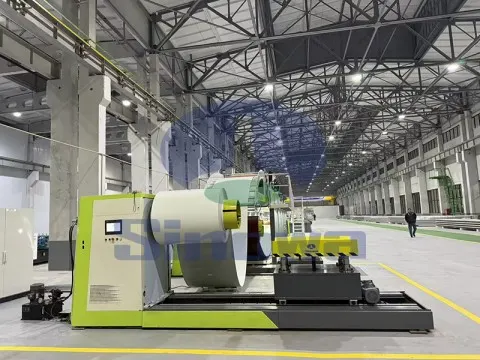
Sandwich Panel Line
Publication Date: Oct 6, 2026
Sandwich panel lines manufacture composite panels with varied core materials, including PU, phenolic, PIR, rock wool, mineral wool and glass wool. These customized production lines deliver panels for roofing, wall cladding, cold storage and other building insulation and structural scenarios.
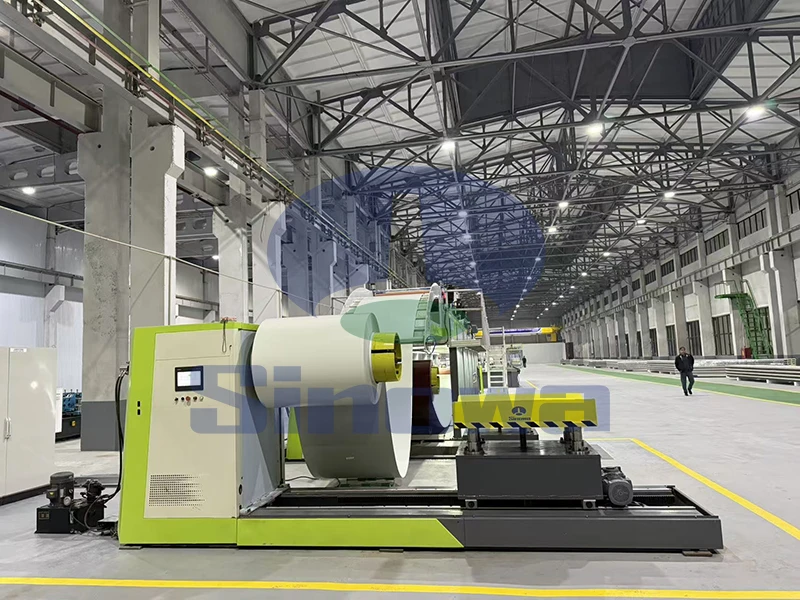
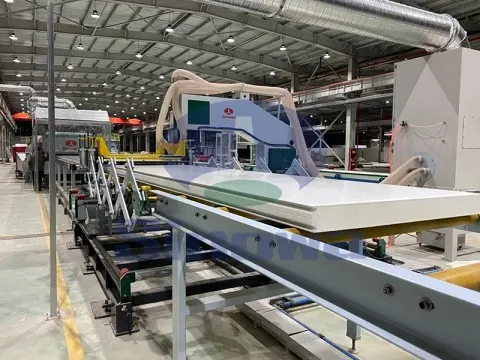
Polyurethane sandwich panel lines are widely adopted in modern building material production, specializing in manufacturing lightweight, high-insulation composite panels with closed-cell polyurethane foam cores. The production line features continuous integrated processing, covering automatic material feeding, foam foaming, compound pressing, shaping and cutting, ensuring consistent panel thickness and structural stability for mass production. Polyurethane core materials boast ultra-low thermal conductivity, endowing the finished panels with outstanding thermal insulation and heat preservation effects, which makes them highly adaptable for multiple architectural applications. As classic thermal insulation panels, they are extensively used as roof panels for industrial factories, logistics warehouses and temporary buildings, effectively blocking external heat transfer and reducing indoor temperature fluctuations. Meanwhile, these panels serve as wall panels for civil buildings and industrial workshops, optimizing indoor thermal environments and cutting daily energy consumption for heating and cooling. In addition, their excellent low-temperature resistance and thermal stability make them the preferred panel type for conventional cold storage enclosures, maintaining stable internal low-temperature environments and minimizing cold loss during long-term operation. The lightweight structural design of polyurethane sandwich panels also reduces the overall load of building structures, bringing convenience to transportation and on-site installation, and improving the overall construction efficiency of building projects.
PIR sandwich panel lines are upgraded and optimized based on polyurethane panel production technologies, tailored for the production of high-performance polyisocyanurate foam core sandwich panels with enhanced comprehensive performance. The production line adjusts the raw material mixing ratio, foaming temperature control and curing process parameters to adapt to the special chemical properties of PIR materials, producing panels with better thermal stability and fire retardancy than ordinary polyurethane panels. The closed-cell structure of PIR cores retains excellent thermal insulation performance, while the optimized molecular structure improves the material’s high-temperature resistance and anti-deformation ability, avoiding structural collapse or performance attenuation under extreme temperature conditions. In practical applications, PIR sandwich panels are widely used as high-standard roof and wall panels for commercial buildings, industrial plants and public facilities with strict fire protection and energy-saving requirements. Their superior low-temperature insulation performance also makes them ideal for medium and large-sized cold storage buildings, frozen food processing workshops and constant-temperature storage spaces, effectively reducing the operating energy consumption of refrigeration equipment. Moreover, PIR panels have good weather resistance, resisting aging and performance degradation caused by long-term exposure to outdoor wind, rain and ultraviolet radiation, ensuring long-term stable use in external wall and roof enclosure systems of buildings.
Phenolic sandwich panel lines are professional production equipment dedicated to manufacturing flame-retardant and heat-insulating phenolic foam core composite panels, adopting precise continuous foaming and composite molding processes to ensure uniform core density and tight bonding between the core layer and metal or inorganic surface layers. Phenolic foam materials have unique fire-proof, heat-insulating and smoke-suppressing characteristics, with excellent high-temperature resistance and non-combustible performance, filling the performance gap of ordinary foam sandwich panels in fire safety. The production line realizes automatic continuous production, with stable product molding quality and high production efficiency, meeting the large-scale procurement demand of engineering projects. Finished phenolic sandwich panels are mainly applied to building parts with high fire protection requirements, including external wall panels of high-rise buildings, partition wall panels of shopping malls, hospitals and office buildings, effectively blocking the spread of fire and improving the overall fire safety level of buildings. In terms of roofing applications, phenolic roof panels are suitable for public buildings and industrial facilities that need to balance thermal insulation and fire prevention. Additionally, their good corrosion resistance and thermal stability also make them applicable for special industrial workshops and ventilation enclosure structures, adapting to complex indoor and outdoor operating environments.
Rock wool sandwich panel lines are professional production systems for inorganic fiber core sandwich panels, using high-quality basalt and other natural mineral raw materials to produce rock wool core layers through high-temperature melting, fiber forming and curing processes, then compounding with metal decorative panels on both sides. The entire production process realizes automated assembly line operation from raw material processing, fiber laying, composite pressing to finished product cutting, ensuring uniform fiber distribution and stable overall performance of rock wool cores. Rock wool materials feature excellent non-combustible fire resistance, superior sound insulation and noise reduction performance, as well as good thermal insulation capacity, making the finished panels multi-functional building enclosure materials. In architectural applications, rock wool sandwich panels are widely used as fire-proof wall panels and roof panels for industrial plants, chemical workshops and fire-key protection buildings, providing reliable fire barrier protection. Their excellent sound absorption and insulation effects are suitable for partition walls of office buildings, schools and cultural and sports venues, reducing indoor and outdoor noise interference. Meanwhile, these panels can be used for the wall and roof enclosure of special storage spaces, realizing dual functions of fire prevention and heat preservation, and adapting to diversified building safety and environmental protection needs.
Mineral wool sandwich panel lines are designed for the production of general inorganic mineral wool core composite panels, adopting flexible production processes to process various mineral raw materials into fine fiber core layers and compound them with different specification surface layers. Compared with rock wool, mineral wool has a more cost-effective performance while retaining basic inorganic material advantages such as non-combustibility, heat insulation and sound absorption. The production line features strong compatibility, adjustable product thickness and density, and can produce customized panels according to different application scenarios to meet differentiated market demands. Finished mineral wool sandwich panels are widely used in conventional industrial and civil building projects, serving as common wall panels and roof panels for factory workshops, warehouse buildings and temporary prefabricated houses, providing basic thermal insulation and fire-proof protection for buildings. In addition, they are often used for internal partition walls of buildings and enclosure structures of auxiliary facilities, with stable structural performance and strong constructability. Their moderate performance characteristics and economic advantages make them suitable for large-scale ordinary construction projects, balancing building use functions and project construction costs efficiently.
Glass wool sandwich panel lines are specialized equipment for producing lightweight glass wool core sandwich panels, taking glass fiber as the main raw material, through high-temperature fiberization, wool forming and composite molding processes to complete panel production. The production line is optimized for the fluffy and porous structural characteristics of glass wool materials, adopting gentle pressing and fixed molding processes to avoid fiber compression and performance loss, ensuring the maximum retention of the material’s sound insulation and thermal insulation properties. Glass wool cores have ultra-light weight, excellent sound absorption performance and good low-temperature thermal insulation effect, with soft texture and strong adaptability to building structures. In practical applications, glass wool sandwich panels are mostly used for internal wall insulation, ceiling and partition wall decoration of buildings, effectively absorbing indoor noise and improving indoor acoustic environment. They are also applicable to the wall and roof insulation layer of light steel structure buildings, reducing building self-weight while achieving good heat preservation and energy-saving effects. Moreover, these panels are often used for the auxiliary insulation and noise reduction of cold storage equipment and pipeline enclosure structures, cooperating with main insulation panels to optimize the overall thermal insulation and silent effect of the building space.
The structural design and process configuration of different sandwich panel lines determine the core performance differences of finished panels, thus forming a clear application hierarchy in building enclosure engineering. Polyurethane and PIR panel lines focus on high-efficiency thermal insulation production, with finished panels outstanding in low-temperature heat preservation and lightweight structural performance, occupying a dominant position in cold storage panel production. The precise foaming and curing processes of the two production lines ensure that the panels have dense closed-cell structures, effectively locking air and reducing heat conduction, which is irreplaceable for constant-temperature and low-temperature storage buildings. Phenolic panel lines focus on fire-proof and high-temperature resistant process optimization, making finished panels excel in fire safety, suitable for high-risk fire building scenarios. Inorganic fiber panel lines including rock wool, mineral wool and glass wool adopt completely different production principles from foam panel lines, relying on high-temperature fiber forming processes to realize fire-proof and sound-insulating functions, forming a complementary product system with organic foam panels.
In roof panel application scenarios, different sandwich panels produced by corresponding production lines show distinct adaptability according to environmental and functional demands. Polyurethane and PIR roof panels are preferred for long-span industrial plants and cold storage buildings due to their light weight, high strength and excellent thermal insulation, which can reduce roof structural load and prevent external temperature from affecting indoor constant-temperature environments. Phenolic roof panels are commonly used for public buildings and commercial facilities with high fire protection standards, improving the overall fire resistance of roof enclosure structures. Rock wool and mineral wool roof panels are suitable for industrial workshops with high fire and noise control requirements, realizing integrated functions of fire prevention, heat preservation and noise reduction. Glass wool roof panels are mostly used for light-duty roof insulation and noise reduction of temporary buildings and civil auxiliary buildings, meeting basic building use needs with economic and practical performance.
In wall panel engineering applications, the six types of sandwich panels produced by professional lines cover all scenarios from external enclosure to internal partition of buildings. High-insulation polyurethane and PIR wall panels are widely used in external wall insulation and decoration of modern industrial and civil buildings, reducing building energy consumption and improving wall weather resistance. Phenolic wall panels are applied to external walls and fire-proof partition walls of high-rise buildings and crowded public places to enhance building fire safety performance. Rock wool wall panels are favored in industrial fire-proof partition and sound insulation projects due to their superior fire-proof and sound-absorbing properties. Mineral wool wall panels are widely used in ordinary factory and civil building wall enclosures with cost-effective performance. Glass wool wall panels are mainly used for indoor partition insulation and noise reduction, optimizing indoor living and working environments.
Cold storage panel scenarios put forward high requirements for low-temperature insulation, anti-deformation and anti-condensation performance of panels, and professional sandwich panel lines can produce targeted products for cold storage functional needs. Polyurethane sandwich panels, as the mainstream cold storage panel products, have ultra-low thermal conductivity and stable low-temperature performance, suitable for various low-temperature cold storage, frozen warehouse and constant-temperature fresh-keeping warehouse enclosures. Upgraded PIR cold storage panels further optimize fire resistance on the basis of retaining high-efficiency insulation, meeting the dual requirements of cold storage energy saving and fire safety. Other types of panels can also be used for auxiliary partition and insulation structures of cold storage according to performance characteristics, forming a complete set of cold storage building enclosure solutions with different functional panels, ensuring long-term stable and low-energy operation of cold storage facilities.
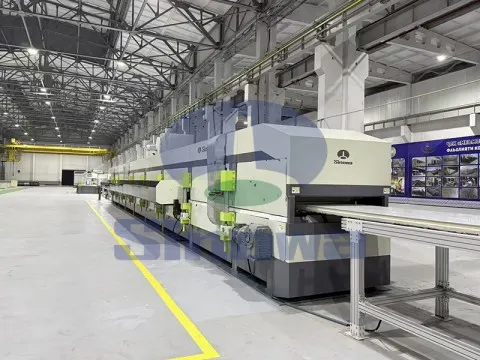
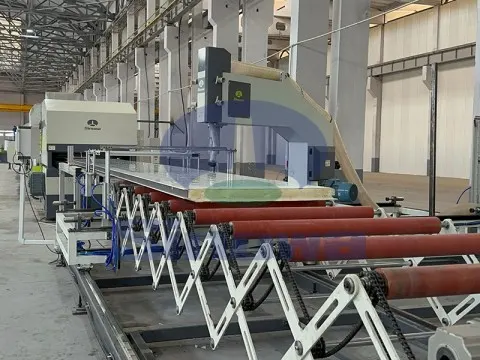
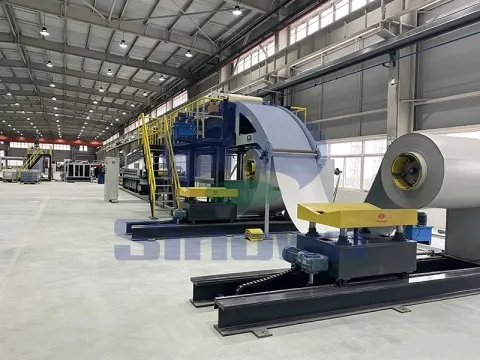
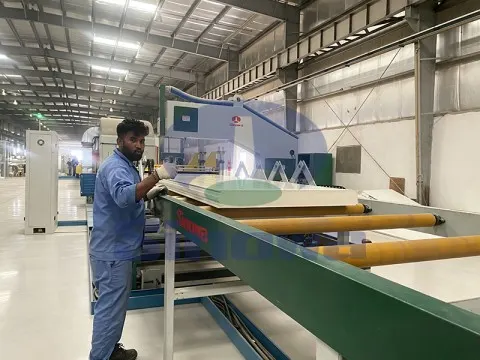
Gallery of Sandwich Panel Line
Tags: sandwich panel line, sandwich panel line manufacturer, sandwich panel line supplier, china sandwich panel line, sandwich panel line for sale
https://www.sandwichpanelmachinery.com/tags/sandwich-panel-line.html
Related Informations
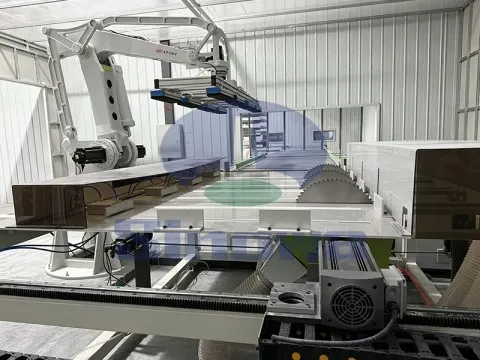
Why Is The Curing Effect Poor On Polyurethane Sandwich Panel Line?
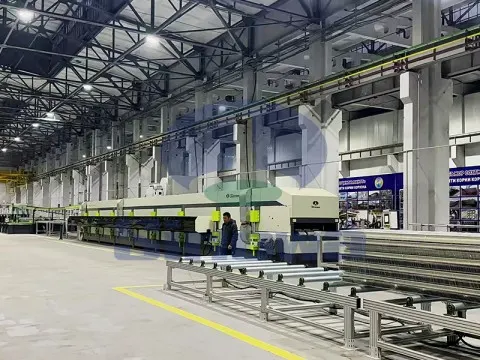
Polyurethane Sandwich Panel Line