Does The PU Sandwich Panel Line Have Automatic Stacking System?
Publication Date: Sep 28, 2026
Modern PU sandwich panel production lines are equipped with mature automatic stacking systems as standard terminal configurations. This intelligent module replaces manual stacking, realizing automated panel collection, arrangement and storage to boost production efficiency and product consistency greatly.
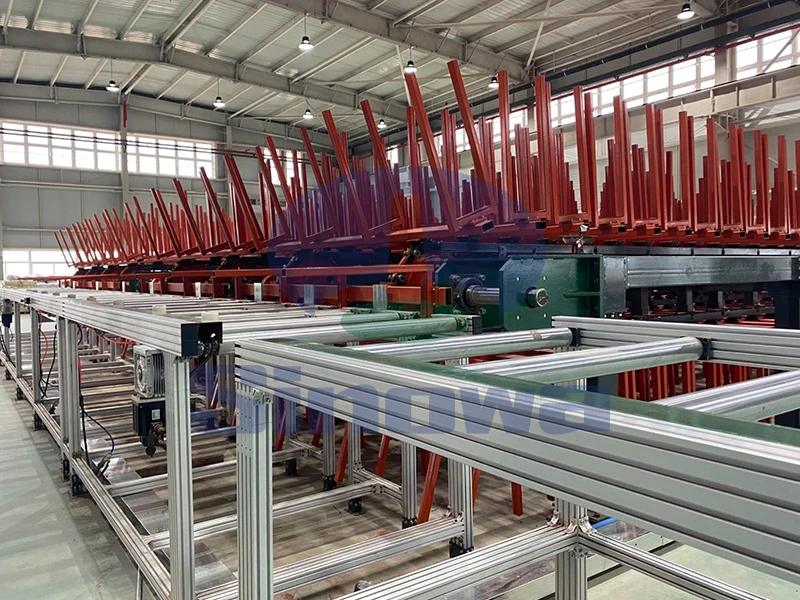
The automatic stacking system serves as the core terminal functional unit of a full continuous PU sandwich panel line, undertaking the final finishing work of finished panel production. After PU sandwich panels complete foaming, curing, cutting and shaping on the production line, they are steadily transported to the stacking working area via the matched conveyor system. Unlike semi-automatic production devices that rely heavily on manual sorting and stacking, the integrated stacking system can independently finish all follow-up finishing procedures without human intervention. It perfectly connects the front-end continuous production process and the back-end packaging and warehousing links, forming a closed-loop automated production flow. This structural design effectively eliminates the production discontinuity caused by manual operation, ensuring the entire production line runs stably and efficiently for a long time.
The core mechanical structure of the automatic stacking system mainly consists of a multi-degree-of-freedom mechanical arm and a flexible grabbing assembly, which lays a solid foundation for stable and damage-free panel stacking. Most high-performance stacking devices adopt vacuum suction cup groups as the main grabbing components, which fit closely with the smooth surface of PU sandwich panels. This flexible contact mode avoids common problems in traditional clamping methods, such as surface scratches, edge collapse, indentation and panel deformation. The mechanical arm supports flexible adjustment of grabbing angle, position and force, adapting to panels of different lengths, widths and thicknesses. Whether for conventional flat panels or special structural panels, it can achieve single-piece accurate grabbing to ensure the integrity of each finished product.
Intelligent sensing and program control technology are the key to realizing the automatic operation of the stacking system. The system is equipped with high-precision positioning sensors that can automatically identify the incoming state of finished panels in real time, including panel position, placement angle and dimensional parameters. The collected data is quickly transmitted to the central control program of the production line, which automatically generates the optimal stacking path and arrangement scheme. The whole sensing and judgment process is completed instantly without manual calibration or parameter adjustment. The intelligent control system can also automatically identify unqualified panels with dimensional deviations, realizing preliminary screening of finished products and preventing defective products from being mixed into finished stacked materials.
The automatic stacking system has highly flexible adjustable parameters to meet diverse production and storage requirements. Operators can preset multiple key parameters through the control terminal, including stacking height, panel spacing, stacking arrangement mode and single-layer stacking quantity. For different usage scenarios such as indoor storage and outdoor transportation, the system can switch between flat stacking and cross stacking modes freely. The adjustable stacking height makes full use of vertical storage space, effectively reducing the floor area of finished product storage areas. Meanwhile, the reserved gaps between stacked panels can avoid mutual extrusion and friction, maintaining the flatness and structural stability of PU sandwich panels for a long time.
Compared with traditional manual stacking operation, the automated stacking system shows overwhelming advantages in production efficiency. Manual stacking requires multiple workers to cooperate in sorting, carrying and arranging panels, with slow operation speed and long interval between each stacking action, which cannot match the high-speed continuous output of modern production lines. In contrast, the automatic stacking device operates synchronously with the production line rhythm, grabbing and placing panels accurately without interruption. It maintains a stable stacking speed all day long, completely eliminating efficiency fluctuations caused by manual fatigue, mood and rest time, and greatly improving the overall output capacity of the production line.
Product quality stability is significantly improved with the support of the automatic stacking system. Manual stacking is prone to irregular arrangement, uneven stress and accidental collision, which often lead to panel edge damage, surface coating wear and overall tilting of stacked products. These subtle damages will affect the later installation effect and service performance of PU sandwich panels. The automated system follows unified program standards for each stacking action, with consistent placement angle, spacing and flatness of every panel. The overall stacked structure is neat and stable, effectively avoiding product damage caused by human factors and ensuring uniform finished product quality.
The application of the automatic stacking system effectively reduces production safety risks in the workshop. Manual carrying and stacking of large-size PU sandwich panels involves frequent high-altitude operation and heavy-load handling, which is accompanied by potential safety hazards such as panel falling, worker collision and extrusion injury. The automated stacking process realizes unmanned operation in the stacking area, isolating workers from high-risk operating links. The system is also equipped with safety protection mechanisms, which can automatically pause operation when foreign objects enter the working area, effectively avoiding equipment failures and safety accidents, and creating a safer and more standardized production environment.
The automatic stacking system optimizes the subsequent production and logistics links of PU sandwich panels greatly. Neatly stacked finished products are convenient for automated packaging, binding and handling, which improves the efficiency of post-production processing. The standardized stacking structure also facilitates counting and inventory management of finished products, enabling enterprises to accurately grasp production output and inventory data. In the logistics and transportation link, regular stacked panels are not easy to shift and deform during handling and transportation, reducing the loss rate of finished products in the circulation process and lowering the overall production and operation cost of enterprises.
With the continuous upgrading of PU sandwich panel production technology, the performance of automatic stacking systems is also constantly optimized and iterated. Modern stacking systems are more intelligent and adaptive, able to automatically identify and adapt to panel specification changes without frequent manual parameter modification. The mechanical structure is more compact and durable, reducing equipment failure rate and maintenance cost. The integrated design of the system also improves the overall integration of the production line, making the entire production process from raw material processing to finished product storage more coherent and intelligent.
In conclusion, the automatic stacking system is an indispensable core component of advanced PU sandwich panel production lines. It not only solves many pain points of traditional manual stacking such as low efficiency, poor quality consistency and high safety risks, but also promotes the overall intelligent and automated upgrading of panel production. As the demand for high-efficiency and high-quality sandwich panel production increases, the automatic stacking system will become a standard configuration for more production lines, bringing more stable production quality and higher economic benefits to industrial production.
Gallery of PU Sandwich Panel Line
Tags: pu sandwich panel line, pu sandwich panel line manufacturer, pu sandwich panel line supplier, china pu sandwich panel line, pu sandwich panel line for sale
-
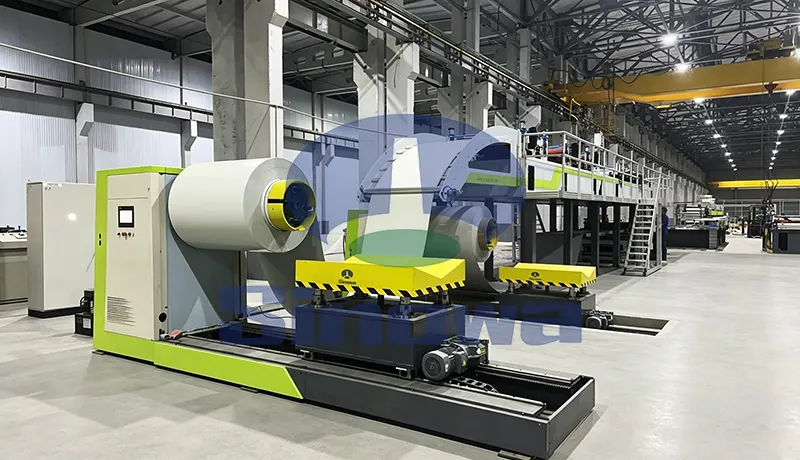
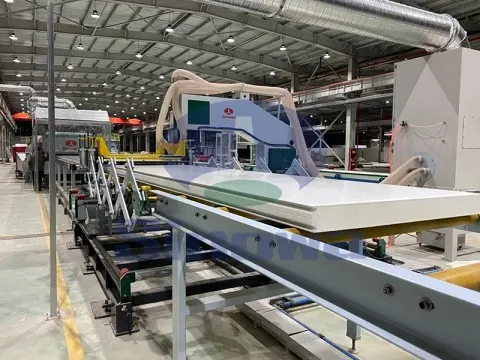
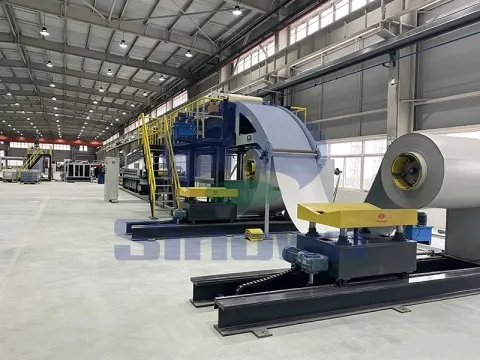
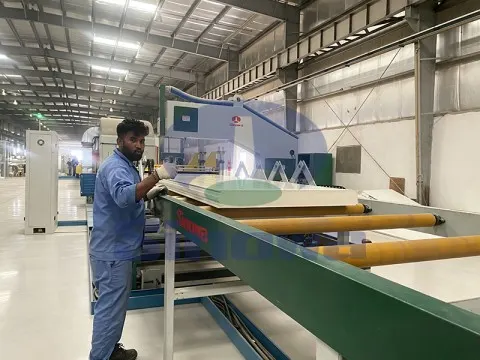
The PU sandwich panel line is a core production setup for making high-performance building insulation panels. This professional PU sandwich panel production line features automated operation to streamline the whole manufacturing process efficiently. Every component of the polyurethane sandwich panel line is precisely calibrated to ensure consistent panel thickness and structural stability. A well-maintained polyurethane sandwich panel production line can greatly boost production efficiency while reducing manual operation errors. The continuous PU sandwich panel line adapts to diverse production demands for different panel sizes and surface styles. With advanced molding technology, the PIR sandwich panel line produces panels with excellent heat preservation and sound insulation properties. Stable running of the PIR sandwich panel production line guarantees reliable product quality for various construction and industrial application scenarios.
-
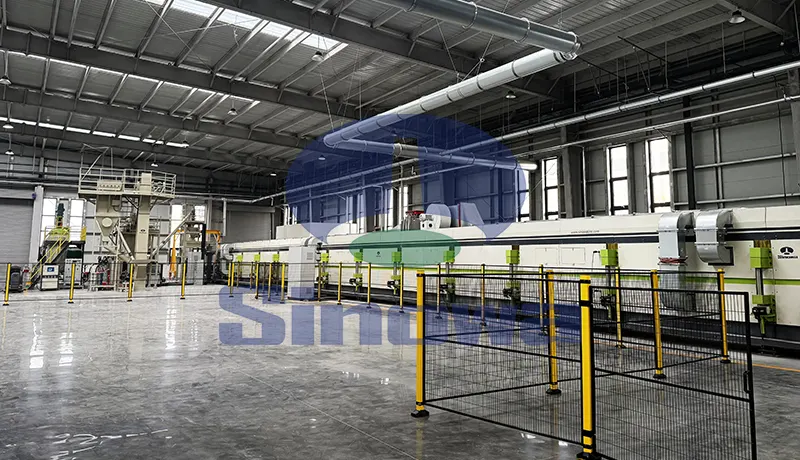
A phenolic insulation board production line serves as the core equipment for manufacturing high-performance thermal insulation building materials. This phenolic insulation panel production line integrates material mixing, foaming, molding and cutting processes to ensure continuous and stable production efficiency. Every operational link of the insulation board production line is precisely calibrated to produce uniform and durable insulation boards. The automated design of the insulation panel production line effectively reduces manual intervention and improves product consistency. Proper maintenance of the phenolic board production line can greatly extend its service life and maintain steady production output. With optimized structural design, the phenolic panel production line adapts to various production demands and delivers high-quality finished products for thermal insulation engineering applications.
-
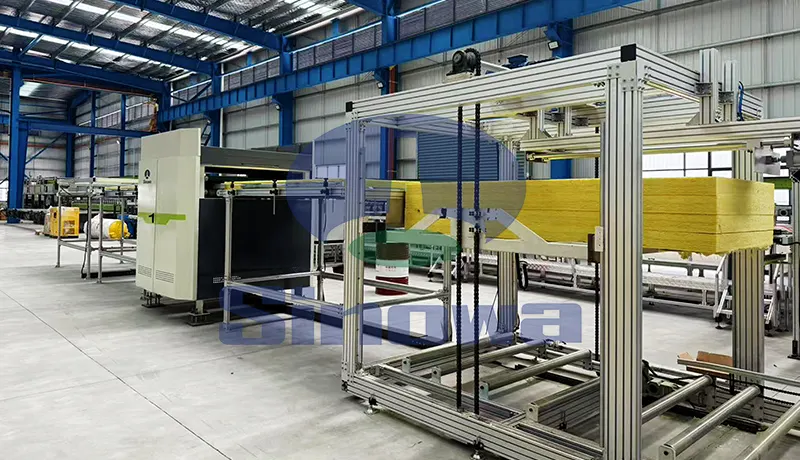
A professional rockwool sandwich panel line serves as the core equipment for producing high-performance building panels. This rockwool sandwich panel production line integrates feeding, laminating and forming processes to ensure stable and efficient production. The well-structured rock wool sandwich panel line can process raw rockwool materials into panels with excellent thermal and sound insulation properties. Operators can adjust the running parameters of the rock wool sandwich panel production line to manufacture panels of different thicknesses and specifications. The automated design of the mineral wool sandwich panel production line greatly reduces manual operation errors and improves product consistency. Regular maintenance of the mineral wool sandwich panel line is essential to sustain long-term operational efficiency and guarantee qualified finished panels for diverse construction applications.