Phenolic Insulation Panel Processing Line
Publication Date: Sep 27, 2026
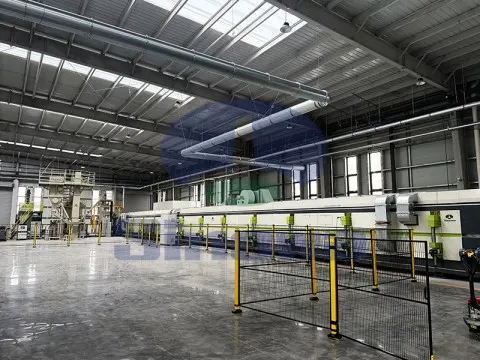
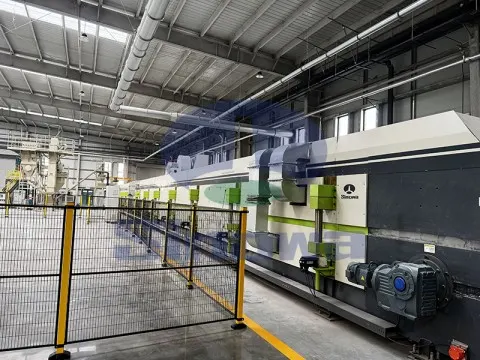
The phenolic insulation panel processing line is an integrated automated manufacturing system for producing high-performance thermal insulation panels. It integrates material mixing, foaming, pressing, curing and finishing processes to deliver uniform, stable phenolic panels for diverse insulation applications.
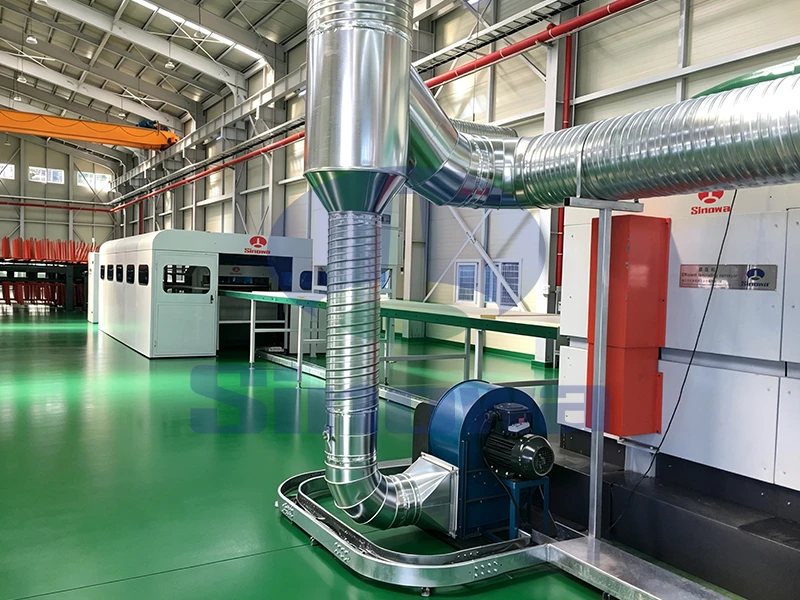
The overall structural design of the phenolic insulation panel processing line focuses on integrated automation and procedural continuity, covering all core links from raw material input to finished product output. This systematic production setup abandons fragmented manual processing modes and unifies the parameter coordination of each processing unit, laying a solid foundation for consistent product quality. Each functional module of the line is precisely matched in operating speed and processing rhythm, avoiding production discontinuity and performance fluctuations caused by mismatched procedures. The modular layout also endows the production line with flexible adjustability, enabling adaptive tuning for different panel thicknesses, surface materials and structural specifications. Meanwhile, the closed processing design effectively reduces material waste and external interference during production, optimizing the overall production efficiency and operational stability of the entire manufacturing process.
Raw material pretreatment and proportional feeding serve as the initial and fundamental stage of the entire processing workflow. The core raw materials include phenolic resin, curing agents, foaming agents and auxiliary additives, all of which require strict pretreatment before formal processing. Impurity removal and fine filtering are conducted on raw materials to eliminate particulate impurities that may affect panel uniformity and surface flatness. The automated feeding system accurately controls the feeding ratio and flow rate of each raw material through precision metering units. Stable and proportional feeding ensures the consistency of subsequent chemical reactions, avoiding uneven foaming, incomplete curing or unstable structural density caused by raw material ratio deviations. This stage also includes continuous material stirring to maintain the uniform dispersion of all components, creating optimal preconditions for the follow-up foaming and composite molding processes.
Raw material mixing and homogenization is a key pre-reaction process that directly determines the internal pore structure uniformity of phenolic insulation panels. After precise feeding, all raw materials are transported to a sealed high-speed mixing unit for full blending. The mixing equipment operates at a stable adjustable speed to ensure that resin materials, curing components and foaming additives are evenly fused at the molecular level. The sealed mixing environment prevents external air pollution and raw material volatilization, maintaining the stability of material activity. During the mixing process, real-time dynamic adjustment of mixing duration and intensity is carried out according to material characteristics, avoiding insufficient mixing uniformity or excessive shear damage to material molecular structures. Fully homogenized mixed materials present a uniform viscous state, which is the key prerequisite for forming fine and closed pore structures in finished panels.
Automatic surface material unwinding and positioning is an essential auxiliary process for composite phenolic insulation panel molding. The processing line is equipped with a dedicated unwinding unit for different surface base materials, which realizes stable and continuous unwinding of coiled surface materials. The built-in deviation correction system dynamically monitors the running track of surface materials in real time, automatically fine-tuning the material conveying position to ensure accurate alignment in the horizontal and vertical directions. Precise positioning effectively prevents problems such as material deviation, wrinkling and overlapping during composite molding, ensuring consistent surface flatness and dimensional accuracy of finished panels. In addition, the unwinding and conveying speed is synchronized with the core material foaming and pressing speed, maintaining the overall continuity of production and avoiding intermittent production defects caused by speed mismatch.
Online foaming and initial curing is the core molding stage of phenolic insulation panels, governing the basic physical structure of finished products. After being evenly mixed, the phenolic composite materials are quantitatively poured between the upper and lower surface materials, and the foaming reaction starts immediately under set temperature and chemical conditions. The foaming agent triggers uniform expansion of the mixed materials, forming a dense closed-cell structure inside the panel. At the same time, the curing agent initiates cross-linking polymerization of phenolic resin molecules, enabling the expanded foam body to complete rapid shaping and initial curing. The production line’s control system dynamically balances foaming speed and curing progress throughout the process to avoid defects such as excessive foaming, local collapse or incomplete initial curing. This stage preliminarily shapes the integrated composite structure of surface material and foam core material, determining the basic thickness and structural uniformity of the panel.
Constant temperature thermal compression molding further optimizes the structural compactness and bonding performance of phenolic insulation panels. After initial curing, the semi-finished panels enter the closed thermal compression unit for pressure and temperature treatment. The preheating system first raises the temperature of panel blanks moderately to reduce the temperature difference between materials and pressing plates, preventing internal structural cracks caused by drastic temperature changes. Stable high temperature and pressure environments promote secondary fusion between the foam core material and surface materials, enhancing interfacial bonding firmness without damaging the internal pore structure. The thermal compression parameters are precisely adjustable to adapt to different panel specifications, effectively eliminating loose internal structures and surface gaps. This process significantly improves the overall mechanical stability and structural uniformity of the panels, laying a foundation for subsequent finished product shaping.
Continuous cooling and stress relief is a vital post-molding process to ensure the dimensional stability of finished panels. Panels discharged from the high-temperature thermal compression unit carry unbalanced internal molecular stress, and direct stacking will lead to irreversible deformation such as warping and bending. The processing line is equipped with a circulating cooling system that adopts gradual and uniform cooling treatment for hot-pressed semi-finished panels. Through circulating air cooling or constant-temperature water circulation heat dissipation, the internal and external temperature of panels decreases synchronously, which fully releases residual internal stress generated in high-temperature processing. The gradual cooling mode avoids structural deformation and performance attenuation caused by rapid temperature drop. After cooling treatment, the panels maintain stable flatness and regular shapes, with fixed internal structural performance, meeting the basic requirements of finished product finishing and storage.
Fixed-length cutting and edge trimming processes realize the standardized sizing and neat appearance of phenolic insulation panels. The cooled and shaped continuous panel blanks are conveyed to the automatic cutting unit, which performs precise fixed-length cutting according to set dimensional parameters. The high-precision cutting tool ensures smooth and flat cutting sections without burrs or irregular fractures. The follow-up edge trimming device automatically polishes and trims the four edges of cut panels to eliminate residual edge materials and tiny irregularities generated in molding and cutting. The entire cutting and trimming process operates synchronously with the production line rhythm, realizing uninterrupted continuous processing. This stage unifies the dimensional specifications of finished panels, improves product appearance quality, and eliminates potential assembly obstacles caused by dimensional errors in subsequent application scenarios.
Surface finishing and protective film lamination enhance the surface quality and service durability of phenolic insulation panels. After cutting and trimming, panel surfaces undergo fine finishing treatment to remove tiny dust, residual impurities and local uneven parts generated during processing. The automated lamination unit then attaches protective films to the upper and lower surfaces of panels, effectively isolating external dust, moisture and mechanical scratches during transportation and storage. The lamination process adopts uniform pressure and stable conveying speed to ensure flat and firm film attachment without bubbles or wrinkles. This post-processing procedure not only optimizes the aesthetic performance of finished panels but also protects the structural integrity and surface performance of panels, extending their effective service life in practical application environments.
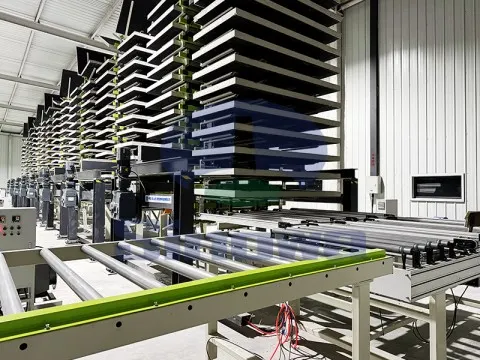
Automatic stacking and orderly output constitute the final link of the entire processing line workflow. Finished panels after all finishing procedures are automatically conveyed to the stacking unit, which realizes orderly layered stacking through intelligent positioning and lifting systems. The stacking equipment stably controls the stacking height and arrangement mode to avoid extrusion deformation of panels caused by irregular stacking. The entire output process is fully automated without manual intervention, effectively improving production efficiency and reducing manual operation errors. Stacked finished products maintain neat specifications and stable quality, facilitating subsequent centralized handling, storage and transportation. This intelligent terminal processing mode realizes the closed-loop operation of the entire production line, ensuring efficient, continuous and standardized batch production of phenolic insulation panels.
Gallery of Phenolic Insulation Panel Processing Line
Tags: phenolic insulation panel processing line, phenolic insulation panel processing line manufacturer, phenolic insulation panel processing line supplier, china phenolic insulation panel processing line, phenolic insulation panel processing line for sale
https://www.sandwichpanelmachinery.com/tags/phenolic-insulation-panel-processing-line.html
-
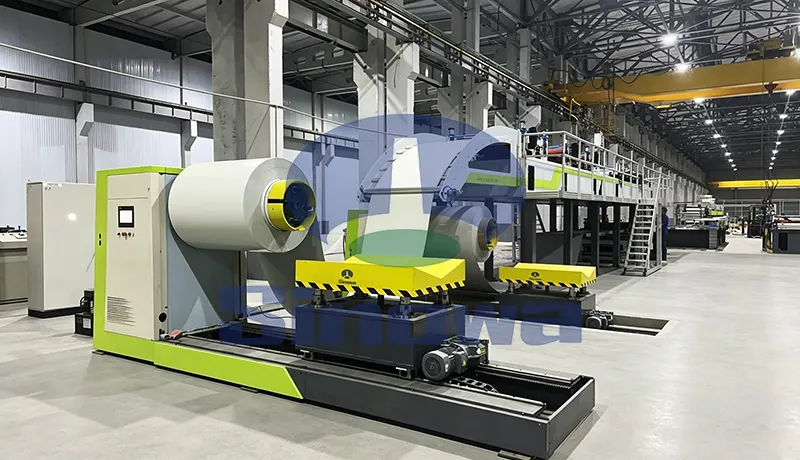
The PU sandwich panel line is a core production setup for making high-performance building insulation panels. This professional PU sandwich panel production line features automated operation to streamline the whole manufacturing process efficiently. Every component of the polyurethane sandwich panel line is precisely calibrated to ensure consistent panel thickness and structural stability. A well-maintained polyurethane sandwich panel production line can greatly boost production efficiency while reducing manual operation errors. The continuous PU sandwich panel line adapts to diverse production demands for different panel sizes and surface styles. With advanced molding technology, the PIR sandwich panel line produces panels with excellent heat preservation and sound insulation properties. Stable running of the PIR sandwich panel production line guarantees reliable product quality for various construction and industrial application scenarios.
-
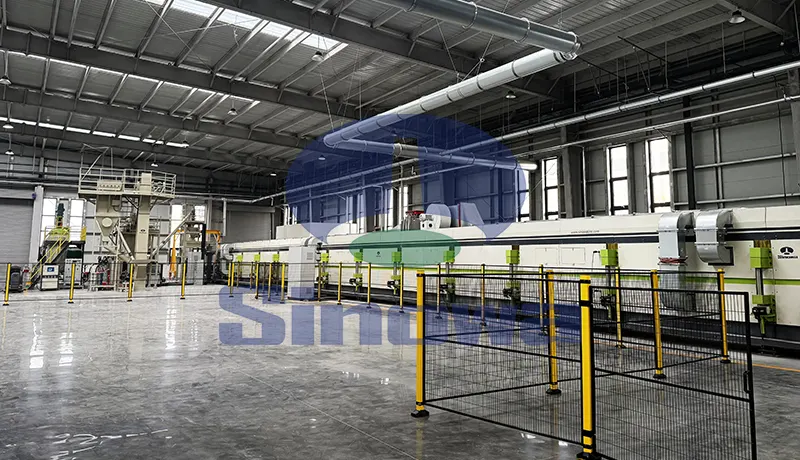
A phenolic insulation board production line serves as the core equipment for manufacturing high-performance thermal insulation building materials. This phenolic insulation panel production line integrates material mixing, foaming, molding and cutting processes to ensure continuous and stable production efficiency. Every operational link of the insulation board production line is precisely calibrated to produce uniform and durable insulation boards. The automated design of the insulation panel production line effectively reduces manual intervention and improves product consistency. Proper maintenance of the phenolic board production line can greatly extend its service life and maintain steady production output. With optimized structural design, the phenolic panel production line adapts to various production demands and delivers high-quality finished products for thermal insulation engineering applications.
-
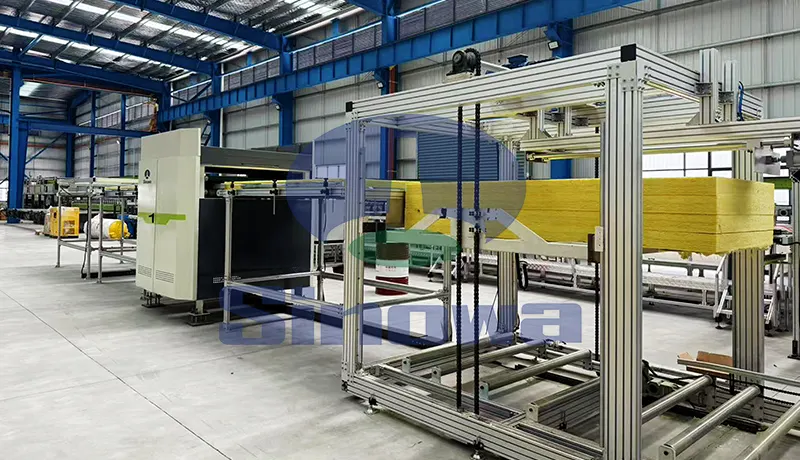
A professional rockwool sandwich panel line serves as the core equipment for producing high-performance building panels. This rockwool sandwich panel production line integrates feeding, laminating and forming processes to ensure stable and efficient production. The well-structured rock wool sandwich panel line can process raw rockwool materials into panels with excellent thermal and sound insulation properties. Operators can adjust the running parameters of the rock wool sandwich panel production line to manufacture panels of different thicknesses and specifications. The automated design of the mineral wool sandwich panel production line greatly reduces manual operation errors and improves product consistency. Regular maintenance of the mineral wool sandwich panel line is essential to sustain long-term operational efficiency and guarantee qualified finished panels for diverse construction applications.