Why Does The Rock Wool Sandwich Panel Production Line Stop Intermittently During Operation?
Publication Date: Sep 27, 2026
Intermittent shutdowns of rock wool sandwich panel production lines are common operational issues that hinder production efficiency and cause product quality fluctuations.
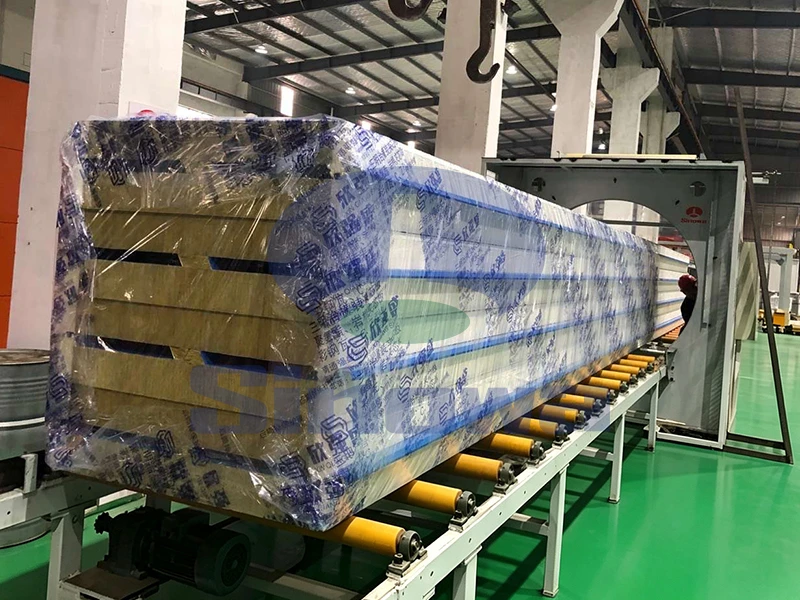
Mechanical transmission system abnormalities are one of the most frequent triggers for intermittent shutdowns of rock wool sandwich panel production lines. Long-term continuous operation leads to gradual wear of core transmission components such as drive rollers, universal couplings, and gear sets, creating tiny gaps and unstable transmission torque. When the equipment operates under variable loads during panel pressing and cutting processes, these gaps cause jitter and asynchronous operation of transmission parts. The built-in overload protection system of the production line will automatically suspend operation to avoid component damage, resulting in intermittent stops. In addition, thermal expansion and contraction of metal parts after long-hour heating operation will cause slight shaft position offset and structural deformation of the equipment frame, further disrupting transmission stability. Loose fixed bolts and aging buffer parts can also aggravate mechanical vibration, triggering frequent short-term shutdowns that are difficult to detect in daily simple inspections.
Sensor and limit switch failures are key electrical factors leading to intermittent operational stops. The fully automated rockwool panel production line relies on various precision sensors to monitor feeding positioning, pressing tension, cutting stroke and temperature status in real time. After long-term use, photoelectric sensors are easily contaminated by rock wool dust and adhesive residues, which weakens signal reception sensitivity and causes intermittent signal loss. Vibration during equipment operation may also displace sensor installation positions, making it unable to accurately capture production state data. Limit switches used for stroke control often suffer from poor contact due to internal spring fatigue and carbon deposition on contacts. Once the system receives abnormal or discontinuous feedback signals, it will activate safety protection logic and pause operation temporarily, forming irregular intermittent shutdowns that seriously disrupt continuous production rhythm.
Unstable power supply and electrical circuit faults effectively induce intermittent shutdown problems in rockwool board production lines. Fluctuations in industrial power voltage and current often occur in long-time production scenarios, especially during peak power consumption periods. When the operating power of motors, heating modules and control cabinets fails to meet stable working standards, the electrical control system will trigger self-protection shutdowns to prevent circuit burnout and component damage. Moreover, long-term operation leads to aging of internal circuit wires, loose wiring terminals and oxidized contact surfaces. These hidden circuit faults do not cause permanent failures but lead to intermittent circuit disconnection under equipment vibration and load changes. Frequent start-stop cycles of the equipment also aggravate electrical component aging, forming a vicious cycle of unstable power supply and intermittent shutdowns.
Raw material feeding anomalies are non-negligible causes of intermittent operational suspensions of rock wool sandwich panel lines. The production line requires continuous and stable supply of rock wool core materials and metal sheet materials with uniform specifications. In actual production, uneven feeding speed caused by blocked feeding chutes and sticky raw materials will lead to inconsistent material conveying rhythm. When the front-end feeding speed is too slow or material supply is interrupted briefly, the back-end pressing and curing processes will lack matching raw materials. The intelligent linkage control system of the production line will automatically stop subsequent operations to avoid empty running and equipment idling wear. In addition, irregular raw material sizes and uneven material stacking will cause positioning deviation during feeding, triggering the line’s deviation correction and protection mechanism, which temporarily pauses production and results in intermittent stop phenomena.
Heating and curing system instability will cause targeted intermittent shutdowns of the production line. Rock wool sandwich panel molding relies on stable heating and curing temperature to ensure bonding performance between core materials and surface layers. The heating system may experience intermittent temperature deviation due to aging heating components and uneven heat conduction. When the actual temperature of the curing zone is lower or higher than the system’s preset operating range, the temperature monitoring module will send abnormal signals to the control center. The system will suspend production automatically to prevent unqualified products caused by improper curing temperature. Meanwhile, blocked heat dissipation channels and accumulated dust on heating equipment will lead to local overheating, triggering overheating protection shutdowns. After the equipment cools down slightly and the temperature returns to normal, it restarts automatically, forming obvious intermittent operational stops.
Hydraulic and pneumatic system failures are important hidden dangers for intermittent shutdowns in production operation. The pressing, cutting and positioning actions of rock wool sandwich panel production lines are mostly driven by hydraulic and pneumatic systems. Long-term operation leads to slight oil leakage and air leakage in pipeline joints and valve bodies, which reduces system pressure stability. Insufficient hydraulic pressure and unstable air pressure will cause incomplete execution of equipment actions such as panel pressing and edge trimming. The system will judge the action execution failure as an operational abnormality and pause production for self-inspection. In addition, impurities in hydraulic oil and compressed air will block fine pipeline valves, leading to intermittent pressure supply interruption. Frequent pressure fluctuation and instantaneous pressure loss will repeatedly trigger the equipment’s fault protection program, resulting in irregular intermittent shutdowns during continuous production.
Improper equipment parameter setting and program logic conflicts will induce intermittent operational stops. In daily production, operators often adjust production parameters such as operating speed, pressing pressure and curing time according to product specifications. Improper parameter matching, such as excessive operating speed that exceeds the mechanical response limit of transmission parts, or mismatched tension parameters of surface materials, will cause operational conflicts in various functional modules of the production line. The built-in program logic will trigger adaptive protection shutdowns to coordinate module operation. In addition, long-term operation may cause minor data deviation in the control system’s background parameters. Accumulated tiny data errors will lead to occasional program judgment errors, making the equipment pause and reset automatically. This kind of program-induced shutdown is intermittent and random, bringing great difficulty to daily fault troubleshooting.
Equipment dust accumulation and poor daily maintenance accelerate the occurrence of intermittent shutdown faults. The production environment of rock wool sandwich panels generates a large amount of fine rock wool dust and adhesive dust, which easily adheres to the surface of motors, sensors, circuit boards and transmission components. Excessive dust accumulation will block equipment heat dissipation holes, cause component overheating and short-term circuit failure, and also increase transmission friction resistance. Many intermittent faults are caused by neglected daily cleaning and maintenance. Infrequent lubrication of transmission bearings and guide rails leads to unsmooth mechanical operation, while untimely inspection of vulnerable parts results in latent faults. These hidden problems do not cause complete equipment failure but lead to frequent short stops during operation, reducing overall production efficiency and increasing subsequent maintenance costs.
Unstable operation of auxiliary supporting equipment will drive the main production line to stop intermittently. The rock wool sandwich panel production line is composed of multiple interconnected auxiliary systems including waste discharge equipment, cooling systems and material sorting devices. The operation state of auxiliary equipment is linked to the main control system. Once the waste discharge device is blocked and cannot discharge production residues in time, or the cooling system operates abnormally leading to poor heat dissipation, the main line will receive linkage fault signals and suspend operation automatically. Most auxiliary equipment faults are temporary and can be eliminated after simple cleaning and adjustment, so the main line can quickly restart operation. This repeated stop and restart state forms typical intermittent shutdowns, which not only affects production continuity but also causes repeated impact wear on the main line equipment.
Human operational errors and abnormal working environment factors also contribute to intermittent production line shutdowns. Unstandardized operation by individual operators, such as accidental touch of control buttons, incorrect manual intervention in automatic operation processes, and untimely handling of minor material jams, will trigger the equipment's emergency stop protection mechanism. In addition, changes in on-site working environment such as excessive ambient temperature, high humidity and severe vibration will affect the normal operation of precision electrical components and control systems. High humidity easily causes circuit damp and poor signal transmission, while excessive ambient temperature aggravates equipment heat accumulation. These environmental interferences lead to occasional operational abnormalities and intermittent shutdowns. Standardizing operational procedures and improving on-site production environment can effectively reduce such unnecessary intermittent stop faults.
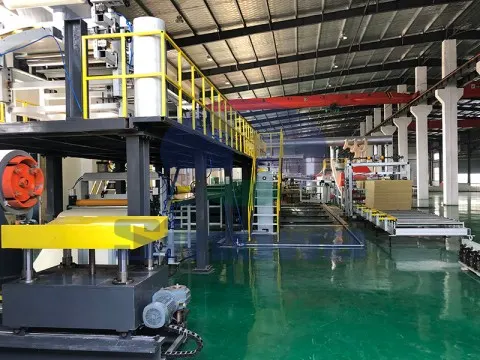
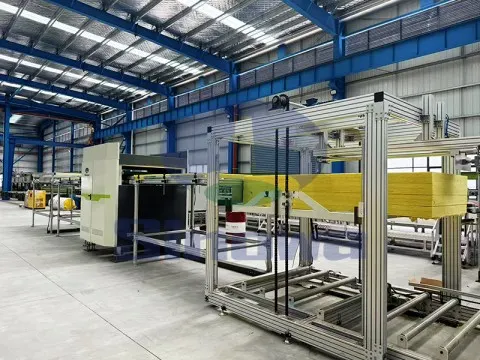
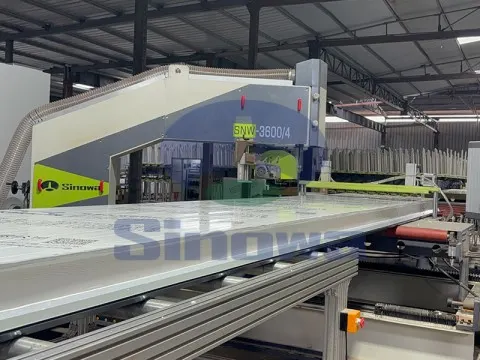
Gallery of Rock Wool Sandwich Panel Production Line
Tags: rock wool sandwich panel production line, rock wool sandwich panel production line manufacturer, rock wool sandwich panel production line supplier, china rock wool sandwich panel production line, rock wool sandwich panel production line for sale
-
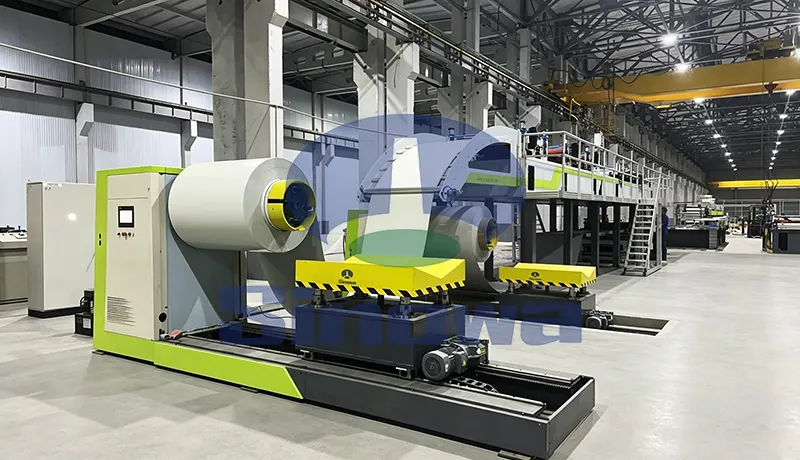
The PU sandwich panel line is a core production setup for making high-performance building insulation panels. This professional PU sandwich panel production line features automated operation to streamline the whole manufacturing process efficiently. Every component of the polyurethane sandwich panel line is precisely calibrated to ensure consistent panel thickness and structural stability. A well-maintained polyurethane sandwich panel production line can greatly boost production efficiency while reducing manual operation errors. The continuous PU sandwich panel line adapts to diverse production demands for different panel sizes and surface styles. With advanced molding technology, the PIR sandwich panel line produces panels with excellent heat preservation and sound insulation properties. Stable running of the PIR sandwich panel production line guarantees reliable product quality for various construction and industrial application scenarios.
-
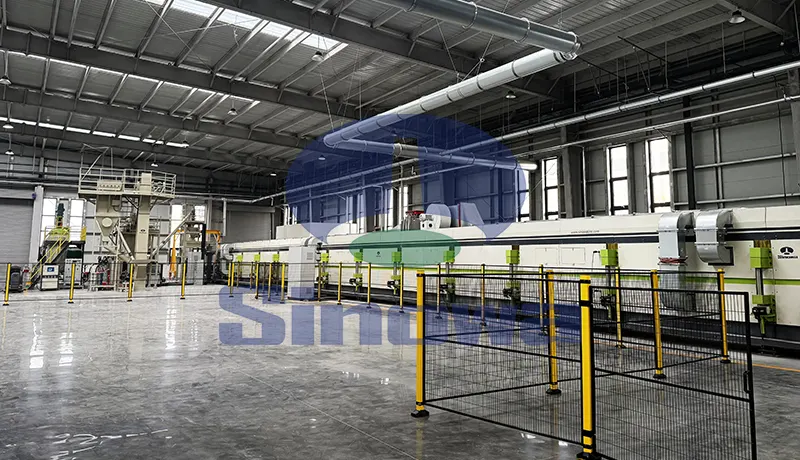
A phenolic insulation board production line serves as the core equipment for manufacturing high-performance thermal insulation building materials. This phenolic insulation panel production line integrates material mixing, foaming, molding and cutting processes to ensure continuous and stable production efficiency. Every operational link of the insulation board production line is precisely calibrated to produce uniform and durable insulation boards. The automated design of the insulation panel production line effectively reduces manual intervention and improves product consistency. Proper maintenance of the phenolic board production line can greatly extend its service life and maintain steady production output. With optimized structural design, the phenolic panel production line adapts to various production demands and delivers high-quality finished products for thermal insulation engineering applications.
-
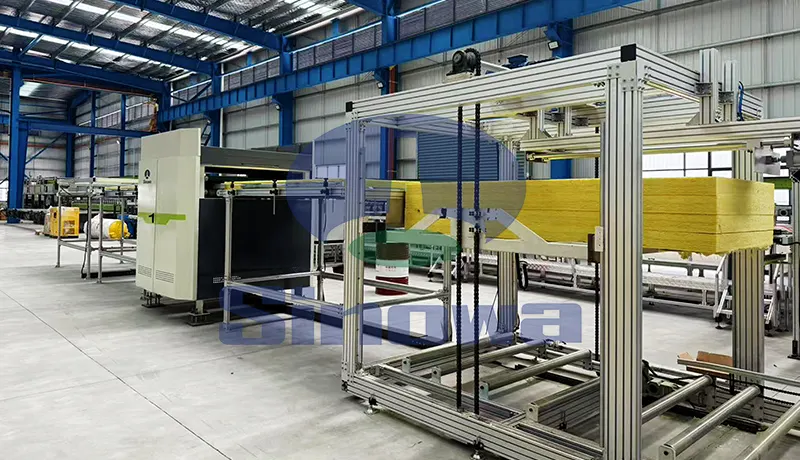
A professional rockwool sandwich panel line serves as the core equipment for producing high-performance building panels. This rockwool sandwich panel production line integrates feeding, laminating and forming processes to ensure stable and efficient production. The well-structured rock wool sandwich panel line can process raw rockwool materials into panels with excellent thermal and sound insulation properties. Operators can adjust the running parameters of the rock wool sandwich panel production line to manufacture panels of different thicknesses and specifications. The automated design of the mineral wool sandwich panel production line greatly reduces manual operation errors and improves product consistency. Regular maintenance of the mineral wool sandwich panel line is essential to sustain long-term operational efficiency and guarantee qualified finished panels for diverse construction applications.