
The cost of a polyurethane sandwich panel production line varies widely based on equipment configuration, automation level, functional design, and supporting systems.
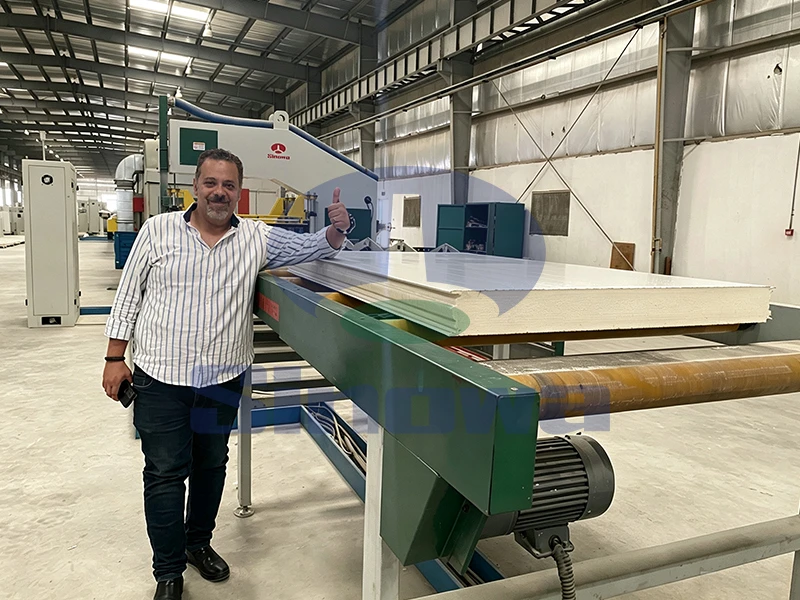
One of the most fundamental factors shaping the overall cost of a polyurethane sandwich panel production line is its operational mode, which is mainly divided into continuous and discontinuous structures. Continuous production lines feature integrated automated workflows that realize uninterrupted feeding, foaming, pressing, cutting and stacking processes. These lines boast high production efficiency, stable product consistency and low manual intervention, making them suitable for large-scale, long-term mass production. The integrated mechanical structure and intelligent linkage system of continuous lines require more sophisticated manufacturing processes and high-precision components, which naturally elevate overall equipment investment. In contrast, discontinuous production lines adopt intermittent operation modes with relatively independent functional modules. They are more flexible for small-batch, diversified production demands and have simpler structural designs, resulting in lower overall equipment costs. The distinct structural and operational differences between the two modes form the primary cost gap in basic equipment configuration.
Equipment automation degree serves as another critical element that affects the comprehensive cost of polyurethane sandwich panel production lines. Low-automation lines rely heavily on manual operation for material feeding, parameter adjustment, finished product collection and equipment inspection. Such lines have simple control systems and basic mechanical structures, with lower manufacturing and assembly costs, yet they come with higher long-term labor costs and unstable production quality. Medium-automation lines introduce semi-intelligent control modules to realize automatic adjustment of partial production parameters and mechanical linkage, balancing cost and operational efficiency for most medium-scale production scenarios. High-automation lines are equipped with full PLC intelligent control systems, automatic parameter calibration, real-time operation monitoring and fault self-diagnosis functions. These advanced intelligent configurations require sophisticated programming technology, high-precision sensing components and stable control systems, greatly increasing equipment research and manufacturing costs while significantly improving production accuracy and operational stability.
Core functional component configurations directly determine the performance and cost of polyurethane sandwich panel production lines. Key components include decoiling systems, roll forming devices, high-pressure foaming injection systems, double-belt pressing systems and flying saw cutting structures. High-quality foaming injection systems with precise pressure and flow control can ensure uniform polyurethane foam density and stable bonding performance of sandwich panels, but they adopt high-precision processing technology and durable materials, leading to higher costs. The double-belt pressing system, as the core molding structure, determines the flatness and overall strength of finished panels. Longer and more stable pressing structures with anti-deformation designs require more raw materials and complex assembly processes. In addition, optimized edge trimming and waste recycling components can improve product yield and material utilization, and the addition of these practical functional modules will correspondingly increase the overall equipment investment budget.
Production capacity and customized functional demands play a vital role in adjusting the comprehensive cost of polyurethane sandwich panel production lines. Standard conventional lines are designed for regular panel specifications and fixed production speeds, with mature and standardized manufacturing processes that control costs at a moderate level. When users need higher daily output, the production line needs to be equipped with faster operating speeds, larger-scale supporting structures and enhanced power systems, which will raise manufacturing costs. Meanwhile, personalized customization demands further affect overall expenses, such as supporting multi-layer composite panel production, adapting to different core material filling requirements, and realizing adjustable thickness and width of finished panels. Each customized functional module needs targeted structural transformation and technical debugging, breaking the standardized production mode of equipment manufacturers and increasing technical research and development as well as production costs.
Material selection for equipment manufacturing is an invisible but key factor influencing the cost of polyurethane sandwich panel production lines. The main frame, pressing rollers, transmission shafts and other load-bearing and operating components of the production line can adopt different grades of metal materials and surface treatment processes. High-strength alloy materials with anti-corrosion, wear-resistant and anti-deformation properties can adapt to long-term high-load operation, reduce equipment wear and failure rates, and extend service life, but such high-quality materials have higher procurement and processing costs. ordinary conventional materials can meet basic production needs with lower upfront investment, yet they are prone to aging and wear after long-term use, leading to increased maintenance frequency and replacement costs. In addition, the surface anti-rust and anti-corrosion treatment technology of equipment also affects manufacturing costs, with high-standard treatment processes bringing better equipment durability and higher processing expenses.
Supporting auxiliary systems and safety configurations effectively raise the comprehensive use value and overall cost of polyurethane sandwich panel production lines. Complete production lines are not limited to core processing equipment but also include supporting systems such as finished product stacking, automatic packaging, material conveying and waste collection. These auxiliary devices can realize fully enclosed automated production, reduce manual participation and improve overall production efficiency, and their matching installation and debugging will increase total equipment investment. Moreover, professional safety configurations including ventilation systems, pressure protection devices and emergency stop linkage structures are essential for safe production. These safety systems are designed to adapt to the chemical characteristics of polyurethane foaming production, avoiding potential safety hazards in the production process, and their professional design and component selection will also affect the overall cost of the production line.
Installation, debugging and technical service costs are indispensable parts of the overall investment in polyurethane sandwich panel production lines. Complete equipment delivery includes on-site assembly, mechanical debugging, parameter optimization and production line trial operation. Professional technical teams need to conduct targeted debugging according to users' factory environment and production demands to ensure stable operation of all modules. Meanwhile, standardized operation training for on-site operators is required to ensure staff can proficiently master equipment use and daily maintenance skills. High-quality after-sales services such as long-term technical guidance, remote fault diagnosis and spare parts supply guarantee the stable operation of the production line in the later stage. The labor costs of professional technicians, time costs of on-site service and technical service guarantees are all included in the comprehensive investment cost of the production line.
Long-term operation and maintenance costs affect the total life-cycle investment of polyurethane sandwich panel production lines, which is an important dimension for evaluating comprehensive equipment costs. High-configuration production lines adopt high-precision components and mature structural designs, with low failure rates in daily operation, fewer replacement parts and lower daily maintenance costs. Their efficient energy-saving designs can effectively reduce power consumption in long-term operation and cut down daily operating expenses. In contrast, low-configuration equipment has low upfront investment but requires frequent component maintenance and replacement, with higher energy consumption and longer downtime losses, resulting in higher comprehensive operating costs in the long run. In addition, regular equipment maintenance, lubrication and parameter calibration work also generate certain long-term operational costs, which need to be included in the overall investment assessment of the production line.
Market supply and industrial technological iteration also bring dynamic changes to the cost of polyurethane sandwich panel production lines. With the continuous upgrading of industrial manufacturing technology, new intelligent and energy-saving technologies are continuously applied to production line equipment. The integration of new technologies and new processes will optimize production performance but also raise the manufacturing cost of new-generation equipment. Meanwhile, changes in the market supply of mechanical components, electronic control parts and metal raw materials will cause fluctuations in equipment manufacturing costs. When the industrial market demand is strong, the overall manufacturing and delivery cost of equipment will rise slightly due to production capacity scheduling and order backlog. Technological progress also promotes the elimination of backward low-efficiency equipment, making the cost-performance advantage of new high-efficiency and energy-saving production lines more prominent in the market.
User demand matching and equipment scalability are key factors that affect the cost-performance ratio of polyurethane sandwich panel production line investment. For small and medium-sized production scenarios with stable demand, standardized basic configuration production lines can meet production needs with moderate investment and high cost performance. For enterprises with long-term expansion plans, production lines with scalable structural designs and reserved functional interfaces can realize later functional upgrading and capacity expansion without overall equipment replacement. Although such scalable equipment has a slightly higher upfront cost, it avoids the repeated investment waste caused by equipment elimination in the later stage. Reasonable matching of equipment configuration with actual production demands and future development plans is crucial to controlling the comprehensive investment cost of the production line and improving long-term economic benefits.