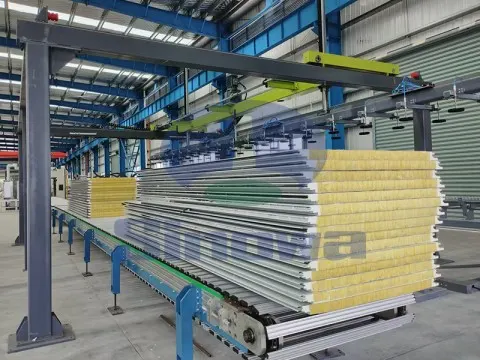
Sandwich Panel Manufacturing Line
Publication Date: Oct 6, 2026
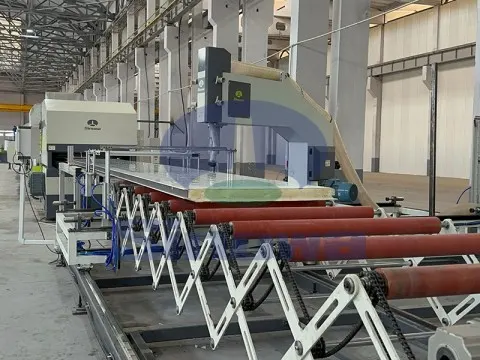
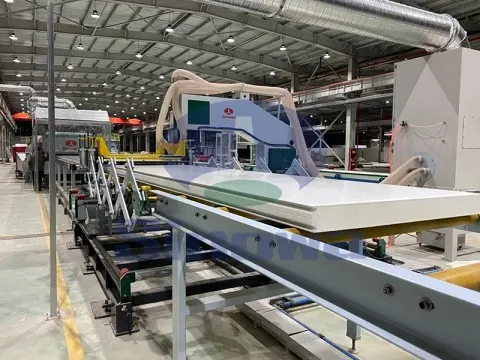
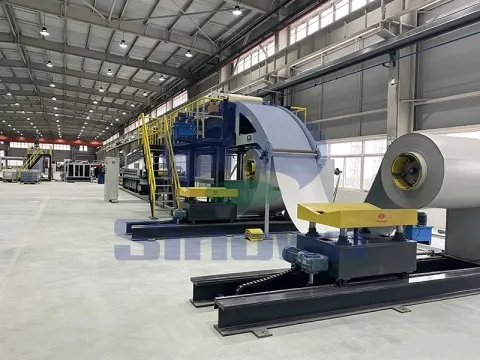
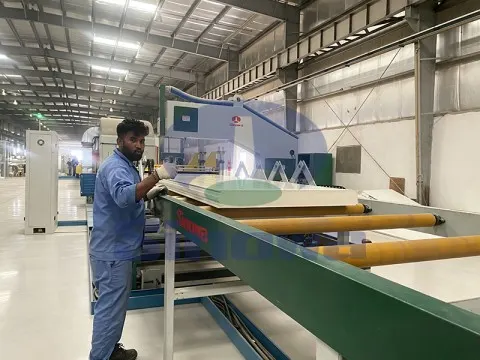
Sandwich panel manufacturing lines produce composite panels with diverse core materials, including PU, phenolic, PIR, rock wool, mineral wool and glass wool. These automated lines fabricate durable panels widely used for building roof, wall and cold storage enclosure systems.
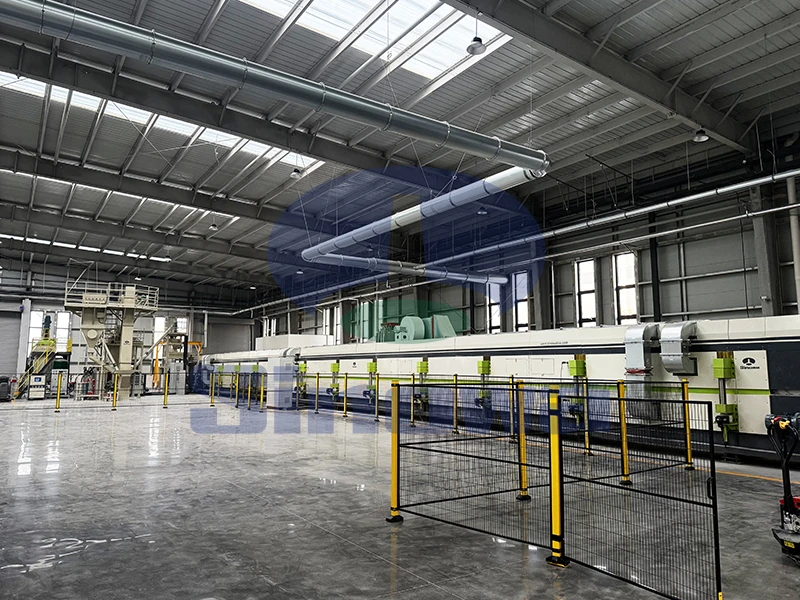
Polyurethane sandwich panel manufacturing lines are highly versatile automated production systems designed to deliver high-performance insulated composite panels for modern construction scenarios. Featuring integrated foaming, laminating, trimming and continuous molding processes, these lines precisely control raw material foaming density and bonding pressure to ensure the core material forms a uniform closed-cell structure. The finished polyurethane sandwich panels boast ultra-low thermal conductivity, lightweight structure and excellent structural stability, which endows them with outstanding thermal insulation and pressure resistance. In practical applications, panels produced by these lines serve as ideal materials for industrial factory wall panels and roof panels, effectively reducing building energy consumption by blocking external heat transfer. Meanwhile, their superior low-temperature insulation performance makes them a mainstream choice for medium and low-temperature cold storage panels, maintaining stable internal temperature and reducing refrigeration operational costs. The flexible parameter adjustment function of the production line enables the manufacturing of panels with different thicknesses, adapting to the insulation needs of various architectural environments and meeting the enclosure requirements of civil buildings, industrial facilities and logistics cold storage projects.
Phenolic sandwich panel manufacturing lines are professional production equipment tailored for fire-resistant and heat-insulating composite panels, adopting optimized raw material mixing and high-temperature curing processes different from conventional polyurethane production equipment. The production system accurately regulates the reaction temperature and curing time of phenolic resin raw materials, promoting the formation of a compact and flame-retardant core structure with stable chemical properties. Panels manufactured by this line feature excellent flame retardancy, low smoke emission and high-temperature resistance, along with reliable thermal insulation and corrosion resistance. In construction applications, phenolic sandwich panels are extensively applied in external wall panels of high-rise buildings, partition wall panels of public buildings, and roof panels of special industrial workshops that require strict fire prevention. Additionally, their stable physical properties in humid environments make them suitable for cold storage enclosure structures in coastal and high-humidity areas, avoiding insulation performance attenuation caused by moisture absorption. The automated continuous production mode ensures consistent panel flatness and bonding strength, greatly improving the overall durability and safety of building enclosure systems.
PIR sandwich panel manufacturing lines are upgraded and optimized based on traditional polyurethane production technologies, focusing on enhancing the thermal stability and fire resistance of finished panels through precise molecular polymerization control. The production line adopts advanced raw material proportioning and constant-pressure foaming systems, which effectively improve the cross-linking density of PIR core materials and form a more rigid and heat-resistant closed-cell structure compared with ordinary polyurethane cores. This structural advantage enables PIR panels to maintain stable insulation performance under high-temperature conditions and possess better flame spread resistance. In practical engineering, PIR sandwich panels are widely used for high-standard cold storage panels, including frozen food warehouses, pharmaceutical cold chain storage facilities and low-temperature logistics centers, as their low thermal conductivity efficiently reduces cold loss and improves energy utilization efficiency. They are also commonly used as roof panels and external wall panels for large commercial buildings and industrial plants in high-temperature climates, providing long-term stable thermal insulation and fire protection for building envelopes.
Rock wool sandwich panel manufacturing lines are specialized automated production systems dedicated to producing inorganic fireproof insulation panels, with mature processes including core material laying, continuous pressing, composite bonding and fixed-length cutting. During production, the line adopts constant-pressure molding technology to closely bond rock wool core materials with metal surface layers, avoiding core material displacement and delamination, and greatly improving the overall structural rigidity of finished panels. Rock wool core materials have excellent non-combustible performance and sound absorption effects, making the produced panels stand out in fire resistance and noise reduction. These panels are primarily applied to fireproof wall panels and roof panels of industrial plants, shopping malls, hospitals and other public buildings with high safety requirements, effectively blocking fire spread and reducing indoor and outdoor noise interference. Moreover, their good moisture-proof and weather-resistant properties also make them applicable for external wall insulation systems and special cold storage projects that require high fire safety standards.
Mineral wool sandwich panel manufacturing lines are designed for the mass production of eco-friendly inorganic insulation panels, integrating automatic core material paving, precise laminating and intelligent shaping processes. The production line optimizes the fiber arrangement density of mineral wool raw materials during processing, ensuring the finished core material has uniform porosity and stable insulation performance. Different from rock wool, mineral wool features softer fiber texture and better flexibility while retaining excellent fire resistance and thermal insulation capabilities. Panels produced by this line are widely used in building internal wall partition panels, ceiling panels and external wall insulation panels, creating comfortable and safe indoor environments for commercial and residential buildings. In industrial fields, they serve as auxiliary enclosure panels for factory workshops and logistics warehouses, and can also be used for light-duty cold storage insulation structures. Their lightweight characteristics reduce the overall load of building structures, while outstanding sound insulation performance effectively improves indoor acoustic environment quality.
Glass wool sandwich panel manufacturing lines are professional production equipment for lightweight high-efficiency insulation panels, adopting low-density fiber forming and high-strength composite bonding technologies. The production process precisely controls the fiber stacking thickness and bonding uniformity of glass wool raw materials, enabling the finished panels to achieve ultra-light weight and excellent thermal insulation performance. Glass wool core materials have fine and uniform fiber structures, with low thermal conductivity and superior sound absorption performance in medium and high-frequency bands. The manufactured glass wool sandwich panels are mostly applied to lightweight building enclosure structures, including internal wall panels, roof insulation layers and ceiling panels of office buildings, shopping centers and residential buildings. They are also widely used in temporary building wall and roof panels, as well as ventilation and insulation auxiliary structures of small and medium-sized cold storage. The production line’s flexible processing capability can adapt to customized size requirements, meeting the diversified lightweight insulation needs of modern green buildings.
The differentiated process design of various sandwich panel manufacturing lines determines the unique application scenarios of finished panels in roof engineering. Polyurethane and PIR panel lines produce panels with lightweight and high-strength properties, which are the preferred materials for large-span industrial factory roofs, logistics warehouse roofs and commercial building roofs, as they can reduce roof structural load while ensuring excellent waterproof and heat insulation effects. Phenolic panel lines manufacture panels suitable for special industrial roofs with high fire prevention requirements, effectively resisting high-temperature baking and flame erosion. Rock wool and mineral wool panel products are widely used for public building roofs and fireproof partition roofs, relying on superior fire resistance to improve building safety. Glass wool panel products are more suitable for temporary building roofs and light-duty roof insulation projects, balancing economic efficiency and basic insulation performance. All these production lines can adjust panel thickness and surface layer specifications according to roof load-bearing and environmental needs, realizing targeted production for different roof working conditions.
Each type of sandwich panel manufacturing line has mature technical advantages in the production of building wall panels, covering diversified wall enclosure demands from industrial to civil buildings. Polyurethane panel lines produce wall panels with good compression resistance and heat preservation, applicable to external and internal walls of ordinary industrial workshops and residential buildings. PIR panel wall products are favored for high-end industrial workshops and pharmaceutical factory wall systems due to their enhanced thermal stability and fire resistance. Phenolic panel wall panels excel in humid and high-fire-risk environments, suitable for external wall insulation and decoration of coastal buildings and chemical industrial plants. Rock wool and mineral wool panel lines produce fireproof and sound-insulating wall panels, which are widely used for partition walls of office buildings, hospitals and schools, as well as fire isolation walls of industrial zones. Glass wool wall panels are mainly used for indoor light partition walls and decorative insulation walls, creating quiet and comfortable indoor spaces with their excellent sound absorption effect.
Cold storage panel production is a key application field covering all six types of sandwich panel manufacturing lines, with each line adapting to different cold storage operation temperature and environmental conditions. Polyurethane sandwich panel lines are the most commonly used equipment for conventional cold storage production, and their finished panels have ultra-low thermal conductivity, which can effectively lock low temperature and reduce cold loss, suitable for normal-temperature and low-temperature food cold storage. PIR panel lines produce high-performance cold storage panels that can adapt to ultra-low temperature environments and frequent temperature changes, ideal for frozen product cold storage and pharmaceutical cold chain warehouses. Phenolic panel cold storage products have outstanding moisture-proof and flame-retardant properties, suitable for cold storage built in humid and corrosive environments. Rock wool and mineral wool panel cold storage structures meet high fire safety standards, applicable for large-scale integrated cold storage parks with strict fire prevention requirements. Glass wool panels are often used for auxiliary insulation structures of small cold storage and cold storage equipment partition insulation, realizing energy-saving and heat-preservation effects with low cost.
The comprehensive application of six core material sandwich panel manufacturing lines forms a complete production system for modern building insulation and fireproof enclosure materials. Each production line has its own process characteristics and performance advantages, covering lightweight insulation, high-efficiency fire prevention, low-temperature resistance and sound insulation functions required by different building parts. From industrial plant roofs and walls to civil building enclosure structures, and from conventional cold storage to special environmental cold chain facilities, these automated production lines can complete customized panel manufacturing according to actual engineering demands. With the development of green building technology, these sandwich panel production lines are constantly optimized in terms of energy conservation and production efficiency, providing high-quality, durable and environmentally friendly composite panel materials for modern architectural energy-saving and safety construction.
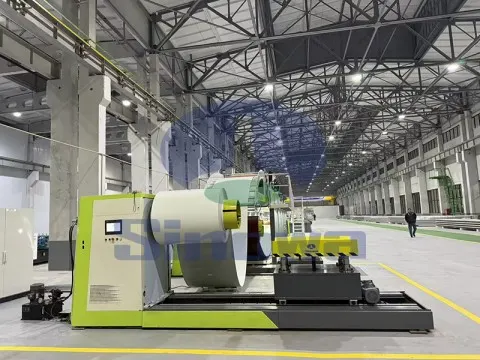
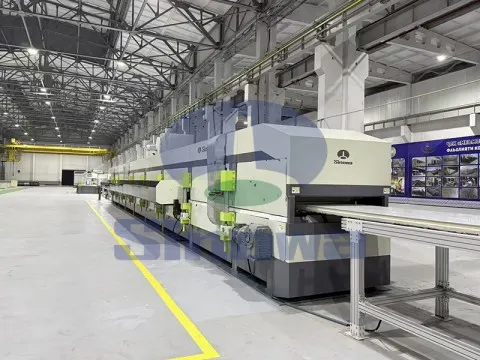
Gallery of Sandwich Panel Manufacturing Line
Tags: sandwich panel manufacturing line, sandwich panel manufacturing line manufacturer, sandwich panel manufacturing line supplier, china sandwich panel manufacturing line, sandwich panel manufacturing line for sale
https://www.sandwichpanelmachinery.com/tags/sandwich-panel-manufacturing-line.html
Related Informations