Industrial Sandwich Panel Manufacturing Line
Publication Date: Oct 6, 2026
Industrial sandwich panel manufacturing lines are automated integrated production systems for composite building panels with dual outer facings and insulating inner cores. They streamline full-process production from raw material processing to finished panel shaping, bonding and cutting, ensuring efficient, stable and high-quality panel manufacturing for construction and industrial applications.
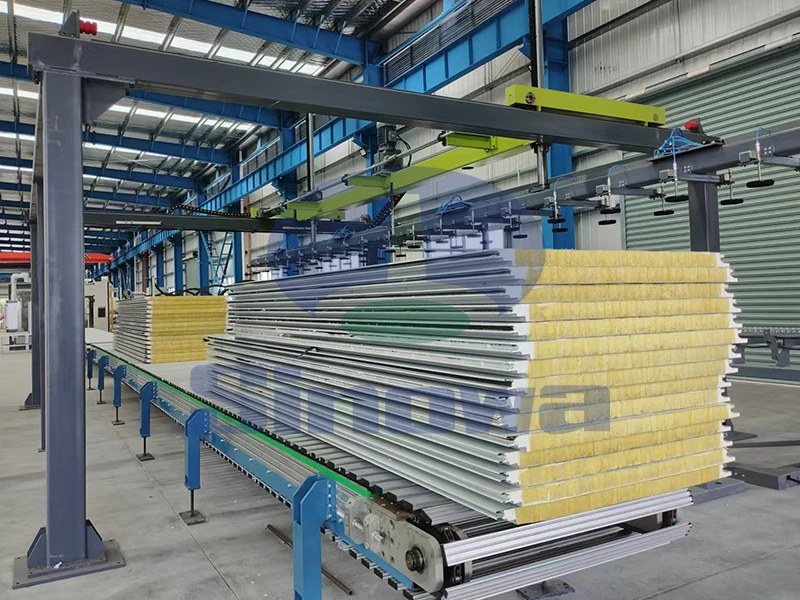
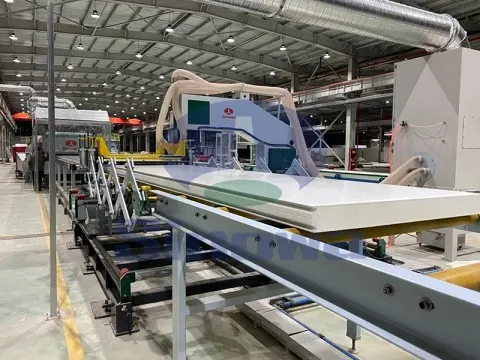
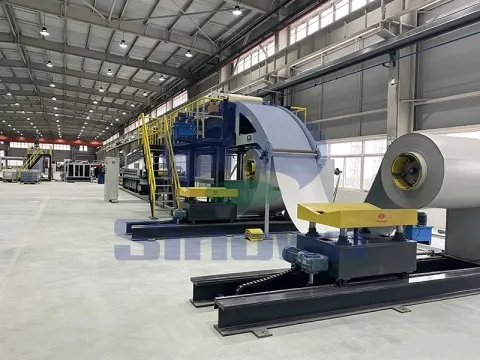
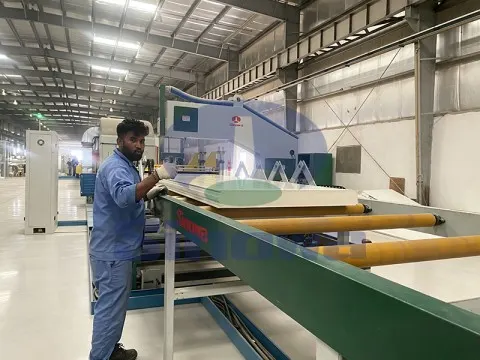
The industrial sandwich panel manufacturing line serves as a comprehensive automated production system tailored for mass production of composite sandwich panels, which are widely utilized in modern construction, industrial warehousing, cold chain facilities and clean room projects. This integrated production equipment integrates multiple independent processing units into a continuous assembly line, realizing seamless connection from raw material feeding to finished product output. Unlike traditional discrete manufacturing modes, the streamlined production mode of this line greatly reduces manual intervention, unifies processing parameters and maintains consistent product performance across batches. The core design concept of the production line is to combine mechanical precision processing and chemical composite molding, perfectly integrating the structural rigidity of outer facing materials and the thermal insulation, sound insulation and fire resistance properties of core materials. Each functional module of the line is precisely matched in operating speed and processing rhythm, which not only improves overall production efficiency but also effectively avoids product quality fluctuations caused by inconsistent manual operation. Whether for lightweight metal-faced thermal insulation panels or heavy-duty fireproof composite panels, the production line can complete standardized production through parameter adjustment and module adaptation, meeting diverse application demands in different industrial and construction scenarios.
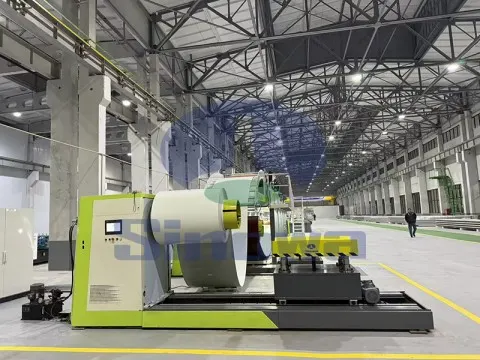
Adhesive coating and surface treatment processes directly affect the bonding strength and service durability of sandwich panels, acting as the critical medium connecting outer facings and inner core materials. After the completion of roll forming, the inner surfaces of upper and lower metal facings enter the automatic coating system for uniform adhesive application. The production line adopts roller coating technology instead of traditional manual or simple spraying methods, which can form a thin, continuous and evenly distributed adhesive layer on the material surface. The coating thickness and glue application speed can be precisely adjusted according to different core material types and production requirements, effectively solving common problems such as glue accumulation, missing coating and uneven thickness. Before coating, the system also completes automatic surface cleaning and static removal treatment for the facings, removing surface dust, oil stains and fine impurities that may affect bonding effect. The specially formulated industrial adhesives used in production have excellent adhesion, weather resistance and curing stability, which can produce strong composite force after curing. Reasonable coating treatment ensures that no delamination or cracking occurs between the panel layers during long-term use, greatly improving the overall structural stability and service life of finished sandwich panels under complex environmental conditions.
Core material layout and precise positioning is an indispensable intermediate link to ensure the internal structural uniformity of sandwich panels. After the adhesive coating process is completed, the upper and lower facings are transported forward synchronously, and the preprocessed core materials are automatically laid between the two layers of facings through the special core feeding device of the production line. For flexible foam core materials, the equipment realizes continuous paving and uniform spreading to avoid local hollowing or material accumulation. For rigid plate-shaped core materials, the system completes automatic arrangement, gap filling and precise docking to ensure seamless splicing between core material units. The production line is equipped with a multi-dimensional positioning correction system, which can dynamically adjust the horizontal and vertical positions of core materials in real time to ensure that the core layer is completely centered and evenly aligned with the upper and lower facings. Accurate core material layout ensures consistent thickness of the entire panel, uniform internal stress distribution and balanced thermal insulation and mechanical performance of each part of the panel. This standardized positioning process also avoids quality defects such as partial thinness, core deviation and uneven stress, laying a reliable foundation for subsequent integral pressing and curing molding.
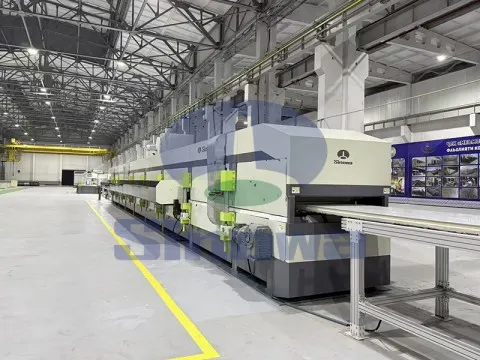
Integrated laminating and pressure molding is the core process that realizes the composite molding of sandwich panels, determining the overall compactness and structural integrity of finished products. After the completion of core material layout and preliminary assembly, the semi-finished panel enters the double-belt laminating unit of the production line, which provides continuous and uniform static pressure for composite molding. The laminating unit adopts upper and lower synchronous circulating belt structures, which can wrap the panel tightly and apply stable pressure across the entire processing section. The pressure value, lamination speed and fitting gap of the equipment can be intelligently adjusted according to different panel thicknesses, core material hardness and adhesive curing characteristics. During the lamination process, the adhesive layer is fully spread and infiltrated between the facings and core material under uniform pressure, realizing close integration of all structural layers. The continuous lamination mode avoids intermittent pressure differences caused by segmented processing, ensuring that the bonding strength of each position of the panel is consistent. Meanwhile, the sealed laminating environment reduces the impact of external dust and air flow on the composite process, effectively preventing bubbles, delamination and loose bonding inside the panel. After lamination, the preliminary integrated structure of the sandwich panel is formed, with stable overall shape and closely combined layers.
Constant temperature curing and structural stabilization treatment is a key process to solidify the composite structure and stabilize the physical performance of sandwich panels. After lamination and pressing, the semi-finished panels enter the intelligent constant temperature curing channel equipped on the production line to complete the adhesive curing reaction and internal structural stabilization. The curing system adopts segmented temperature control technology, which sets matching temperature and heat preservation time according to the chemical curing characteristics of different adhesives and core materials. The gradual temperature rise and constant temperature heat preservation mode enables the adhesive to complete cross-linking reaction stably and uniformly, forming high-strength bonding structure without causing thermal damage or deformation to the core material and metal facings. During the curing process, the slow heat conduction and uniform temperature field eliminate internal stress generated in the pressing process, making the overall structure of the panel more stable and reducing the probability of later deformation and warping. The closed curing environment also avoids rapid temperature change caused by external air, preventing cracks and performance attenuation of the adhesive layer. Sufficient and standardized curing treatment enables the sandwich panel to obtain stable mechanical strength, reliable layer bonding performance and durable environmental adaptability, meeting the long-term use requirements of various industrial and construction scenarios.
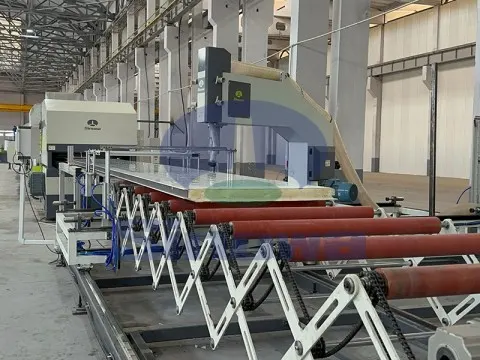
Fixed-length cutting and edge finishing processes realize the final shaping and appearance optimization of finished sandwich panels. After completing curing and structural stabilization, the continuously formed long panel is transported to the precision cutting unit for automatic fixed-length cutting. The production line supports flexible setting of cutting length according to customer demand and application scenarios, and the high-precision cutting tool ensures flat and smooth cutting sections without burrs, collapses or uneven notches. The cutting equipment operates synchronously with the front-end production speed, realizing dynamic tracking and fixed-length cutting without stopping the line, which effectively improves continuous production efficiency. After cutting, the panels enter the edge finishing unit to complete edge trimming, chamfering and residual glue cleaning. The edge treatment process removes sharp edges and residual impurities generated during cutting and molding, optimizing the overall appearance of the panel while avoiding edge cracking and layer warping during transportation and installation. For panels requiring special edge sealing protection, the equipment can complete automatic edge sealing and reinforcement treatment in one step. Standardized cutting and finishing ensure that the dimensional accuracy and appearance quality of each finished panel meet unified production standards, facilitating subsequent packaging, transportation and on-site assembly construction.
Automatic quality inspection and online monitoring run through the entire production process to realize real-time control of product quality. The industrial sandwich panel manufacturing line is equipped with a full set of online detection devices, which conduct real-time monitoring and data collection on key indicators such as material feeding accuracy, forming dimensional error, adhesive coating uniformity, lamination pressure stability and curing temperature parameters. The intelligent monitoring system can automatically identify abnormal data in the production process, trigger early warning prompts and adjust operating parameters in time to avoid batch defective products. After the completion of panel molding, the system conducts offline sampling and comprehensive quality inspection, including detection of overall flatness, layer bonding compactness, panel thickness uniformity and surface appearance quality. Unqualified products are automatically screened and marked for reprocessing or correction, while qualified products enter the subsequent packaging process. The whole-process quality monitoring mode changes the traditional post-production inspection mode, realizes real-time prevention and control of quality risks, ensures that all finished panels have stable and reliable performance, and greatly improves the overall yield and production consistency of the production line.
Automatic stacking and intelligent packaging is the final link of the production line, realizing standardized storage and convenient transportation of finished sandwich panels. After passing quality inspection, the qualified panels are automatically transported to the stacking unit through the conveying system, and the intelligent stacking equipment carries out orderly layered stacking according to fixed specifications and quantities. The stacking process is equipped with anti-collision and anti-pressure protection measures to avoid surface scratch, extrusion deformation and structural damage of panels during stacking. The system can adjust stacking height and arrangement mode according to panel specifications and packaging requirements, ensuring neat and stable stacking structure. After stacking is completed, the automatic packaging device completes overall winding, sealing and binding of the panel stacks, with adjustable packaging tightness and protective thickness to adapt to different transportation and storage environments. The fully automated stacking and packaging process replaces manual operation, improves packaging efficiency and standardizes product packaging appearance. At the same time, it provides effective dustproof, moisture-proof and anti-collision protection for finished panels, ensuring that the product quality remains intact during long-distance transportation and on-site storage, and providing convenient conditions for subsequent construction and application.
Gallery of Industrial Sandwich Panel Manufacturing Line
Tags: industrial sandwich panel manufacturing line, industrial sandwich panel manufacturing line manufacturer, industrial sandwich panel manufacturing line supplier, china industrial sandwich panel manufacturing line, industrial sandwich panel manufacturing line for sale
https://www.sandwichpanelmachinery.com/blog/industrial-sandwich-panel-manufacturing-line.html
-
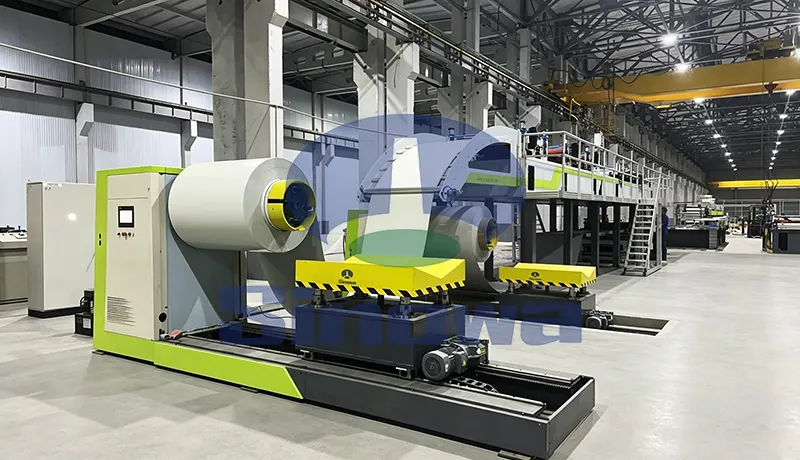
The PU sandwich panel line is a core production setup for making high-performance building insulation panels. This professional PU sandwich panel production line features automated operation to streamline the whole manufacturing process efficiently. Every component of the polyurethane sandwich panel line is precisely calibrated to ensure consistent panel thickness and structural stability. A well-maintained polyurethane sandwich panel production line can greatly boost production efficiency while reducing manual operation errors. The continuous PU sandwich panel line adapts to diverse production demands for different panel sizes and surface styles. With advanced molding technology, the PIR sandwich panel line produces panels with excellent heat preservation and sound insulation properties. Stable running of the PIR sandwich panel production line guarantees reliable product quality for various construction and industrial application scenarios.
-
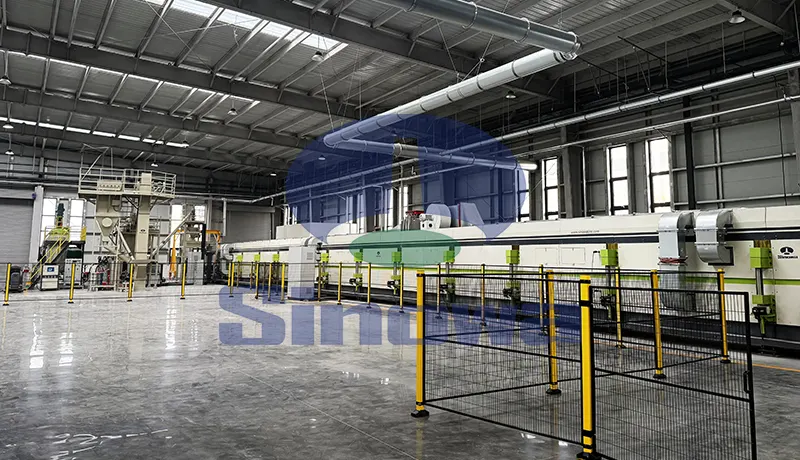
A phenolic insulation board production line serves as the core equipment for manufacturing high-performance thermal insulation building materials. This phenolic insulation panel production line integrates material mixing, foaming, molding and cutting processes to ensure continuous and stable production efficiency. Every operational link of the insulation board production line is precisely calibrated to produce uniform and durable insulation boards. The automated design of the insulation panel production line effectively reduces manual intervention and improves product consistency. Proper maintenance of the phenolic board production line can greatly extend its service life and maintain steady production output. With optimized structural design, the phenolic panel production line adapts to various production demands and delivers high-quality finished products for thermal insulation engineering applications.
-
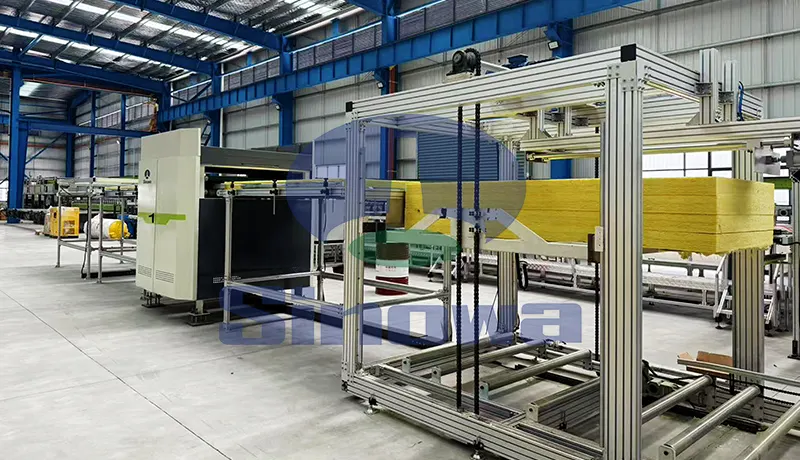
A professional rockwool sandwich panel line serves as the core equipment for producing high-performance building panels. This rockwool sandwich panel production line integrates feeding, laminating and forming processes to ensure stable and efficient production. The well-structured rock wool sandwich panel line can process raw rockwool materials into panels with excellent thermal and sound insulation properties. Operators can adjust the running parameters of the rock wool sandwich panel production line to manufacture panels of different thicknesses and specifications. The automated design of the mineral wool sandwich panel production line greatly reduces manual operation errors and improves product consistency. Regular maintenance of the mineral wool sandwich panel line is essential to sustain long-term operational efficiency and guarantee qualified finished panels for diverse construction applications.