Why Is The Production Speed Of Rock Wool Sandwich Panel Line Unstable?
Publication Date: Sep 24, 2026
The unstable production speed of rock wool sandwich panel lines plagues many manufacturing plants, causing output fluctuations and product inconsistencies.
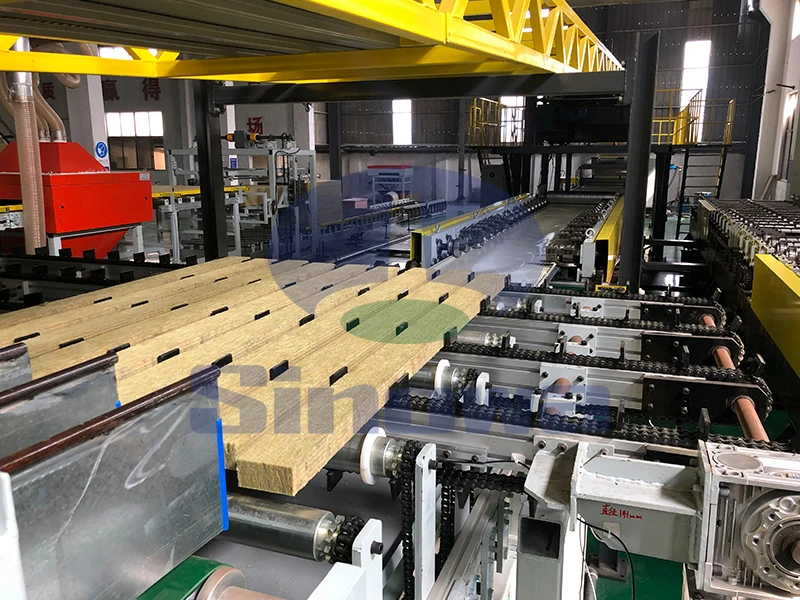
Mechanical equipment wear and aging stands as one of the most prevalent causes of unstable production speed in rock wool sandwich panel production lines. Long-term continuous operation inevitably leads to gradual wear on key transmission components, including drive gears, conveyor rollers and bearing assemblies. These parts bear frequent friction and load pressure during daily production, and subtle abrasions or deformation will form over time without timely maintenance. When transmission components lose their original operating precision, the conveying speed of base plates and rock wool core materials will fluctuate irregularly. Moreover, aging motor devices often generate unstable power output, failing to provide consistent driving force for the entire production line. Even minor mechanical jitters can be amplified in continuous industrial production, resulting in obvious speed variations during panel forming, gluing and cutting processes, which directly disrupts the uniform rhythm of mass production.
Unstable raw material quality and inconsistent feeding conditions also severely disrupt the steady operation of rock wool sandwich panel production lines. Rock wool core materials vary greatly in density, fiber tightness and thickness uniformity due to different raw material processing batches. Loose or uneven rock wool materials are prone to stacking, skewing or compression deformation during automatic feeding, which will block the feeding channel intermittently and force the production line to slow down or pause temporarily. In addition, the surface flatness and hardness of metal base plates may differ between batches. Overly soft or warped base plates cannot be conveyed at a fixed speed through the roller system, causing intermittent stuck conditions. The automatic feeding system is designed for standardized material specifications, and frequent material condition changes will make the equipment unable to maintain a constant operating speed, leading to frequent speed rises and falls throughout the production process.
Improper parameter setting and unreasonable program debugging are common human-induced factors triggering production speed instability. Many production lines adopt unified operating parameters for long-term batch production, ignoring the subtle adjustments required for different production environments and material states. Operators may set mismatched running speeds for feeding, gluing, pressing and cutting modules, resulting in uncoordinated operation of each production link. For example, if the front-end feeding speed is set too fast while the back-end pressing and curing speed is slow, material accumulation will occur, forcing the front-end equipment to automatically decelerate to match the back-end progress. Conversely, an excessively slow feeding speed will leave back-end equipment in an idle state with sudden speed jumps during material supplement. Meanwhile, inaccurate program debugging will lead to delayed sensor response and wrong instruction transmission, making the equipment frequently switch between acceleration and deceleration states and failing to maintain stable continuous operation.
Sensor failure and detection system deviation are easily overlooked key factors of unstable production speed. Modern rock wool sandwich panel production lines rely on various precision sensors to monitor material position, conveying speed and processing status in real time, so as to adjust equipment operating parameters intelligently. Dust, debris and residual glue generated during production will adhere to the sensor probe surfaces, blocking signal induction and reducing detection accuracy. When sensors cannot accurately feed back real-time production status, the control system will issue wrong speed adjustment instructions randomly. In addition, long-term operation will cause sensor parameter drift and sensitivity decline, leading to delayed or missing signal transmission. Minor detection errors will cause the control system to frequently adjust the operating speed of each equipment module, resulting in overall speed instability of the entire production line and disrupting continuous production rhythm.
Abnormal operation of the gluing system indirectly causes fluctuations in the production speed of sandwich panel lines. Gluing is a core intermediate link that connects material feeding and hot pressing forming, and its operating stability directly affects the overall production progress. Blockage of gluing nozzles, uneven glue output and unstable glue viscosity will lead to inconsistent gluing quality on the surface of rock wool and base plates. When local glue shortage or excessive glue accumulation occurs, the production line’s intelligent monitoring system will automatically trigger speed adjustment mechanisms to ensure gluing uniformity, forcing the equipment to decelerate for supplementary gluing or accelerate to eliminate accumulated materials. At the same time, unstable glue temperature will change fluidity, resulting in discontinuous gluing processes. Frequent adjustments caused by gluing system abnormalities break the fixed production cycle, making the overall production speed unable to maintain a stable state for a long time.
Faults and pressure instability of the hot pressing unit are important mechanical factors leading to production speed fluctuations. The hot pressing process determines the forming efficiency of rock wool sandwich panels and requires stable pressure and temperature conditions to match fixed operating speed. When the hydraulic system of the hot pressing equipment has minor oil leakage, pipeline blockage or pressure pump aging problems, the pressing pressure will fluctuate continuously. Insufficient or unstable pressure will affect the bonding and forming speed of sandwich panels, making the equipment unable to complete pressing work within the set time. To ensure product forming quality, the production line will automatically adjust the conveying and operating speed to adapt to pressure changes. In addition, uneven heating of the hot pressing plate will lead to inconsistent curing speed of internal materials, resulting in intermittent pause and speed adjustment of the production line during the pressing and discharging process, causing overall speed instability.
Irregular daily maintenance and inadequate equipment upkeep aggravate production speed instability of the whole line. Many production workshops only conduct simple fault removal after equipment shutdown, lacking systematic and regular precision maintenance. Long-term accumulated dust, oil dirt and material residues will adhere to the conveyor system, transmission gears and track structures, increasing equipment operating resistance. Increased friction will make the equipment consume more power during operation, leading to slow startup, uneven operating speed and occasional stalling. Moreover, lack of regular lubrication for rotating and transmission components will cause dry friction and component jitter, further disrupting speed stability. Minor hidden faults that are not eliminated in daily maintenance will gradually accumulate and evolve into obvious operating abnormalities, making the production speed fluctuate frequently in daily operation.
Unstable power supply and electrical system abnormalities are external core factors affecting production speed stability. The entire rock wool sandwich panel production line relies on stable voltage and current output to maintain fixed operating speed. Fluctuating grid voltage, instantaneous power surge or insufficient power load will cause unstable motor operating power, leading to inconsistent equipment operating speed. Aging electrical circuits, loose wiring terminals and damaged contactors will also cause intermittent power supply interruption and signal transmission errors. When the electrical system fails to provide continuous and stable power support, each functional module of the production line will have inconsistent operating states. Some modules may decelerate due to insufficient power, while others maintain normal speed, resulting in overall production rhythm disorder and obvious speed instability in continuous production.
Changes in production environment conditions also exert an indirect but obvious impact on the operating speed of sandwich panel production lines. Ambient temperature and humidity changes will affect both equipment operating performance and material processing state. In low-temperature environments, mechanical components will shrink slightly, lubricating oil fluidity will decrease, and equipment operating resistance will increase, resulting in reduced and unstable operating speed. In high-humidity environments, rock wool materials easily absorb moisture, leading to increased weight and reduced flexibility, which affects feeding and conveying efficiency and forces the production line to adjust speed frequently. In addition, excessive workshop dust will affect the sensitivity of electrical components and sensors, and uneven ground vibration will cause equipment jitter, further disrupting the stable operating speed of the entire production line.
Unreasonable manual operation and insufficient operator proficiency are human factors that cannot be ignored for speed instability. In actual production, some operators fail to follow standardized operating procedures and adjust equipment parameters arbitrarily according to subjective experience, breaking the matched operating rhythm of each production link. New operators with insufficient proficiency cannot accurately judge subtle abnormal states of equipment and materials, and cannot make timely and precise parameter adjustments. Improper manual intervention, such as forced material feeding and random equipment debugging, will cause sudden changes in production line operating speed. Meanwhile, irregular start-stop operations in the production process will damage the stable operating state of the equipment, leading to frequent speed fluctuations in subsequent continuous production and affecting overall production efficiency and stability.
Gallery of Rock Wool Sandwich Panel Line
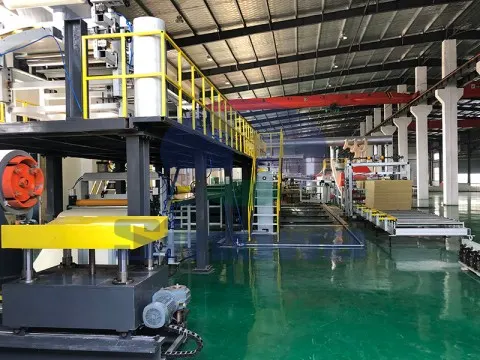
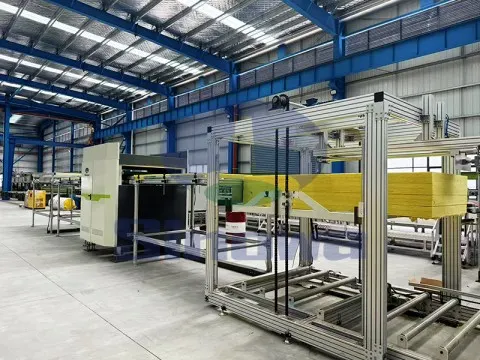
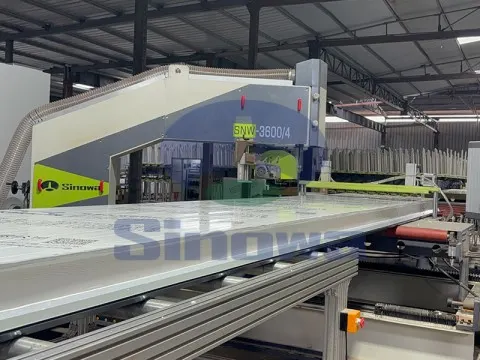
Tags: rock wool sandwich panel line, rock wool sandwich panel line manufacturer, rock wool sandwich panel line supplier, china rock wool sandwich panel line, rock wool sandwich panel line for sale
-
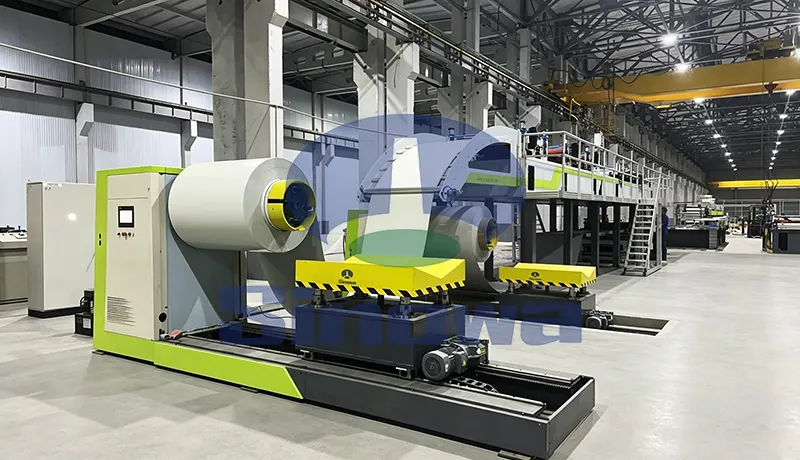
The PU sandwich panel line is a core production setup for making high-performance building insulation panels. This professional PU sandwich panel production line features automated operation to streamline the whole manufacturing process efficiently. Every component of the polyurethane sandwich panel line is precisely calibrated to ensure consistent panel thickness and structural stability. A well-maintained polyurethane sandwich panel production line can greatly boost production efficiency while reducing manual operation errors. The continuous PU sandwich panel line adapts to diverse production demands for different panel sizes and surface styles. With advanced molding technology, the PIR sandwich panel line produces panels with excellent heat preservation and sound insulation properties. Stable running of the PIR sandwich panel production line guarantees reliable product quality for various construction and industrial application scenarios.
-
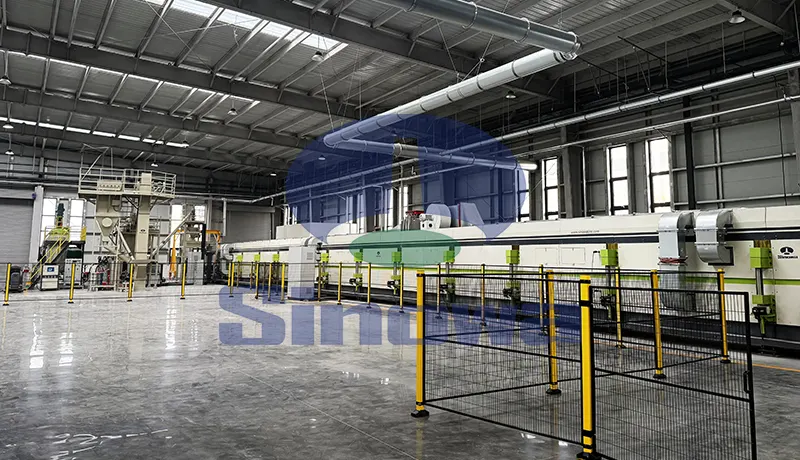
A phenolic insulation board production line serves as the core equipment for manufacturing high-performance thermal insulation building materials. This phenolic insulation panel production line integrates material mixing, foaming, molding and cutting processes to ensure continuous and stable production efficiency. Every operational link of the insulation board production line is precisely calibrated to produce uniform and durable insulation boards. The automated design of the insulation panel production line effectively reduces manual intervention and improves product consistency. Proper maintenance of the phenolic board production line can greatly extend its service life and maintain steady production output. With optimized structural design, the phenolic panel production line adapts to various production demands and delivers high-quality finished products for thermal insulation engineering applications.
-
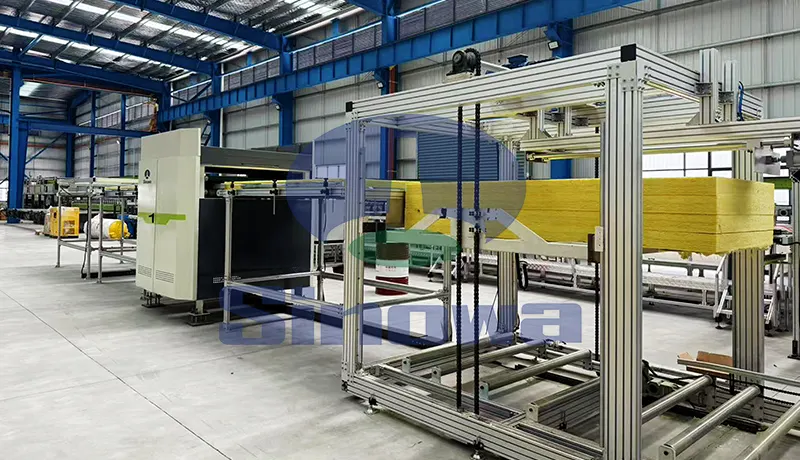
A professional rockwool sandwich panel line serves as the core equipment for producing high-performance building panels. This rockwool sandwich panel production line integrates feeding, laminating and forming processes to ensure stable and efficient production. The well-structured rock wool sandwich panel line can process raw rockwool materials into panels with excellent thermal and sound insulation properties. Operators can adjust the running parameters of the rock wool sandwich panel production line to manufacture panels of different thicknesses and specifications. The automated design of the mineral wool sandwich panel production line greatly reduces manual operation errors and improves product consistency. Regular maintenance of the mineral wool sandwich panel line is essential to sustain long-term operational efficiency and guarantee qualified finished panels for diverse construction applications.