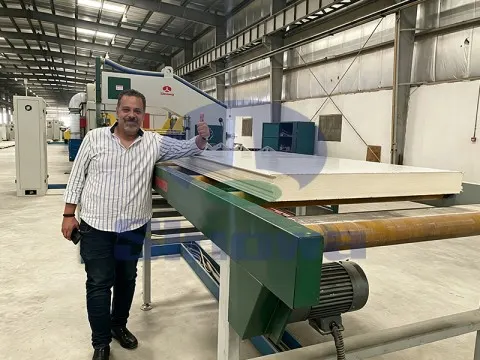
PUR Sandwich Panel Machinery
PUR Sandwich Panel Machinery. Continuous production line for PUR & PIR insulated sandwich panels. Wall, roof & cold room panels. Custom machinery solution.
PUR sandwich panel machinery represents a highly integrated and automated production system dedicated to the continuous manufacturing of polyurethane composite sandwich panels, which are core lightweight and heat-insulating building materials widely adopted in modern construction, industrial warehousing, and cold chain facilities. This professional production equipment integrates multiple functional modules covering raw material unwinding, surface forming, precise material mixing, high-pressure foaming, continuous lamination, constant-temperature curing, fixed-length cutting and finished product stacking, realizing one-stop streamlined production without intermittent manual intervention. Different from traditional discrete panel manufacturing equipment, this machinery adopts a fully continuous operation mode, effectively eliminating production gaps and quality fluctuations caused by frequent equipment start-stop and parameter adjustment. It perfectly combines mechanical transmission technology, fluid precise metering technology, constant-temperature thermal control technology and intelligent linkage control technology, ensuring that each produced panel features uniform core density, stable bonding performance and consistent overall specifications. As the market demand for energy-saving, high-strength and easy-to-install building panels continues to grow, PUR sandwich panel line has become essential core equipment for upgrading the panel manufacturing industry, helping manufacturers achieve large-scale, high-efficiency and standardized production while optimizing product comprehensive performance and reducing overall production consumption.
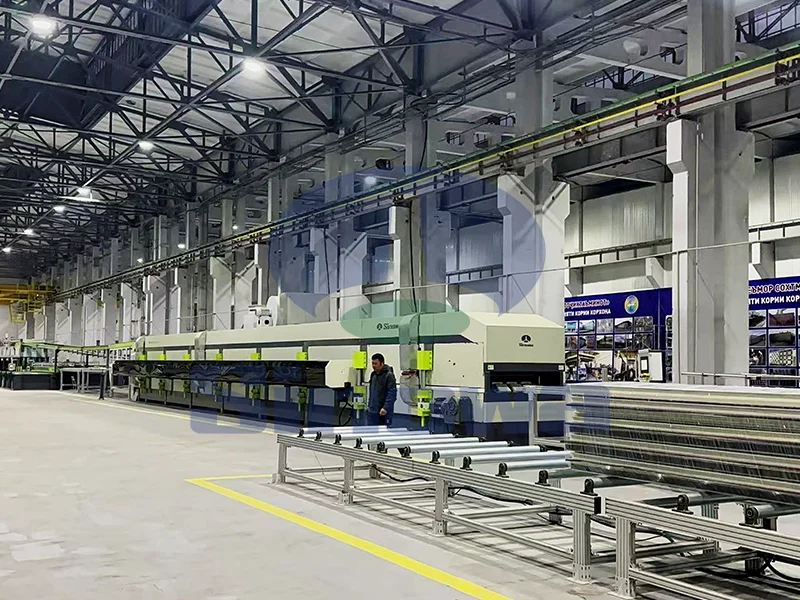
The overall structural design of PUR sandwich panel making machinery focuses on modular integration and operational stability, with each functional unit independently configured and closely linked to form a complete closed-loop production system. The whole equipment is divided into multiple core functional areas according to the production process sequence, including substrate feeding and forming area, PUR raw material mixing and foaming area, composite lamination and curing area, precision cutting and finishing area, and automatic finished product output area. Each module is designed with adaptive linkage functions, which can realize synchronous speed adjustment and parameter matching according to different production speeds and panel specifications, avoiding production mismatches that affect product quality. The mechanical frame adopts high-strength welded structural materials, which can withstand long-term continuous operation and maintain stable structural deformation resistance, effectively reducing equipment vibration and displacement during high-speed production. In addition, the equipment is equipped with optimized transmission and buffer structures, which slow down the mechanical wear caused by long-term operation and extend the overall service life of the production line. The modular design also brings great convenience for daily equipment maintenance and later function upgrading, allowing operators to independently inspect, repair or replace a single functional module without affecting the overall operation of the production line, greatly improving the operational flexibility and maintainability of the equipment in industrial production scenarios.
The substrate feeding and roll forming system is the front-end core module of PUR sandwich panel production line, undertaking the pretreatment and shaping of upper and lower surface materials of sandwich panels. This system mainly consists of automatic uncoiling devices, material leveling mechanisms and multi-pass roll forming units, which cooperate to complete the continuous feeding and precise shaping of coil raw materials. The automatic uncoiling device can stably release coiled substrates at a constant speed, and is equipped with tension control components to avoid material deviation, stretching or wrinkling during feeding, ensuring the flatness and uniformity of surface materials. The follow-up leveling mechanism further corrects the subtle deformation of the substrate caused by coiling and transportation, eliminating uneven stress on the material surface. The multi-pass roll forming unit adopts graded rolling design, which gradually shapes the flat substrate into the required plate structure through multiple groups of precision forming rollers, instead of one-time strong pressing that easily causes material damage. All forming parameters such as rolling gap and forming speed can be flexibly adjusted according to different substrate thicknesses and panel profile requirements. This precise forming process ensures that the surface materials have accurate dimensional accuracy and stable structural performance, laying a solid foundation for the subsequent tight composite bonding with PUR foam core materials and avoiding quality problems such as uneven plate surface and inconsistent edge dimensions of finished panels.
The PUR raw material storage, metering and mixing system is the key functional unit that determines the thermal insulation and structural performance of finished panels, responsible for the precise proportioning and uniform mixing of polyurethane reactive raw materials. Polyurethane foam is formed by the chemical reaction of two different liquid raw materials, which need to be stored in independent sealed storage tanks in the equipment to avoid premature contact and reaction. The storage tanks are equipped with constant-temperature insulation structures to maintain the stable activity of raw materials, preventing raw material performance degradation caused by excessive temperature fluctuation. The core of the system lies in the high-precision metering device, which can accurately control the output of two raw materials in real time according to set proportions, effectively avoiding performance defects such as insufficient foaming, uneven density or poor bonding caused by unreasonable material ratio. After precise metering, the raw materials are transported to the high-pressure mixing chamber, where professional mixing structures carry out rapid and uniform stirring to fully fuse the two raw materials and form a homogeneous reactive mixture. The optimized mixing structure reduces pressure loss during material transmission, ensures thorough mixing effect, and minimizes the temperature rise of the mixture during the mixing process, so that the subsequent foaming reaction can be carried out in the most stable state, ensuring the consistency of the internal pore structure of the foam core layer.
The high-pressure foaming and uniform spraying system of PUR sandwich panel production machinery realizes the uniform coverage and preliminary foaming of polyurethane mixture on the surface of the substrate, which is a crucial link to form the sandwich composite structure. After being fully mixed, the PUR reactive liquid is transported to the automatic spraying device through a high-pressure pipeline, and the adjustable injection nozzles evenly spray the mixture on the surface of the lower substrate that has been formed and conveyed stably. The spraying system supports dynamic adjustment of spraying width and thickness according to different panel specifications, realizing full coverage of the substrate width without dead zones or overlapping accumulation. The high-pressure injection mode ensures that the liquid mixture can quickly infiltrate the tiny gaps on the substrate surface, enhancing the subsequent bonding tightness between the foam core layer and the surface plate. After spraying, the PUR mixture starts a preliminary foaming reaction under set temperature conditions, and gradually expands to fill the space between the upper and lower substrates. The equipment precisely controls the foaming speed and initial expansion volume through parameter setting, avoiding excessive foaming overflow or insufficient filling. This standardized spraying and preliminary foaming process ensures that the foam core layer can form a uniform and compact structure in the subsequent composite curing stage, effectively improving the overall thermal insulation and pressure resistance of the sandwich panel.
The double-belt pressing and constant-temperature curing system is the core molding unit of PUR sandwich panel line, determining the final structural stability and comprehensive performance of finished panels. After the upper and lower substrates with PUR foam mixture enter the double-belt press equipment, the upper and lower parallel heat-conveying belts apply uniform and stable pressure to the composite plate body, ensuring that the foam core layer is closely combined with the surface plates without hollowing or delamination. The pressing system maintains consistent pressure output in the whole width and length range of the plate, avoiding local pressure deviation leading to uneven core layer density. At the same time, the system is equipped with an intelligent constant-temperature thermal control module, which creates a stable temperature environment inside the curing channel to promote the complete cross-linking, foaming and curing reaction of polyurethane materials. In this closed constant-temperature space, the foam fully expands and polymerizes to form a solid integral core structure with uniform pore size and stable density. The length of the curing channel and the conveying speed of the belt body are scientifically matched to ensure that the polyurethane reaction is fully completed before the plate exits the molding section. This integrated pressing and curing process enables the surface plates and the foam core layer to form an inseparable integral structure, greatly improving the mechanical strength, structural stability and service durability of the finished sandwich panel.
The precision trimming and fixed-length cutting system of the PUR sandwich panel equipment is responsible for finishing and sizing the cured integrated sandwich panels to meet the unified specification requirements of finished products. After the composite panels are discharged from the curing and molding system, they will be stably conveyed to the trimming and cutting station through the synchronous conveying mechanism. Firstly, the edge trimming device accurately cuts off the excess foam and edge materials on both sides of the plate, correcting the edge deviation generated in the previous production process to ensure the straightness and flatness of the plate edge. The trimming tool adopts high-precision cutting components with stable cutting performance, which can realize smooth cutting without burrs or edge damage, avoiding subsequent edge cracking of the panel. Then, the fixed-length cutting system performs accurate positioning and cutting according to the preset panel length parameters. The intelligent positioning sensor tracks the conveying speed and plate length in real time, and the cutting tool performs instantaneous stable cutting at the precise position, ensuring that the length error of each finished panel is controlled within a tiny range. The whole trimming and cutting process is fully automated, with no need for manual measurement and operation. It can adapt to the switching of multiple panel length specifications, effectively improving the dimensional accuracy and appearance quality of finished products, and meeting the unified installation and use requirements of engineering projects.
The automatic conveying and cooling system of PUR sandwich panel manufacturing line undertakes the stable transmission and post-curing cooling of finished panels, ensuring the structural stability of panels after molding. After cutting and trimming, the high-temperature panels just out of the curing area will be conveyed to the cooling buffer area through the multi-group synchronous conveying roller way. The conveying system adopts variable-frequency speed regulation design, which can adjust the conveying speed synchronously with the front-end production rhythm to avoid plate accumulation or excessive tension. The cooling area adopts natural air circulation and auxiliary uniform heat dissipation structure, which slowly and evenly reduces the internal and surface temperature of the panel, avoiding rapid temperature drop causing internal stress and structural deformation of the foam core layer. Sufficient cooling treatment enables the polyurethane core layer to complete the final stable shaping, further solidify the bonding performance between the core layer and the surface plates, and eliminate the residual reaction stress inside the plate body. The entire cooling and conveying process maintains the flat state of the panel, effectively preventing plate bending, warping and other quality problems. This stable post-processing link perfects the whole production process, ensures that the performance and shape of the finished panel tend to be completely stable, and improves the qualified rate of finished products.
The intelligent control and linkage regulation system is the brain core of PUR sandwich panel production equipment, realizing the unified scheduling and precise control of all production links. The entire production line is equipped with an integrated intelligent operating platform, which can centrally set, adjust and monitor all production parameters including feeding speed, material ratio, foaming temperature, curing pressure, cutting size and operating rhythm. The system adopts automatic linkage control logic, and when a single parameter is adjusted, all matching functional modules will synchronously complete parameter adaptation, avoiding production disorder caused by mismatched parameters of each link. In the production process, the real-time monitoring module collects the operating data of each equipment unit and product processing data in real time, and feeds back the abnormal data to the operating system in time to realize early warning of equipment failure and product quality deviation. Operators can complete daily production setting, equipment operation monitoring and production data statistics through a simple human-computer interaction interface. The intelligent control system not only simplifies the operation process and reduces the dependence on manual experience, but also maintains the stability and consistency of the production process for a long time, effectively reducing the error rate and failure rate in the production process, and greatly improving the overall production efficiency and product quality stability of the equipment.
The operational advantages of PUR sandwich panel manufacturing equipment in industrial production are mainly reflected in high automation, stable product quality and low comprehensive consumption. Different from semi-automatic production equipment that requires a large number of manual auxiliary operations, this equipment realizes full-process automatic production from raw material feeding to finished product output, which can effectively reduce manual operation errors and labor input costs. The continuous uninterrupted production mode eliminates the quality difference between batches caused by frequent equipment start-stop and parameter resetting, making the density, thickness, bonding strength and thermal insulation performance of each batch of panels highly consistent. In terms of energy consumption control, the equipment adopts optimized energy-saving design in heating, pressing and transmission links, realizing precise energy supply on demand and reducing invalid energy consumption in the production process. At the same time, the precise metering and mixing system minimizes the waste of raw materials, improves the utilization rate of polyurethane raw materials and surface substrates. In addition, the equipment has strong production adaptability, which can flexibly switch and produce sandwich panels of different thicknesses, specifications and surface types according to market demand, meeting the diversified production needs of manufacturers and improving the comprehensive production benefit of the production line.
With the continuous upgrading of building energy-saving and green manufacturing concepts, the application prospect of PUR sandwich panel machine is becoming increasingly broad. Modern construction fields such as prefabricated buildings, clean workshops, low-temperature cold storage and industrial enclosure structures have put forward higher requirements for the thermal insulation performance, structural stability and installation efficiency of sandwich panels, which drives the continuous technological optimization and functional upgrading of supporting production equipment. PUR sandwich panel machinery is constantly evolving towards higher intelligence, higher precision and stronger integration. The upgraded equipment can realize more accurate parameter control, more stable operation state and more diverse product production capabilities, and can better adapt to the complex and changeable market application scenarios. In the field of green manufacturing, the optimized production process of the equipment can effectively reduce production waste and energy consumption, conforming to the development trend of low-carbon and environmental protection in the manufacturing industry. As the core equipment of the sandwich panel manufacturing industry, it will continue to support the high-quality development of the building material industry, provide efficient and reliable production guarantees for the popularization and application of high-performance energy-saving building panels, and create greater market value for modern building engineering construction.
The daily maintenance and standardized operation of PUR sandwich panel manufacturing machinery are crucial to prolonging equipment service life and maintaining long-term stable production efficiency. In daily operation, operators need to strictly follow standardized operation procedures, complete pre-production equipment inspection including material pipeline patency, sensor sensitivity and mechanical operation flexibility, and eliminate potential equipment faults in advance. For the core functional modules such as metering mixing system and spraying device, regular cleaning and maintenance are required to prevent raw material residue from blocking pipelines and nozzles, ensuring the accuracy of material proportioning and spraying uniformity. The transmission and pressing components need regular lubrication and gap calibration to reduce mechanical friction wear and ensure the stability of pressing pressure and conveying speed. In addition, the intelligent control system needs regular data calibration and program detection to ensure the accuracy of parameter monitoring and automatic linkage regulation. Regular equipment maintenance can effectively avoid sudden production failures, reduce equipment downtime and maintenance costs, and maintain the long-term stable and efficient operation state of the production line. Scientific operation and maintenance management can not only extend the service life of the equipment, but also continuously ensure the high-quality output of products, providing stable technical support for the long-term production and operation of manufacturing enterprises.
Tags: pur sandwich panel machinery, pur sandwich panel machinery manufacturer, pur sandwich panel machinery supplier, china pur sandwich panel machinery, pur sandwich panel machinery for sale
https://www.sandwichpanelmachinery.com/sandwich-panel-machineries/pur-sandwich-panel-machinery.html
Related Informations
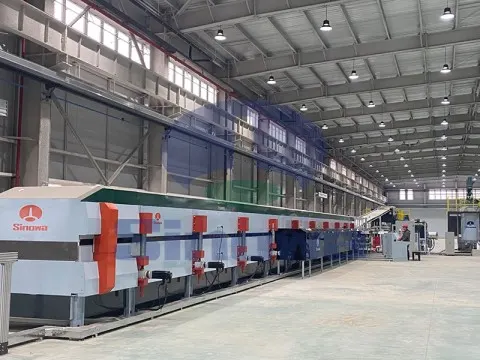
How To Calibrate Dosing System Of Continuous PUR Sandwich Panel Production Machine?