Insulation Sandwich Panel Machine
Publication Date: Sep 27, 2026
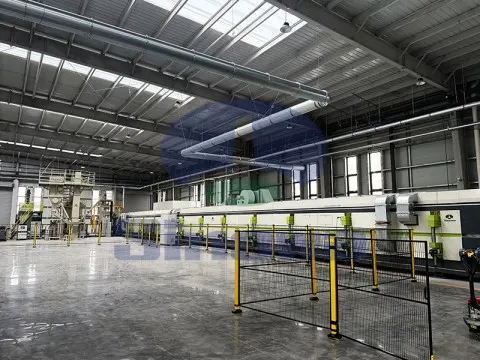
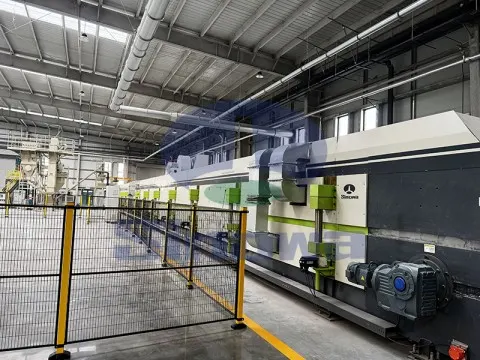
Insulation sandwich panel machine is a specialized automated production system for manufacturing composite insulation panels. It integrates multiple processing procedures to produce durable, heat-insulating panels with layered structures, widely used in modern construction and industrial enclosure projects.
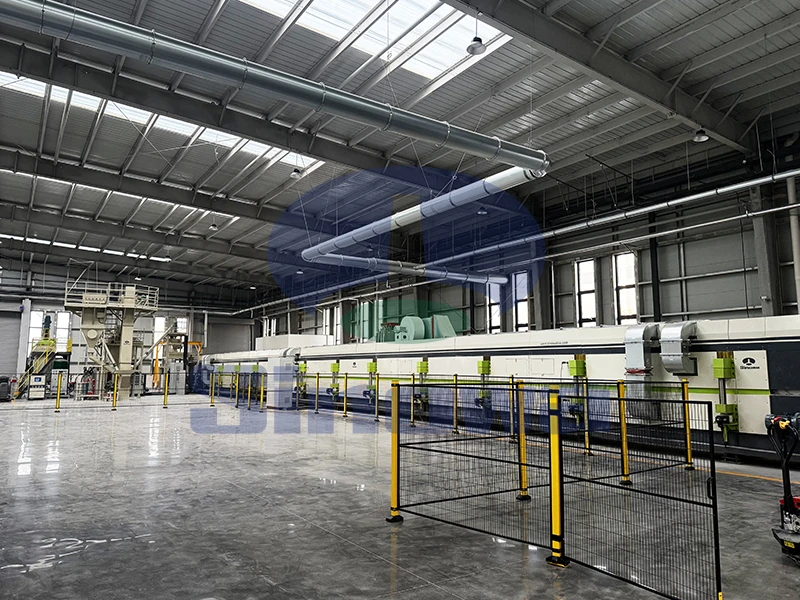
Insulation sandwich panel machines serve as core automated equipment for producing multi-functional composite building panels, relying on systematic mechanical collaboration to complete continuous and standardized panel manufacturing. The equipment focuses on combining rigid outer surface materials with lightweight thermal insulation core materials, forming a stable three-layer integrated structure through precise mechanical processing and bonding treatment. Unlike traditional manual or semi-automatic production methods, this automated system unifies multiple independent processing steps into one streamlined production flow, effectively avoiding inconsistencies in manual operation and greatly improving production stability. It adapts to diverse production demands by adjusting mechanical parameters, enabling the fabrication of panels with different thicknesses and structural configurations to fit various application scenarios. The overall operational logic prioritizes precision and continuity, ensuring every produced panel maintains consistent structural compactness and basic performance stability in daily mass production.
The complete structure of an insulation sandwich panel machinery adopts a modular design, with each functional unit closely connected to form a complete closed-loop production system. The main functional modules cover raw material conveying, surface material pretreatment, core material processing, adhesive coating, composite pressing, constant-temperature curing, fixed-length cutting and finished product sorting. Each module is equipped with independent adjustable mechanical structures and linkage control components, which can synchronize operating parameters according to production requirements. The raw material conveying module ensures stable and uniform feeding of surface plates and insulation core materials, avoiding material deviation or stacking during operation. The pretreatment unit handles surface leveling and impurity removal of outer layer materials, creating a clean and flat bonding foundation for subsequent composite processing. This modular structural layout not only simplifies daily operation and maintenance but also allows flexible adjustment of production processes for different raw material combinations.
Raw material feeding and pretreatment are the foundational stages that determine the overall quality of finished sandwich panels. The machine's automatic feeding system transports surface materials and insulation core materials at a constant and controllable speed, maintaining precise material alignment throughout the process. For metal or non-metal surface materials, the pretreatment mechanism conducts fine leveling and surface smoothing to eliminate wrinkles, bends and surface impurities that may affect bonding effects. Meanwhile, the core material processing unit sorts and arranges porous insulation fillers to ensure uniform density and complete coverage between the two surface layers. During this stage, all feeding speeds and pretreatment intensities are adjustable, which can match different material hardness and texture characteristics. Standardized pretreatment effectively eliminates potential quality hazards such as uneven bonding and local hollowing, laying a solid foundation for high-quality composite molding in subsequent procedures.
Adhesive coating and composite lamination are the core procedures that realize the integral structure of sandwich panels. The sandwich panel making machine is fitted with a precise automatic gluing system that evenly coats high-performance adhesive on the inner surfaces of outer layer materials. The gluing amount and coating range are precisely controlled by mechanical calibration to avoid excessive glue overflow or insufficient coating areas, ensuring uniform bonding force across the entire panel surface. After gluing, the surface materials and intermediate insulation core materials are accurately aligned and sent to the composite pressing area. The upper and lower roller sets in the pressing unit adopt stepless spacing adjustment, which can adapt to different panel thickness specifications. Uniform static pressure is applied to the stacked materials to make the three layers closely fit together, eliminating internal gaps and ensuring the initial integration of the composite structure.
Constant-temperature pressure curing is a key step to stabilize the bonding performance and structural strength of sandwich panels. After preliminary composite pressing, semi-finished panels enter a closed constant-temperature curing channel with adjustable internal environmental parameters. The curing system is equipped with circulating heating and uniform air supply components, which form a stable and balanced temperature field inside the channel to ensure consistent curing effects on all parts of the panel. According to the characteristics of different adhesives and core materials, the system can flexibly adjust curing temperature and holding time to promote full reaction and solidification of adhesives. Long-term stable pressure is maintained during the curing process to prevent structural deformation or layer separation caused by material shrinkage. This procedure fully strengthens the internal bonding structure of the panel, endowing the finished product with excellent structural stability and anti-delamination performance.
Foam mixing and pouring systems are essential core components for producing foam-based insulation sandwich panels. For panels with polyurethane and similar foam cores, the sandwich panel manufacturing machine adopts a high-precision batching and mixing structure to proportion various liquid raw materials including reaction monomers and functional additives. All raw materials are mixed evenly under controlled pressure and temperature to trigger stable foaming reactions, avoiding uneven density and local voids in the foam layer. The mixed foaming materials are quantitatively poured into the gap between the upper and lower surface layers through a precise discharging structure. With the limitation of adjustable conveyor spacing, the foam expands evenly and fills the entire interlayer space, forming a dense and uniform thermal insulation core. The whole foaming and pouring process is carried out in a closed environment, which ensures the safety of production and the uniformity of core material structure.
Fixed-length cutting and edge trimming processes ensure the dimensional accuracy and appearance quality of finished sandwich panels. After complete curing and shaping, continuous semi-finished panels are transported to the precision cutting unit. The machine’s intelligent cutting system can set arbitrary cutting lengths according to production requirements, and the cutting tool operates with high precision to ensure flat and neat cutting sections without burrs or irregular edges. The edge trimming mechanism further polishes and trims the four sides of the panel, removing residual materials and uneven edges generated during composite molding. This processing step standardizes the overall dimensions of each panel, ensuring good assembly compatibility during on-site installation. At the same time, it eliminates sharp edges and surface defects, improving the overall appearance and safety performance of finished products.
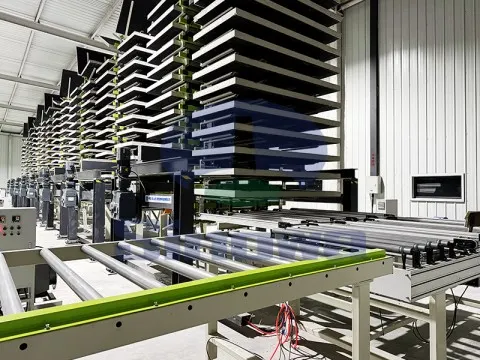
Cooling shaping and automatic stacking are the final finishing procedures of the entire sandwich panel production line. After cutting and trimming, high-temperature panels are sent to the cooling area for natural and auxiliary balanced cooling, which releases internal stress generated during high-temperature curing and pressing. Gradual cooling effectively prevents panel deformation, warping and surface cracks caused by rapid temperature change, further stabilizing the overall structural performance of the panels. After full cooling and shaping, the finished panels are automatically transported to the stacking area by the conveying system. The intelligent stacking mechanism arranges panels neatly in fixed specifications, realizing automatic collection and arrangement of finished products. This automated process replaces manual carrying and stacking, reducing labor investment and avoiding surface scratches and structural damage caused by manual operation.
The operational control system of insulation sandwich panel production machines realizes intelligent and precise management of the whole production process. The centralized control panel integrates all parameter adjustment functions, allowing operators to set feeding speed, pressing pressure, curing temperature, cutting size and other core parameters in a unified manner. The system supports real-time monitoring of operating status of each functional module, automatically identifying abnormal conditions such as material jamming, parameter deviation and equipment overload. Once abnormal problems occur, the system will trigger timely protection responses to stop operation and avoid equipment damage or defective product output. In addition, the control system has parameter memory functions, which can save mature production formulas for different panel specifications, enabling rapid switching of production modes and greatly improving production flexibility and efficiency.
With the continuous development of building material manufacturing technology, insulation sandwich panel machines are constantly evolving towards higher automation, higher precision and stronger versatility. Modern optimized equipment structures reduce mechanical wear and energy consumption during long-term operation, improving overall production energy efficiency. The upgraded adaptive adjustment functions enable the equipment to process more types of surface materials and insulation core materials, expanding the application range of finished panels. While maintaining stable production quality, the equipment effectively reduces defective rate and labor costs, bringing higher production benefits to standardized panel manufacturing. As key supporting equipment for energy-saving building materials, it will continue to play an important role in promoting the standardized production and popularization of high-performance insulation sandwich panels in the construction industry.
Gallery of Insulation Sandwich Panel Machine
Tags: insulation sandwich panel machine, insulation sandwich panel machine manufacturer, insulation sandwich panel machine supplier, china insulation sandwich panel machine, insulation sandwich panel machine for sale
https://www.sandwichpanelmachinery.com/tags/insulation-sandwich-panel-machine.html
-
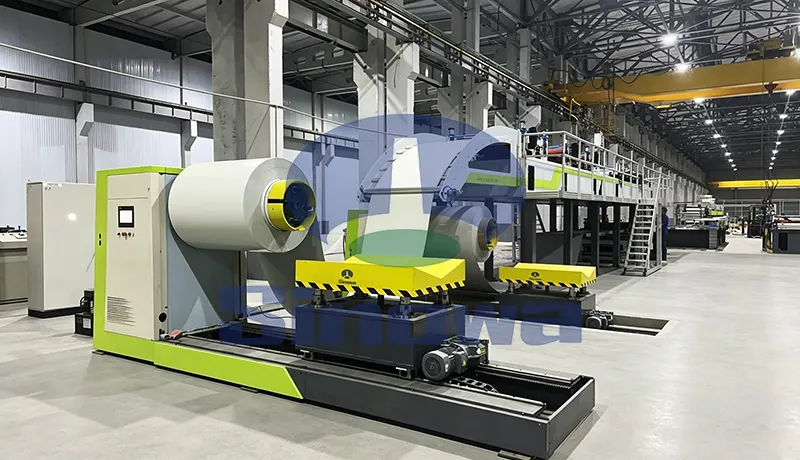
The PU sandwich panel line is a core production setup for making high-performance building insulation panels. This professional PU sandwich panel production line features automated operation to streamline the whole manufacturing process efficiently. Every component of the polyurethane sandwich panel line is precisely calibrated to ensure consistent panel thickness and structural stability. A well-maintained polyurethane sandwich panel production line can greatly boost production efficiency while reducing manual operation errors. The continuous PU sandwich panel line adapts to diverse production demands for different panel sizes and surface styles. With advanced molding technology, the PIR sandwich panel line produces panels with excellent heat preservation and sound insulation properties. Stable running of the PIR sandwich panel production line guarantees reliable product quality for various construction and industrial application scenarios.
-
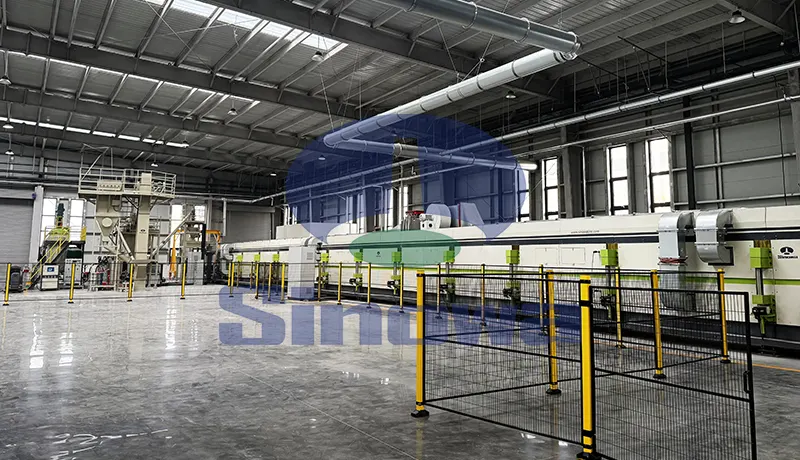
A phenolic insulation board production line serves as the core equipment for manufacturing high-performance thermal insulation building materials. This phenolic insulation panel production line integrates material mixing, foaming, molding and cutting processes to ensure continuous and stable production efficiency. Every operational link of the insulation board production line is precisely calibrated to produce uniform and durable insulation boards. The automated design of the insulation panel production line effectively reduces manual intervention and improves product consistency. Proper maintenance of the phenolic board production line can greatly extend its service life and maintain steady production output. With optimized structural design, the phenolic panel production line adapts to various production demands and delivers high-quality finished products for thermal insulation engineering applications.
-
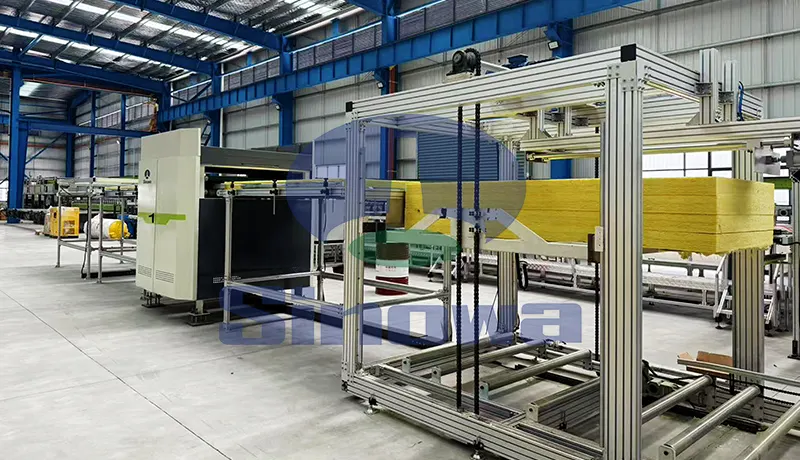
A professional rockwool sandwich panel line serves as the core equipment for producing high-performance building panels. This rockwool sandwich panel production line integrates feeding, laminating and forming processes to ensure stable and efficient production. The well-structured rock wool sandwich panel line can process raw rockwool materials into panels with excellent thermal and sound insulation properties. Operators can adjust the running parameters of the rock wool sandwich panel production line to manufacture panels of different thicknesses and specifications. The automated design of the mineral wool sandwich panel production line greatly reduces manual operation errors and improves product consistency. Regular maintenance of the mineral wool sandwich panel line is essential to sustain long-term operational efficiency and guarantee qualified finished panels for diverse construction applications.