
The delivery time for sandwich panel machinery varies greatly based on machine type, customization level, component sourcing and production scheduling. Standard equipment takes weeks to deliver, while customized continuous lines require months of manufacturing, testing and preparation before shipment.
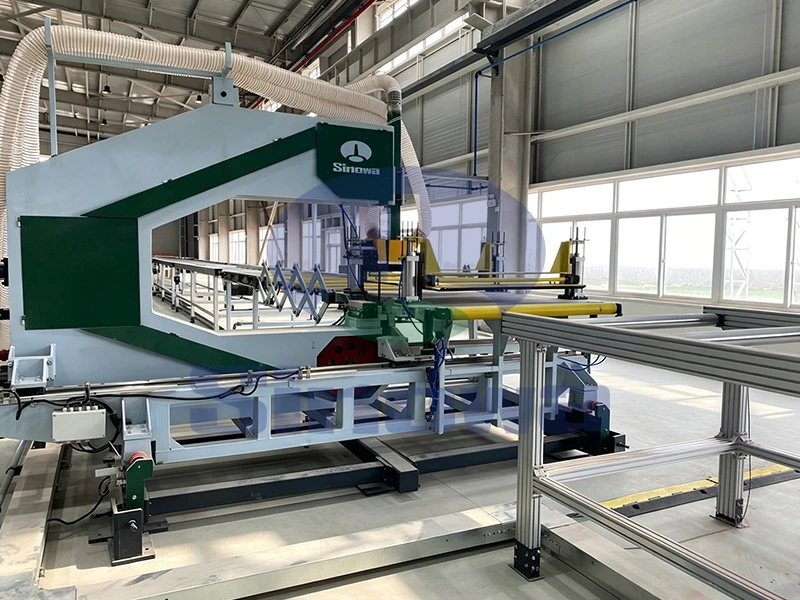
The basic classification of sandwich panel machinery serves as the primary factor determining overall delivery cycles, creating a clear gap between different equipment configurations. Standard discontinuous sandwich panel production lines feature relatively simple structural designs and mature assembly processes, with most core components kept in regular stock for rapid deployment. For these conventional machines that meet universal production demands, the complete delivery process usually spans four to six months from official order confirmation to final shipment. This timeline covers internal order verification, standardized component assembly, basic functional debugging and packaging procedures with no extra process adjustments. In contrast, continuous sandwich panel production lines adopt integrated structural frameworks and precision pressing systems that require exclusive manufacturing. Each structural component is tailor-made to match continuous production logic, leading to extended production cycles that typically range from seven to ten months for full delivery completion.
Customization requirements are the most critical variable that prolongs the delivery time of sandwich panel machinery, as personalized modifications break standardized production workflows. Many industrial clients need adjusted machine parameters, special molding specifications or exclusive functional modules to fit their unique production scenarios. These customized demands require professional technical teams to redesign mechanical structures, revise electrical control programs and adjust assembly processes from scratch. Unlike standard equipment that follows fixed production templates, customized machinery needs repeated technical confirmation, blueprint revision and process optimization. Each modification link adds working days to the overall schedule, and complex multi-item customizations can extend the delivery cycle by one to three months. Even minor adjustments to panel forming sizes or output parameters require targeted testing and verification to ensure stable machine operation after delivery.
Raw material and core component sourcing cycles directly affect the delivery progress of sandwich panel machinery, forming an indispensable precondition for equipment manufacturing. High-precision transmission parts, hydraulic systems and intelligent control modules applied in modern sandwich panel machinery cannot be produced in-house and rely on stable supply channels. The availability of these key components fluctuates with market supply conditions and order backlogs of upstream suppliers. When core components are in sufficient stock, the manufacturing process can start immediately after order confirmation without delay. However, tight market supply or bulk component order backlogs will lead to waiting periods, pushing back the entire production schedule. It often takes several weeks to complete full component procurement and quality inspection before formal machine assembly can commence.
Factory production scheduling and order backlog status play a vital role in determining the actual delivery time of sandwich panel machinery. Professional machinery manufacturers usually maintain a fixed monthly production capacity and arrange production tasks in chronological order of order receipt. During industry peak seasons when market demand surges, manufacturers face dense order backlogs, and new orders need to queue for production arrangement. This queuing period is not included in the standard production cycle and will naturally extend the overall delivery time. In off-seasons with sufficient production vacancies, new orders can be scheduled for production immediately after confirmation, ensuring delivery is completed within the standard cycle. Reasonable production scheduling management helps balance order volume and production capacity to avoid excessive delivery delays.
In-factory testing and quality inspection procedures are essential links that occupy a fixed proportion of the sandwich panel machinery delivery cycle. After completing mechanical assembly and electrical wiring, all equipment must go through multi-round functional debugging and performance testing to eliminate potential operational faults. The testing process includes no-load operation detection, simulated production running, parameter calibration and safety performance verification. Standard equipment requires at least one to two weeks of systematic testing to confirm stable operation. Customized machinery with special functions needs longer targeted testing cycles to verify the effectiveness of personalized modules. Unqualified equipment needs rework and secondary testing, which will further extend the delivery timeline to ensure qualified product quality before shipment.
Order processing and document preparation procedures also consume a certain amount of time in the overall delivery cycle of sandwich panel machinery. After receiving customer orders, manufacturers need to complete internal review processes including demand confirmation, technical scheme verification and contract review. This preliminary sorting work ensures all production requirements are clear and avoids subsequent production deviations. For cross-regional transactions, professional staff need to sort out shipment documents, inspection materials and logistics certification files in advance. Standard order processing takes several working days, while complex orders with special transaction terms require longer document sorting and confirmation. These pre-shipment preparations are necessary to ensure smooth follow-up logistics and handover processes.
Logistics transportation and port processing cycles are key external factors affecting the final arrival time of sandwich panel machinery. After equipment completion and packaging, the delivery process enters the logistics stage, whose duration depends on transportation distance and shipping scheduling. Short-distance land transportation can be completed within a short time, while long-distance sea transportation requires fixed shipping schedules and route arrangement. Additionally, port loading, customs declaration and inspection procedures will occupy extra time. Occasional port congestion, shipping schedule adjustments or temporary policy inspections may cause slight delays in logistics links. Overall, the logistics stage usually takes several weeks, varying with different transportation modes and destination conditions.
Quantity of ordered equipment directly changes the overall delivery cycle of sandwich panel machinery. Single-unit orders follow the standard production and delivery process with fixed cycle ranges. When customers place bulk orders with multiple machine units or complete production line combinations, manufacturers need to arrange batch production and phased delivery. Bulk production requires coordinated allocation of production materials, equipment and labor resources to ensure consistent product quality for all units. The production cycle for multiple units will be appropriately extended compared with single equipment, and phased shipment arrangements also need unified scheduling. Large-scale turnkey production line orders with supporting auxiliary equipment will further prolong the overall delivery cycle due to increased production and coordination workload.
Post-production modification and buffer time reserves affect the actual delivery efficiency of sandwich panel machinery. Formal delivery schedules usually reserve reasonable buffer periods to cope with unexpected situations such as minor production errors, component replacement or temporary technical adjustments. These reserved times effectively avoid delivery delays caused by accidental factors. If customers put forward minor demand adjustments during the production process, manufacturers will complete targeted modifications within the buffer time without changing the overall delivery date. Sufficient buffer setting improves delivery stability, while insufficient reserved time may lead to delayed delivery once unexpected problems occur in the production process.
Early communication and confirmation efficiency between buyers and sellers indirectly optimizes the delivery cycle of sandwich panel machinery. Timely confirmation of technical schemes, production parameters and modification demands can avoid repeated adjustments in the production process. Delayed feedback on customer demands will lead to stagnation in production arrangement and waste of production cycles. Active communication helps lock in production plans at an early stage, ensure each production link advances as scheduled, and maximize compliance with standard delivery cycles. Good interaction efficiency can even appropriately shorten partial redundant processes and realize early delivery on the premise of guaranteed equipment quality.