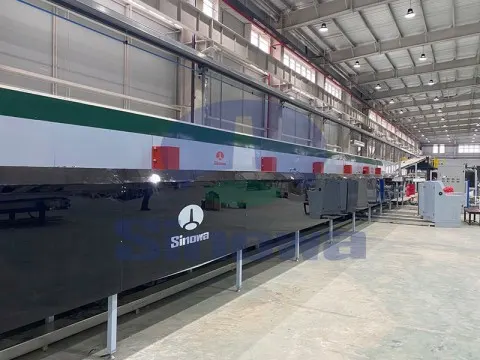
PIR Sandwich Panel Production Line
Publication Date: Oct 6, 2026
The PIR sandwich panel production line is a specialized continuous manufacturing system for producing high-performance polyisocyanurate foam composite panels. It integrates automated material processing, chemical foaming, composite pressing and curing procedures to deliver durable, thermally efficient building panels with stable structural performance.
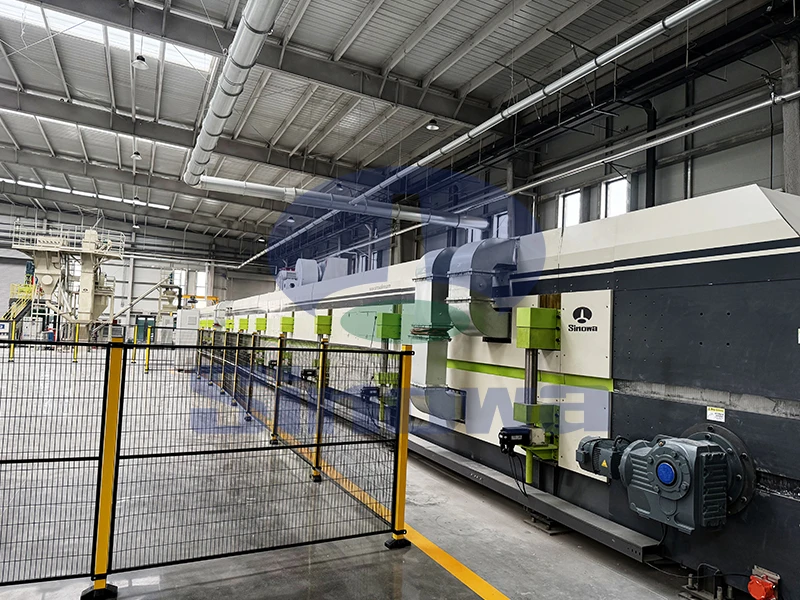
The core design logic of the PIR sandwich panel production line differentiates it from conventional polyurethane sandwich panel manufacturing equipment, focusing on adapting to the unique chemical characteristics of PIR foam materials. Unlike ordinary polyurethane foam, PIR foam features a modified molecular structure with optimized component ratios, which endows the finished panels with superior thermal stability and enhanced structural rigidity. This production line is structurally modular and fully continuous, enabling uninterrupted mass production while maintaining consistent product uniformity across every batch. Every functional unit of the line is precisely calibrated to coordinate with the slow and stable foaming and curing rhythm of PIR raw materials, avoiding common defects such as uneven foam density, incomplete curing and weak interlayer bonding that often occur in ordinary production lines. The overall operational logic prioritizes precision parameter control and synchronous mechanical movement, laying a solid foundation for the stable production of high-quality insulated building panels suitable for diverse construction scenarios.
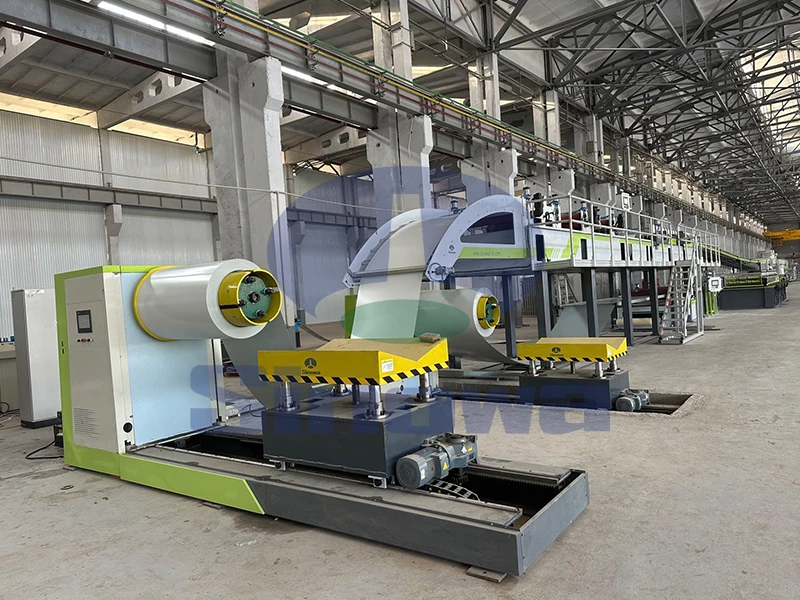
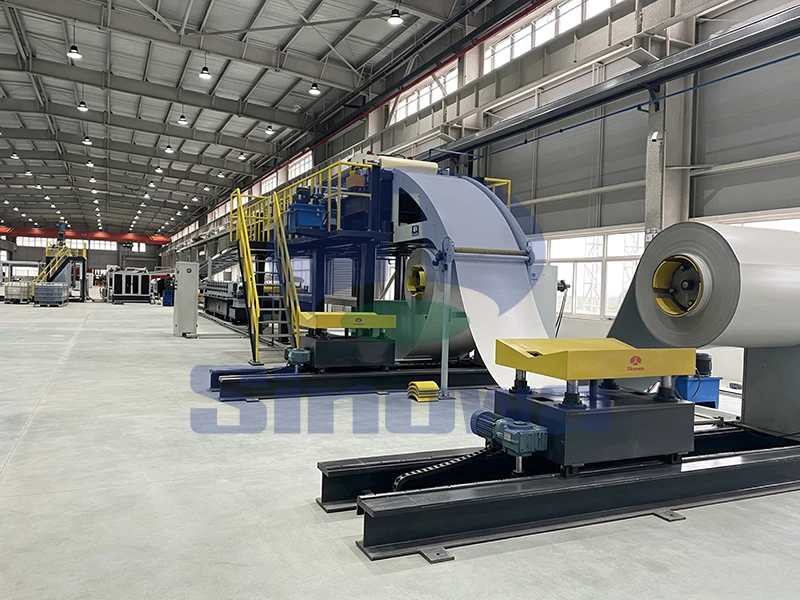
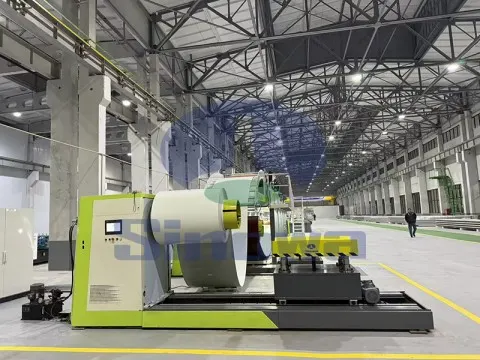
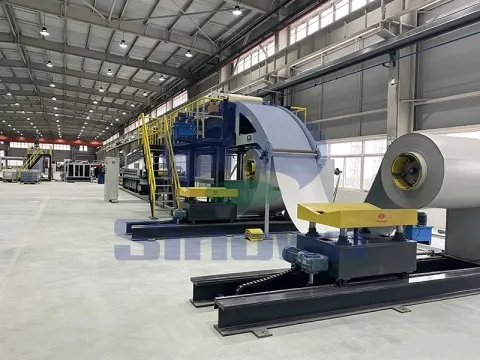
Raw material pretreatment and feeding serve as the foundational starting procedure of the entire PIR sandwich panel production workflow, covering both metal surface sheet processing and PIR chemical raw material preparation. For metal face sheets, the line is equipped with automatic uncoiling, leveling and deviation correction devices that flatten coiled metal materials completely and eliminate surface wrinkles, warps and position offsets. This precise pretreatment ensures the flatness of the outer protective layer, which directly affects the final appearance and composite tightness of the sandwich panels. Meanwhile, the PIR chemical raw material supply system conducts constant-temperature storage and precise proportional metering of polyol and isocyanate components. Strict temperature stabilization prevents raw material performance attenuation caused by ambient temperature fluctuations, while accurate ratio control guarantees the smooth progress of subsequent foaming reactions and the formation of stable foam molecular structures. All feeding procedures operate automatically in a linked manner, reducing manual intervention errors and ensuring continuous and orderly material supply for subsequent production links.
Surface preheating and primer treatment are indispensable pre-processing steps to strengthen the bonding performance of PIR sandwich panels. After leveling and correction, the metal face sheets enter the infrared preheating unit, which uniformly raises the surface temperature of the sheets to the optimal range matching PIR foam bonding requirements. Appropriate preheating eliminates the temperature difference between the metal surface and the foaming material, effectively preventing delamination and virtual bonding caused by inconsistent thermal expansion and contraction during the composite process. Following preheating, the automatic primer coating system applies a uniform layer of special adhesive promoter on the inner surface of the metal sheets. The coating thickness and uniformity are precisely controlled by automated equipment, which enhances the molecular adhesion between the metal surface and PIR foam core. This treatment process greatly improves the overall structural integrity of the sandwich panels, enabling the panels to maintain stable bonding performance under long-term temperature changes and external stress, and effectively extending the service life of finished products.
Roll forming processing shapes the pretreated metal face sheets into the standardized profile required for finished PIR sandwich panels. The production line is equipped with multi-group continuous roll forming units, which gradually bend and shape the flat metal sheets through orderly arranged forming rollers. Each roller group adopts segmented pressure adjustment to ensure gradual stress release during metal deformation, avoiding surface cracks, indentations and structural deformation. The forming speed is precisely synchronized with the overall operating speed of the production line to maintain consistent production rhythm. Different profile specifications can be realized by adjusting the roller parameters, enabling the line to produce panels with diverse edge structures and surface shapes. After forming, the metal sheets maintain high dimensional accuracy and surface flatness, creating qualified outer layer conditions for the subsequent compounding with PIR foam core materials. This fully automated forming process realizes high-efficiency and high-precision shaping without secondary manual trimming.
High-pressure mixing and foam pouring is the core technical link that determines the internal quality of PIR sandwich panels. The production line adopts a professional high-pressure mixing system with stable working pressure, which fully mixes the two-component PIR chemical raw materials in a closed mixing chamber. The precise pressure control ensures that the raw materials achieve uniform molecular fusion without insufficient mixing or material overflow problems. The mixed liquid foam material is evenly poured on the surface of the lower metal face sheet through a traversing pouring head. The mobile pouring mode realizes full coverage and uniform distribution of the liquid material on the sheet surface, effectively avoiding local thick or thin foam layers. At this stage, the liquid material begins preliminary micro-foaming reaction, and the initial fluid state ensures that the foam can fully fill the composite gap and form a tight fit with the metal sheet. The entire mixing and pouring process operates in a closed and sterile environment, avoiding impurity mixing and ensuring the purity and stability of the PIR foam core.
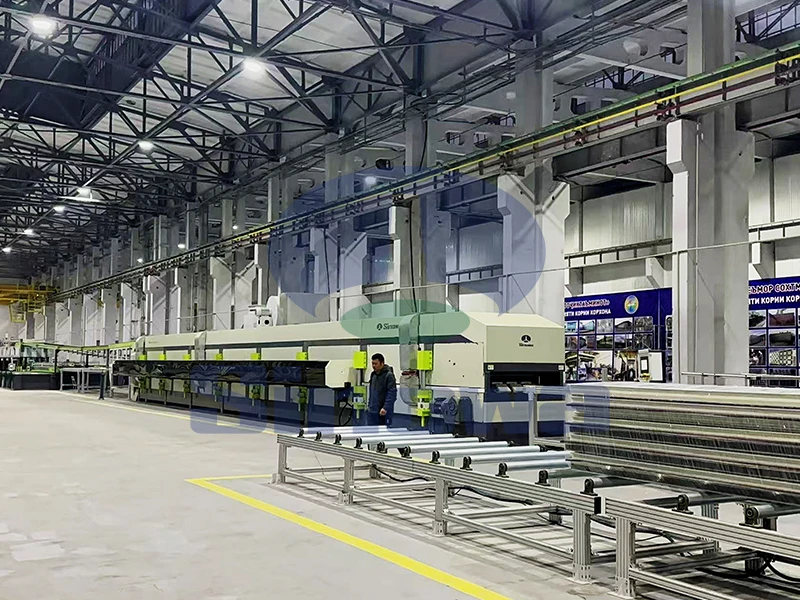
Continuous double-belt composite pressing is a key procedure for forming the integrated structure of PIR sandwich panels. After foam pouring, the upper and lower formed metal sheets with intermediate liquid foam enter the double-belt pressing unit synchronously. The unit adopts adjustable constant-pressure and constant-temperature operation mode, with independent control of pressing pressure, belt running speed and internal cavity temperature. The stable pressing pressure promotes the full combination of foam and metal sheets and controls the uniform expansion of foam bubbles, ensuring consistent core density of the panels. The constant-temperature cavity environment provides a stable reaction condition for PIR foam curing, avoiding uneven curing caused by temperature differences. The double-belt structure drives the semi-finished panels to move forward at a uniform speed, realizing continuous pressing and forming. This process eliminates internal gaps and loose structures of the panels, greatly improving the overall compactness and structural stability of the finished sandwich panels.
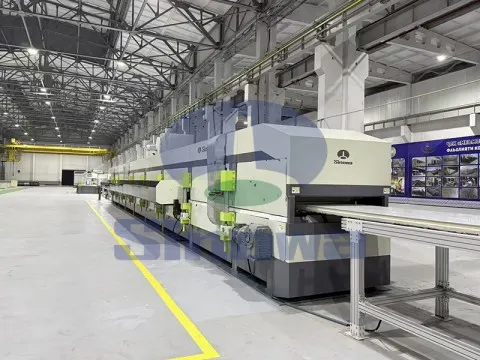
Constant-temperature curing and cooling shaping procedures further stabilize the internal structure and performance of PIR sandwich panels. After composite pressing, the semi-finished panels enter the segmented constant-temperature curing channel, where the residual chemical reaction of PIR foam is fully completed through gradient temperature control. The staged curing mode avoids internal stress concentration caused by rapid temperature change, enabling the foam molecular structure to form a more stable cross-linked state and significantly improving the thermal insulation and structural stability of the core material. After curing, the panels enter the automatic cooling section for natural and uniform cooling. Slow cooling fixes the finished shape of the panels, eliminates surface deformation and internal warping, and stabilizes the overall dimensional accuracy. This two-stage processing procedure ensures that the physical properties of PIR foam reach the optimal state, making the panels resistant to deformation in long-term use and maintaining stable thermal insulation performance.
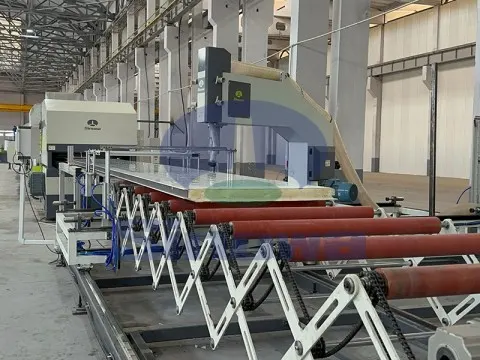
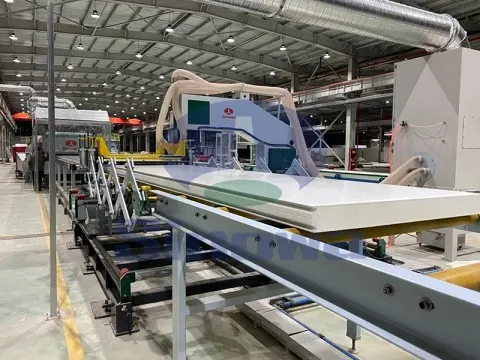
Fixed-length cutting and edge trimming are precision finishing processes to standardize the size and appearance of PIR sandwich panels. According to customized production requirements, the automatic positioning and cutting system accurately measures the panel length and performs fixed-length cutting with high-precision cutting tools. The cutting process is smooth and burr-free, ensuring flat and neat panel end faces. Subsequently, the edge trimming device automatically trims the redundant foam and metal edges on both sides of the panels to unify the overall width specification. Meanwhile, the integrated dust removal system cleans up foam debris and metal dust generated during trimming, keeping the panel surface clean and tidy. All cutting and trimming parameters are intelligently adjusted according to different panel thicknesses and specifications, realizing adaptive processing of multiple product types. This link ensures that the dimensional tolerance of finished panels is controlled within a tiny range, meeting the standardized assembly requirements of construction projects.
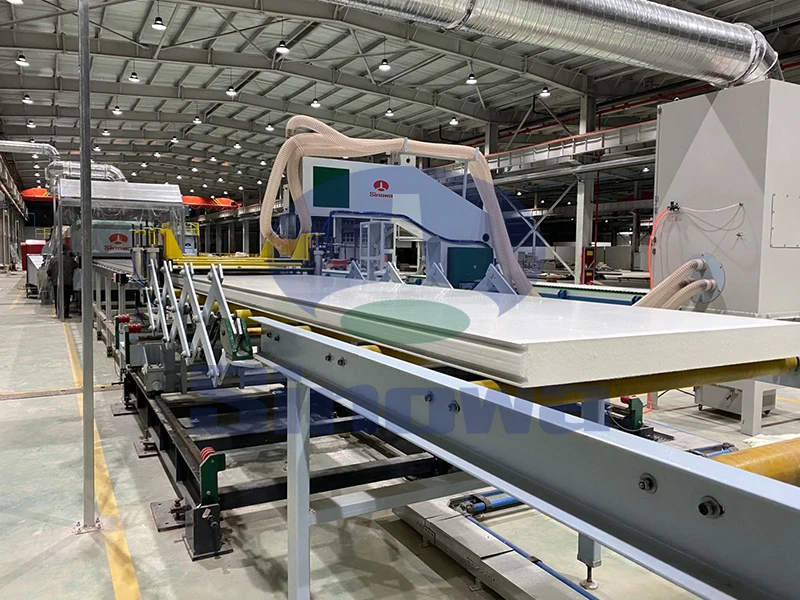
Surface film laminating is an important protective process for enhancing the surface quality and durability of PIR sandwich panels. After finishing and dust removal, the panels pass through the automatic film laminating unit, which evenly attaches a transparent protective film on the outer metal surface of the panels. The laminating equipment adopts adjustable tension control to ensure the protective film is tightly attached without bubbles, wrinkles or deviations. The attached protective film can effectively isolate dust, scratches, oxidation and chemical corrosion during transportation, storage and construction, protecting the original surface finish of the metal layer. For panels used in special environments, the laminating process can match protective films with different functional characteristics to improve the weather resistance and corrosion resistance of the finished products. This automated process is efficient and stable, not affecting the structural performance of the panels while greatly optimizing product appearance quality and service life.
Automatic stacking and intelligent packaging constitute the final link of the PIR sandwich panel production line, realizing efficient finished product collection and standardized storage. After laminating, qualified panels are automatically transported to the stacking platform, where the intelligent stacking system orderly arranges and stacks the panels according to fixed quantities and specifications. The system adopts flexible stacking protection measures to avoid extrusion and collision damage between panels. After stacking is completed, the automatic packaging equipment conducts integral wrapping and binding of the panel stacks, with tight and standardized packaging to prevent loose displacement during transportation. The entire stacking and packaging process is fully automated, reducing manual handling errors and improving production efficiency. The standardized finished product state is convenient for subsequent transportation, warehousing and construction application, realizing seamless connection from production to terminal use.
Gallery of PIR Sandwich Panel Production Line
Tags: pir sandwich panel production line, pir sandwich panel production line manufacturer, pir sandwich panel production line supplier, china pir sandwich panel production line, pir sandwich panel production line for sale
https://www.sandwichpanelmachinery.com/tags/pir-sandwich-panel-production-line.html
Related Informations