What Factors Affect The Curing Effect Of PIR Sandwich Panel Production Line?
Publication Date: Oct 6, 2026
The curing effect of PIR sandwich panels determines their structural stability, bonding performance and service durability. Multiple interrelated production factors influence foam forming and interfacial curing quality, covering raw material properties, process parameters, equipment status and production environment.
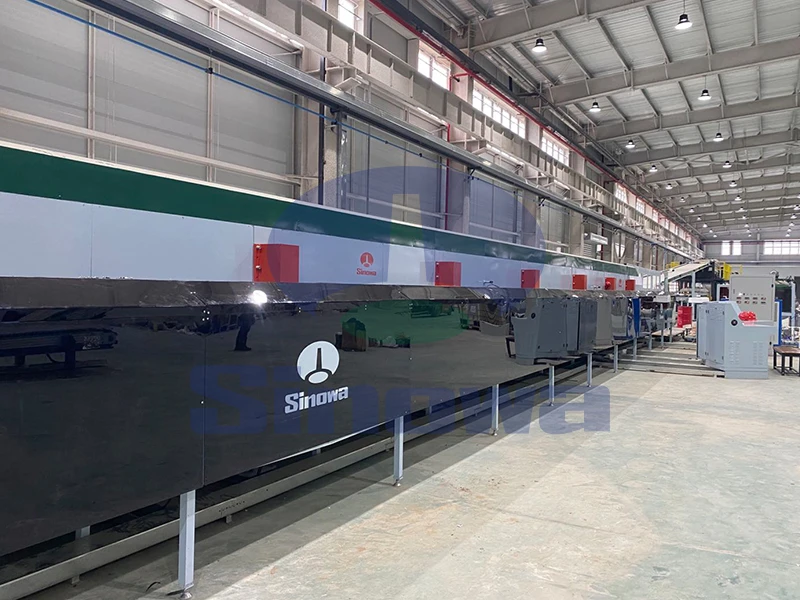
Raw material formulation and performance consistency stand as the foundational factors dominating the curing effect of PIR sandwich panels during continuous production. PIR foam curing relies on the trimerization reaction of isocyanate and cross-linking polymerization with polyol components, and subtle changes in raw material characteristics will directly alter the reaction kinetics and final curing state. The viscosity of polyol and isocyanate raw materials affects the mixing uniformity in the foaming stage; excessively high viscosity leads to insufficient material fusion, forming local unreacted areas inside the foam core, while overly low viscosity causes material stratification and uneven component distribution. In addition, the activity of catalyst additives in raw materials plays a decisive role in controlling reaction speed. Insufficient catalyst activity slows down the trimerization reaction, resulting in incomplete curing and low foam compactness, while excessive activity triggers ultra-fast partial reactions, generating irregular cell structures and internal stress inside the panel. Batch fluctuations in raw material hydroxyl value and isocyanate index also disrupt the balance of curing reactions. Unmatched component proportions will cause inconsistent cross-linking density of the PIR foam layer, leading to differences in hardness, toughness and bonding strength between different batches of panels, which seriously undermines the overall curing uniformity and product stability.
Precise temperature control throughout the production process is one of the most critical factors affecting PIR panel curing quality, as PIR chemical reactions are extremely temperature-sensitive. The temperature control links cover raw material preheating, surface material preheating and curing oven temperature maintenance, each playing an irreplaceable role in the curing process. Proper raw material preheating can reduce material viscosity, improve mixing fluidity, and activate molecular activity to ensure sufficient and uniform chemical reactions. If the raw material temperature is too low, the initial reaction stagnates, the foam cannot fully expand before gelation, and a large number of closed-cell defects appear inside the core layer. On the contrary, excessive raw material temperature causes runaway rapid reactions, forming open-cell structures that reduce the compressive strength and thermal insulation performance of cured panels. The preheating temperature of upper and lower surface materials also matters greatly. Low surface material temperature leads to rapid heat loss of injected liquid PIR materials, resulting in incomplete interfacial reactions and weak bonding between core layer and surface materials. Meanwhile, stable and uniform oven temperature is essential for subsequent curing. Uneven temperature distribution in the oven causes inconsistent curing degrees in different parts of the panel, with over-cured areas becoming brittle and under-cured areas prone to delamination and deformation.
Production line operating speed and matching curing time directly determine whether PIR panels can complete full cross-linking and foam stabilization, exerting a core impact on curing effect. The continuous production mode of PIR sandwich panels requires an accurate match between line speed and the effective curing time of foam materials. The curing reaction of PIR foam includes foaming expansion, gel molding and cross-linking curing three stages, all of which need sufficient time to complete molecular rearrangement and structural stabilization. When the production line speed is too fast, the panels pass through the curing area too quickly, leaving insufficient time for internal trimerization and cross-linking reactions. This results in incomplete curing, loose foam structure, poor overall rigidity, and easy separation between the core layer and surface materials in later use. In contrast, excessively low line speed leads to over-curing of the panels. Long-term high-temperature standing causes excessive aging of foam molecular structures, reduced material toughness, increased brittleness, and even local hollowing and cracking of the core layer. Moreover, unreasonable speed adjustment will break the stable reaction rhythm of PIR materials. Frequent speed fluctuations in production lead to inconsistent curing degrees of front and rear panels, forming batch quality differences and reducing the overall yield of cured products.
Uniform pressure control in the molding and curing process is indispensable for ensuring excellent curing effect of PIR sandwich panels. In the continuous production process, the compression pressure of the upper and lower conveyor belts and roller sets acts on the foam core layer and composite interface, directly affecting the compactness of foam molding and the fit degree between core and surface materials. Reasonable and stable pressure can eliminate air pockets between the surface material and PIR foam, ensure full contact of reaction interfaces, and promote uniform heat transfer and complete curing reactions. When the molding pressure is insufficient, tiny gaps remain at the bonding interface, blocking molecular cross-linking reactions, resulting in weak bonding strength and easy delamination of cured panels. Insufficient pressure also leads to excessive expansion of partial foam, uneven panel thickness and loose internal structure, reducing compressive resistance and dimensional stability. Excessively high pressure will over-compress the PIR foam core, destroy the original uniform closed-cell structure, reduce the thermal insulation performance of the panel, and cause irreversible deformation of the foam molecular chain, making the cured panel prone to warping. In addition, uneven pressure distribution in the width direction of the production line causes inconsistent compactness on both sides and the middle of the panel, leading to unbalanced curing effect and overall structural deviation of the product.
Material mixing uniformity in the foaming stage profoundly affects the subsequent curing quality of PIR sandwich panels. The excellent curing performance of PIR panels is based on the full and uniform mixing of polyol, isocyanate, catalyst and other auxiliary materials. The mixing state of materials directly determines the consistency of chemical reactions in each area of the foam core. If the mixing equipment fails to achieve high-precision mixing, local material proportion imbalance will occur. Areas with excessive isocyanate will undergo excessive trimerization reactions, forming hard and brittle cured structures, while areas with insufficient isocyanate will have incomplete cross-linking, resulting in soft and under-cured parts. Ununiform mixing also leads to inconsistent reaction speeds in different regions of the foam. Some areas complete gelation and curing rapidly, while others stay in the foaming stage for a long time, causing internal structural disorder and residual stress inside the panel after curing. In addition, unstable material metering accuracy will cause continuous mixing proportion deviations in the production process. Long-term metering errors will lead to cumulative differences in curing effects of continuous panels, seriously affecting the consistency and qualification rate of finished products.
Ambient production environment conditions, including temperature, humidity and air circulation, subtly and continuously influence the curing effect of PIR sandwich panels. PIR foaming and curing reactions are sensitive to ambient humidity; excessive air humidity will make moisture invade the uncured foam layer. Moisture reacts with isocyanate components, generating gas bubbles that form void defects inside the cured foam, reducing the compactness and bonding performance of the panel. High humidity also slows down the interfacial curing reaction between the core layer and surface materials, increasing the risk of later delamination. Low ambient humidity is relatively conducive to curing, but extreme dryness will accelerate surface heat loss of the panel, causing inconsistent curing speed between the surface and inner layer of the foam. Ambient temperature fluctuations also interfere with the stable progress of curing reactions. Frequent temperature changes in the production workshop make it difficult to stabilize the material reaction rhythm, resulting in fluctuating curing degrees of panels. Unsmooth air circulation in the production area leads to local heat accumulation or heat loss, causing uneven temperature distribution around the panels and further disrupting the uniform curing state of the foam structure.
Equipment operation accuracy and maintenance status are key hardware factors that stabilize or weaken the curing effect of PIR sandwich panel production lines. The normal operation of preheating systems, mixing systems, curing ovens and conveyor systems jointly guarantees standardized curing reactions. The aging or parameter deviation of preheating equipment will cause unstable preheating temperature of raw materials and surface materials, failing to provide a stable initial temperature environment for PIR reactions and directly leading to inconsistent curing effects. The wear and failure of mixing equipment components will reduce mixing efficiency and uniformity, resulting in material proportion deviations and defective curing. The sealing and heating uniformity of the curing oven equipment are particularly important; poor oven sealing causes internal heat loss and temperature fluctuation, while aging heating components lead to local overheating or underheating, making the panel produce over-cured or under-cured defects. In addition, the deviation of conveyor belt operation flatness and roller pressure balance will cause uneven stress on the panel during curing, resulting in warping deformation and inconsistent bonding strength of finished panels. Regular equipment maintenance and parameter calibration can effectively avoid these problems and maintain stable curing quality.
Surface material pretreatment quality significantly affects the interfacial curing effect of PIR sandwich panels. The bonding and curing between the metal surface material and PIR foam core is a key part of overall panel curing, and the surface state of the facade material directly determines the interfacial reaction efficiency and bonding firmness. Residual dust, oil stains and oxide layers on the surface of untreated materials will isolate the contact between PIR raw materials and the facade material, hinder molecular cross-linking reactions at the interface, and lead to insufficient interfacial curing and reduced bonding strength. Incomplete pretreatment will also cause local weak bonding points, making the panel prone to delamination under external force or temperature changes after long-term use. Appropriate surface pretreatment can increase the surface roughness of the facade material, expand the contact area with PIR foam, and effectively promote interfacial curing reactions. Meanwhile, uniform pretreatment ensures consistent surface state of each batch of facade materials, avoiding batch differences in interfacial curing quality. Uneven pretreatment operation will lead to inconsistent curing effects on different parts of the same panel, reducing the overall structural uniformity and service reliability of the product.
Curing zoning control and staged temperature adjustment optimize the final curing molding effect of PIR sandwich panels. The continuous curing process of PIR panels can be divided into initial foaming molding, intermediate cross-linking stabilization and final aging setting stages, each requiring matched temperature and time parameters. Unreasonable zoning temperature setting is a common cause of poor curing quality. Excessively high temperature in the initial stage leads to rapid foam expansion and premature gelation, making it impossible for internal molecular reactions to proceed fully, while excessively low initial temperature causes slow foaming and insufficient core layer expansion. The intermediate cross-linking stage needs constant temperature maintenance to ensure sufficient trimerization and cross-linking reactions; temperature fluctuation in this stage will directly reduce foam compactness and structural stability. The final aging stage requires gradual temperature reduction to eliminate internal residual stress of the panel. Rapid cooling will cause sudden shrinkage of the foam structure, resulting in cracking and warping of cured panels. Scientific zoning control and staged parameter adjustment can make the PIR curing reaction proceed step by step, effectively improving the uniformity, compactness and structural stability of the cured panel.
Manual operation proficiency and process parameter adjustment accuracy are important human factors affecting the curing consistency of PIR sandwich panels. Despite the high automation of modern production lines, manual fine-tuning of parameters, equipment monitoring and process adjustment still determine the final curing quality. Skilled operators can accurately adjust line speed, temperature and pressure parameters according to raw material batch changes and real-time production conditions, maintaining the optimal curing reaction state. Inexperienced operation may lead to unreasonable parameter matching, such as mismatched temperature and speed, insufficient or excessive molding pressure, resulting in a large number of defective cured products. In addition, real-time monitoring of production status is crucial. Timely detection and adjustment of minor fluctuations in material flow, temperature and pressure can avoid cumulative curing quality problems. Irregular operation habits and delayed parameter correction will lead to continuous deterioration of curing effects, reduce product qualification rate, and cause unstable quality of finished PIR sandwich panels.
Gallery of PIR Sandwich Panel Production Line
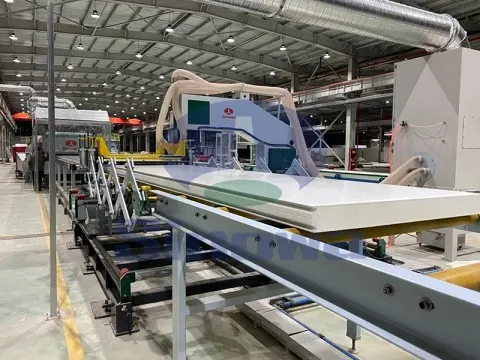
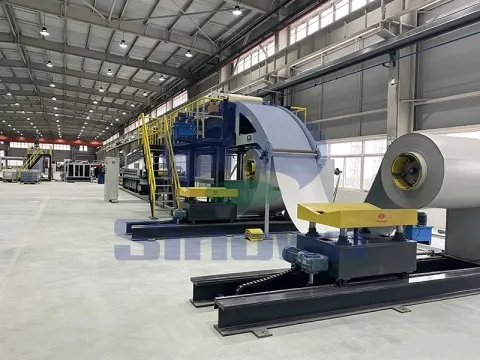
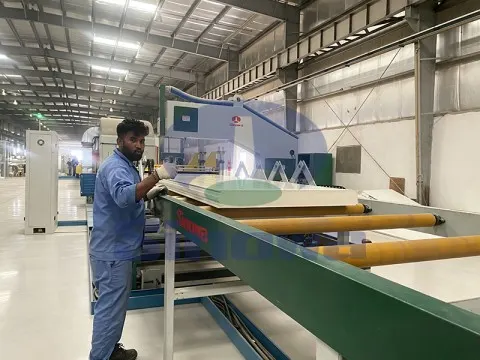
Tags: pir sandwich panel production line, pir sandwich panel production line manufacturer, pir sandwich panel production line supplier, china pir sandwich panel production line, pir sandwich panel production line for sale
-
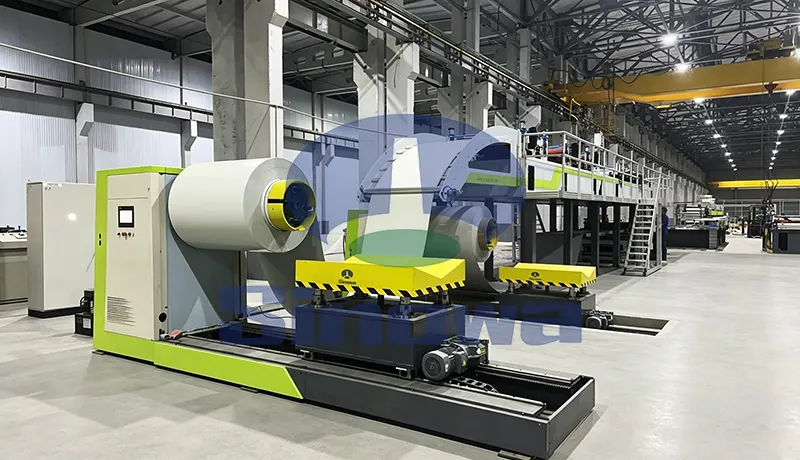
The PU sandwich panel line is a core production setup for making high-performance building insulation panels. This professional PU sandwich panel production line features automated operation to streamline the whole manufacturing process efficiently. Every component of the polyurethane sandwich panel line is precisely calibrated to ensure consistent panel thickness and structural stability. A well-maintained polyurethane sandwich panel production line can greatly boost production efficiency while reducing manual operation errors. The continuous PU sandwich panel line adapts to diverse production demands for different panel sizes and surface styles. With advanced molding technology, the PIR sandwich panel line produces panels with excellent heat preservation and sound insulation properties. Stable running of the PIR sandwich panel production line guarantees reliable product quality for various construction and industrial application scenarios.
-
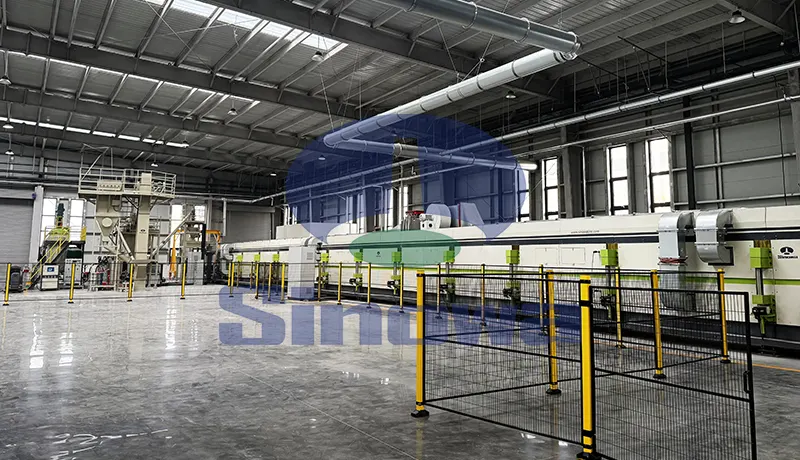
A phenolic insulation board production line serves as the core equipment for manufacturing high-performance thermal insulation building materials. This phenolic insulation panel production line integrates material mixing, foaming, molding and cutting processes to ensure continuous and stable production efficiency. Every operational link of the insulation board production line is precisely calibrated to produce uniform and durable insulation boards. The automated design of the insulation panel production line effectively reduces manual intervention and improves product consistency. Proper maintenance of the phenolic board production line can greatly extend its service life and maintain steady production output. With optimized structural design, the phenolic panel production line adapts to various production demands and delivers high-quality finished products for thermal insulation engineering applications.
-
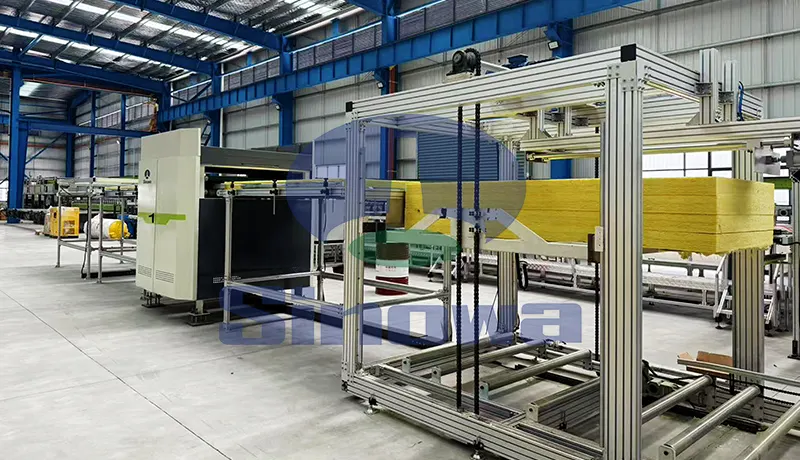
A professional rockwool sandwich panel line serves as the core equipment for producing high-performance building panels. This rockwool sandwich panel production line integrates feeding, laminating and forming processes to ensure stable and efficient production. The well-structured rock wool sandwich panel line can process raw rockwool materials into panels with excellent thermal and sound insulation properties. Operators can adjust the running parameters of the rock wool sandwich panel production line to manufacture panels of different thicknesses and specifications. The automated design of the mineral wool sandwich panel production line greatly reduces manual operation errors and improves product consistency. Regular maintenance of the mineral wool sandwich panel line is essential to sustain long-term operational efficiency and guarantee qualified finished panels for diverse construction applications.