Does Sandwich Panel Machinery Need A Special Factory Building?
Publication Date: Oct 6, 2026
Sandwich panel machinery does not require an overly customized special factory building, but it demands specific structural, spatial and infrastructural conditions for stable operation. ordinary industrial workshops can be adapted as long as they meet core site requirements for production safety and efficiency.
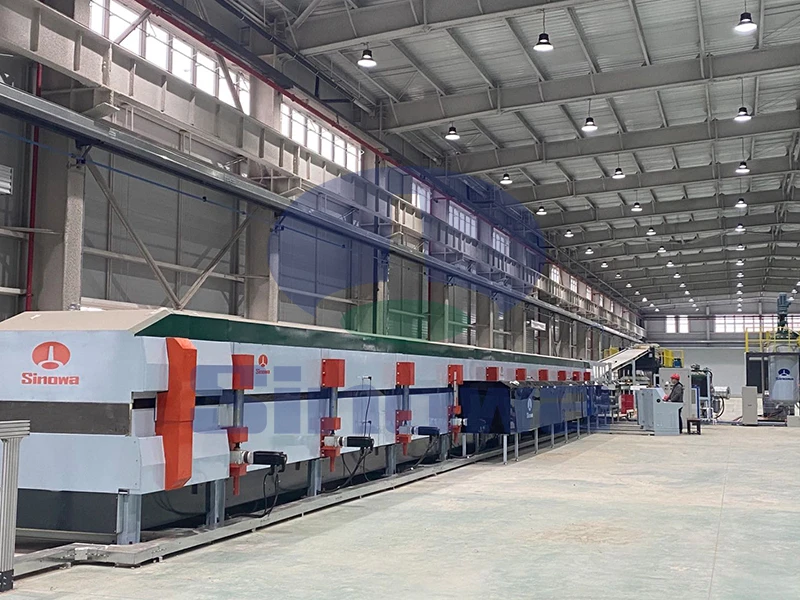
Many industrial investors new to the sandwich panel manufacturing industry often wonder whether they need to construct a completely exclusive and specially designed factory building to install and operate sandwich panel production machinery. The core answer lies in distinguishing between “special customized factory buildings” and “qualified industrial production workshops”. Unlike precision electronic manufacturing or special chemical production equipment that requires ultra-clean, constant-temperature and fully customized plant structures, sandwich panel machinery is a kind of heavy-duty industrial production equipment with relatively inclusive site adaptability. It does not need professional factory buildings with unique structural designs or special architectural modifications that deviate from conventional industrial standards. However, ordinary civilian buildings, light-duty workshops and commercial spaces are completely unqualified to host such machinery, as they lack the basic bearing capacity and spatial conditions for industrial production. In short, the production of sandwich panels only needs a standard industrial factory building with targeted functional configurations, rather than a fully customized special plant designed exclusively for this equipment.
The most fundamental requirement for housing sandwich panel machinery is the floor bearing capacity of the factory building, which is the primary factor that determines whether an ordinary industrial workshop can be used. Sandwich panel production lines are integrated heavy equipment composed of multiple functional units, including roll forming systems, pressing devices, material laying mechanisms and finished product stacking frames. The overall weight of the complete production line is large, and key working parts will form concentrated pressure on the local floor area during operation. Long-term operation of the equipment will also produce continuous mechanical vibration, which puts forward high requirements for the structural stability and compression resistance of the factory floor. ordinary light industrial workshops with thin floor slabs and low bearing capacity are prone to floor cracking, structural deformation and even potential safety hazards after long-term equipment operation. Therefore, the qualified factory building must have a thickened reinforced concrete floor structure to bear the concentrated load of the equipment and resist operational vibration, which is a basic industrial configuration rather than a special customized design.
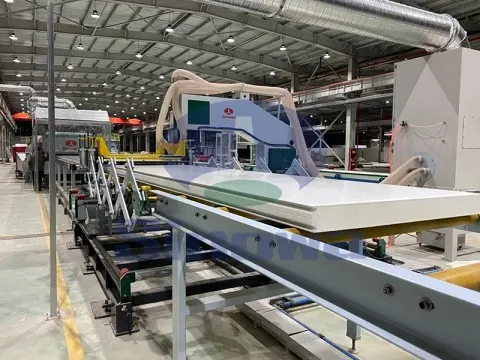
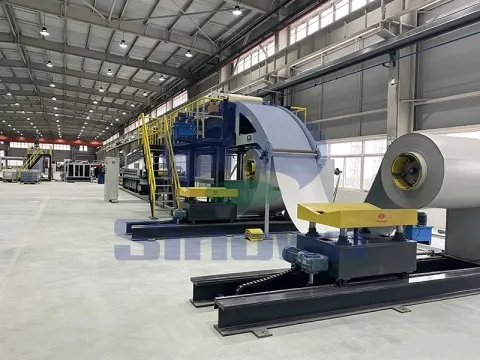
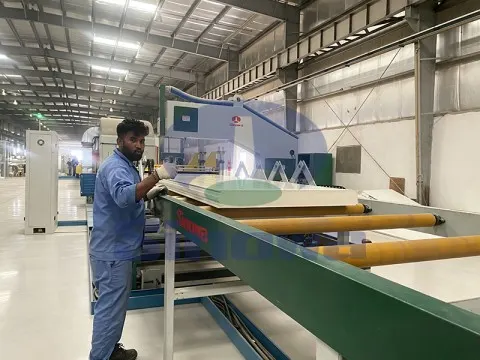
Sufficient and standardized spatial layout is another essential condition for placing sandwich panel machinery, which makes the factory building different from ordinary small industrial workshops. A complete sandwich panel production line is a long linear assembly line with continuous production procedures, covering raw material feeding, roller pressing forming, core material filling, composite pressing, cutting and finished product output. The whole production process is carried out in a straight line, so the factory building needs to have a long and open linear space without excessive partition walls and structural columns that block the production line. In addition to the space occupied by the main equipment, the factory also needs to reserve independent areas for raw material coil storage, core material stacking, finished product temporary storage and equipment daily maintenance. Too narrow or fragmented space will affect the continuity of production, reduce operational efficiency, and bring inconvenience to equipment debugging and later maintenance. Reasonable spatial planning only follows the production logic of mechanical assembly lines and does not need special spatial transformation beyond conventional industrial standards.
Factory building height and ventilation conditions are key auxiliary factors affecting the normal operation of sandwich panel machinery and production safety. Most sandwich panel production equipment is equipped with upper feeding structures, lifting devices and vertical pressing systems, and the later maintenance of equipment also needs sufficient vertical operation space. Low factory buildings will restrict the installation of large-scale equipment accessories and hinder daily overhaul and parts replacement. Meanwhile, the production process of some sandwich panels will produce a small amount of volatile gas and dust debris, and long-term accumulation of these substances in the closed factory space will affect the working environment and equipment operation stability. A qualified industrial factory building needs to be equipped with natural ventilation windows and auxiliary mechanical ventilation equipment to ensure smooth air circulation in the workshop. This ventilation configuration is a standard supporting facility for industrial production, not a special design for sandwich panel machinery, and can be realized by conventional industrial workshop transformation.
Power supply and supporting infrastructure configuration of the factory building is an indispensable basic condition for the stable operation of sandwich panel machinery. Modern sandwich panel production lines are highly automated electromechanical integration equipment, which requires stable and sufficient industrial power supply to support continuous operation. The equipment involves multiple motor operation, heating systems and automatic control systems, which have high requirements for voltage stability and power load capacity. ordinary civil power supply and light industrial power supply systems cannot meet the long-term high-load operation needs of the production line, so the factory building must be connected with special industrial power circuits and equipped with matching power distribution cabinets and voltage stabilization devices. In addition, the equipment needs supporting air compression systems and water supply and drainage facilities in the production process. These infrastructure configurations are basic standard configurations for heavy industrial production workshops, and there is no need to design exclusive special power and water supply systems for sandwich panel production alone.
The ground flatness and anti-skid treatment of the factory building also affect the operational accuracy and service life of sandwich panel machinery. The automated production line relies on precise mechanical transmission and linear operation, and uneven ground will cause the overall tilt of the equipment, resulting in inaccurate product cutting size, inconsistent pressing effect and other production quality problems. Long-term equipment operation on uneven ground will also aggravate the wear of mechanical parts and reduce the service life of the production line. Therefore, the factory ground needs to be polished and leveled professionally after construction to ensure overall flatness. At the same time, considering the frequent handling of raw materials and finished products in the production process, the ground needs simple anti-skid and wear-resistant treatment to avoid safety accidents such as slipping during manual operation and cargo handling. This kind of ground treatment is a conventional industrial construction process and does not belong to special factory building customization.
Different types of sandwich panel production machinery have slightly different factory building requirements, further proving that no fully special factory building is needed. Continuous automated production lines for conventional sandwich panels adapt to standard long-span industrial workshops with ordinary supporting facilities. For production lines using special core materials, only partial functional area adjustment is required in the existing factory building. For example, production lines with adhesive filling processes only need to set up independent ventilated storage areas for auxiliary materials in the workshop, while production lines for bulky core materials only need to appropriately expand the material preparation and stacking space. These adjustments are local layout optimizations based on conventional industrial workshops, not overall reconstruction and special customization of the factory building. Enterprises can complete factory adaptation according to their own equipment types and production scales, with low transformation difficulty and strong flexibility.
Fire protection and safety layout of the factory building is a basic requirement for sandwich panel production, rather than a special industrial standard. As building material production equipment, sandwich panel machinery involves combustible core materials and auxiliary production materials in the production process, so the factory building needs to meet basic industrial fire protection conditions. The workshop needs to reserve safe passageways, be equipped with sufficient fire extinguishing equipment, and ensure unobstructed evacuation routes. The spacing between equipment and factory walls, as well as the distance between material stacking areas and mechanical operation areas, need to comply with conventional industrial safety layout norms. There is no need to set up special fire protection structures and safety isolation facilities exclusive to sandwich panel production. As long as the factory building meets the basic safety production conditions of general industrial enterprises, it can fully meet the safety operation needs of sandwich panel machinery.
Many enterprises mistakenly believe that special factory buildings are required because they confuse equipment customization with plant construction standards. In fact, the personalized adjustment of sandwich panel production lines is mainly reflected in equipment functional configuration and production process optimization, rather than dependence on special factory environments. Equipment manufacturers will adjust the equipment size, functional modules and operational parameters according to the actual space and infrastructure conditions of the enterprise's existing factory building, realizing the adaptive matching of equipment and conventional workshops. With the continuous upgrading of modern sandwich panel machinery, the integration and compactness of equipment are constantly improved, and the requirements for factory building specialization are further reduced. Most standard industrial workshops can complete the installation, commissioning and long-term stable operation of the production line after simple functional transformation and layout optimization.
In conclusion, sandwich panel machinery does not need a professionally customized special factory building that is independently designed and constructed for exclusive use. All the site conditions required for its operation, including floor bearing capacity, spatial scale, ventilation and power infrastructure, ground treatment and safety fire protection layout, are within the scope of standard industrial factory building configurations. Enterprises only need to select qualified standard industrial workshops and carry out targeted local transformation and reasonable layout planning according to the type and scale of production equipment, which can effectively meet the production and operation needs of sandwich panel machinery. This flexible site requirement greatly reduces the factory construction cost and investment threshold for sandwich panel production enterprises, and also improves the practicability and universality of such production equipment in the industrial market.
Gallery of Sandwich Panel Machinery
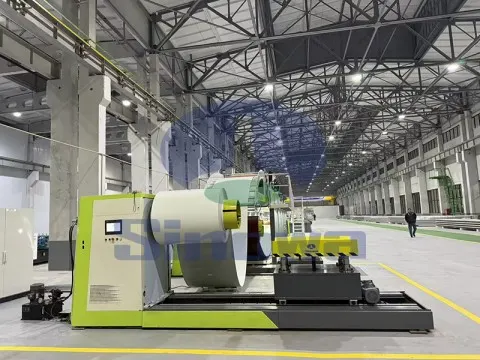
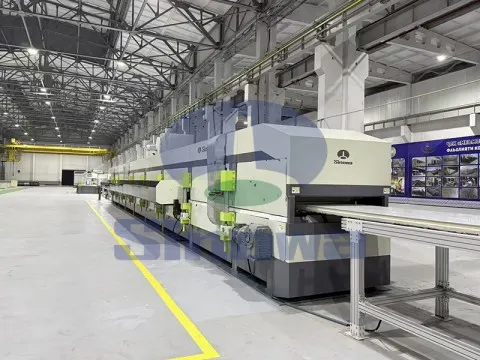
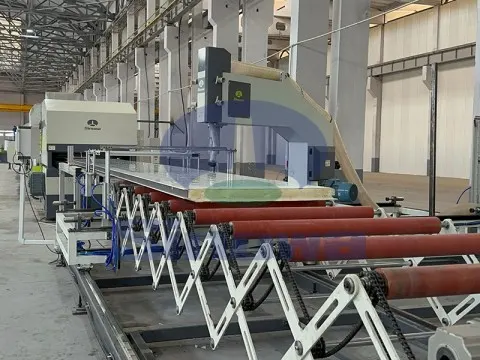
Tags: sandwich panel machinery, sandwich panel machinery manufacturer, sandwich panel machinery supplier, china sandwich panel machinery, sandwich panel machinery for sale
-
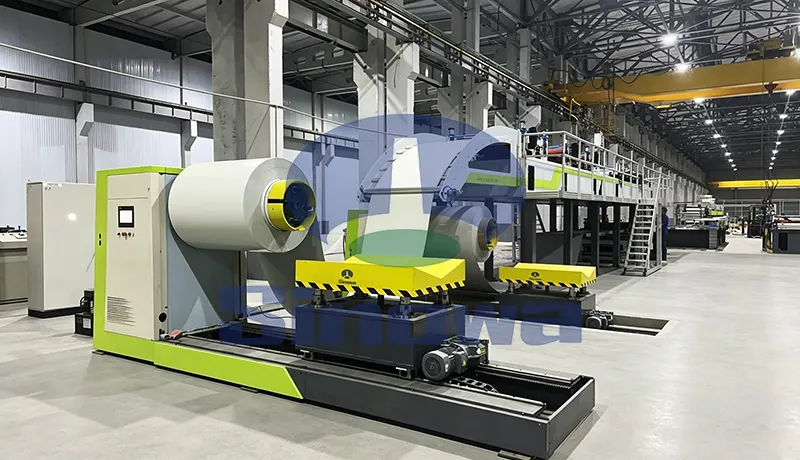
The PU sandwich panel line is a core production setup for making high-performance building insulation panels. This professional PU sandwich panel production line features automated operation to streamline the whole manufacturing process efficiently. Every component of the polyurethane sandwich panel line is precisely calibrated to ensure consistent panel thickness and structural stability. A well-maintained polyurethane sandwich panel production line can greatly boost production efficiency while reducing manual operation errors. The continuous PU sandwich panel line adapts to diverse production demands for different panel sizes and surface styles. With advanced molding technology, the PIR sandwich panel line produces panels with excellent heat preservation and sound insulation properties. Stable running of the PIR sandwich panel production line guarantees reliable product quality for various construction and industrial application scenarios.
-
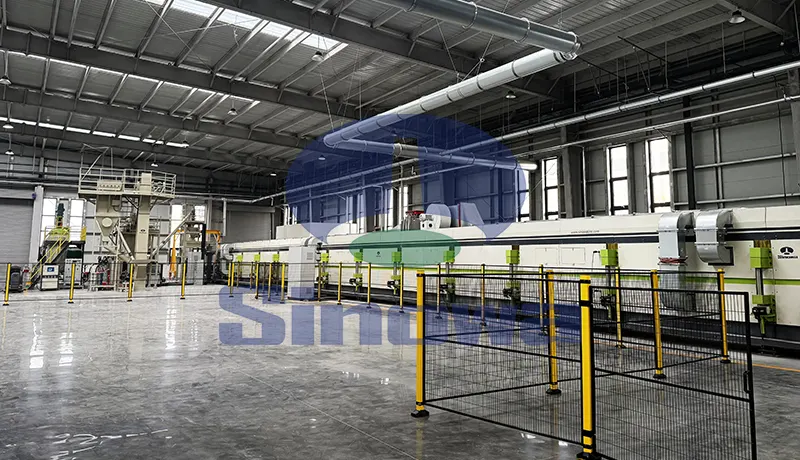
A phenolic insulation board production line serves as the core equipment for manufacturing high-performance thermal insulation building materials. This phenolic insulation panel production line integrates material mixing, foaming, molding and cutting processes to ensure continuous and stable production efficiency. Every operational link of the insulation board production line is precisely calibrated to produce uniform and durable insulation boards. The automated design of the insulation panel production line effectively reduces manual intervention and improves product consistency. Proper maintenance of the phenolic board production line can greatly extend its service life and maintain steady production output. With optimized structural design, the phenolic panel production line adapts to various production demands and delivers high-quality finished products for thermal insulation engineering applications.
-
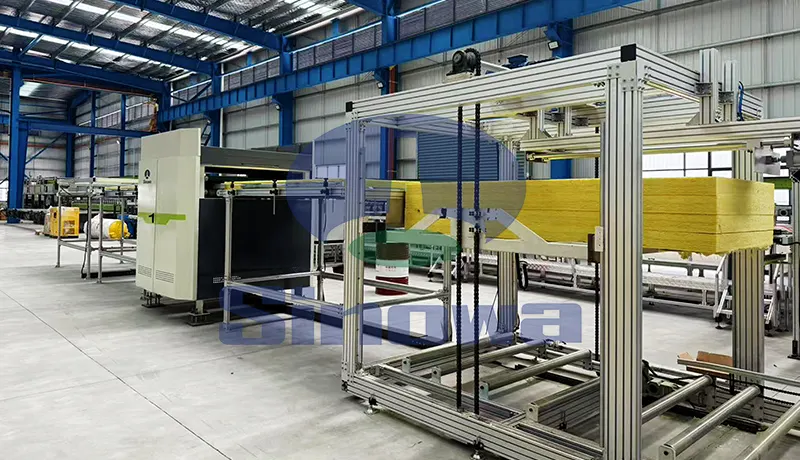
A professional rockwool sandwich panel line serves as the core equipment for producing high-performance building panels. This rockwool sandwich panel production line integrates feeding, laminating and forming processes to ensure stable and efficient production. The well-structured rock wool sandwich panel line can process raw rockwool materials into panels with excellent thermal and sound insulation properties. Operators can adjust the running parameters of the rock wool sandwich panel production line to manufacture panels of different thicknesses and specifications. The automated design of the mineral wool sandwich panel production line greatly reduces manual operation errors and improves product consistency. Regular maintenance of the mineral wool sandwich panel line is essential to sustain long-term operational efficiency and guarantee qualified finished panels for diverse construction applications.