Rigid PU Sandwich Panel Line
Publication Date: Sep 27, 2026
The rigid PU sandwich panel line is an integrated automated production system for manufacturing high-performance composite panels. It integrates foaming, lamination and curing processes to produce lightweight, insulated panels widely used in modern construction and industrial sectors.
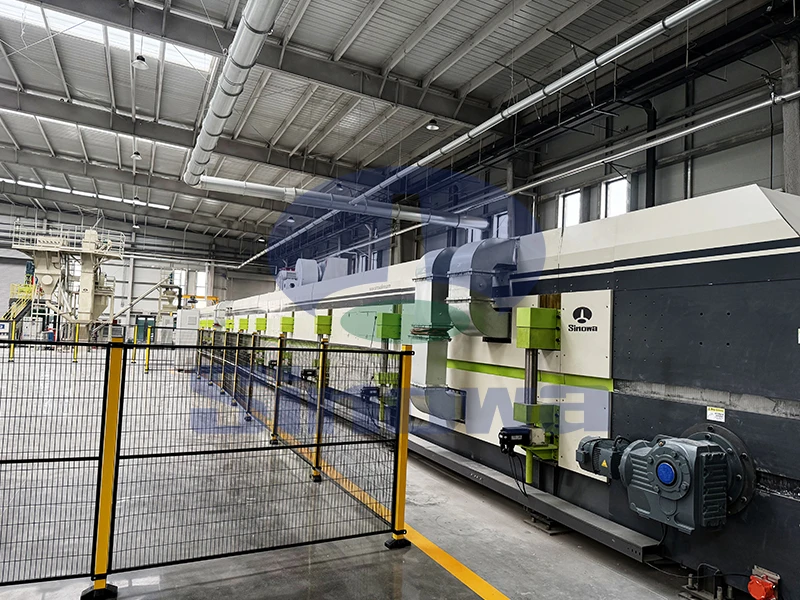
The rigid PU sandwich panel production line represents a sophisticated integrated manufacturing system that merges mechanical automation, chemical foaming technology and constant-temperature curing processes to achieve continuous and efficient production of composite panels. At its core, the equipment is designed to bond rigid polyurethane foam cores with diverse surface materials, creating integrated structural panels with excellent thermal insulation and mechanical stability. Unlike traditional intermittent production equipment, this continuous line realizes uninterrupted material feeding, processing and forming, which greatly improves production consistency and operational efficiency. Every functional unit of the line is precisely coordinated, from raw material conveying to final panel shaping, eliminating manual intervention errors and ensuring each finished panel maintains uniform structural density and surface flatness. The systematic design also simplifies overall production management, making it adaptable to long-term and large-scale industrial manufacturing demands for composite insulation panels.
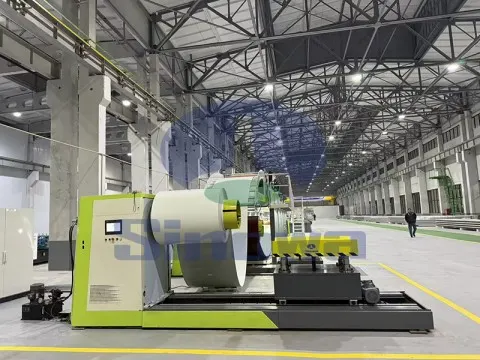
Raw material pretreatment and feeding serve as the foundational stage of the entire rigid PU sandwich panel production process, determining the basic quality of finished panels. The line is equipped with automated feeding modules that steadily transport upper and lower surface materials, including metal and non-metal sheets, to the processing station with stable tension control. This tension regulation function effectively avoids material wrinkling, deviation and deformation during high-speed operation, ensuring the flatness of panel outer layers. Meanwhile, the polyurethane raw material supply system conducts precise metering and uniform mixing of two-component chemical materials. Accurate proportioning is essential to guarantee stable foaming reactions, consistent core density and reliable bonding performance between the foam core and surface layers. Well-controlled pretreatment and feeding processes lay a solid foundation for subsequent foaming and composite molding procedures.
Precision high-pressure foaming and pouring is the core technological link that endows PU sandwich panels with superior insulation performance. After professional metering and mixing, the liquid polyurethane raw materials are transported to the pouring station and evenly sprayed onto the moving lower surface material through high-pressure spraying equipment. The automated pouring system realizes uniform material distribution across the entire panel width, preventing local material accumulation or shortage that may cause uneven core thickness and inconsistent thermal insulation effects. Once poured, the liquid materials start mild chemical reactions initially, preparing for subsequent foaming expansion. The whole pouring process features high automation and precise flow control, which optimizes the utilization rate of polyurethane raw materials while ensuring the continuity and uniformity of the foam core layer, avoiding common defects such as hollow cores and sparse foaming in traditional production.
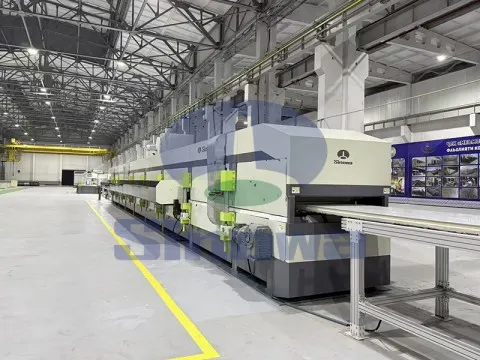
Double-belt lamination and constant-temperature curing constitute the key forming stage of rigid PU sandwich panels, directly affecting the structural integrity and stability of finished products. After the PU raw material is poured, the upper and lower surface materials with the intermediate liquid foam layer enter the closed double-belt pressing module. This module features parallel upper and lower conveyor belts that apply uniform and stable pressure to the composite material layer, ensuring the foam fully fills the gap between the two surface layers without gaps or delamination. Equipped with an intelligent constant-temperature control system, the curing section maintains a stable reaction environment for polyurethane foaming, expansion, gelation and solidification. The controlled temperature and pressure environment promotes sufficient chemical cross-linking of PU materials, forming a dense closed-cell foam core that is tightly integrated with surface layers, realizing one-piece composite molding of the sandwich panel structure.
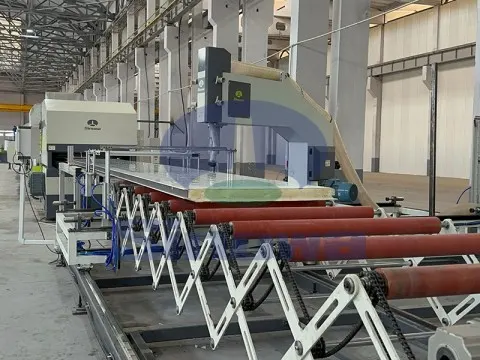
Online shaping and trimming processes further optimize the dimensional accuracy and appearance quality of rigid PU sandwich panels. After completing curing and preliminary forming, the continuous panel blanks enter the precision shaping unit of the production line. Multiple sets of shaping rollers calibrate the flatness and thickness of the panels, correcting minor deformation generated during the pressing and curing process to ensure consistent overall dimensions of each panel. Subsequently, the automated trimming device accurately cuts off redundant edge materials on both sides of the panels, smoothing the panel edges and eliminating burrs and irregular margins. All shaping and trimming procedures operate synchronously with the continuous production rhythm, without interrupting the production process. This integrated processing mode effectively improves the surface finish and dimensional uniformity of finished panels, meeting the fine processing requirements of various application scenarios.
Fixed-length cutting and intelligent stacking are the final automated procedures of the rigid PU sandwich panel production line, realizing standardized finished product output. According to customized production parameters, the high-precision cutting device automatically cuts continuous panel blanks into specified lengths with neat and smooth cutting surfaces without cracking or deformation of the foam core and surface layers. The cutting system features fast response and high accuracy, adapting to diverse length customization needs of different projects. After cutting, the finished panels are automatically conveyed to the stacking station, where the intelligent stacking mechanism neatly arranges and stacks panels in order. This automated post-processing process completely replaces manual cutting and stacking, greatly improving production efficiency, reducing labor costs, and avoiding panel damage and messy stacking problems caused by manual operation.
The structural design of the rigid PU sandwich panel line focuses on operational stability and flexible adaptability to diverse production demands. The whole line adopts a modular integrated structure, with each functional unit independently arranged and closely connected, facilitating daily maintenance, equipment debugging and later function upgrading. The transmission system uses high-stability roller groups and synchronous drive devices to ensure consistent operating speed of each production section, avoiding material stretching and panel distortion caused by speed differences. In addition, the equipment supports flexible adjustment of production parameters, including panel thickness, foaming density and production speed. This flexibility enables the line to manufacture sandwich panels with different specifications, which can meet the differentiated usage needs of building exterior walls, interior partitions, cold storage enclosures and other scenarios, greatly expanding the application scope of production products.
The rigid PU sandwich panel line delivers prominent production performance advantages in efficiency, product quality and energy conservation. Benefiting from fully continuous automated production, the line achieves uninterrupted operation from feeding to finished product output, with far higher production efficiency than traditional intermittent production equipment. The precisely controlled foaming, pressing and curing processes ensure that finished panels have uniform closed-cell structures, stable thermal insulation performance and excellent bonding strength between core and surface layers. Meanwhile, the optimized raw material metering and spraying system reduces raw material waste and improves material utilization efficiency. The intelligent temperature control system also avoids invalid energy consumption, realizing energy-saving production while maintaining stable processing conditions, which helps reduce overall production costs for manufacturers.
Products manufactured by the rigid PU sandwich panel line possess comprehensive performance strengths and wide application value. The integrated composite structure endows the panels with lightweight characteristics while maintaining good mechanical bearing capacity, effectively reducing the load of building and equipment supporting structures. The dense closed-cell PU foam core provides outstanding thermal insulation and heat preservation effects, effectively isolating temperature transfer and reducing energy consumption for building temperature regulation. In addition, the panels feature good sound insulation, moisture resistance and structural durability, adapting to complex indoor and outdoor usage environments. These superior performances make the panels widely applicable in industrial plant enclosures, commercial building insulation, cold storage thermal preservation and clean workshop decoration fields.
With the continuous upgrading of energy-saving building material manufacturing technology, the rigid PU sandwich panel line is evolving toward higher intelligence and more stable operation. Modern production lines are equipped with intelligent monitoring systems that realize real-time tracking and data collection of key production parameters such as material proportioning, curing temperature and operating speed. The system can automatically identify abnormal operating conditions and trigger early warnings, effectively reducing equipment failure rates and defective product rates. Further optimized mechanical structures and process technologies continuously improve the precision and stability of panel molding. As the market demand for high-efficiency energy-saving composite panels grows, this automated production line will remain a core processing device in the new building material manufacturing industry, supporting the sustainable development of energy-saving building engineering.
Gallery of Rigid PU Sandwich Panel Line
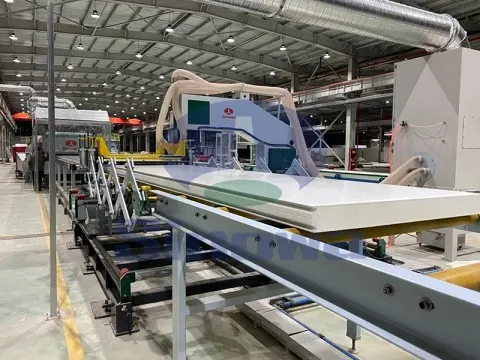
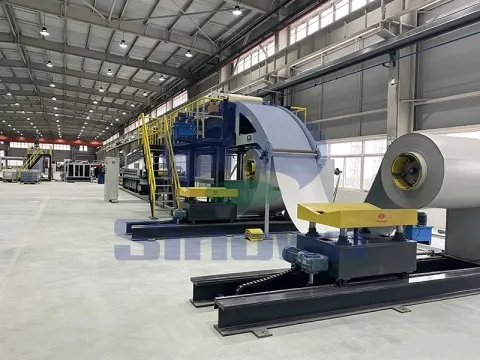
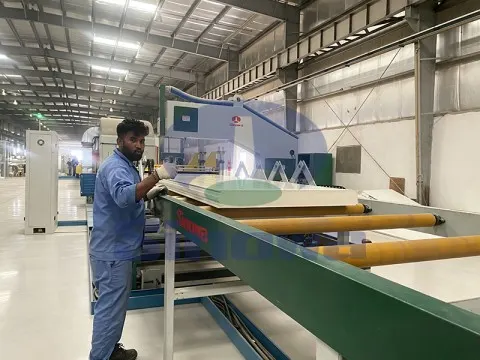
Tags: rigid pu sandwich panel line, rigid pu sandwich panel line manufacturer, rigid pu sandwich panel line supplier, china rigid pu sandwich panel line, rigid pu sandwich panel line for sale
https://www.sandwichpanelmachinery.com/tags/rigid-pu-sandwich-panel-line.html
-
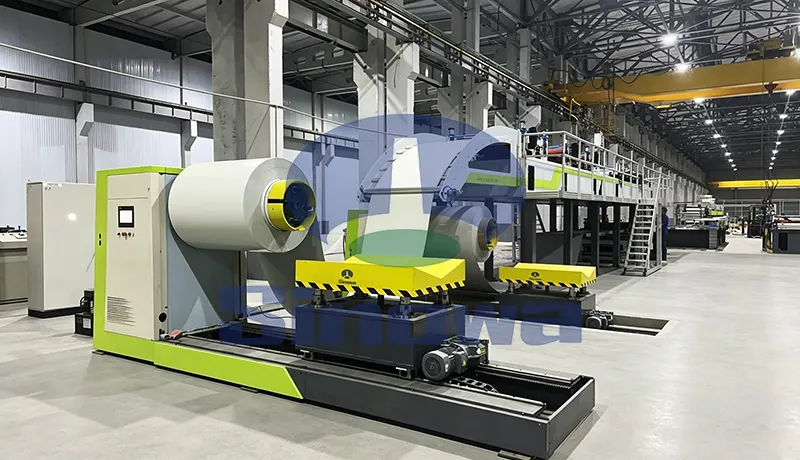
The PU sandwich panel line is a core production setup for making high-performance building insulation panels. This professional PU sandwich panel production line features automated operation to streamline the whole manufacturing process efficiently. Every component of the polyurethane sandwich panel line is precisely calibrated to ensure consistent panel thickness and structural stability. A well-maintained polyurethane sandwich panel production line can greatly boost production efficiency while reducing manual operation errors. The continuous PU sandwich panel line adapts to diverse production demands for different panel sizes and surface styles. With advanced molding technology, the PIR sandwich panel line produces panels with excellent heat preservation and sound insulation properties. Stable running of the PIR sandwich panel production line guarantees reliable product quality for various construction and industrial application scenarios.
-
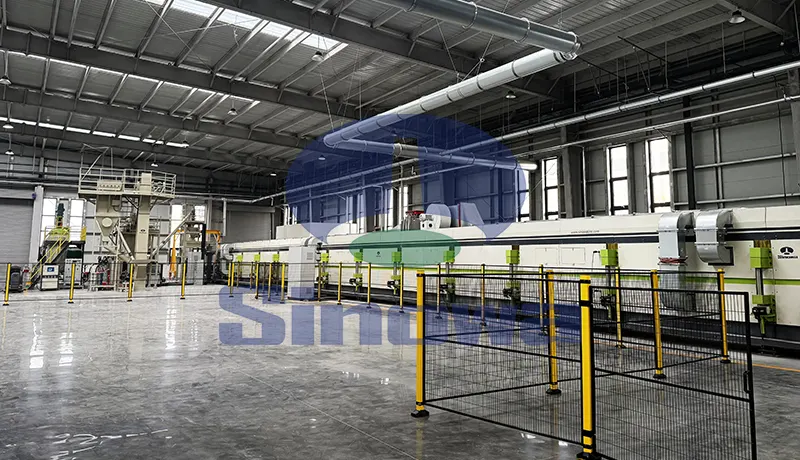
A phenolic insulation board production line serves as the core equipment for manufacturing high-performance thermal insulation building materials. This phenolic insulation panel production line integrates material mixing, foaming, molding and cutting processes to ensure continuous and stable production efficiency. Every operational link of the insulation board production line is precisely calibrated to produce uniform and durable insulation boards. The automated design of the insulation panel production line effectively reduces manual intervention and improves product consistency. Proper maintenance of the phenolic board production line can greatly extend its service life and maintain steady production output. With optimized structural design, the phenolic panel production line adapts to various production demands and delivers high-quality finished products for thermal insulation engineering applications.
-
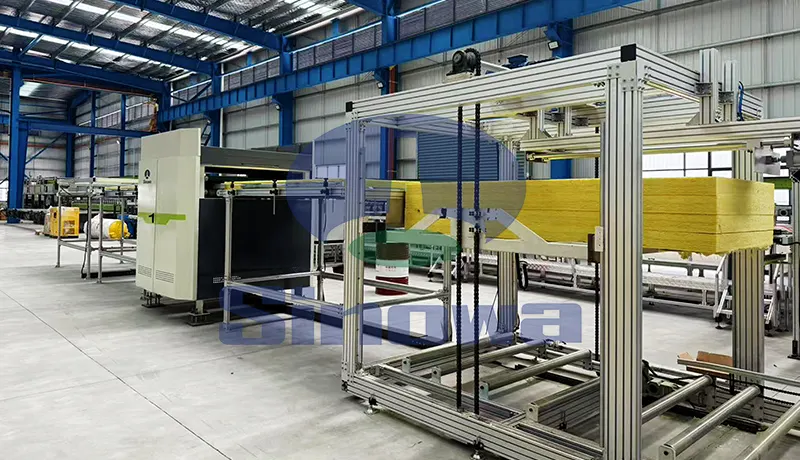
A professional rockwool sandwich panel line serves as the core equipment for producing high-performance building panels. This rockwool sandwich panel production line integrates feeding, laminating and forming processes to ensure stable and efficient production. The well-structured rock wool sandwich panel line can process raw rockwool materials into panels with excellent thermal and sound insulation properties. Operators can adjust the running parameters of the rock wool sandwich panel production line to manufacture panels of different thicknesses and specifications. The automated design of the mineral wool sandwich panel production line greatly reduces manual operation errors and improves product consistency. Regular maintenance of the mineral wool sandwich panel line is essential to sustain long-term operational efficiency and guarantee qualified finished panels for diverse construction applications.