What Is The Service Life Of PU Sandwich Panel Production Equipment?
Publication Date: Sep 23, 2026
PU sandwich panel production equipment features a definite service life determined by multiple operational and maintenance factors. Proper usage, daily upkeep, working environment and load conditions all jointly influence its durable working cycle and overall functional stability.
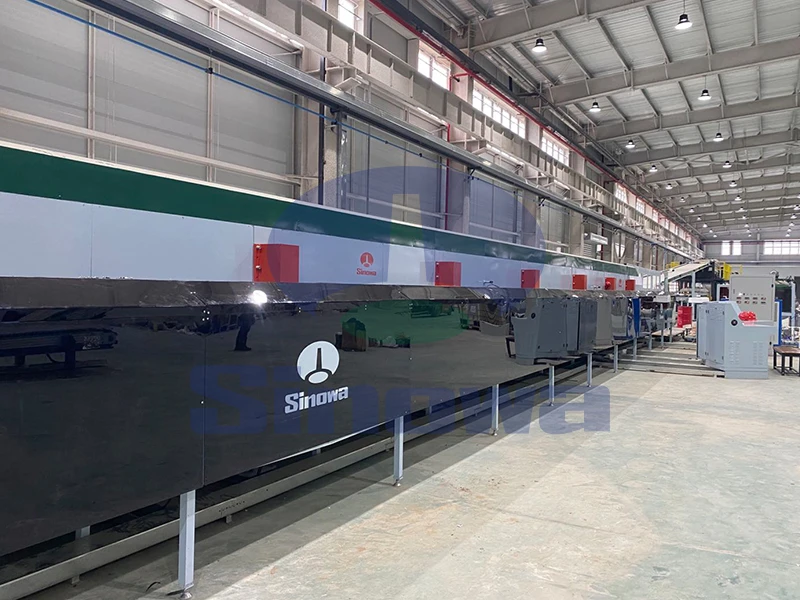
The basic service life of standard PU sandwich panel production equipment generally falls within a stable range under conventional daily operating conditions. For most full-automatic production lines dedicated to PU sandwich panel manufacturing, the core mechanical and electrical components can maintain normal and efficient operation for a long period when working under rated load and standard operating frequency. In general, the whole set of equipment can achieve a usable service life of over a decade with basic standardized operation, which covers the main production functions including material feeding, foaming, pressing, cutting and shaping. This baseline lifespan is built on the inherent structural stability of the equipment, as its metal frame, transmission system and fixed processing units are designed to withstand long-term continuous industrial production. Even with daily startup and shutdown circulation, the original structural performance will not suffer rapid attenuation in the early and middle service stages, laying a solid foundation for long-term stable production operation.
Operating load intensity is one of the core factors that directly affect the service life of PU sandwich panel production equipment. Equipment running under long-term overloaded working conditions will experience accelerated wear and aging of key components, which significantly shortens its overall service cycle. When the equipment continuously operates beyond the rated production speed, processes excessive raw materials per unit time, or undertakes super-long daily working hours, the transmission gears, roller shafts, hydraulic systems and foaming control components will bear excessive mechanical pressure and operating load. Long-term overload operation will cause irreversible fatigue loss of metal parts, increased friction loss of moving components and frequent fluctuation of electrical operating parameters. In contrast, operating the equipment strictly in accordance with the rated load, arranging reasonable production intervals and avoiding continuous high-intensity operation can effectively reduce component loss, maintain stable mechanical performance and extend the effective service life of the entire production line to the maximum extent.
Daily maintenance and regular overhaul work play an indispensable role in prolonging the service life of PU sandwich panel production equipment. Scientific and systematic maintenance can eliminate potential equipment faults in advance, slow down component aging and keep the equipment in optimal working state for a long time. Daily basic maintenance includes cleaning surface dust and residual raw materials, checking the tightness of connecting parts, supplementing lubricating oil for transmission and moving structures, and inspecting the normal operation of circuit and air pressure systems. Regular in-depth overhauls involve detecting the wear degree of vulnerable parts, calibrating precision control parameters, maintaining hydraulic and pneumatic systems, and replacing aging accessories in a timely manner. Production lines with complete maintenance mechanisms can effectively avoid minor faults evolving into major equipment failures, reduce unnecessary component loss, and make the equipment maintain stable production performance for more than the conventional service cycle.
The working environment where PU sandwich panel production equipment is placed has a subtle but far-reaching impact on its service life. Industrial production environments with high humidity, excessive dust, corrosive gas or drastic temperature changes will accelerate the aging and damage of equipment components. Excessive workshop dust may accumulate in the equipment’s transmission gaps and electrical control boxes, causing increased component friction, poor heat dissipation and circuit short-circuit risks. High humidity and corrosive air will cause oxidation and rust on metal structural parts, corrosion of precision parts and aging of circuit insulation layers, damaging the equipment’s internal structure. Meanwhile, long-term exposure to ultra-high or ultra-low temperature will affect the working accuracy of the foaming system and the operational stability of electrical components. A dry, clean, well-ventilated and constant-temperature production environment can effectively protect equipment components, reduce environmental erosion and ensure long-term stable operation of the equipment.
The quality of raw materials used in production directly affects the wear degree and service life of PU sandwich panel production equipment. Unqualified or impure raw materials will cause extra loss to the equipment’s processing units and functional systems. Raw materials mixed with hard impurities, oversized particles or uneven components will increase the wear of feeding rollers, cutting blades and pressing molds during processing, and may even cause jamming damage to internal transmission structures. In addition, raw materials with unregulated viscosity and foaming activity will lead to unstable foaming reaction in the equipment, easily causing residue adhesion on the inner wall of the foaming chamber and blockage of material conveying pipelines. Long-term use of substandard raw materials will not only reduce production product quality but also increase the frequency of equipment cleaning and component replacement, accelerate equipment aging, and greatly shorten the effective service life of the production line.
Operational standardization of staff is a key human factor affecting the long-term service life of PU sandwich panel production equipment. Non-standard manual operation is one of the main causes of premature equipment failure and shortened service cycle. Unskilled operators may make mistakes in parameter setting, equipment startup and shutdown procedures, and material feeding operations, easily causing equipment idling, sudden startup and shutdown, and abnormal operation of functional systems. Random adjustment of equipment operating parameters beyond the safe range will impact the stability of the foaming and pressing system, causing fatigue damage to precision components. In addition, irregular daily operation habits such as failure to clean equipment in time and neglect pre-operation inspection will accumulate small equipment problems over time. Standardized operation training and standardized working procedures can effectively avoid man-made equipment damage, maintain stable equipment operation and guarantee its normal service life.
Timely replacement of vulnerable parts is crucial to maintaining the overall service life of PU sandwich panel production equipment. Any production equipment has regularly worn vulnerable parts, and long-term operation will lead to natural aging and performance degradation of these components. The vulnerable parts of PU sandwich panel production lines mainly include transmission belts, lubrication bearings, cutting blades, sealing rings and filter components. These parts bear frequent friction, extrusion and pressure impact during production, and their performance will gradually decline after long-term use. Delayed replacement of aging vulnerable parts will lead to increased equipment operating resistance, reduced production accuracy, and even cause linkage faults of adjacent components. Regular inspection of vulnerable parts, timely replacement of failed and aging accessories, and matching the specifications of replacement parts with the original equipment can keep the overall performance of the production line intact and ensure continuous and stable operation throughout the equipment’s service cycle.
Equipment upgrading and technical renovation can effectively extend the actual service life of old PU sandwich panel production equipment. With the continuous progress of industrial production technology, some early-built production lines may face problems such as backward control systems and low operational efficiency after years of use, but their main mechanical structures still have usable value. Targeted technical upgrades such as updating the intelligent control system, optimizing the material conveying structure, and transforming the foaming and pressing precision system can improve the operational performance of old equipment. These renovations can solve the aging performance defects of partial systems, improve production efficiency and operational stability, and enable the old equipment to regain stable working capacity. Reasonable technical upgrades can break through the original service life limit of the equipment, make the main equipment continue to be put into formal production, and greatly improve the actual service cycle and utilization value of the production line.
Long-term idle storage status will also affect the service life and functional stability of PU sandwich panel production equipment. Many production lines will face periodic idle state due to production schedule adjustment, and improper storage management during idle period will cause hidden dangers to equipment performance. Long-term idle equipment is prone to metal rust, lubricating oil deterioration, circuit moisture aging and pipeline blockage caused by residual material solidification. If the equipment is left idle for a long time without regular maintenance and debugging, the accumulated hidden faults will lead to unstable operation and reduced accuracy when it is restarted, and even cause startup failure. Carrying out regular rust prevention, oil maintenance, circuit detection and empty machine debugging for idle equipment can effectively avoid performance degradation caused by long-term shutdown, maintain the equipment’s functional integrity, and ensure that it can still work stably after repeated startup and use.
The final effective service life of PU sandwich panel production equipment is a comprehensive result of multiple factors rather than a fixed numerical value. Equipment with good inherent quality, standardized operation, perfect maintenance, favorable working environment and timely technical upgrading can maintain efficient production performance for a longer time and maximize its service value. On the contrary, equipment with long-term overload operation, irregular maintenance, harsh working environment and frequent non-standard operation will age rapidly and have a greatly shortened service cycle. Mastering the influencing rules of various factors and formulating targeted use and maintenance strategies are the key to fully exerting the equipment’s performance and prolonging its overall service life in industrial production.
Gallery of PU Sandwich Panel Production Equipment
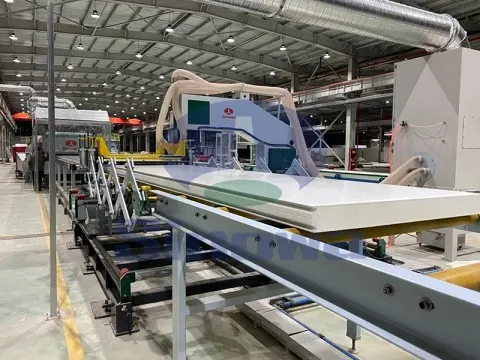
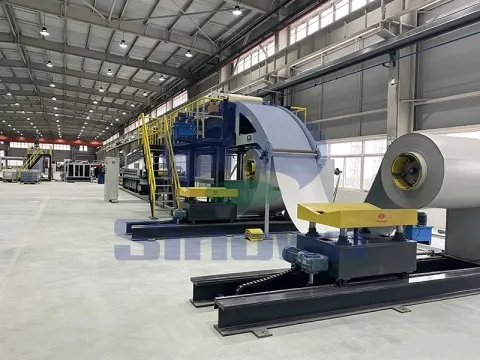
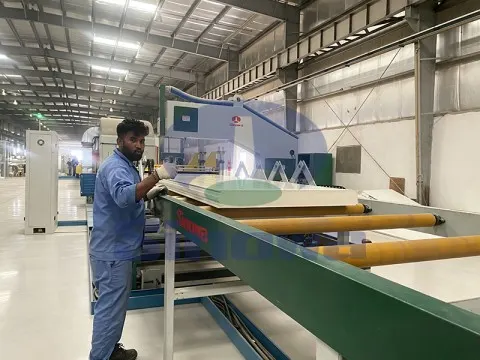
Tags: pu sandwich panel production equipment, pu sandwich panel production equipment manufacturer, pu sandwich panel production equipment supplier, china pu sandwich panel production equipment, pu sandwich panel production equipment for sale
-
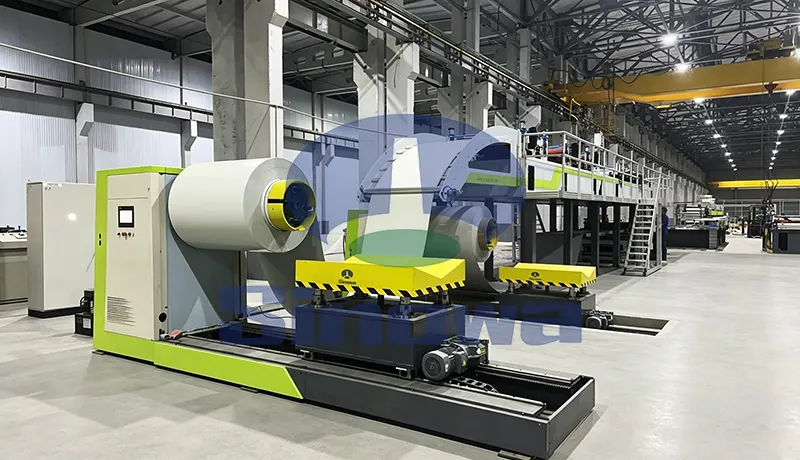
The PU sandwich panel line is a core production setup for making high-performance building insulation panels. This professional PU sandwich panel production line features automated operation to streamline the whole manufacturing process efficiently. Every component of the polyurethane sandwich panel line is precisely calibrated to ensure consistent panel thickness and structural stability. A well-maintained polyurethane sandwich panel production line can greatly boost production efficiency while reducing manual operation errors. The continuous PU sandwich panel line adapts to diverse production demands for different panel sizes and surface styles. With advanced molding technology, the PIR sandwich panel line produces panels with excellent heat preservation and sound insulation properties. Stable running of the PIR sandwich panel production line guarantees reliable product quality for various construction and industrial application scenarios.
-
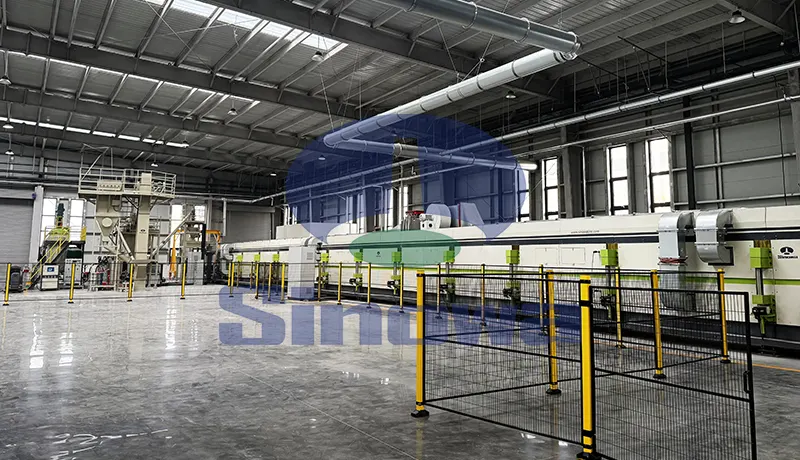
A phenolic insulation board production line serves as the core equipment for manufacturing high-performance thermal insulation building materials. This phenolic insulation panel production line integrates material mixing, foaming, molding and cutting processes to ensure continuous and stable production efficiency. Every operational link of the insulation board production line is precisely calibrated to produce uniform and durable insulation boards. The automated design of the insulation panel production line effectively reduces manual intervention and improves product consistency. Proper maintenance of the phenolic board production line can greatly extend its service life and maintain steady production output. With optimized structural design, the phenolic panel production line adapts to various production demands and delivers high-quality finished products for thermal insulation engineering applications.
-
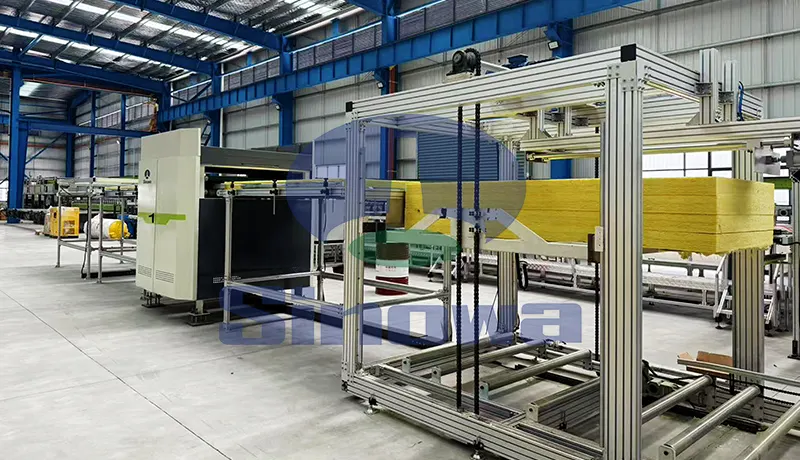
A professional rockwool sandwich panel line serves as the core equipment for producing high-performance building panels. This rockwool sandwich panel production line integrates feeding, laminating and forming processes to ensure stable and efficient production. The well-structured rock wool sandwich panel line can process raw rockwool materials into panels with excellent thermal and sound insulation properties. Operators can adjust the running parameters of the rock wool sandwich panel production line to manufacture panels of different thicknesses and specifications. The automated design of the mineral wool sandwich panel production line greatly reduces manual operation errors and improves product consistency. Regular maintenance of the mineral wool sandwich panel line is essential to sustain long-term operational efficiency and guarantee qualified finished panels for diverse construction applications.