How To Solve Uneven Thickness Of Boards Produced By Phenolic Insulation Panel Production Line?
Publication Date: Sep 27, 2026
Uneven thickness is a prevalent quality defect in phenolic insulation panel production, compromising product usability and appearance.
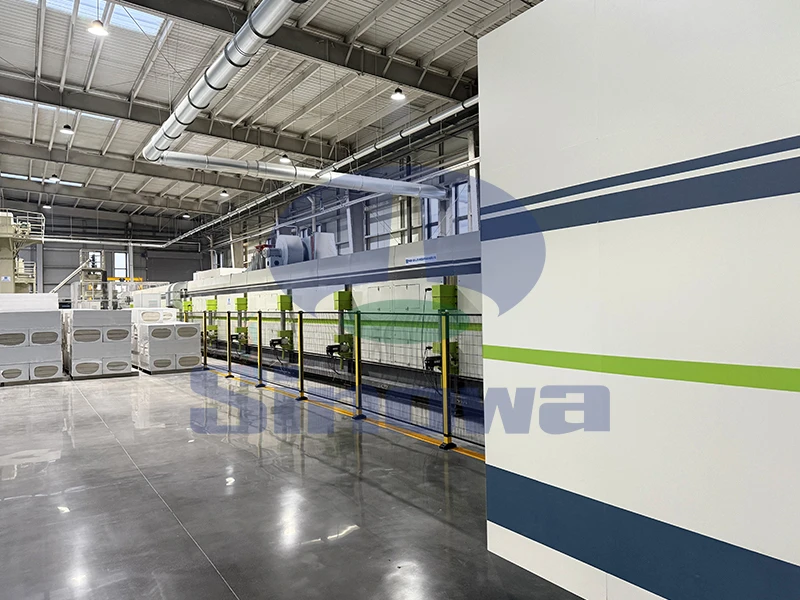
Improper calibration and operational deviation of pressing roller sets are among the most frequent triggers of uneven phenolic insulation panel thickness. In continuous phenolic board production lines, upper and lower compression rollers undertake core thickness calibration and flattening tasks, and long-term operational vibration and mechanical wear will gradually offset the symmetric spacing of roller sets. When the roller gap varies locally, the pressed panels will show inconsistent thickness across different areas, especially obvious edge-thinning and middle-thickening phenomena. Additionally, unbalanced pressure output of individual rollers leads to uneven extrusion force on the board surface during molding. To resolve this issue, production staff should conduct regular gap calibration of the entire roller set with precision measuring tools, eliminating spacing errors caused by mechanical fatigue. It is also necessary to debug the pressure balance system to ensure uniform pressure output of each roller, and replace worn roller accessories in a timely manner to maintain stable physical pressing effects on panels.
Unstable raw material ratio and inconsistent feeding uniformity directly lead to thickness fluctuation of phenolic insulation panels. Phenolic foam panels rely on precise proportioning of resin, foaming agents and auxiliary materials to form uniform closed-cell structures. Slight deviation in raw material mixing ratio will cause inconsistent foaming expansion degree of materials in different production cycles. Excess foaming agents lead to over-expansion and local thickening of partial panels, while insufficient dosage results in incomplete foaming and thin board layers. Meanwhile, uneven feeding speed and discontinuous material paving cause fluctuating material accumulation on the conveyor belt. Local material accumulation too thick or too thin will form fixed thickness defects after pressing and curing. The effective solution is to optimize the automatic batching system to ensure accurate and stable proportioning of all raw materials, and adjust the feeding and paving equipment to realize uniform and continuous material laying, avoiding material aggregation or sparse distribution in the production process.
Mismatched synchronization of phenolic insulation board production line operating speeds is a key factor causing continuous thickness deviation of phenolic panels. The whole production process including material feeding, foaming, conveying and pressing requires strict speed coordination. When the running speed of the pressing unit is inconsistent with the front-end foaming and conveying speed, the material residence time in the pressing area will be abnormal. If the pressing speed is too fast, the foamed material cannot be fully flattened and shaped, resulting in overall thicker panels with uneven local thickness; if the pressing speed is too slow, the material is over-extruded, causing excessive thinning and inconsistent thickness of finished products. Moreover, sudden speed changes in the production line will cause material tension fluctuation and local deformation. Manufacturers need to unify the speed parameters of each production unit, set stable and matching operating procedures, and install linkage speed regulation devices to realize synchronous operation of the whole line, eliminating thickness errors caused by speed mismatch.
Abnormal production temperature and unstable curing conditions easily induce uneven thickness of phenolic insulation panels. The foaming and curing process of phenolic materials is highly sensitive to temperature changes. Fluctuations in the temperature of the curing oven and preheating area will affect the foaming rate and curing degree of materials. In high-temperature areas, materials foam rapidly and expand fully, forming thicker panel sections, while low-temperature areas lead to slow foaming and insufficient expansion, resulting in thinner board bodies. Uneven internal temperature distribution of the curing equipment will also cause inconsistent curing speed of different parts of the same panel, leading to internal stress and subtle thickness deviation after molding. To improve this situation, it is essential to regularly detect and adjust the temperature uniformity of curing and preheating equipment, eliminate local temperature dead zones, and maintain a constant and stable temperature environment in the molding area. Stable temperature conditions ensure consistent foaming and curing of all materials, laying a foundation for uniform panel thickness.
Faulty operation of thickness detection and automatic correction systems aggravates panel thickness inconsistency. Modern phenolic insulation panel production lines are equipped with real-time thickness scanning and correction devices to monitor and adjust material thickness during production. However, long-term operation may cause detection sensor deviation, dust coverage and signal delay, making the system unable to accurately capture local thickness changes of panels. When the detection data is inaccurate, the automatic correction mechanism cannot adjust material paving density and roller gap in a timely manner, resulting in continuous accumulation of thickness defects. In addition, failure of individual correction components will lead to ineffective local adjustment. Production teams need to conduct daily cleaning and calibration of thickness detection sensors to ensure sensitive and accurate data collection, and regularly inspect and maintain the automatic correction system to eliminate equipment failures, realizing real-time monitoring and dynamic adjustment of panel thickness in the production process.
Unreasonable material paving and blank forming processes cause local thickness differences of phenolic insulation panels. The airflow paving technology adopted in panel production determines the uniformity of initial material blank molding. Unadjusted airflow parameters will lead to uneven material dispersion, forming blank structures with inconsistent density and thickness locally. Excess edge materials that are not recycled and cleaned in time will cause edge material accumulation, making the edge thickness of finished panels larger than the middle part. Meanwhile, irregular material blank shaping before pressing will lead to inconsistent stress distribution during subsequent extrusion molding, further enlarging thickness deviation. Optimizing the paving process requires precise adjustment of airflow intensity and dispersion range to form uniform and dense material blanks. Equipping with automatic edge material recovery devices can timely remove redundant edge materials, and standardizing blank shaping operations can ensure consistent structural uniformity of all panel blanks before pressing.
Mechanical vibration and equipment fixation instability trigger random thickness defects of phenolic panels. The phenolic panel production line will generate mechanical vibration during high-speed operation, and loose equipment fixation parts will amplify vibration amplitude, causing subtle displacement of pressing rollers and conveying platforms. Slight jitter of the roller set during pressing will lead to uneven extrusion force on the board surface, forming irregular thickness fluctuation on the panel. Long-term unrectified vibration will also cause gradual displacement of equipment installation positions, resulting in overall deviation of pressing gaps. Regular equipment inspection and reinforcement are necessary to fix loose bolts and installation components, and install vibration reduction devices on key production units. Reducing production vibration can ensure stable operation of pressing and conveying structures, avoiding random thickness errors caused by mechanical jitter and displacement.
Inconsistent raw material quality stability leads to recurring thickness unevenness of finished panels. Batch differences in phenolic resin viscosity, foaming activity and material fluidity will directly affect the foaming molding effect. Raw materials with excessive viscosity have poor fluidity and cannot be evenly spread in the paving process, resulting in local material accumulation and thickening; materials with low viscosity foam excessively and are prone to thinning after extrusion. Even with fixed production parameters, unstable raw material performance will cause obvious thickness differences between different production batches and different panel areas. Manufacturers need to establish strict raw material quality screening procedures, test the performance indicators of each batch of materials before production, and adjust production process parameters adaptively according to material characteristics to offset thickness deviation caused by raw material batch differences and ensure stable finished product quality.
Improper post-molding cooling and stress relief cause secondary thickness deviation of phenolic panels. Just-cured phenolic insulation panels have high internal temperature and residual molding stress. Uneven cooling speed in the post-production cooling area will lead to inconsistent shrinkage degree of different parts of the panel. Rapid cooling areas shrink slightly while slow cooling areas shrink greatly, resulting in overall uneven thickness and subtle warping deformation. In addition, unrelieved internal stress will slowly release after finished product molding, causing secondary dimensional changes and thickness deviation. Optimizing the cooling process requires uniform cooling wind speed and temperature in the cooling area to ensure synchronous heat dissipation of the whole panel. Adding a stress relief process after preliminary molding can eliminate internal molding stress, stabilize the panel structure, and avoid thickness changes caused by post-molding shrinkage and stress release.
Lack of standardized production operation and regular equipment maintenance system leads to long-term thickness instability of phenolic panels. Irregular manual operation, such as random adjustment of process parameters and inconsistent feeding operations, will cause continuous fluctuation of panel thickness. Many production lines lack systematic daily maintenance and regular calibration mechanisms, leading to gradual accumulation of equipment wear, parameter deviation and component failure, which make thickness defects difficult to eradicate. Establishing standardized operation procedures is essential to unify parameter adjustment, feeding and molding operation standards for all staff. Formulating regular equipment maintenance, calibration and inspection plans can eliminate potential equipment and process hazards in advance. Standardized management and regular maintenance fundamentally improve the overall stability of the production line and ensure long-term consistent thickness of phenolic insulation panels.
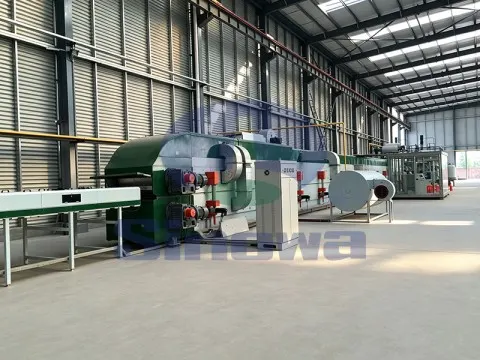
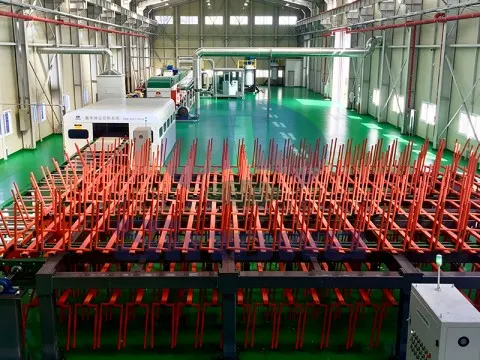
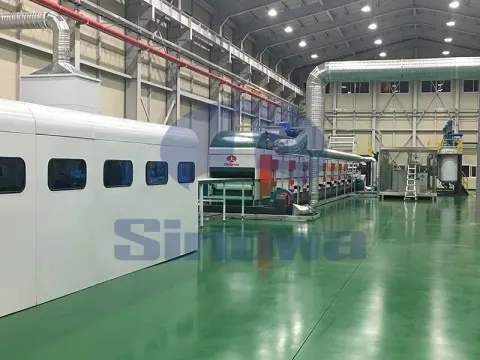
Gallery of Phenolic Insulation Panel Production Line
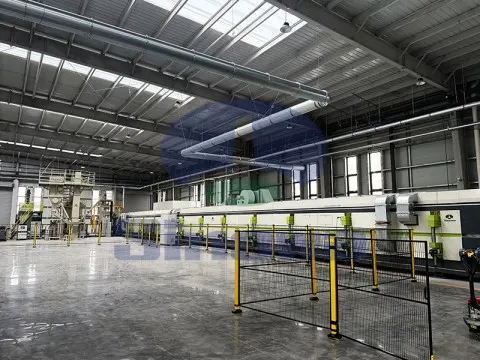
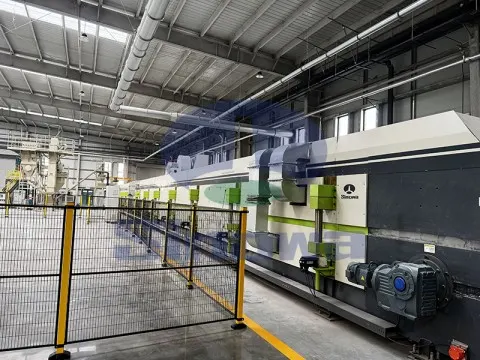
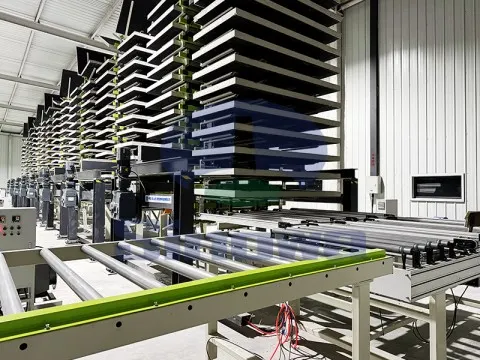
Tags: phenolic insulation panel production line, phenolic insulation panel production line manufacturer, phenolic insulation panel production line supplier, china phenolic insulation panel production line, phenolic insulation panel production line for sale
-
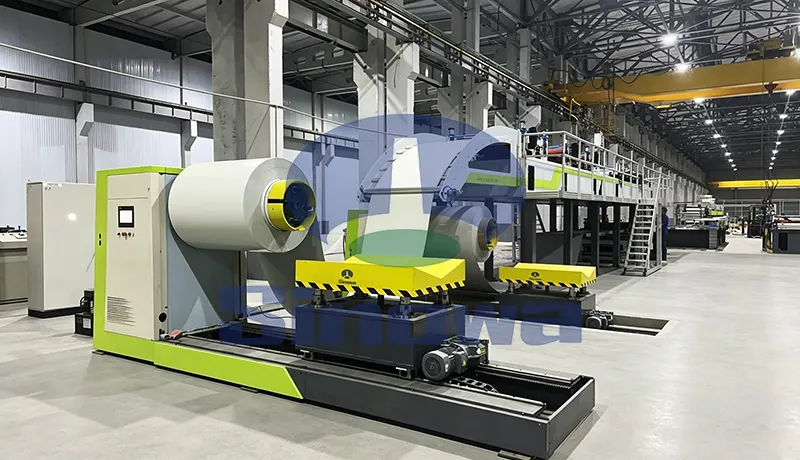
The PU sandwich panel line is a core production setup for making high-performance building insulation panels. This professional PU sandwich panel production line features automated operation to streamline the whole manufacturing process efficiently. Every component of the polyurethane sandwich panel line is precisely calibrated to ensure consistent panel thickness and structural stability. A well-maintained polyurethane sandwich panel production line can greatly boost production efficiency while reducing manual operation errors. The continuous PU sandwich panel line adapts to diverse production demands for different panel sizes and surface styles. With advanced molding technology, the PIR sandwich panel line produces panels with excellent heat preservation and sound insulation properties. Stable running of the PIR sandwich panel production line guarantees reliable product quality for various construction and industrial application scenarios.
-
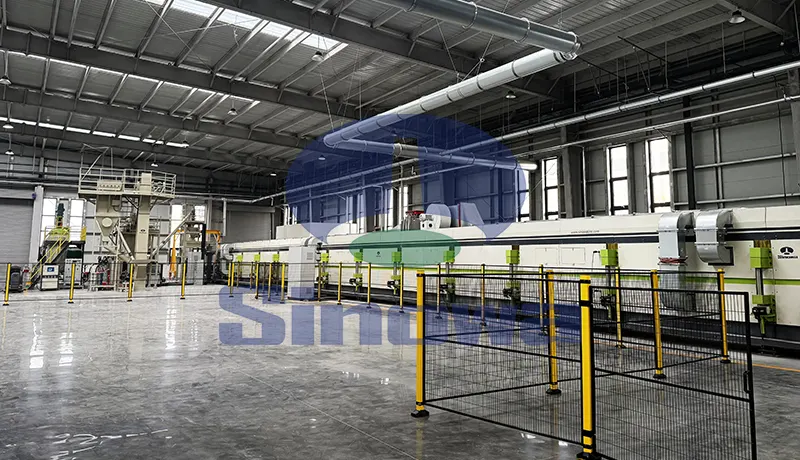
A phenolic insulation board production line serves as the core equipment for manufacturing high-performance thermal insulation building materials. This phenolic insulation panel production line integrates material mixing, foaming, molding and cutting processes to ensure continuous and stable production efficiency. Every operational link of the insulation board production line is precisely calibrated to produce uniform and durable insulation boards. The automated design of the insulation panel production line effectively reduces manual intervention and improves product consistency. Proper maintenance of the phenolic board production line can greatly extend its service life and maintain steady production output. With optimized structural design, the phenolic panel production line adapts to various production demands and delivers high-quality finished products for thermal insulation engineering applications.
-
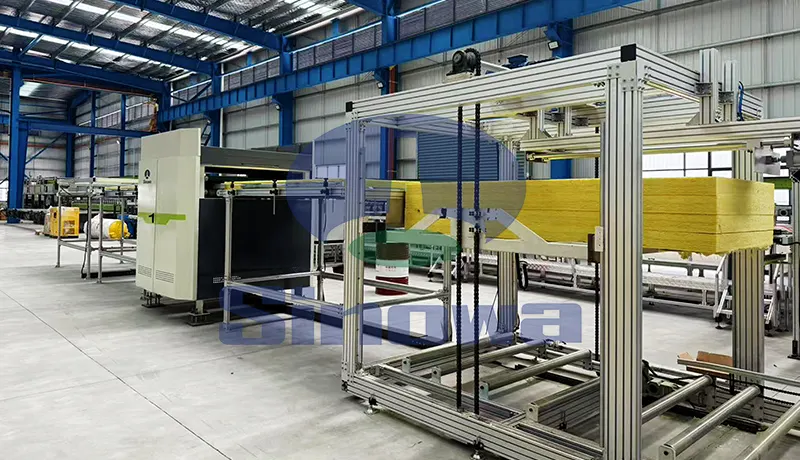
A professional rockwool sandwich panel line serves as the core equipment for producing high-performance building panels. This rockwool sandwich panel production line integrates feeding, laminating and forming processes to ensure stable and efficient production. The well-structured rock wool sandwich panel line can process raw rockwool materials into panels with excellent thermal and sound insulation properties. Operators can adjust the running parameters of the rock wool sandwich panel production line to manufacture panels of different thicknesses and specifications. The automated design of the mineral wool sandwich panel production line greatly reduces manual operation errors and improves product consistency. Regular maintenance of the mineral wool sandwich panel line is essential to sustain long-term operational efficiency and guarantee qualified finished panels for diverse construction applications.