PU Foam Panel Manufacturing Line
Publication Date: Sep 27, 2026
A PU foam panel manufacturing line is an integrated automated system for continuous production of polyurethane foam composite panels. It integrates raw material processing, precise mixing, foaming, lamination, curing and finishing, delivering uniform, high-performance insulation panels for diverse industrial and construction applications.
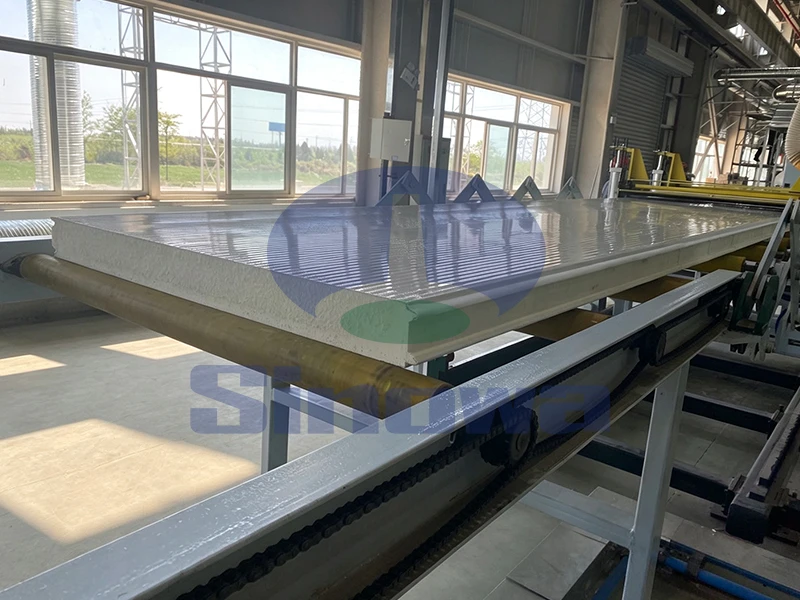
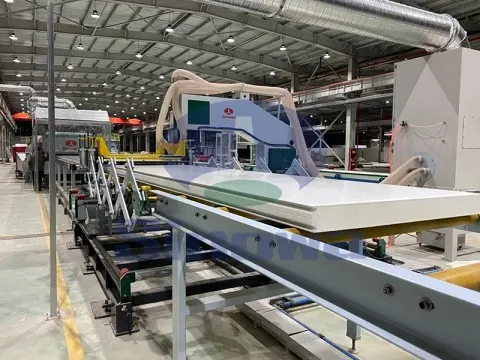
The overall operation of a PU foam panel manufacturing line relies on a modular and interconnected structural design that unifies multiple independent processing units into a cohesive production workflow. Each functional section operates in synchronized coordination, eliminating disjointed manual operations and intermittent production pauses that commonly exist in traditional batch production modes. The entire line covers the full manufacturing cycle from initial surface material pretreatment to final finished product stacking, forming a closed-loop automated production system. Every transmission device and control component is precisely calibrated to match the production rhythm, ensuring stable operational speed and consistent processing accuracy throughout continuous production. This systematic layout not only improves overall production efficiency but also lays a solid foundation for uniform product quality by standardizing every production step and eliminating artificial operational errors.
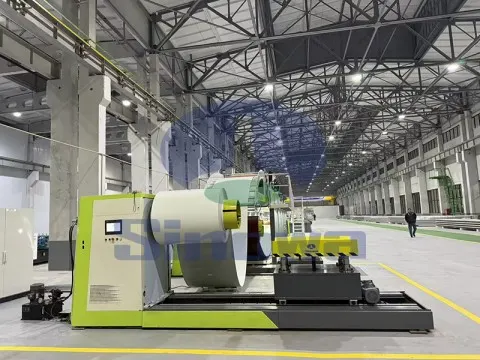
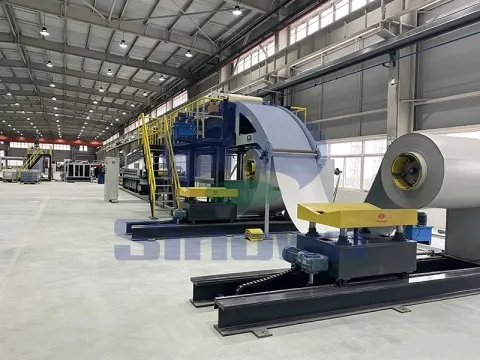
Raw material pretreatment serves as the initial and foundational procedure in the entire PU foam panel manufacturing process, directly influencing the stability of subsequent foaming reactions and the bonding quality of finished panels. This stage mainly includes surface material unwinding, cleaning and shaping, as well as purification and preprocessing of polyurethane raw materials. Surface substrates are smoothly unwound from coiled materials through automatic unwinding devices, with surface dust, oil stains and impurities thoroughly removed via professional cleaning structures to enhance the adhesion between substrates and foam core materials. Meanwhile, liquid polyols, isocyanates and various auxiliary additives undergo fine filtration to eliminate tiny particulate impurities generated during storage and transportation. Standardized pretreatment effectively avoids structural defects such as hollow pores and poor bonding in finished panels, ensuring the basic flatness and structural integrity of raw materials before formal production.
Raw material proportioning and high-precision mixing constitute the core technological link that determines the internal quality and performance of PU foam panels. The production line is equipped with an intelligent metering and mixing system that independently transports different liquid raw materials through dedicated pipelines. The system accurately adjusts the feeding ratio and flow rate of each raw material through real-time data monitoring, realizing precise quantitative feeding without manual intervention. Inside the sealed mixing chamber, high-speed swirling stirring technology is adopted to achieve instantaneous and homogeneous fusion of multiple raw materials. This efficient mixing method ensures that auxiliary components for adjusting foaming speed, pore structure and toughness are evenly distributed in the base materials. Uniformly mixed raw materials can produce fine and consistent foam pores in subsequent reactions, endowing panels with stable thermal insulation and mechanical properties.
Automated pouring and uniform foaming processes follow the raw material mixing stage, acting as key steps for forming the foam core structure of PU panels. The well-mixed liquid PU materials are evenly poured onto the moving lower surface substrate through a precision pouring head with adjustable discharging range and speed. As the conveyor system operates at a constant speed, the liquid materials naturally spread and infiltrate the middle space of the double-layer substrates. Under appropriate temperature conditions, the materials undergo rapid physical foaming and chemical cross-linking reactions, gradually expanding to fill the entire interlayer gap. The whole foaming process is dynamically monitored by the system to avoid excessive expansion or insufficient foaming. Stable and controlled foaming forms a dense, uniform and pore-free foam core layer, which is the key to ensuring the heat preservation, sound insulation and shock resistance of finished PU foam panels.
Surface material roll forming and preheating treatment further optimize the structural stability and composite effect of PU foam panels during production. After unwinding and cleaning, the upper and lower surface substrates pass through multi-station roll forming equipment, which gradually presses the flat substrates into preset profile structures through orderly arranged roller groups. This process enhances the overall rigidity and flatness of the panels, improving their bending resistance and structural stability in subsequent use. After forming, the substrates enter a constant-temperature preheating chamber for surface warming treatment. Preheating can effectively activate the surface activity of the substrates, greatly enhancing the bonding force between the substrates and the foam core. It also avoids the quality problem of uneven foaming reaction caused by temperature difference between room-temperature substrates and high-temperature foaming materials, making the composite structure more firm and durable.
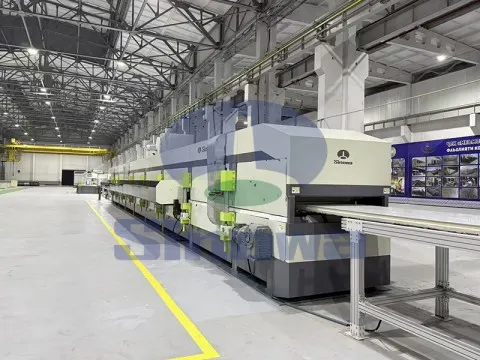
Continuous lamination and constant-temperature curing are critical processes for shaping integrated PU foam composite panels. After foaming and preliminary compounding, the semi-finished panels enter a double-belt pressing and curing system that maintains stable pressure and constant temperature. The continuous pressing structure tightly fits the upper and lower substrates with the foam core, eliminating gaps and warping phenomena in the composite layer. The constant-temperature curing environment provides stable reaction conditions for the continuous cross-linking and solidification of PU foam molecules. During the several-minute curing process, the foam core gradually completes structural shaping and performance stabilization, forming an integrated composite structure with the surface materials. Continuous lamination and curing realize uninterrupted forming of long-strip panels, greatly improving production continuity while ensuring the overall flatness and structural consistency of panel products.
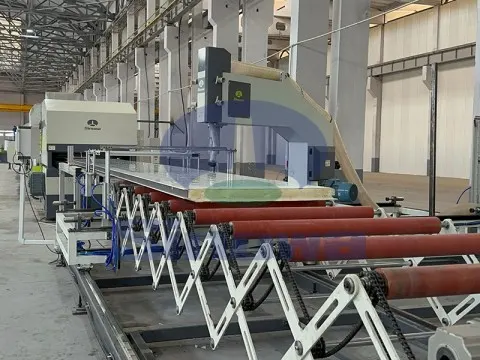
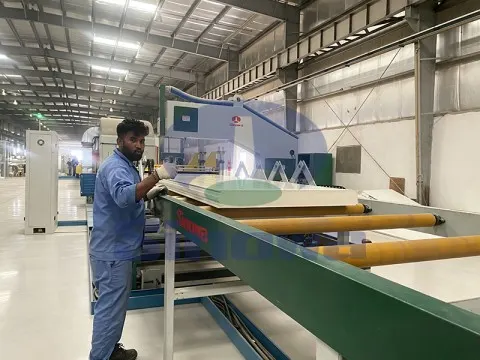
Fixed-length cutting and edge finishing processes convert continuously produced long-strip semi-finished panels into standard finished products. The production line is equipped with an intelligent flying saw cutting system that supports real-time length measurement and automatic positioning according to preset production parameters. The high-precision cutting device can complete fast and smooth cross-cutting of long panels without stopping the production line, ensuring consistent length specifications of each finished panel. After cutting, the edge finishing mechanism trims and polishes the panel edges to remove burrs, uneven edges and residual foam materials generated during cutting. This fine processing not only optimizes the appearance quality of the panels but also ensures the flatness and regularity of panel joints during subsequent installation and assembly, improving the overall construction effect.
Cooling and shaping treatment is an indispensable post-processing step to stabilize the final performance of PU foam panels. Panels just out of the curing system retain a certain temperature and have not yet completed full molecular stabilization, which may cause slight deformation or structural shrinkage if directly stacked. The production line is equipped with a circulating cooling conveying area that adopts natural air cooling and auxiliary heat dissipation structures to gradually reduce the panel temperature to room temperature at a uniform speed. The slow cooling mode effectively avoids internal stress concentration caused by rapid temperature change, preventing panel warping, bending and size deviation. During the cooling process, the internal molecular structure of the foam core is further stabilized, and the bonding performance between the composite layers is fully strengthened, ensuring the long-term structural stability of the finished panels in different usage environments.
Automatic stacking and finished product sorting realize the final automated output and orderly storage of PU foam panels. After cooling and shaping, qualified panels are transported to the stacking station through the conveyor system. The intelligent stacking device can automatically adjust the stacking height and arrangement mode according to product specifications, realizing neat and standardized stacking of finished panels. The system is equipped with a simple screening function to preliminarily identify panels with obvious surface defects or size deviations, separating unqualified products from qualified finished products. Automated stacking replaces traditional manual handling and stacking, greatly reducing labor costs and avoiding panel damage caused by manual operation errors. This process ensures neat finished product storage and facilitates subsequent packaging, transportation and warehouse management work.
The intelligent control and daily maintenance system guarantee the long-term stable and efficient operation of the entire PU foam panel manufacturing line. The whole production process is centrally controlled by an intelligent operating system, which can monitor operating parameters such as material proportioning, foaming temperature, conveying speed and cutting accuracy in real time. Operators can adjust production parameters remotely through the control terminal to adapt to different product production needs. In terms of daily maintenance, the modular structural design enables independent inspection, repair and replacement of each functional unit without affecting the overall operation of the production line. Regular cleaning of material pipelines, calibration of metering systems and lubrication of transmission components can effectively reduce equipment failure rates. Scientific operation management and standardized maintenance extend the service life of the equipment and ensure long-term stable output of high-quality PU foam panel products.
Gallery of PU Foam Panel Manufacturing Line
Tags: pu foam panel manufacturing line, pu foam panel manufacturing line manufacturer, pu foam panel manufacturing line supplier, china pu foam panel manufacturing line, pu foam panel manufacturing line for sale
https://www.sandwichpanelmachinery.com/tags/pu-foam-panel-manufacturing-line.html
-
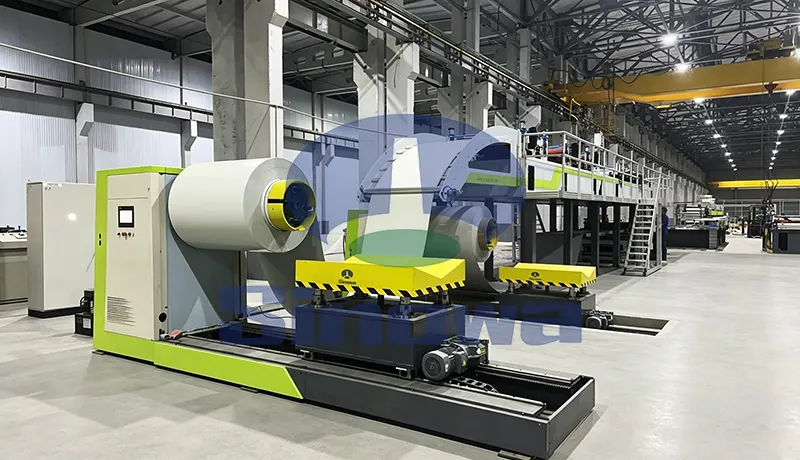
The PU sandwich panel line is a core production setup for making high-performance building insulation panels. This professional PU sandwich panel production line features automated operation to streamline the whole manufacturing process efficiently. Every component of the polyurethane sandwich panel line is precisely calibrated to ensure consistent panel thickness and structural stability. A well-maintained polyurethane sandwich panel production line can greatly boost production efficiency while reducing manual operation errors. The continuous PU sandwich panel line adapts to diverse production demands for different panel sizes and surface styles. With advanced molding technology, the PIR sandwich panel line produces panels with excellent heat preservation and sound insulation properties. Stable running of the PIR sandwich panel production line guarantees reliable product quality for various construction and industrial application scenarios.
-
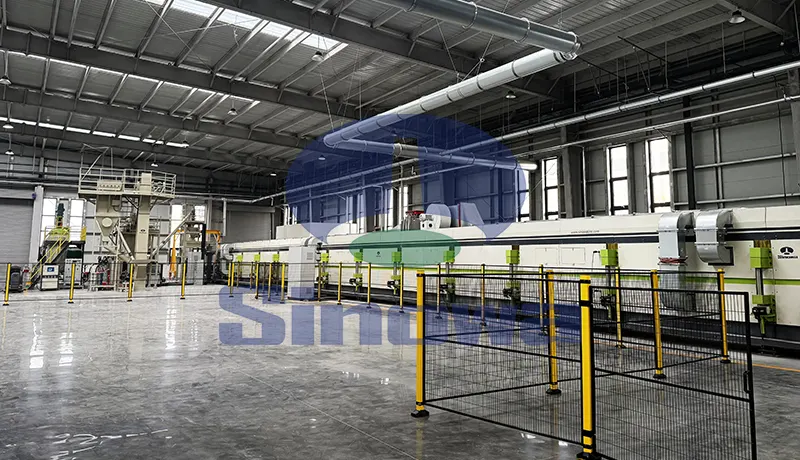
A phenolic insulation board production line serves as the core equipment for manufacturing high-performance thermal insulation building materials. This phenolic insulation panel production line integrates material mixing, foaming, molding and cutting processes to ensure continuous and stable production efficiency. Every operational link of the insulation board production line is precisely calibrated to produce uniform and durable insulation boards. The automated design of the insulation panel production line effectively reduces manual intervention and improves product consistency. Proper maintenance of the phenolic board production line can greatly extend its service life and maintain steady production output. With optimized structural design, the phenolic panel production line adapts to various production demands and delivers high-quality finished products for thermal insulation engineering applications.
-
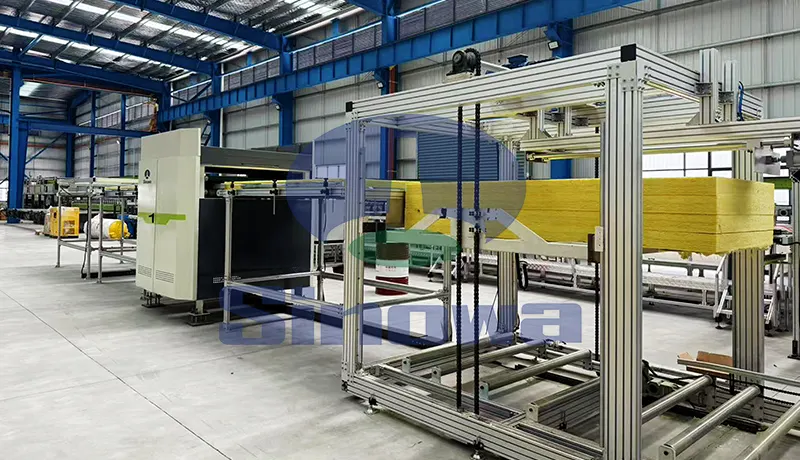
A professional rockwool sandwich panel line serves as the core equipment for producing high-performance building panels. This rockwool sandwich panel production line integrates feeding, laminating and forming processes to ensure stable and efficient production. The well-structured rock wool sandwich panel line can process raw rockwool materials into panels with excellent thermal and sound insulation properties. Operators can adjust the running parameters of the rock wool sandwich panel production line to manufacture panels of different thicknesses and specifications. The automated design of the mineral wool sandwich panel production line greatly reduces manual operation errors and improves product consistency. Regular maintenance of the mineral wool sandwich panel line is essential to sustain long-term operational efficiency and guarantee qualified finished panels for diverse construction applications.