Phenolic Foam Board Production Line
Publication Date: Sep 27, 2026
A phenolic foam board production line is an integrated automated system for manufacturing high-performance thermal insulation boards. It covers raw material processing, precise batching, mixing, continuous foaming, curing, shaping and finishing, ensuring stable, standardized and efficient production of phenolic foam products.
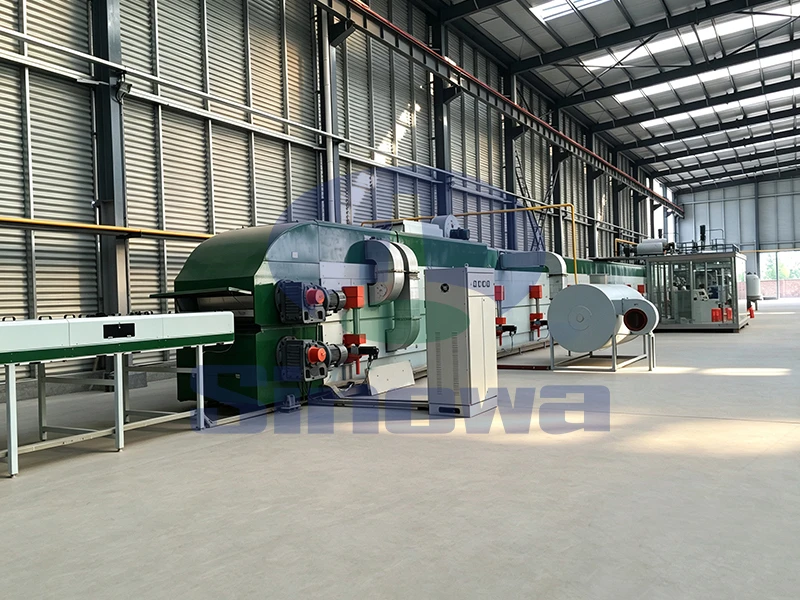
The core foundation of a phenolic foam board production line lies in its scientific raw material preparation and feeding system, which lays a solid foundation for consistent product quality. The main production materials include phenolic resin, foaming agents, curing agents and functional additives, each playing an irreplaceable role in the final product performance. The production line is equipped with sealed storage and automatic conveying devices for all raw materials, which effectively isolates external dust and moisture to prevent material deterioration and performance fluctuation. The feeding system adopts quantitative and constant-speed delivery design, which can stably transport different types of raw materials to the subsequent batching link. Meanwhile, it is equipped with material state monitoring components to track the fluidity and purity of materials in real time, avoiding material blockage or uneven feeding problems. This fully automated feeding mode eliminates manual feeding errors, ensures the stability of raw material supply throughout the production process, and provides basic guarantee for the uniformity of foam board density and structural performance.
Precision automatic batching is a key link that determines the structural stability and performance consistency of phenolic foam boards. Different from traditional manual proportioning methods, the production line adopts intelligent batching modules with high-precision metering components to accurately control the dosage of each raw material. The system sets exclusive proportion parameters according to the production requirements of different foam board specifications, and automatically adjusts the feeding ratio in real time during operation to adapt to slight changes in material characteristics. The batching process is carried out in a fully closed environment, which not only avoids the volatilization loss of volatile additives but also prevents harmful material leakage and environmental pollution. Reasonable proportion collocation can effectively optimize the foaming reaction efficiency, make the internal cell structure of the foam board uniform and dense, and avoid quality defects such as hollow holes and uneven thickness. Stable batching accuracy greatly reduces product performance differences between different batches and improves the overall qualification rate of products.
High-shear homogeneous mixing is an essential process to fully integrate raw materials and activate preliminary chemical reactions. After accurate batching, all raw materials are transported to the professional mixing unit of the production line for high-speed shearing and stirring. The mixing equipment adopts multi-layer stirring structure and variable-frequency speed regulation technology, which can realize full mixing of viscous resin materials and liquid additives in a short time. The internal temperature of the mixing cavity is precisely controlled to maintain a constant reaction temperature range, which prevents premature curing or incomplete mixing of materials caused by temperature deviation. In the mixing process, the system can break up material agglomerations and disperse various functional components evenly in the resin matrix, so that each part of the mixed material has consistent component content and reaction activity. Uniformly mixed materials can carry out stable foaming and polymerization reactions in the subsequent process, which is crucial for improving the thermal insulation and mechanical properties of phenolic foam boards.
Continuous closed foaming is the core molding stage of phenolic foam boards, which directly shapes the basic structure of finished products. The well-mixed material liquid is continuously injected into the sealed constant-temperature foaming cavity through a stable conveying pipeline. Different from open foaming processes, the closed foaming environment can accurately control foaming pressure, temperature and reaction time, avoiding the influence of external air flow and temperature on foaming effect. Under the set temperature and pressure conditions, the foaming agent vaporizes rapidly to generate uniform tiny bubbles, and the phenolic resin undergoes preliminary polymerization and curing reactions at the same time. The foam expands steadily in the confined cavity space to form a regular plate structure with uniform thickness and flat surface. The continuous feeding and foaming mode realizes uninterrupted production, greatly improves production efficiency, and effectively avoids intermittent quality differences caused by discontinuous production. The precise control of foaming parameters ensures that the internal cell structure of the foam board is fine and closed, endowing the product with excellent thermal insulation and sound insulation performance.
Graded temperature curing process is the key to complete resin polymerization and stabilize foam board performance. After preliminary foaming and molding, the semi-finished foam board enters the segmented curing tunnel of the production line for staged temperature treatment. The curing tunnel is divided into low-temperature stabilization zone, medium-temperature polymerization zone and high-temperature final curing zone, each with independent temperature adjustment and constant temperature control system. In the low-temperature stage, the preliminary foaming structure is fixed to prevent bubble rupture and board deformation; the medium-temperature stage accelerates the cross-linking polymerization reaction of phenolic resin to enhance the internal bonding force of the foam; the high-temperature stage completes the final curing reaction to eliminate residual active components inside the material. The whole curing process is carried out at a constant speed with the transmission device, ensuring that each part of the foam board receives consistent temperature treatment. Scientific graded curing effectively improves the structural stability, compression resistance and aging resistance of phenolic foam boards, making product performance more durable and reliable.
Surface composite lamination is an important link to optimize the surface performance and application adaptability of phenolic foam boards. To meet different application scenarios, the production line is equipped with automatic surface lamination and composite devices, which can compound different protective and decorative facers on both sides of the foam board. The equipment realizes automatic unreeling, leveling and deviation correction of the surface materials, ensuring the flatness and alignment of the composite layers. Before lamination, the system carries out micro-treatment on the surface of the foam board to improve the bonding adhesion between the foam matrix and the surface materials. The composite process adopts uniform pressure pressing technology to make the surface materials fit closely with the foam board without bubbles and wrinkles. The composite structure can effectively improve the surface hardness, wear resistance and weather resistance of phenolic foam boards, while preventing the internal foam structure from being damaged by external collision and erosion. This processing link expands the application scope of products and improves the overall use value of foam boards.
Fixed-length cutting and edge trimming processes realize the standardized sizing and neat appearance of finished products. After curing and composite molding, the continuous phenolic foam plate is transmitted to the precision cutting unit of the production line. The intelligent cutting system can automatically set the cutting length and width according to product specifications, and complete fixed-length cutting with high-precision servo control. The cutting tool adopts special wear-resistant and high-temperature resistant materials, which can ensure smooth and flat cutting sections without burrs, cracks and material peeling. Subsequently, the edge trimming device automatically polishes and trims the four edges of the cut foam board to eliminate irregular edges and residual burrs generated in the production process. The integrated cutting and trimming process realizes one-time forming of product size, ensures the dimensional accuracy and consistency of each finished board, and makes the product meet the assembly and construction requirements of various engineering scenarios.
Surface finishing and dust removal treatment further improves the appearance quality and cleanliness of phenolic foam boards. After cutting and trimming, a small amount of foam dust and residual debris will remain on the surface and edges of the products, which needs to be cleaned through professional finishing equipment. The production line is equipped with circulating air dust removal devices and soft polishing components, which can efficiently remove surface floating dust and tiny debris without damaging the foam surface structure. For products needing surface anti-corrosion and anti-aging enhancement, the system can complete uniform spraying and film coating treatment in the finishing link. The automatic spraying equipment realizes quantitative and uniform coating, forming a compact protective film on the board surface to further optimize the weather resistance and corrosion resistance of the product. The complete finishing process makes the product surface smooth, clean and beautiful, and eliminates hidden quality troubles caused by residual dust.
Automatic detection and quality screening is the final guarantee for stable product quality of the production line. The production line is equipped with multi-dimensional online detection devices, which can real-time monitor the key indicators of finished foam boards including thickness uniformity, surface flatness, structural compactness and overall integrity. The detection system automatically records and analyzes all indicator data during the production process, and marks unqualified products in real time once abnormal quality problems are found. The intelligent screening device automatically separates qualified products and defective products to prevent unqualified products from entering the packaging link. Meanwhile, the system can feed back the abnormal quality data to the front-end production modules, helping technicians adjust production parameters in time to eliminate potential quality hazards. The full-process online detection mode realizes real-time quality control, effectively improves the overall product qualification rate, and maintains the stable operation level of the production line.
Automatic stacking and intelligent packaging realize the efficient finishing and safe storage of finished products. After passing the quality inspection, qualified phenolic foam boards are transmitted to the automatic stacking device, which neatly stacks the products according to fixed specifications and quantities through mechanical positioning and lifting. The stacking equipment has stable operation and accurate positioning, which can avoid product collision and damage during stacking. Subsequently, the intelligent packaging system completes automatic wrapping, sealing and bundling of stacked products. The packaging process is tight and neat, which can effectively prevent dust pollution, moisture absorption and mechanical damage of products during transportation and storage. The whole stacking and packaging process is fully automated without manual intervention, which greatly improves the finishing efficiency of finished products, reduces labor costs, and realizes standardized and orderly management of finished product storage and delivery.
Gallery of Phenolic Foam Board Production Line
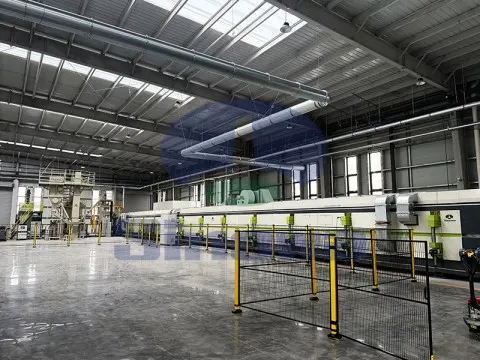
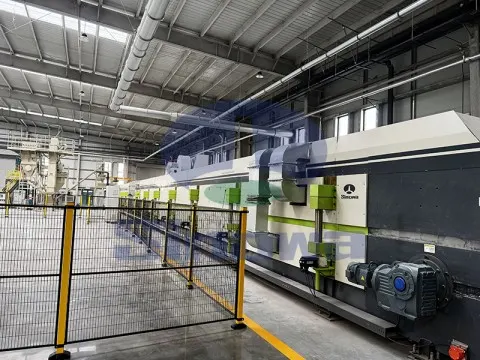
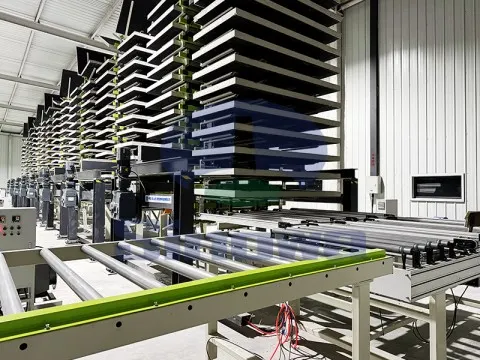
Tags: phenolic foam board production line, phenolic foam board production line manufacturer, phenolic foam board production line supplier, china phenolic foam board production line, phenolic foam board production line for sale
https://www.sandwichpanelmachinery.com/tags/phenolic-foam-board-production-line.html
-
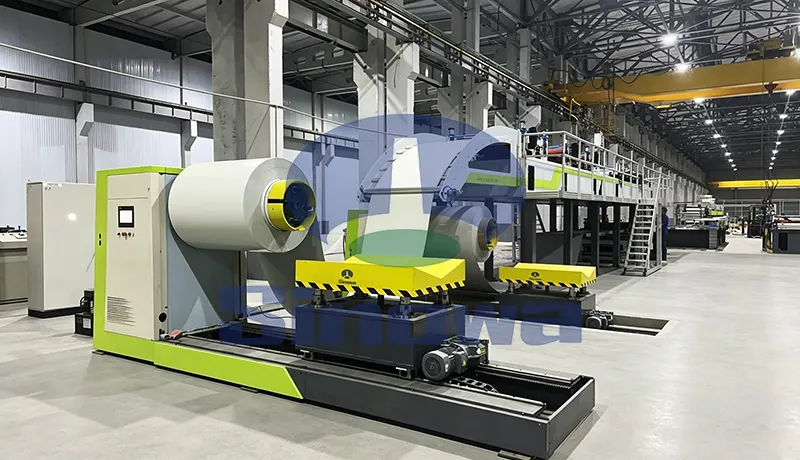
The PU sandwich panel line is a core production setup for making high-performance building insulation panels. This professional PU sandwich panel production line features automated operation to streamline the whole manufacturing process efficiently. Every component of the polyurethane sandwich panel line is precisely calibrated to ensure consistent panel thickness and structural stability. A well-maintained polyurethane sandwich panel production line can greatly boost production efficiency while reducing manual operation errors. The continuous PU sandwich panel line adapts to diverse production demands for different panel sizes and surface styles. With advanced molding technology, the PIR sandwich panel line produces panels with excellent heat preservation and sound insulation properties. Stable running of the PIR sandwich panel production line guarantees reliable product quality for various construction and industrial application scenarios.
-
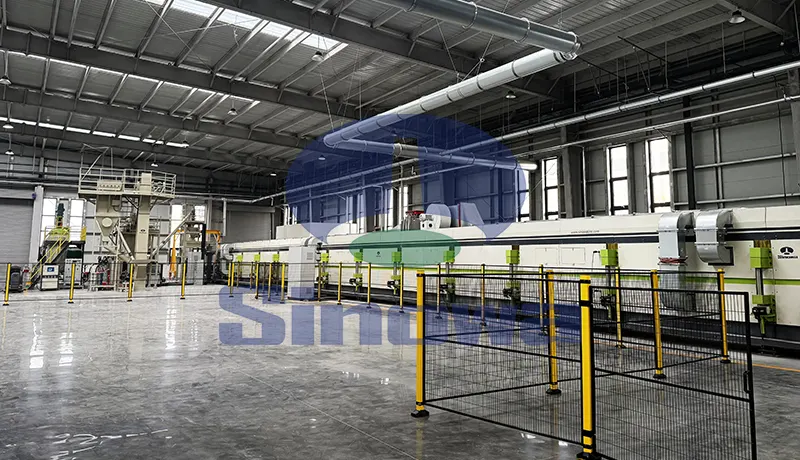
A phenolic insulation board production line serves as the core equipment for manufacturing high-performance thermal insulation building materials. This phenolic insulation panel production line integrates material mixing, foaming, molding and cutting processes to ensure continuous and stable production efficiency. Every operational link of the insulation board production line is precisely calibrated to produce uniform and durable insulation boards. The automated design of the insulation panel production line effectively reduces manual intervention and improves product consistency. Proper maintenance of the phenolic board production line can greatly extend its service life and maintain steady production output. With optimized structural design, the phenolic panel production line adapts to various production demands and delivers high-quality finished products for thermal insulation engineering applications.
-
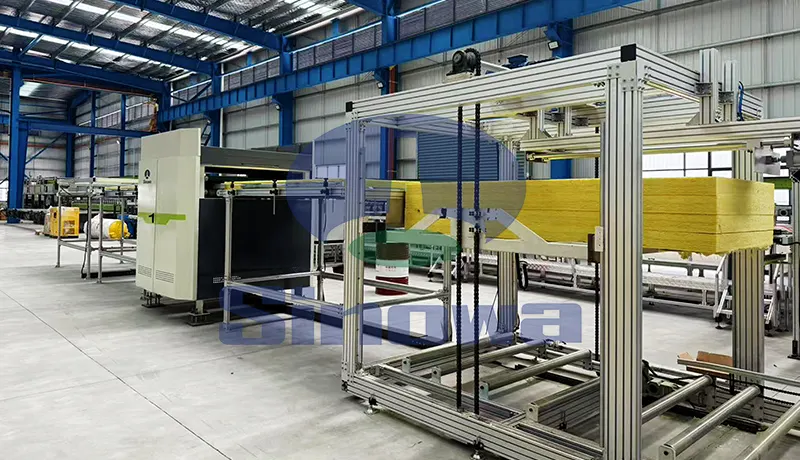
A professional rockwool sandwich panel line serves as the core equipment for producing high-performance building panels. This rockwool sandwich panel production line integrates feeding, laminating and forming processes to ensure stable and efficient production. The well-structured rock wool sandwich panel line can process raw rockwool materials into panels with excellent thermal and sound insulation properties. Operators can adjust the running parameters of the rock wool sandwich panel production line to manufacture panels of different thicknesses and specifications. The automated design of the mineral wool sandwich panel production line greatly reduces manual operation errors and improves product consistency. Regular maintenance of the mineral wool sandwich panel line is essential to sustain long-term operational efficiency and guarantee qualified finished panels for diverse construction applications.