
Sandwich panel machines are versatile industrial equipment designed to manufacture composite panels with diverse surface and core materials. They adapt to various raw material combinations, producing functional building panels with insulation, fireproof and structural advantages for multiple construction scenarios.
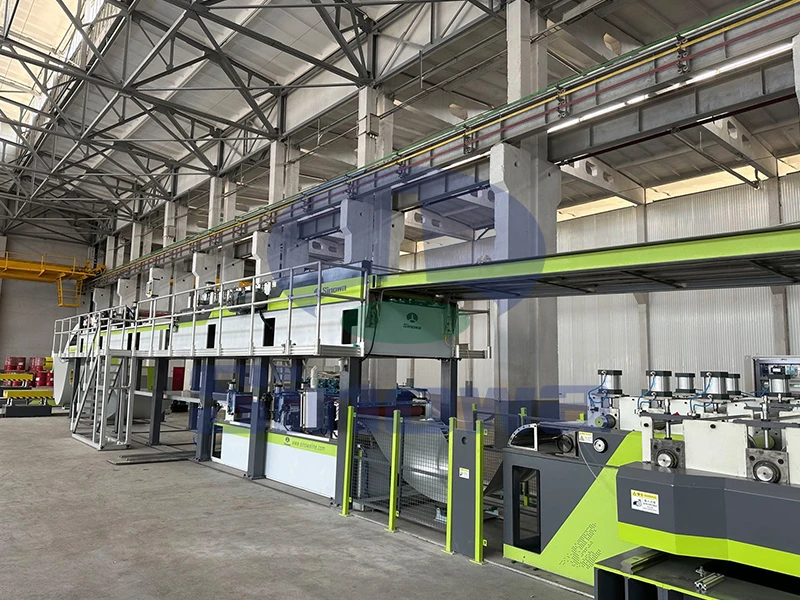
The most widely used surface materials processed by sandwich panel machines are various metal sheet substrates, which form the outer protective layer of finished panels. Common metal options include pre-painted galvanized steel sheets, galvanized iron sheets and aluminum alloy sheets, all featuring excellent surface flatness and structural durability. The machine’s rolling and laminating modules can automatically level, shape and bond these metal sheets, adapting to different sheet thicknesses and surface coatings. These metal surface materials endow sandwich panels with strong anti-corrosion ability, mechanical rigidity and weather resistance, enabling long-term service in outdoor and harsh industrial environments. The equipment can adjust rolling tension and pressing parameters to fit different metal material toughness, ensuring no deformation or wrinkling during continuous production, and maintaining a smooth and uniform panel surface for subsequent installation and use.
Expanded Polystyrene, commonly known as EPS, is one of the most mainstream core materials processed by sandwich panel machines, favored for its lightweight and cost-effective properties. This foam material features uniform closed-cell structures, providing outstanding thermal insulation and shock absorption performance. Sandwich panel machines conduct automatic feeding, positioning and composite lamination for EPS boards, perfectly bonding the foam core with outer metal or non-metal surface layers. The equipment’s low-pressure laminating system avoids crushing the delicate foam structure of EPS, preserving its complete insulation performance. EPS core panels produced by such machines are extremely light, effectively reducing the overall weight of building envelopes while retaining stable structural performance. These panels are widely applied in temporary buildings, warehouse enclosures and ordinary residential insulation projects due to their balanced practicality and processing adaptability.
Polyurethane (PUR) and Polyisocyanurate (PIR) foam core materials are high-performance insulation options fully compatible with modern sandwich panel machines. Compared with ordinary foam materials, PUR and PIR foam have finer cellular structures and lower thermal conductivity, delivering superior thermal insulation effects. The machine’s precise foaming and laminating system can complete integral composite molding of continuous foam layers, realizing seamless bonding between the foam core and surface plates. The equipment supports adjustable foaming density and thickness parameters to meet different thermal insulation and structural rigidity requirements. In particular, PIR foam processed by professional sandwich panel machines gains enhanced high-temperature resistance and flame retardant performance during molding. Panels with PUR and PIR cores are ideal for cold storage buildings, high-end commercial buildings and temperature-controlled industrial spaces that demand strict thermal insulation effects.
Rock wool core materials are typical fireproof functional raw materials that sandwich panel machines can efficiently process, focusing on safety-oriented building panel production. Made from natural mineral fibers through high-temperature melting and fiber forming, rock wool has excellent fire resistance and acoustic insulation properties. Sandwich panel machines are equipped with special fiber material feeding and compaction devices to neatly arrange loose rock wool fiber layers and tightly compound them with outer surface plates. The equipment adopts segmented low-speed pressing technology to prevent fiber displacement and layering, ensuring uniform internal structure of finished panels. During production, the machine stabilizes the fiber density of rock wool cores, maintaining consistent fireproof and sound insulation performance across the entire panel. Rock wool sandwich panels produced by such equipment are widely used in building fire partitions, exterior wall fireproof systems and noise reduction facilities for industrial workshops.
Glass wool is another common mineral fiber core material processable by sandwich panel machines, featuring lightweight and excellent sound absorption characteristics. Similar to rock wool, glass wool is made from inorganic glass fibers, with softer texture and lower density, bringing better lightweight advantages for finished panels. Professional sandwich panel machines are optimized for the physical characteristics of glass wool, adopting flexible feeding and low-pressure composite processes to avoid fiber breakage and collapse. The equipment can evenly spread glass wool fibers into continuous and flat core layers, achieving tight integration with upper and lower surface materials. Glass wool core panels retain efficient sound absorption and heat preservation functions while being lighter than rock wool panels. They are mostly used in indoor partition walls, building ceiling insulation and residential sound insulation renovation scenarios with low load-bearing requirements.
In addition to metal surface layers, sandwich panel machines can process various non-metal inorganic surface materials to produce environmentally friendly and fireproof composite panels. Common non-metal surface substrates include cement fiber boards, magnesium oxide boards and other inorganic flat plates with high fire resistance and environmental friendliness. The machine’s feeding and positioning system is adaptable to the rigid texture and flat characteristics of inorganic plates, realizing accurate alignment and stable lamination. The equipment adjusts adhesive coating amount and pressing time according to the water absorption and surface roughness of inorganic materials to ensure firm bonding between surface plates and core insulation layers. Non-metal surface panels produced by such machines have zero combustion performance and no harmful substance precipitation, complying with green building requirements. They are commonly used in indoor fireproof partitions, clean room enclosures and public building interior decoration projects.
Phenolic foam is a high-grade fireproof and heat preservation core material that can be molded and compounded by professional sandwich panel machines. This material has ultra-low thermal conductivity, excellent flame retardancy and anti-aging properties, with stable performance in high-temperature and humid environments. Sandwich panel machines support automatic continuous production of phenolic foam cores, completing integral foaming, curing and composite molding processes in one go. The equipment’s temperature and pressure control system is precisely calibrated for phenolic foam’s curing characteristics, avoiding foaming defects and ensuring uniform core density. Finished phenolic foam sandwich panels feature outstanding comprehensive performance, including heat preservation, fireproofing, moisture resistance and corrosion resistance. They are widely applied in special industrial buildings, outdoor thermal insulation projects and high-standard public infrastructure with strict environmental adaptability requirements.
Honeycomb structural materials are special lightweight core materials processable by advanced sandwich panel machines, including aluminum honeycomb and plastic honeycomb substrates. Honeycomb materials feature regular hexagonal hollow structures, which can greatly reduce panel weight while maintaining high structural strength and flatness. Modern sandwich panel machines are equipped with special honeycomb core positioning and bonding devices, realizing seamless fitting between honeycomb cores and flat surface plates. The equipment adopts uniform gluing and constant-pressure curing technology to ensure firm bonding of each honeycomb unit, avoiding hollowing and detachment. Honeycomb sandwich panels produced by such machines have ultra-high strength-to-weight ratio, good shock resistance and flatness stability. They are widely used in building curtain walls, exhibition hall partitions, transportation facility interiors and other scenarios requiring high flatness and lightweight performance.
Extruded Polystyrene (XPS) foam is a high-density insulation core material compatible with high-precision sandwich panel machines, known for its superior compression resistance and moisture resistance. Different from EPS foam, XPS has a closed and compact cellular structure, with higher density, stronger compression resistance and better waterproof and moistureproof performance. Sandwich panel machines can conduct precise fixed-thickness cutting and composite lamination for XPS boards, adapting to the high rigidity of XPS materials through optimized pressing parameters. The equipment ensures that XPS core layers remain intact without compression deformation during the compounding process, retaining its excellent thermal insulation and compression resistance. XPS core sandwich panels have stable performance in humid and low-temperature environments, making them suitable for building roof insulation, foundation moisture-proof layers and cold storage floor insulation projects.
The strong material adaptability of sandwich panel machines lays a solid foundation for diversified customized panel production, covering multiple combinations of metal and non-metal surface layers and organic and inorganic core materials. Each type of raw material corresponds to unique production parameter settings, including feeding speed, pressing pressure, curing temperature and gluing volume, which the equipment can intelligently adjust to match material characteristics. This flexible processing capability enables the machine to produce functional panels targeting different building needs, such as thermal insulation, fireproofing, sound insulation and load-bearing. With continuous technological upgrading, modern sandwich panel machines keep expanding their processable material range, meeting the increasingly diverse and high-performance requirements of the construction industry for composite building panels.