Continuous Rockwool Sandwich Panel Line
Publication Date: Sep 27, 2026
The continuous rockwool sandwich panel line is an integrated automated production system for manufacturing high-performance composite panels. It integrates multiple processing procedures to achieve continuous, efficient and stable production, delivering panels with excellent thermal insulation and structural durability for construction and industrial applications.
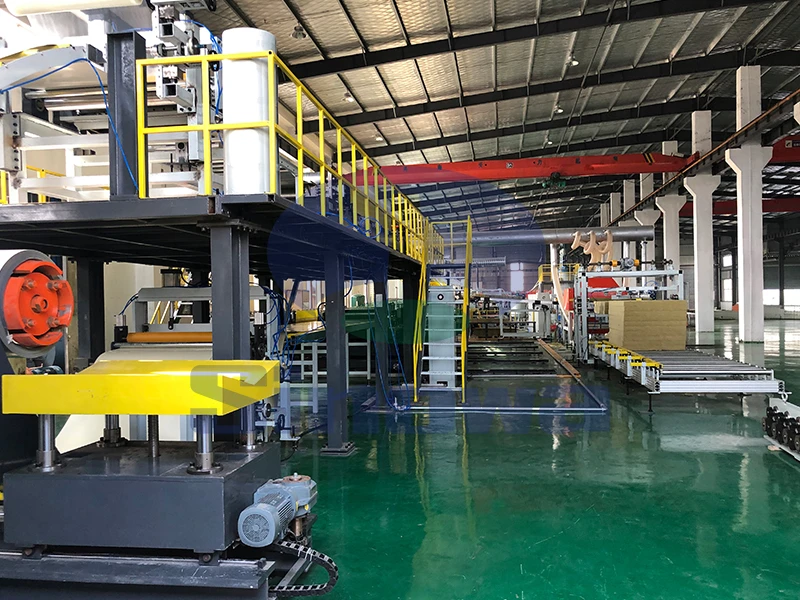
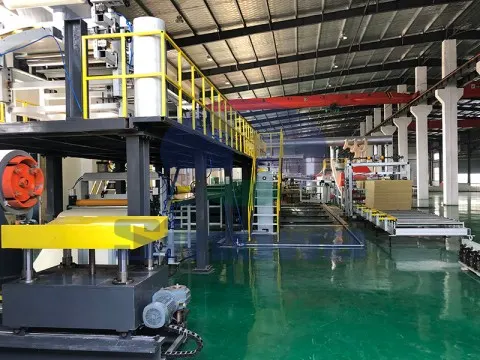
The continuous rockwool sandwich panel line adopts a streamlined and modular structural design, which lays a solid foundation for automated and uninterrupted production. The entire production system consists of multiple interconnected functional units, each undertaking independent processing tasks while maintaining precise collaborative operation. The front-end modules are mainly responsible for raw material storage, unwinding and preliminary pretreatment, covering metal surface materials and rockwool core materials. Metal coil materials are smoothly unfolded by professional unwinding equipment, which can stabilize the feeding speed and flatness of sheet materials to avoid wrinkles and deviations. Meanwhile, the rockwool core material conveying unit conducts orderly arrangement and preliminary shaping of loose rockwool fibers, ensuring the continuity and uniformity of the core material supply. This integrated front-end processing mode eliminates intermittent operation gaps in traditional production, effectively improving the overall production continuity and laying a stable foundation for subsequent composite processing.
Raw material pretreatment is an indispensable basic process in the operation of the rockwool sandwich panel production line, directly affecting the bonding quality and finished product performance of subsequent processes. For metal surface sheets, the production line is equipped with automatic surface cleaning and protective film coating devices. The cleaning system removes dust, oil stains and fine impurities on the metal surface, solving the problem of unstable bonding caused by surface contaminants. The uniform protective film coating can prevent surface scratches and oxidation during production and subsequent use, maintaining the smooth and intact appearance of the panel. For rockwool core materials, targeted fiber sorting and shaping treatment is carried out to optimize the internal porous structure of rockwool, enhance the uniformity of fiber distribution, and avoid local density differences. This refined pretreatment process standardizes the state of all raw materials, greatly reducing product quality fluctuations in mass continuous production.
Precision adhesive application technology is the core link to realize the composite integration of rockwool core and metal surface sheets in the continuous production line. Different from traditional manual or simple roller gluing methods, the line adopts advanced non-contact synchronous spraying gluing technology, which can complete uniform adhesive coating on the inner surfaces of upper and lower metal sheets at the same time. The supporting adhesive supply system can intelligently adjust the glue coating amount, spraying range and spraying speed according to different material textures and production requirements, ensuring that the adhesive layer is thin and uniform without accumulation or leakage. The high-performance environmental-friendly polymer adhesive used features fast curing speed, strong adhesion and excellent aging resistance. It can form a stable bonding layer between metal and rockwool materials without corroding metal sheets or damaging rockwool fiber structure, effectively improving the overall structural integrity and service life of the sandwich panel.
Preheating treatment before composite molding is a key process to optimize the bonding effect and structural stability of rockwool sandwich panels. The continuous production line is equipped with a circulating hot air preheating system, which conducts constant-temperature preheating on the glued metal sheets and arranged rockwool core materials. Reasonable preheating can activate the molecular activity of the adhesive, accelerate the preliminary curing reaction, and significantly enhance the bonding tightness between the surface sheet and the core material. At the same time, preheating can eliminate the internal moisture of rockwool fibers, avoid the problem of bonding failure or internal hollowing caused by moisture volatilization in the subsequent pressing process, and optimize the internal compactness of the panel. The closed circulating hot air design ensures uniform temperature distribution in the preheating area, making the temperature of each part of the raw materials consistent, avoiding local insufficient curing or excessive heating damage, and further improving the consistency of finished product quality.
Constant-pressure composite pressing is the core molding process that determines the mechanical properties and structural stability of finished panels in the entire production line. The preheated and assembled semi-finished materials are continuously sent to the double-belt constant-pressure pressing unit, the most critical functional component of the production system. The pressing unit can provide continuous and uniform three-dimensional pressure covering the entire length and width of the panel, enabling the metal surface sheets and rockwool core layer to be closely fitted without gaps or dislocation. Compared with intermittent pressing equipment, the continuous pressing mode avoids uneven pressure caused by segmented operation, effectively ensures the overall flatness and structural compactness of the panel. The intelligent pressure regulation system can adjust the pressing force and pressing speed in real time according to different panel thickness specifications, realizing flexible production of various products and ensuring that each finished panel has stable compression resistance and structural toughness.
Automatic curing and shaping processes follow the composite pressing link, playing a decisive role in finalizing the structural performance of rockwool sandwich panels. The continuous production line is equipped with a segmented constant-temperature curing channel, which conducts graded curing on the initially formed composite panels. The graded temperature control mode adopts low-temperature preliminary shaping and medium-temperature deep curing, which can fully cure the internal adhesive layer without causing thermal deformation of metal sheets or fiber damage of rockwool core materials. The closed curing environment isolates external dust and temperature interference, ensuring that the adhesive forms a high-strength stable molecular structure, and firmly integrates the metal surface and rockwool core into an integral structure. After curing, the panel structure is completely stabilized, with no internal stress residue, which effectively prevents subsequent deformation, cracking and peeling, and guarantees the long-term use reliability of the finished product.
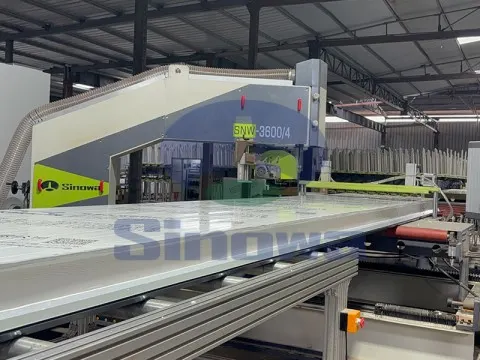
Precision cutting and edge trimming processes ensure the dimensional accuracy and appearance quality of finished rockwool sandwich panels. After continuous curing and shaping, the long-strip integrated panels are stably transported to the precision processing area through the automatic conveying system. The production line is equipped with independent longitudinal slitting and transverse fixed-length cutting devices to complete two key trimming operations. The longitudinal cutting mechanism accurately trims the redundant edge materials on both sides of the panel to ensure consistent panel width and smooth and neat edges. The transverse cutting system realizes fixed-length cutting according to preset parameters, with high cutting precision and flat incision without burrs or cracks. The fully automatic cutting and trimming mode replaces traditional manual trimming, eliminates dimensional errors caused by human operation, realizes unified specifications of finished products, and improves the appearance finish and assembly compatibility of the panels.
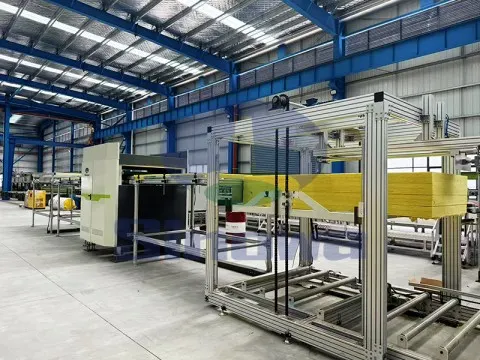
The automatic conveying and stacking system realizes the intelligent finishing and efficient collection of finished panels, completing the final link of continuous production. After cutting and trimming, the qualified finished panels are automatically transported to the sorting and stacking area through the variable-speed conveying line. The system can intelligently identify panel specifications and quality status, realize automatic sorting of qualified products and defective products, and avoid mixed loading of unqualified products. The automatic stacking device adopts stable lifting and stacking technology, which can neatly stack the finished panels according to fixed layers and specifications, ensuring flat and orderly stacking without extrusion deformation. This automated finishing mode greatly reduces manual intervention, improves production efficiency, reduces labor costs, and standardizes the finished product storage form, facilitating subsequent packaging, transportation and on-site construction and assembly.
The intelligent control system serves as the core brain of the entire continuous rock wool sandwich panel production line, realizing full-process automatic monitoring and precise regulation. The centralized control platform integrates the operation data of all functional units such as feeding, gluing, pressing, curing and cutting, and can display the production speed, process parameters and equipment operation status in real time. Operators can adjust all process parameters through the unified control interface to adapt to different production demands of panel thickness, specifications and performance requirements. The system is equipped with automatic error correction and fault early warning functions, which can timely identify abnormal problems such as material deviation, parameter drift and equipment jitter in the production process, and automatically adjust or send early warning signals to avoid batch product quality problems. This intelligent control mode ensures the stability, accuracy and intelligence of the entire production process.
The continuous rockwool sandwich panel production line has prominent technical and application advantages compared with traditional intermittent production equipment. Its integrated continuous production mode greatly shortens the production cycle, realizes uninterrupted mass production, and significantly improves production efficiency and output capacity. The standardized and refined process control effectively reduces the rate of defective products and improves the consistency and stability of finished product quality. The panels produced by this line retain the excellent thermal insulation, fire resistance and sound insulation performance of rockwool materials, and have higher structural strength and surface flatness due to precise composite processing. With strong production flexibility and stable operation performance, the equipment can adapt to the diversified production needs of different application scenarios, providing reliable and high-quality composite panel products for various industrial and construction fields.
Gallery of Continuous Rockwool Sandwich Panel Line
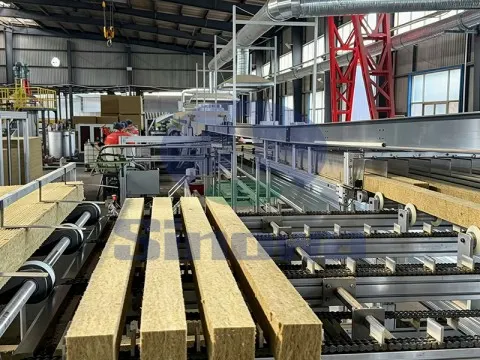
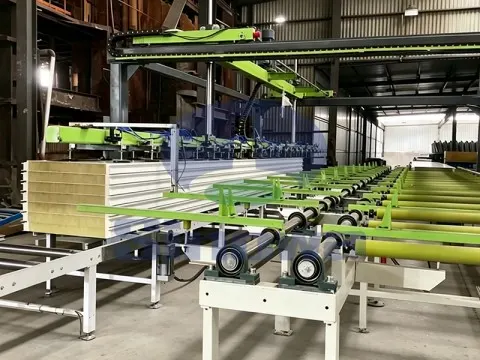
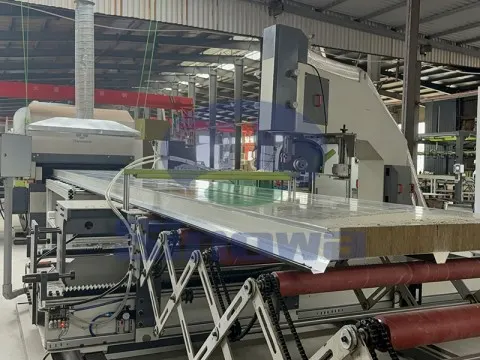
Tags: continuous rockwool sandwich panel line, continuous rockwool sandwich panel line manufacturer, continuous rockwool sandwich panel line supplier, china continuous rockwool sandwich panel line, continuous rockwool sandwich panel line for sale
https://www.sandwichpanelmachinery.com/tags/continuous-rockwool-sandwich-panel-line.html
-
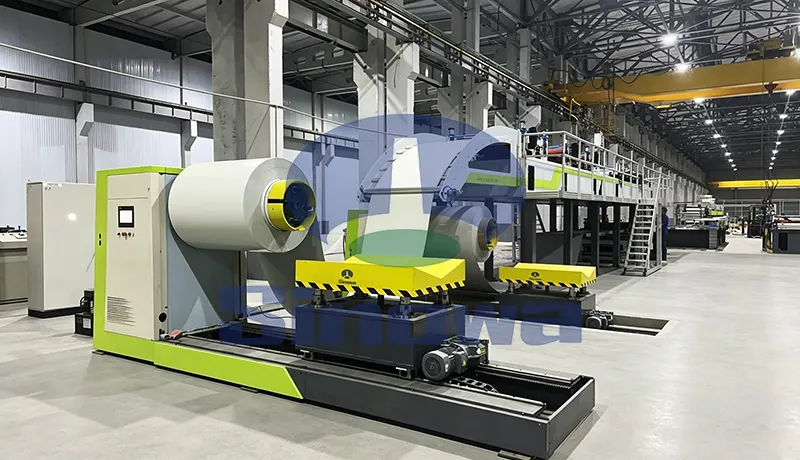
The PU sandwich panel line is a core production setup for making high-performance building insulation panels. This professional PU sandwich panel production line features automated operation to streamline the whole manufacturing process efficiently. Every component of the polyurethane sandwich panel line is precisely calibrated to ensure consistent panel thickness and structural stability. A well-maintained polyurethane sandwich panel production line can greatly boost production efficiency while reducing manual operation errors. The continuous PU sandwich panel line adapts to diverse production demands for different panel sizes and surface styles. With advanced molding technology, the PIR sandwich panel line produces panels with excellent heat preservation and sound insulation properties. Stable running of the PIR sandwich panel production line guarantees reliable product quality for various construction and industrial application scenarios.
-
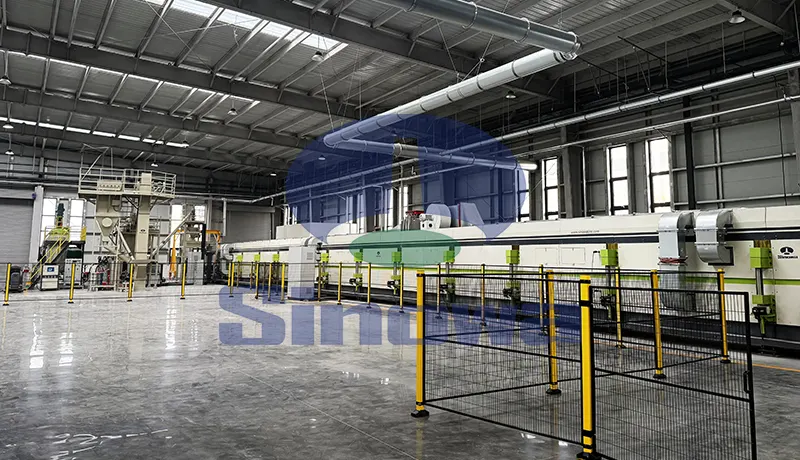
A phenolic insulation board production line serves as the core equipment for manufacturing high-performance thermal insulation building materials. This phenolic insulation panel production line integrates material mixing, foaming, molding and cutting processes to ensure continuous and stable production efficiency. Every operational link of the insulation board production line is precisely calibrated to produce uniform and durable insulation boards. The automated design of the insulation panel production line effectively reduces manual intervention and improves product consistency. Proper maintenance of the phenolic board production line can greatly extend its service life and maintain steady production output. With optimized structural design, the phenolic panel production line adapts to various production demands and delivers high-quality finished products for thermal insulation engineering applications.
-
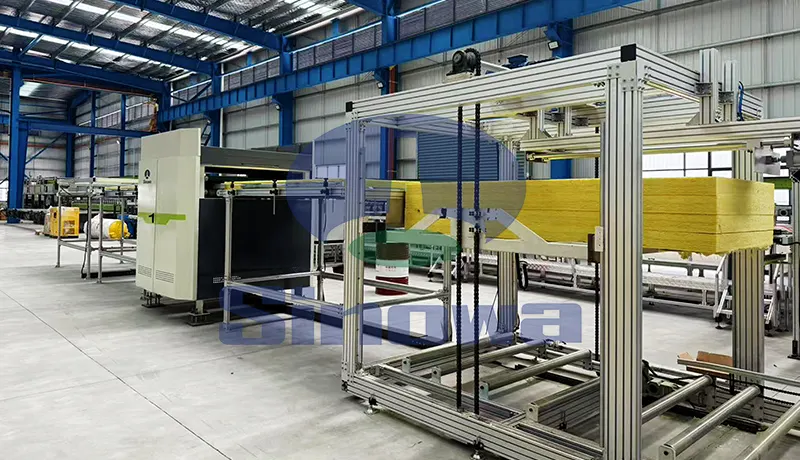
A professional rockwool sandwich panel line serves as the core equipment for producing high-performance building panels. This rockwool sandwich panel production line integrates feeding, laminating and forming processes to ensure stable and efficient production. The well-structured rock wool sandwich panel line can process raw rockwool materials into panels with excellent thermal and sound insulation properties. Operators can adjust the running parameters of the rock wool sandwich panel production line to manufacture panels of different thicknesses and specifications. The automated design of the mineral wool sandwich panel production line greatly reduces manual operation errors and improves product consistency. Regular maintenance of the mineral wool sandwich panel line is essential to sustain long-term operational efficiency and guarantee qualified finished panels for diverse construction applications.