Phenolic Sandwich Panel Production Line
Publication Date: Sep 27, 2026
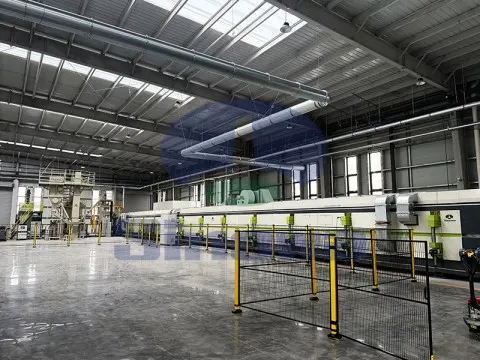
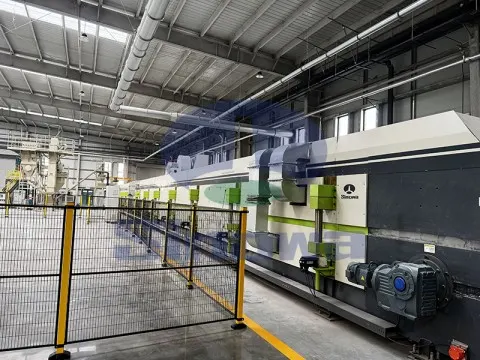
The phenolic sandwich panel production line is an integrated automated manufacturing system dedicated to producing high-performance composite panels. It integrates raw material processing, foaming, laminating, curing and finishing processes to deliver panels with superior fire resistance, thermal insulation and structural stability for diverse industrial and construction uses.
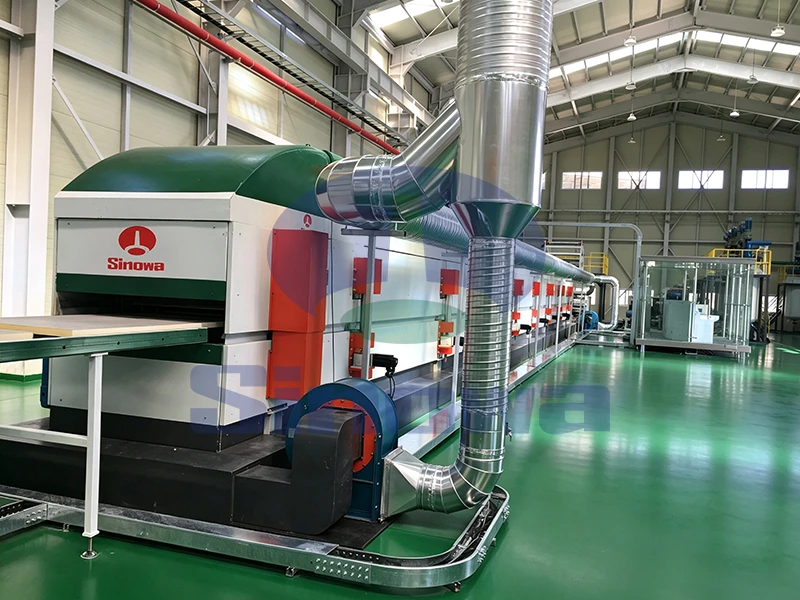
The entire manufacturing process of phenolic sandwich panels starts with systematic raw material preparation and precise batching, which serves as the fundamental guarantee for consistent product quality. The core raw materials mainly include phenolic resin substrates, specialized curing agents, foaming agents and various functional additives, paired with high-strength surface base materials. Phenolic resin acts as the core matrix material, boasting unique molecular structures that endow the final panels with excellent flame retardancy, heat resistance and chemical stability. Before formal production, all raw materials undergo strict screening and uniform mixing in closed automated batching equipment. This step eliminates material agglomeration and component unevenness, preventing premature chemical reactions that may compromise panel performance. The automated batching system maintains stable material ratios throughout production, laying a solid foundation for uniform foam density and structural consistency of finished panels.
Following raw material preparation, the insulation panel production line initiates surface substrate pretreatment and feeding procedures to ensure optimal bonding conditions for subsequent composite processing. The line is equipped with automated uncoiling, leveling and deviation correction devices that handle continuous feeding of surface layer materials, effectively avoiding wrinkles, offsets and surface irregularities during material transmission. Professional surface pretreatment modules remove dust, oil stains and subtle impurities on the substrate surface, while creating a micro-rough surface structure to enhance the adhesion between the surface layer and phenolic core material. This pretreatment process is indispensable for improving the overall structural tightness and service durability of sandwich panels. The whole feeding and pretreatment process operates continuously and intelligently, reducing manual intervention, stabilizing feeding speed and precision, and laying a reliable structural foundation for the later integral composite molding of panels.
Resin modulation and uniform gluing are the core technological links that differentiate phenolic sandwich panel production from ordinary composite panel manufacturing. After preliminary batching, phenolic resin raw materials are transported to sealed reaction and modulation equipment, where temperature, viscosity and feeding speed are precisely regulated in real time. The thermosetting characteristics of phenolic resin require strict control of polymerization degrees during modulation to ensure the resin maintains ideal fluidity and bonding activity. Automated gluing systems evenly coat the modulated resin on the inner surface of the pretreated substrate with controllable coating thickness and uniform coverage. Excess resin is automatically recycled to avoid waste and prevent local resin accumulation that may cause uneven curing. Standardized gluing treatment ensures seamless combination between the surface substrate and foam core, effectively improving the overall structural integrity and mechanical properties of finished panels.
Foaming and core material forming are key stages that determine the thermal insulation and lightweight performance of phenolic sandwich panels. After gluing is completed, the production line injects uniformly mixed foaming materials into the middle layer of the double-sided substrates, and triggers controllable foaming reactions through precise temperature and pressure adjustment. Unlike ordinary foam materials, phenolic foam forms a closed-cell structure during foaming, which endows the panel with ultra-low thermal conductivity and excellent moisture-proof performance. The automated foaming system accurately controls foaming time, expansion ratio and cell density to avoid hollow gaps or dense agglomeration inside the core material. In this process, the foam gradually fills the entire interlayer space and forms a preliminary fixed structure, realizing the initial composite molding of the surface layer and core material, and preliminarily shaping the basic specifications of the sandwich panel.
Continuous composite pressing and shaping further optimize the structural compactness and flatness of semi-finished phenolic sandwich panels. After preliminary foaming and molding, the panels are sent to the segmented pressing system of the production line for constant-pressure composite processing. The pressing equipment applies uniform and stable mechanical pressure to eliminate tiny gaps between the foam core and surface substrate, achieving tight integration of multi-layer materials. The pressing speed and pressure are adaptively adjusted according to different panel thickness and performance requirements to ensure consistent structural density of each panel. Meanwhile, the pressing process corrects minor surface deformation and thickness deviation generated during foaming, ensuring the overall flatness and dimensional uniformity of the panel. This step effectively enhances the mechanical strength and structural stability of the product, avoiding delamination and deformation in subsequent use.
Constant-temperature curing is a critical process for stabilizing the comprehensive performance of phenolic sandwich panels. The pressed semi-finished panels enter a segmented constant-temperature curing tunnel, where staged temperature control is adopted to complete the thorough curing of phenolic resin. As a thermosetting material, phenolic resin undergoes irreversible molecular cross-linking reactions during constant-temperature curing, which fixes the closed-cell structure of the foam core and permanently strengthens the bonding force between layers. The production line precisely controls curing temperature and duration according to the material characteristics of phenolic components, avoiding insufficient curing that causes poor structural stability or over-curing that leads to material brittleness. Gradient curing treatment ensures uniform internal and external curing degree of the panel, fully exerting the fire-resistant, heat-insulating and anti-corrosion advantages of phenolic materials.
Cooling and stereotyping processes ensure the dimensional stability and structural uniformity of finished phenolic sandwich panels. After completing high-temperature curing, the panels are transported to an intelligent cooling system for gradual and uniform cooling treatment. Rapid or uneven cooling may cause internal stress and local deformation of the panels, so the production line adopts segmented cooling modes to slowly reduce the panel temperature to room temperature. This gentle cooling process effectively releases internal stress generated during high-temperature processing, maintaining the integral flatness and accurate dimensional specifications of the panels. After cooling and stereotyping, the internal structure of the phenolic core material is completely stabilized, and the bonding performance between layers reaches the optimal state, enabling the panels to maintain stable physical performance in long-term application environments.
Fixed-length cutting and edge trimming are refined processing steps to standardize finished panel specifications. The cooled and stereotyped continuous panel blanks are sent to the automated cutting system, which performs precise fixed-length cutting according to customized size requirements. The high-precision cutting equipment ensures neat and smooth cutting sections without burrs or edge collapses. Subsequent edge trimming and dust removal processes clean residual foam debris and uneven edges on the panel periphery, optimizing the overall appearance and assembly adaptability of the product. The automated processing system realizes synchronous cutting and trimming, efficiently completing specification shaping while ensuring the consistency of panel size and edge quality. This refined processing improves the construction convenience and fitting accuracy of phenolic sandwich panels in actual engineering applications.
Surface protection treatment is carried out to enhance the weather resistance and service life of phenolic sandwich panels. After cutting and trimming, qualified panels undergo surface film laminating or functional coating treatment on the production line. The protective layer can effectively isolate external moisture, dust and ultraviolet erosion, preventing the panel surface from aging, fading and corrosion during long-term outdoor or industrial use. Meanwhile, the smooth protective surface improves the wear resistance and stain resistance of the panel, simplifying later cleaning and maintenance work. The automated laminating equipment ensures tight fitting between the protective film and the panel surface without bubbles or wrinkles, maintaining the flat and beautiful appearance of the product while further optimizing the comprehensive protective performance of the sandwich panel.
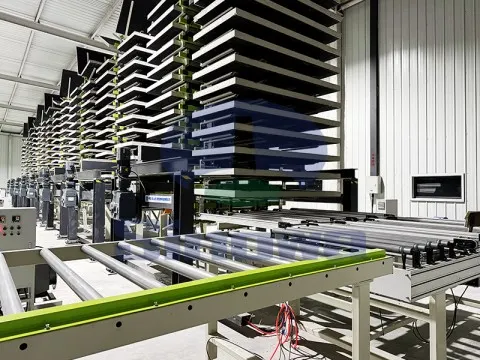
Automatic stacking and intelligent packaging constitute the final links of the entire production flow, realizing efficient finished product output and standardized storage. Processed finished panels are automatically sorted, stacked and arranged neatly by intelligent stacking equipment, which ensures consistent stacking specification and avoids panel extrusion damage. Subsequently, the panels undergo integral packaging and sealing to prevent dust contamination and moisture intrusion during transportation and storage. The entire post-processing process is fully automated, which greatly improves production efficiency, reduces manual operation errors, and ensures the integrity and quality stability of finished products. This complete closed-loop production mode enables the phenolic sandwich panel production line to achieve continuous, efficient and high-quality batch manufacturing of composite panels.
Gallery of Phenolic Sandwich Panel Production Line
Tags: phenolic sandwich panel production line, phenolic sandwich panel production line manufacturer, phenolic sandwich panel production line supplier, china phenolic sandwich panel production line, phenolic sandwich panel production line for sale
https://www.sandwichpanelmachinery.com/tags/phenolic-sandwich-panel-production-line.html
-
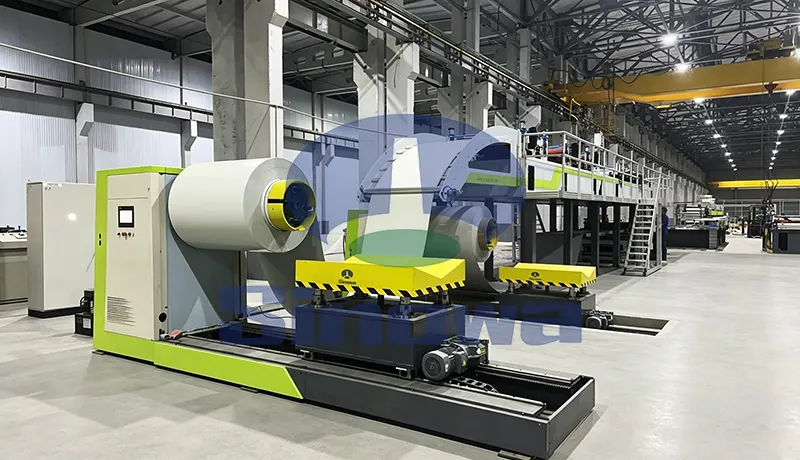
The PU sandwich panel line is a core production setup for making high-performance building insulation panels. This professional PU sandwich panel production line features automated operation to streamline the whole manufacturing process efficiently. Every component of the polyurethane sandwich panel line is precisely calibrated to ensure consistent panel thickness and structural stability. A well-maintained polyurethane sandwich panel production line can greatly boost production efficiency while reducing manual operation errors. The continuous PU sandwich panel line adapts to diverse production demands for different panel sizes and surface styles. With advanced molding technology, the PIR sandwich panel line produces panels with excellent heat preservation and sound insulation properties. Stable running of the PIR sandwich panel production line guarantees reliable product quality for various construction and industrial application scenarios.
-
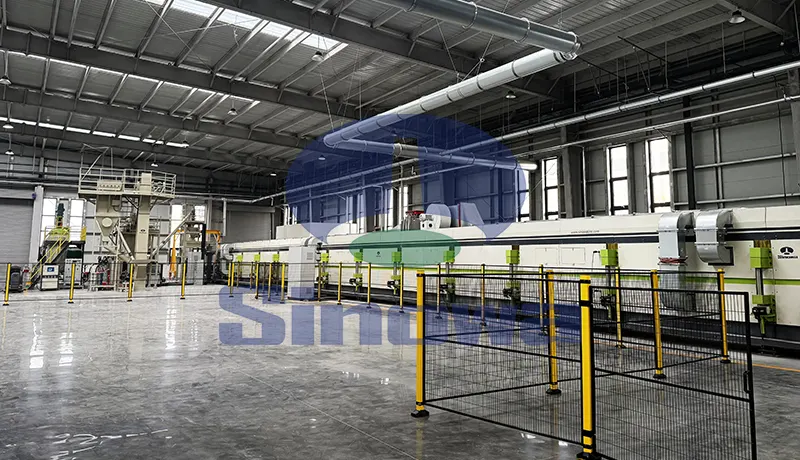
A phenolic insulation board production line serves as the core equipment for manufacturing high-performance thermal insulation building materials. This phenolic insulation panel production line integrates material mixing, foaming, molding and cutting processes to ensure continuous and stable production efficiency. Every operational link of the insulation board production line is precisely calibrated to produce uniform and durable insulation boards. The automated design of the insulation panel production line effectively reduces manual intervention and improves product consistency. Proper maintenance of the phenolic board production line can greatly extend its service life and maintain steady production output. With optimized structural design, the phenolic panel production line adapts to various production demands and delivers high-quality finished products for thermal insulation engineering applications.
-
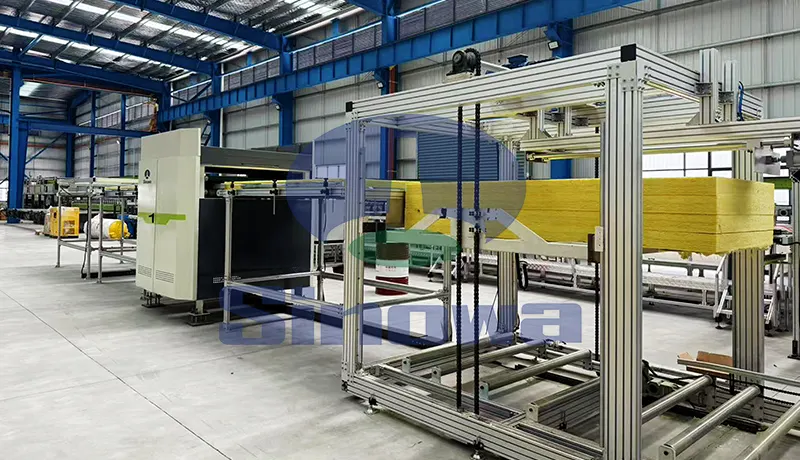
A professional rockwool sandwich panel line serves as the core equipment for producing high-performance building panels. This rockwool sandwich panel production line integrates feeding, laminating and forming processes to ensure stable and efficient production. The well-structured rock wool sandwich panel line can process raw rockwool materials into panels with excellent thermal and sound insulation properties. Operators can adjust the running parameters of the rock wool sandwich panel production line to manufacture panels of different thicknesses and specifications. The automated design of the mineral wool sandwich panel production line greatly reduces manual operation errors and improves product consistency. Regular maintenance of the mineral wool sandwich panel line is essential to sustain long-term operational efficiency and guarantee qualified finished panels for diverse construction applications.