PF Insulation Board Manufacturing Line
Publication Date: Sep 27, 2026
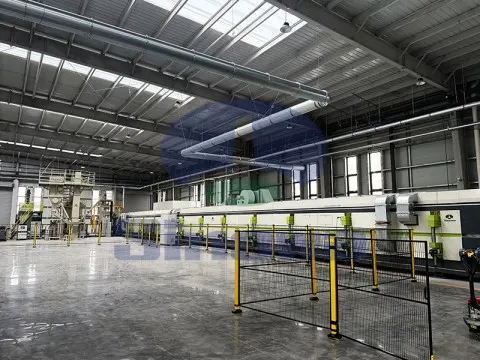
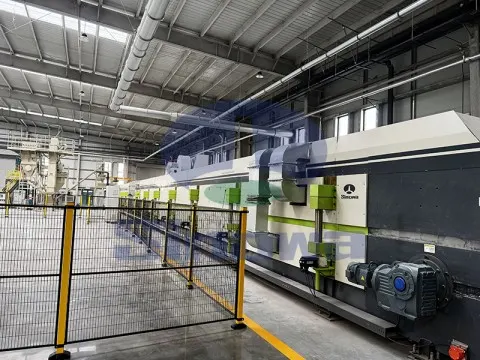
The PF insulation board manufacturing line is a specialized automated production system for phenolic foam insulation boards. It integrates multiple precise processes from raw material processing to finished product shaping, delivering stable, high-performance thermal insulation materials for diverse industrial and construction scenarios.
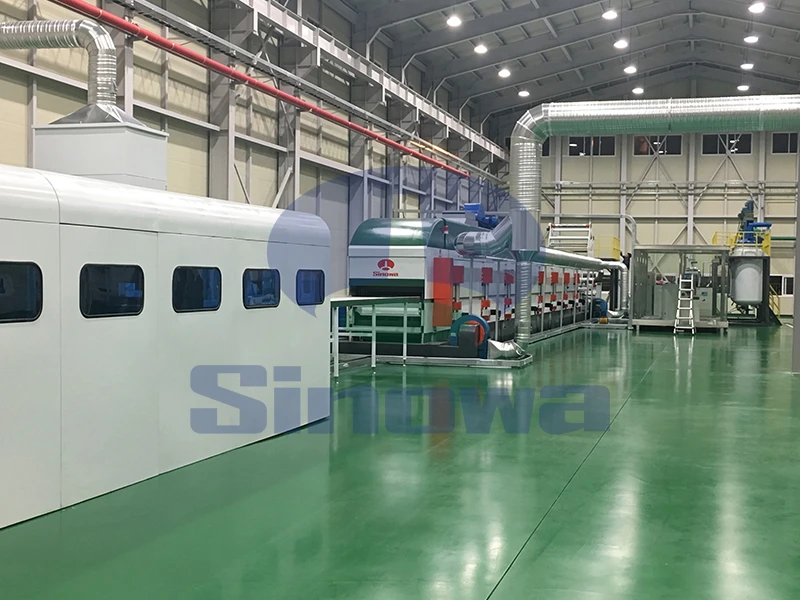
The core operation of the PF insulation board manufacturing line starts with scientific raw material preparation and precision batching, which lays a solid foundation for consistent product quality. The main raw materials include phenolic resin, foaming agents, curing agents, and functional additives, each playing an irreplaceable role in the final board performance. The production system adopts fully automated metering modules to control the proportion of each raw material accurately, avoiding manual measurement errors that may cause unstable foam structure and poor insulation effects. Before formal mixing, raw materials undergo preliminary filtration and viscosity adjustment to remove impurities and optimize fluidity, ensuring smooth subsequent conveying and mixing processes. This standardized batching process unifies the basic material properties of each batch of products, effectively reducing product defects caused by raw material inconsistencies and laying the groundwork for continuous and stable mass production of insulation boards.
After raw material batching, the high-precision mixing process becomes the key link to integrate all components evenly. The production line is equipped with sealed high-speed mixing equipment, which mixes the prepared raw materials in a closed environment to prevent external dust and air impurities from contaminating the mixed liquid. The mixing speed and duration are intelligently regulated according to real-time material status, enabling phenolic resin to fully fuse with foaming and curing components at the molecular level. Uniform mixing ensures that the foaming reaction and curing response can proceed synchronously in all areas of the subsequent board body, avoiding local uneven density, hollow holes or excessive hard blocks. Moreover, the sealed mixing design reduces material volatilization loss, improves raw material utilization efficiency, and maintains a safe and clean production environment while guaranteeing the uniformity of the composite material liquid.
Continuous feeding and surface lamination processes follow the material mixing stage, realizing the preliminary composite molding of PF insulation boards. The mixed homogeneous material liquid is stably transported to the casting station through insulated sealed pipelines to prevent temperature changes from affecting material activity. The equipment evenly coats the material liquid on the surface of the base lining material, with the coating thickness precisely adjusted according to preset product specifications. Immediately after coating, the upper and lower surface layers are automatically laminated with the foaming material layer through a constant-pressure fitting system. The whole lamination process maintains stable tension and pressure to avoid wrinkling, offsetting or delamination of the surface material. This continuous lamination mode replaces traditional intermittent processing, greatly improves production continuity, and ensures the flatness and structural integrity of the semi-finished board.
Closed constant-temperature foaming is the core molding procedure that determines the internal structure of PF insulation boards. Different from open foaming processes for ordinary insulation materials, this production line adopts an enclosed temperature-controlled foaming cavity to create a stable reaction environment for phenolic foam molding. The system accurately controls the internal temperature, pressure and reaction time of the cavity, enabling the material liquid to undergo slow and uniform foaming and polymerization. Gradual foaming under graded temperature conditions allows the internal foam cells to grow evenly and form a fine and closed pore structure. This delicate pore structure is the key to the excellent thermal insulation and sound insulation performance of PF boards. Strict foaming parameter control also prevents excessive expansion or insufficient foaming, ensuring the dimensional stability and structural compactness of the semi-finished products.
Multi-stage gradient curing is a unique and critical process of the PF insulation board manufacturing line, distinguishing it from other foam insulation board production technologies. After preliminary foaming and molding, the semi-finished boards enter the segmented curing tunnel to complete subsequent molecular polymerization and structural stabilization. The curing tunnel is divided into multiple temperature zones with gradual temperature changes, avoiding the quality problems of internal stress concentration and structural deformation caused by one-time high-temperature curing. In each temperature zone, the phenolic resin continues cross-linking reactions, gradually enhancing the bonding force between molecular structures and solidifying the stable foam pore structure. Sufficient gradient curing makes the board body have uniform hardness, stable size and excellent structural toughness, effectively preventing shrinkage, warping and cracking in subsequent use and storage.
Intelligent traction and leveling systems ensure the flatness and dimensional uniformity of semi-finished boards during continuous production. After curing and preliminary shaping, the boards are stably pulled forward by variable-frequency traction equipment with adjustable speed, matching the operating rhythm of the previous foaming and curing processes. The upper and lower leveling devices conduct real-time calibration on the board surface, fine-tuning the flatness and thickness of the board body to eliminate local height differences and surface unevenness. The traction system maintains constant tension throughout the operation to avoid stretching or squeezing deformation of the semi-finished boards. This collaborative operation of traction and leveling ensures that each section of the board maintains consistent dimensional accuracy, providing qualified blanks for subsequent cutting and finishing processes.
Precision cutting and trimming processes realize the final shaping of finished PF insulation boards. The continuous long-strip semi-finished boards are conveyed to the cutting station, where intelligent sensing devices identify the board length and automatically position cutting points. The high-speed cutting equipment adopts smooth cutting tools to complete fixed-length cutting, ensuring neat and burr-free cutting sections. Meanwhile, the edge trimming device automatically removes irregular edges on both sides of the board to unify the overall width specification. The entire cutting and trimming process is automatically controlled without manual intervention, featuring high cutting accuracy and stable efficiency. It can adapt to multiple product size requirements and flexibly switch processing specifications, meeting the diversified size demands of different application scenarios while ensuring the consistency of finished product dimensions.
Automatic cooling and shaping treatment is essential to stabilize the final performance of PF insulation boards. The newly cut boards still retain residual internal temperature and incomplete molecular stability, so they are transported to the circulating cooling area for natural and air-assisted cooling. The uniform cooling environment eliminates internal residual stress generated during high-temperature curing and cutting, further fixing the internal foam structure and overall shape of the boards. Slow and balanced cooling prevents rapid temperature change from causing surface cracking, internal loose pores or dimensional rebound. After full cooling and shaping, the physical properties and structural state of the boards tend to be completely stable, laying a reliable foundation for subsequent quality inspection and long-term use.
Online quality monitoring runs through the entire production process to strictly control product quality stability. The production line is equipped with multiple real-time monitoring sensors, which continuously detect key indicators such as board thickness, flatness, density and surface uniformity during operation. The intelligent control system collects and analyzes monitoring data in real time, automatically adjusting operating parameters of batching, foaming, curing and other links once abnormal data is found. Unqualified products are automatically identified and screened out to prevent defective products from entering the finished product link. This real-time dynamic monitoring mode realizes full-process quality control, reduces manual detection errors, and ensures that all finished products maintain stable and excellent comprehensive performance.
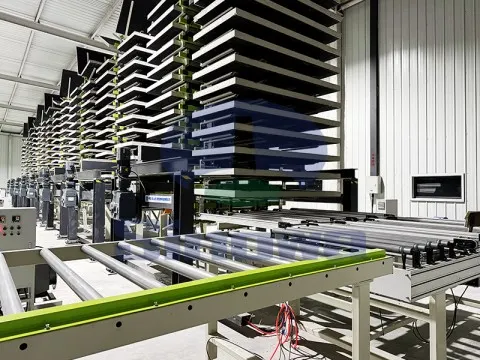
Automatic stacking and finished product output constitute the final link of the entire production line. After passing quality inspection, qualified PF insulation boards are automatically conveyed to the stacking station, where mechanical stacking equipment neatly stacks the boards according to fixed specifications and quantities. The stacking process maintains uniform spacing and stable placement to avoid extrusion damage and surface scratches. The stacked finished products are output in an orderly manner, facilitating subsequent packaging, transportation and storage. The fully automated finishing process reduces manual labor investment, improves overall production efficiency, realizes seamless connection of the entire production flow, and supports large-scale, continuous and standardized production of PF insulation boards.
Gallery of PF Insulation Board Manufacturing Line
Tags: pf insulation board manufacturing line, pf insulation board manufacturing line manufacturer, pf insulation board manufacturing line supplier, china pf insulation board manufacturing line, pf insulation board manufacturing line for sale
https://www.sandwichpanelmachinery.com/tags/pf-insulation-board-manufacturing-line.html
-
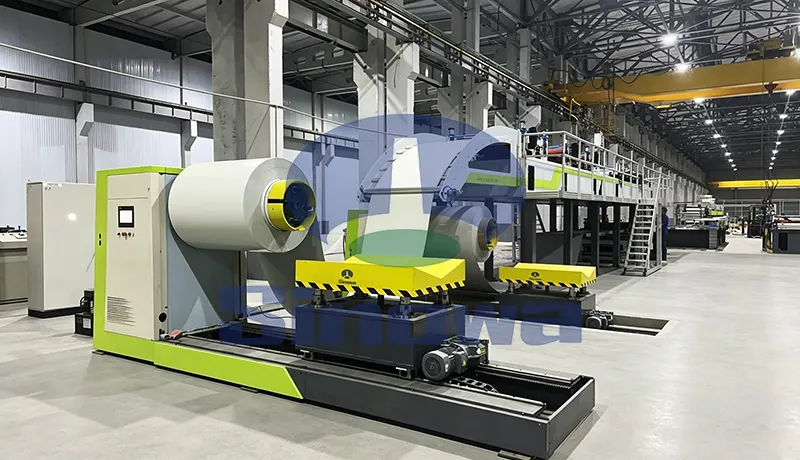
The PU sandwich panel line is a core production setup for making high-performance building insulation panels. This professional PU sandwich panel production line features automated operation to streamline the whole manufacturing process efficiently. Every component of the polyurethane sandwich panel line is precisely calibrated to ensure consistent panel thickness and structural stability. A well-maintained polyurethane sandwich panel production line can greatly boost production efficiency while reducing manual operation errors. The continuous PU sandwich panel line adapts to diverse production demands for different panel sizes and surface styles. With advanced molding technology, the PIR sandwich panel line produces panels with excellent heat preservation and sound insulation properties. Stable running of the PIR sandwich panel production line guarantees reliable product quality for various construction and industrial application scenarios.
-
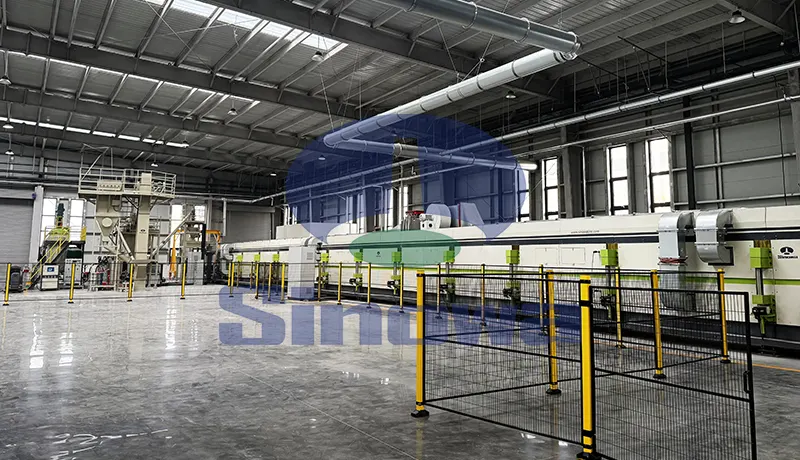
A phenolic insulation board production line serves as the core equipment for manufacturing high-performance thermal insulation building materials. This phenolic insulation panel production line integrates material mixing, foaming, molding and cutting processes to ensure continuous and stable production efficiency. Every operational link of the insulation board production line is precisely calibrated to produce uniform and durable insulation boards. The automated design of the insulation panel production line effectively reduces manual intervention and improves product consistency. Proper maintenance of the phenolic board production line can greatly extend its service life and maintain steady production output. With optimized structural design, the phenolic panel production line adapts to various production demands and delivers high-quality finished products for thermal insulation engineering applications.
-
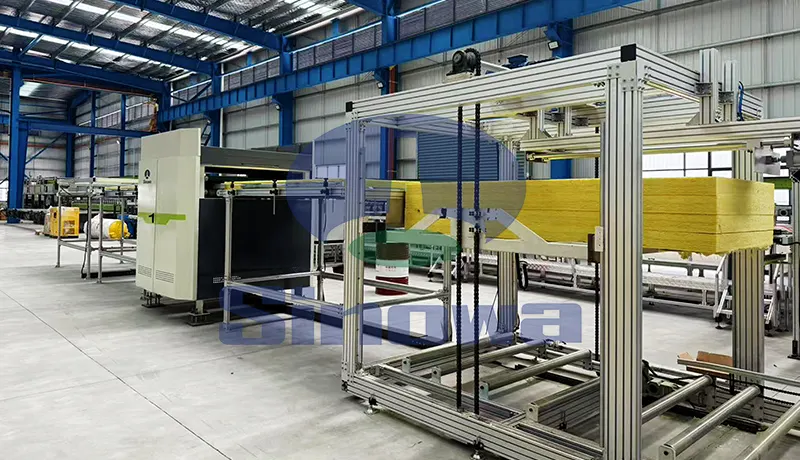
A professional rockwool sandwich panel line serves as the core equipment for producing high-performance building panels. This rockwool sandwich panel production line integrates feeding, laminating and forming processes to ensure stable and efficient production. The well-structured rock wool sandwich panel line can process raw rockwool materials into panels with excellent thermal and sound insulation properties. Operators can adjust the running parameters of the rock wool sandwich panel production line to manufacture panels of different thicknesses and specifications. The automated design of the mineral wool sandwich panel production line greatly reduces manual operation errors and improves product consistency. Regular maintenance of the mineral wool sandwich panel line is essential to sustain long-term operational efficiency and guarantee qualified finished panels for diverse construction applications.