Phenolic Foam Insulation Panel Machine
Publication Date: Sep 27, 2026
Phenolic foam insulation panel machines are specialized integrated production systems designed to manufacture high-performance thermal insulation panels. They integrate material mixing, foaming, molding, curing and cutting processes, ensuring consistent panel quality for diverse building and industrial insulation applications.
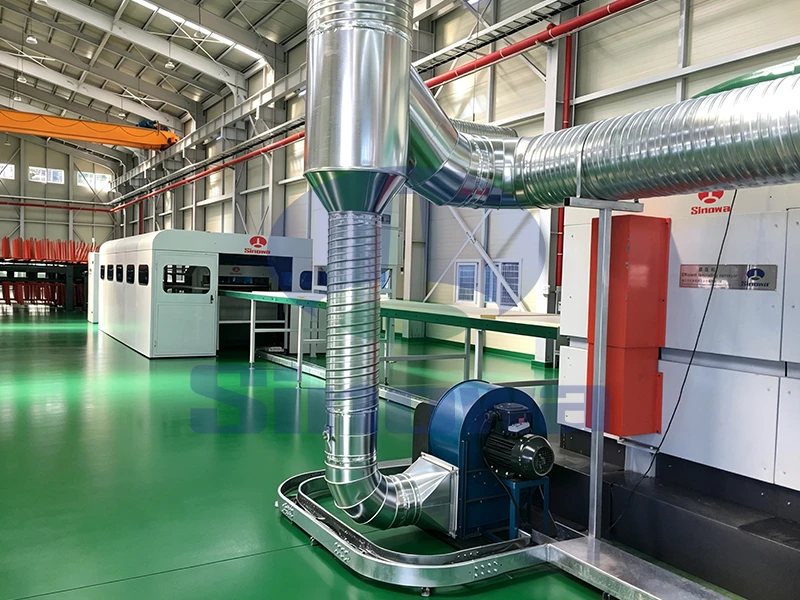
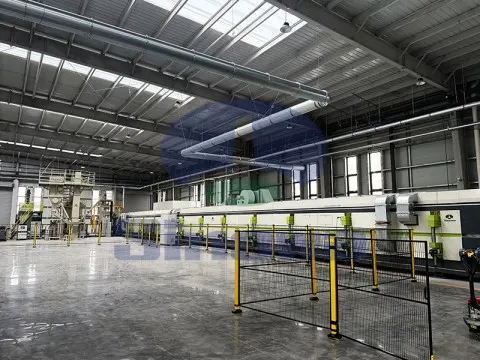
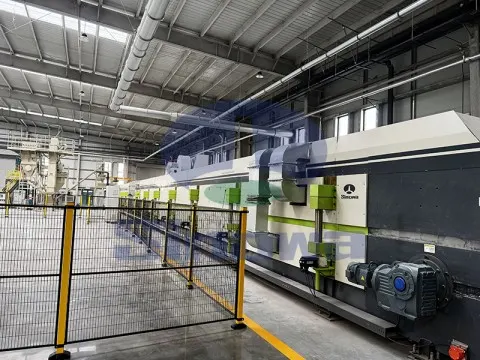
The phenolic foam insulation board production line is a sophisticated automated production system tailored for the thermosetting characteristics of phenolic resin materials. Its core design focuses on converting liquid phenolic raw materials into rigid, closed-cell foam insulation panels with stable physical and thermal properties. Different from ordinary foam processing equipment, this machine is optimized for the unique cross-linking and foaming reactions of phenolic compounds, featuring precise material delivery and constant-temperature control modules. The entire production workflow operates in a continuous cycle, eliminating intermittent production defects and improving overall processing stability. Every functional module is mutually coordinated to avoid material waste and structural inconsistencies in finished panels, laying a solid foundation for standardized insulation panel production in industrial scenarios.
Raw material feeding and precise metering form the foundational working module of the phenolic foam insulation sandwich panel machine. The system is equipped with independent storage and delivery units for phenolic resin, foaming agents, curing agents, and functional additives. All raw materials are transported through sealed pipelines to prevent external contamination and component volatilization. Built-in precision metering devices accurately control the proportion of each material component, which is critical to the foaming uniformity and structural stability of finished panels. Minor deviations in material ratios can lead to uneven pore structures or reduced insulation performance, so the machine’s metering system maintains consistent parameter output during long-term continuous operation, adapting to stable mass production requirements while retaining flexible adjustability for different panel formulations.
High-shear material mixing is a key intermediate process that determines the inherent quality of phenolic foam panels. After accurate metering, all raw materials are conveyed to the closed high-shear mixing chamber of the machine. The internal stirring structure operates at a stable speed to fully blend liquid resin, foaming components and auxiliary additives into a homogeneous colloidal mixture. This uniform mixing effectively avoids local concentration differences of curing agents and foaming agents, preventing partial over-foaming or insufficient foaming in subsequent processes. The mixing chamber adopts a sealed and heat-insulated design to isolate external temperature interference, ensuring the chemical activity of raw materials remains stable. Well-mixed colloids provide reliable preconditions for orderly foaming and cross-linking reactions in the later molding stage.
Continuous foaming and injection molding constitute the core functional stage of the entire production line. The uniformly mixed colloidal materials are quantitatively injected into the continuous molding cavity through pressure delivery pipelines. Inside the closed molding space, the machine’s gradient temperature control system activates the foaming agent, which vaporizes and generates dense tiny bubbles. Meanwhile, phenolic resin initiates cross-linking polymerization reactions under the action of curing agents. The synchronous progress of physical foaming and chemical curing shapes the uniform closed-cell foam structure of phenolic panels. The machine precisely controls injection speed and molding pressure to ensure consistent foam density across all panel areas, effectively avoiding surface depressions, internal cavities and other quality defects that affect insulation and mechanical performance.
Segmented constant-temperature curing is essential for stabilizing the structural performance of phenolic foam insulation panels. The PF sandwich panel production machine is equipped with a long-distance constant-temperature curing tunnel with multi-stage temperature gradient regulation. The low-temperature stage fixes the preliminary foaming structure to prevent structural deformation caused by excessive bubble expansion. The medium-temperature stage accelerates resin polymerization and enhances the bonding force between the foam core and surface base materials. The high-temperature stage completes final curing and solidifies the internal cellular structure, improving the panel’s hardness and compression resistance. The gradient temperature setting avoids the quality problems of incomplete curing or brittle foam caused by single-temperature heating, ensuring the dimensional stability and durability of finished panels in long-term use.
Surface composite lamination processing endows phenolic foam panels with enhanced practical applicability. The machine's automatic lamination module can compound different surface base materials on both sides of the phenolic foam core. Before lamination, the equipment completes automatic surface pretreatment to remove dust and impurities, improving the bonding tightness between the base material and foam core. The rolling and pressing structure applies uniform and stable pressure during composite molding to eliminate gaps and delamination between layers. The integrated lamination and foaming process realizes one-piece molding of composite panels, simplifying traditional multi-step processing procedures. This processing mode greatly improves the overall structural integrity of panels, making them more adaptable to complex installation and usage environments.
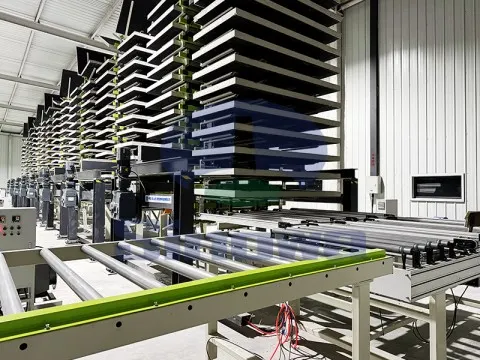
Cooling shaping and fixed-length cutting ensure the standardized size of finished phenolic insulation panels. After curing and lamination, the semi-finished panels enter the circulating cooling system of the machine for gradual cooling and setting. Slow cooling eliminates internal stress generated during high-temperature processing, preventing panel warping and deformation in subsequent use. After complete shaping, the automatic cutting system performs fixed-length and fixed-width cutting according to preset parameters. The high-precision cutting structure ensures flat and neat panel edges without burrs or cracks. The machine also supports flexible adjustment of cutting specifications to produce panels of different sizes, meeting diverse customized needs of different engineering and industrial applications.
Automatic edge trimming and surface protection treatment optimize the finished product quality of insulation panels. After cutting, the machine's edge trimming module automatically polishes panel edges to remove residual burrs and irregular parts, improving the appearance flatness and installation compatibility of panels. Meanwhile, the surface dust removal system cleans floating dust and debris on the panel surface to ensure a clean finished state. Some equipped functional modules can complete surface protective film lamination as required, isolating external dust, moisture and scratch damage during transportation and storage. These refined post-processing steps effectively improve the yield rate of finished products and extend the service life of phenolic foam insulation panels.
Intelligent operation and fault monitoring systems improve the operational stability of the entire machine. The insulation sandwich panel equipment is equipped with a centralized intelligent control panel that integrates parameter setting, operation monitoring and data recording functions. Operators can adjust production parameters such as material ratio, temperature and operating speed according to production needs. The real-time monitoring system automatically tracks the operating status of each module, and can timely identify abnormal conditions such as material blockage, temperature deviation and parameter mismatch. The intelligent control mode reduces manual operation errors, realizes semi-automatic and continuous production, and greatly improves production efficiency while maintaining long-term stable and consistent product quality.
The application value and development advantages of phenolic foam insulation panel machines are reflected in efficient and high-quality industrial production. This integrated equipment realizes one-stop processing from raw material input to finished product output, greatly simplifying the traditional scattered production process. The machine’s precise process control ensures that finished panels have excellent thermal insulation, flame retardancy and structural stability, which are widely used in building energy conservation, industrial pipeline insulation and facility thermal protection fields. With the increasing demand for high-performance insulation materials, the continuous upgrading of this equipment will further promote the standardized and intelligent development of the phenolic foam insulation panel manufacturing industry.
Gallery of Phenolic Foam Insulation Panel Machine
Tags: phenolic foam insulation panel machine, phenolic foam insulation panel machine manufacturer, phenolic foam insulation panel machine supplier, china phenolic foam insulation panel machine, phenolic foam insulation panel machine for sale
https://www.sandwichpanelmachinery.com/tags/phenolic-foam-insulation-panel-machine.html
-
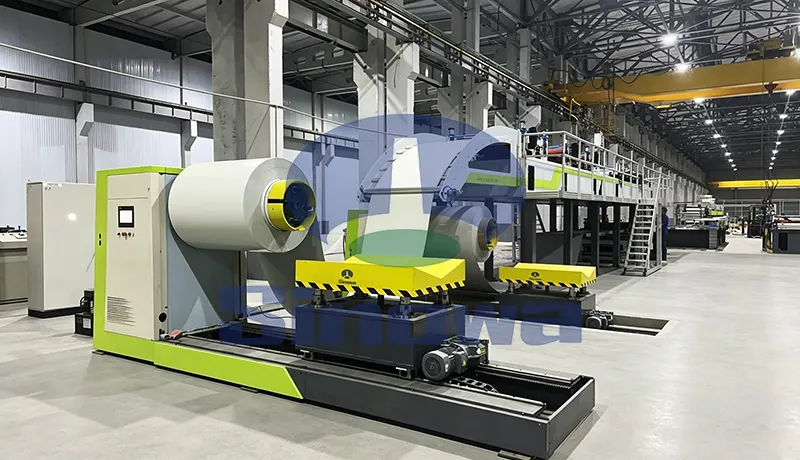
The PU sandwich panel line is a core production setup for making high-performance building insulation panels. This professional PU sandwich panel production line features automated operation to streamline the whole manufacturing process efficiently. Every component of the polyurethane sandwich panel line is precisely calibrated to ensure consistent panel thickness and structural stability. A well-maintained polyurethane sandwich panel production line can greatly boost production efficiency while reducing manual operation errors. The continuous PU sandwich panel line adapts to diverse production demands for different panel sizes and surface styles. With advanced molding technology, the PIR sandwich panel line produces panels with excellent heat preservation and sound insulation properties. Stable running of the PIR sandwich panel production line guarantees reliable product quality for various construction and industrial application scenarios.
-
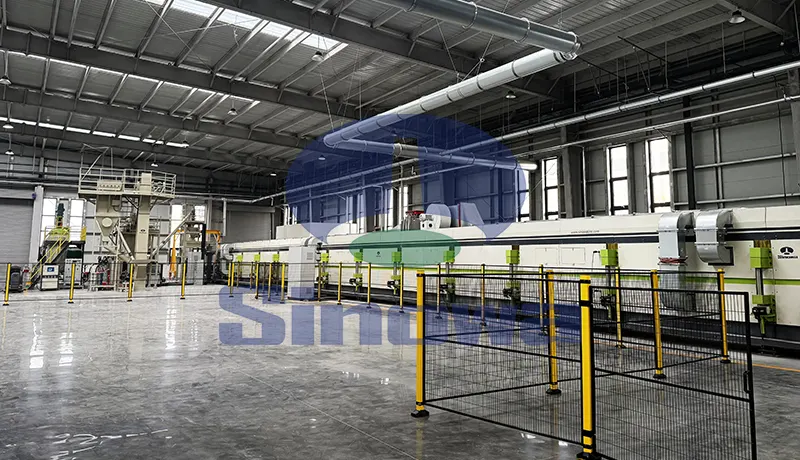
A phenolic insulation board production line serves as the core equipment for manufacturing high-performance thermal insulation building materials. This phenolic insulation panel production line integrates material mixing, foaming, molding and cutting processes to ensure continuous and stable production efficiency. Every operational link of the insulation board production line is precisely calibrated to produce uniform and durable insulation boards. The automated design of the insulation panel production line effectively reduces manual intervention and improves product consistency. Proper maintenance of the phenolic board production line can greatly extend its service life and maintain steady production output. With optimized structural design, the phenolic panel production line adapts to various production demands and delivers high-quality finished products for thermal insulation engineering applications.
-
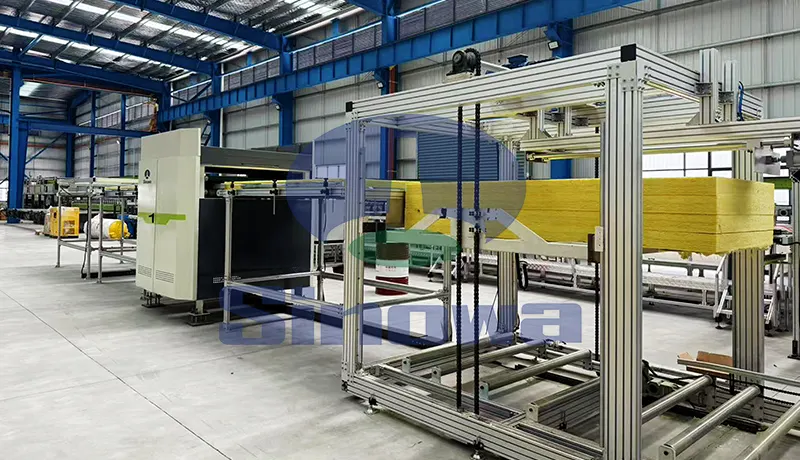
A professional rockwool sandwich panel line serves as the core equipment for producing high-performance building panels. This rockwool sandwich panel production line integrates feeding, laminating and forming processes to ensure stable and efficient production. The well-structured rock wool sandwich panel line can process raw rockwool materials into panels with excellent thermal and sound insulation properties. Operators can adjust the running parameters of the rock wool sandwich panel production line to manufacture panels of different thicknesses and specifications. The automated design of the mineral wool sandwich panel production line greatly reduces manual operation errors and improves product consistency. Regular maintenance of the mineral wool sandwich panel line is essential to sustain long-term operational efficiency and guarantee qualified finished panels for diverse construction applications.