Rockwool Composite Panel Production Line
Publication Date: Sep 27, 2026
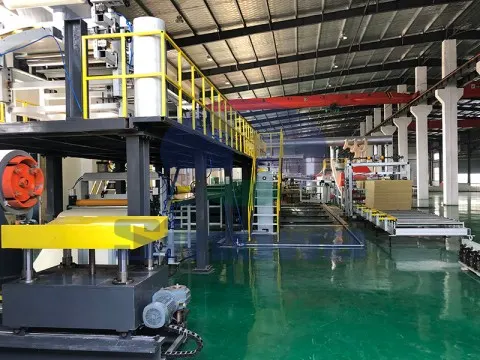
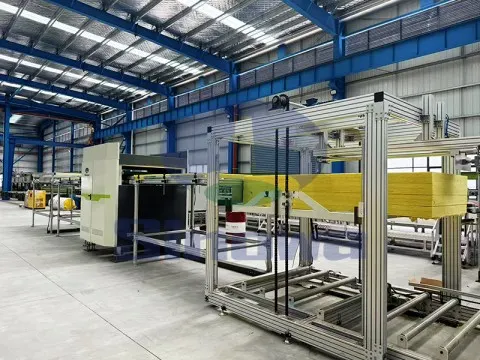
The rockwool composite panel production line is an integrated automated manufacturing system for producing high-performance thermal and fire-insulation panels. It integrates raw material processing, gluing, composite pressing, curing and cutting to realize continuous and efficient panel production.
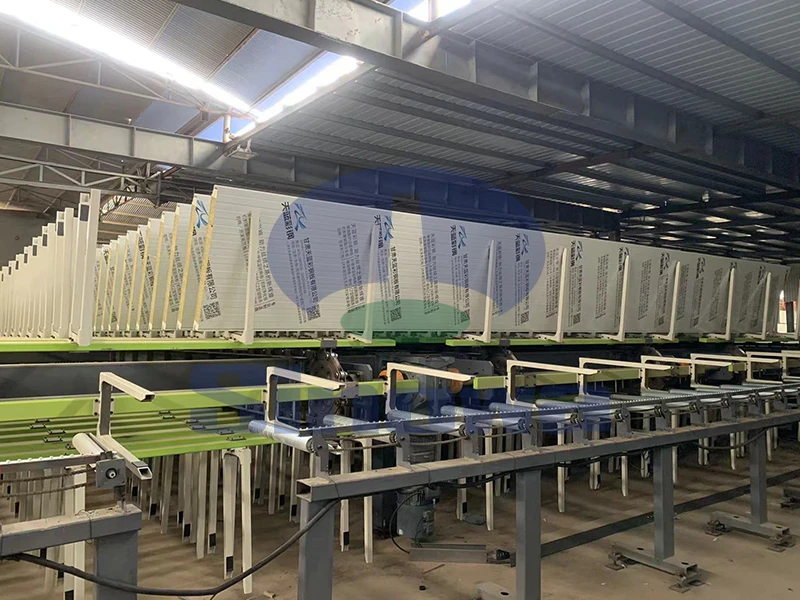
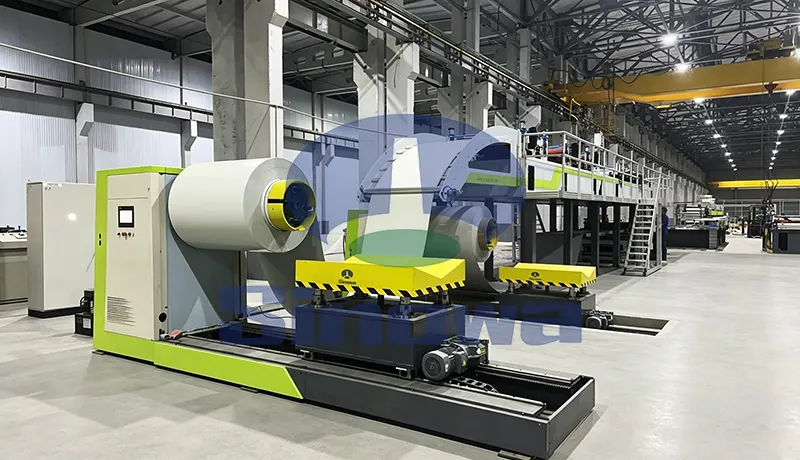
The entire production workflow starts with systematic raw material preparation, which lays a solid foundation for stable finished product quality. The rockwool panel production line is equipped with automatic metal coil unwinding and finishing units that flatten and shape metal surface materials to eliminate surface wrinkles and uneven tension. Meanwhile, dedicated rockwool pretreatment equipment processes raw rockwool materials by adjusting fiber density and uniformity, removing impurities and loose fibers. This pretreatment effectively avoids common defects such as hollow layers and inconsistent thickness in finished panels. The intelligent feeding system adopts variable frequency speed regulation to match the conveying speed of surface materials and core materials, ensuring synchronous and stable material supply for subsequent composite procedures and improving the overall continuity of production.
Precision adhesive application serves as a pivotal intermediate process that determines the bonding performance of composite panels. The rockwool board production line adopts advanced non-contact synchronous spraying technology to coat high-performance environmental polymer adhesive evenly on the inner surfaces of upper and lower metal sheets. Different from traditional manual or roller gluing methods, this automated gluing system realizes quantitative and fixed-point spraying, with adjustable coating thickness and spraying range according to production demands. The selected adhesive features fast curing speed, strong adhesion and excellent aging resistance, which can tightly bond metal sheets and rockwool fibers without causing corrosion or material degradation. Uniform adhesive coverage eliminates local delamination risks and enhances the overall structural integrity of composite panels.
Composite pressing and integral forming is the core molding procedure of the whole production line. After gluing, the metal surface sheets and rockwool core material enter the multi-group graded pressing roller unit for integrated lamination. The symmetrically arranged upper and lower pressure rollers can precisely adjust spacing and constant pressure according to preset panel thickness parameters. The graded pressure design avoids excessive extrusion that would crush rockwool internal fiber structures while ensuring tight fitting between layers. During continuous conveying and pressing, the system eliminates air bubbles between composite layers to prevent hollowing and warping. This stable pressing process standardizes the overall thickness and flatness of semi-finished panels, laying a key foundation for subsequent curing and finishing processing.
Constant temperature curing treatment is essential to stabilize the structural performance of composite panels. The rockwool sandwich panel production line is equipped with a closed intelligent curing channel that provides stable and balanced temperature environments for semi-finished panels. After composite pressing, panels move forward at a constant speed to complete gradual adhesive curing inside the channel. The staged curing mode avoids rapid temperature changes that may cause internal stress and layer separation. With precise temperature and speed linkage control, the adhesive fully reacts and solidifies, forming a durable bonding interface between metal layers and rockwool core. This process significantly improves the structural stability, peel resistance and overall service durability of composite panels, making products adaptable to complex application environments.
Intelligent cooling and shaping procedures follow the curing stage to standardize panel appearance and performance. High-temperature cured panels will generate slight internal stress and surface thermal expansion, so the line is equipped with a natural air circulation cooling system for gradual heat dissipation. Unlike forced rapid cooling, this gentle cooling method effectively prevents panel surface deformation, cracking and internal fiber damage caused by drastic temperature difference. During the cooling process, the panel structure is further finalized, and the bonding interface tends to be more stable. The whole cooling process operates synchronously with production rhythm, ensuring continuous production without stagnation while guaranteeing consistent flatness and structural uniformity of each batch of semi-finished products.
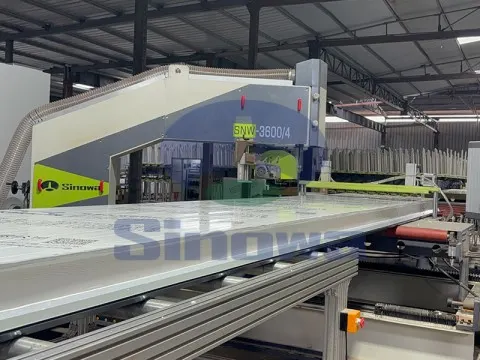
Precision fixed-length cutting and edge trimming are key finishing processes for finished panel specification standardization. The production line adopts intelligent positioning and tracking cutting systems, which can automatically identify panel conveying status and complete fixed-length transverse cutting according to customized production requirements. Equipped with high-precision wear-resistant cutting tools, the equipment ensures smooth and flat cutting sections without metal burrs or rockwool fiber spilling. Meanwhile, the automatic edge trimming device trims irregular edges on both sides of panels to unify overall width specifications. The integrated cutting and trimming process realizes one-time forming of panel size, effectively improving product dimensional accuracy and reducing manual finishing workload.
Surface protection and defect inspection work together to ensure high-quality finished panel output. After cutting and trimming, panels pass through an automatic film coating unit that attaches protective films on metal surfaces to prevent scratches, dust adhesion and surface oxidation during transportation and storage. Subsequently, the built-in visual inspection system conducts real-time detection of panel surface flatness, bonding integrity and cutting precision. It can automatically identify subtle defects such as local delamination, surface indentation and uneven edges that are difficult to detect manually. Defective products will be automatically marked and separated, while qualified products enter the subsequent stacking process, realizing intelligent quality screening and improving overall product qualification rate.
Automatic stacking and finished product sorting optimize the final link of production and improve operational efficiency. The rock wool sandwich panel production line is matched with intelligent stacking equipment, which can automatically absorb, lift and stack qualified panels according to set spacing and layers. The stacking system runs stably with accurate positioning, avoiding panel collision, friction and tilting during stacking. It can adapt to different panel specifications and production batch demands, realizing orderly arrangement of finished products. Automated stacking replaces traditional manual handling, greatly reducing labor intensity and product damage rate. Meanwhile, the linkage sorting function classifies products according to size specifications to facilitate subsequent packaging, storage and targeted delivery.
Intelligent linkage control system supports the stable and efficient operation of the entire composite board production line. The whole production process is centrally controlled by a microcomputer program, realizing synchronous coordination of unwinding, gluing, pressing, curing, cutting and stacking units. The system supports real-time parameter adjustment and production data monitoring, allowing operators to modify production specifications and operating parameters through simple settings. The fault self-diagnosis function can timely identify abnormal equipment operation and trigger early warnings, effectively reducing equipment failure downtime. The highly automated control mode simplifies production operation, ensures consistent production rhythm and stable product quality, and improves the overall intelligent level of panel manufacturing.
The rockwool composite panel production line features high automation, stable operation and flexible production adaptability, meeting the diversified manufacturing demands of insulation composite panels. Its integrated process design simplifies production procedures, reduces manual intervention and production errors, and improves production efficiency and product consistency. Products manufactured by this line have excellent structural stability and surface quality, with reliable comprehensive performance. With flexible parameter adjustment capability, the line can adapt to different production specifications, providing efficient and standardized manufacturing support for the application and promotion of rockwool composite panels in various engineering fields.
Gallery of Rockwool Composite Panel Production Line
Tags: rockwool composite panel production line, rockwool composite panel production line manufacturer, rockwool composite panel production line supplier, china rockwool composite panel production line, rockwool composite panel production line for sale
https://www.sandwichpanelmachinery.com/tags/rockwool-composite-panel-production-line.html
-
The PU sandwich panel line is a core production setup for making high-performance building insulation panels. This professional PU sandwich panel production line features automated operation to streamline the whole manufacturing process efficiently. Every component of the polyurethane sandwich panel line is precisely calibrated to ensure consistent panel thickness and structural stability. A well-maintained polyurethane sandwich panel production line can greatly boost production efficiency while reducing manual operation errors. The continuous PU sandwich panel line adapts to diverse production demands for different panel sizes and surface styles. With advanced molding technology, the PIR sandwich panel line produces panels with excellent heat preservation and sound insulation properties. Stable running of the PIR sandwich panel production line guarantees reliable product quality for various construction and industrial application scenarios.
-
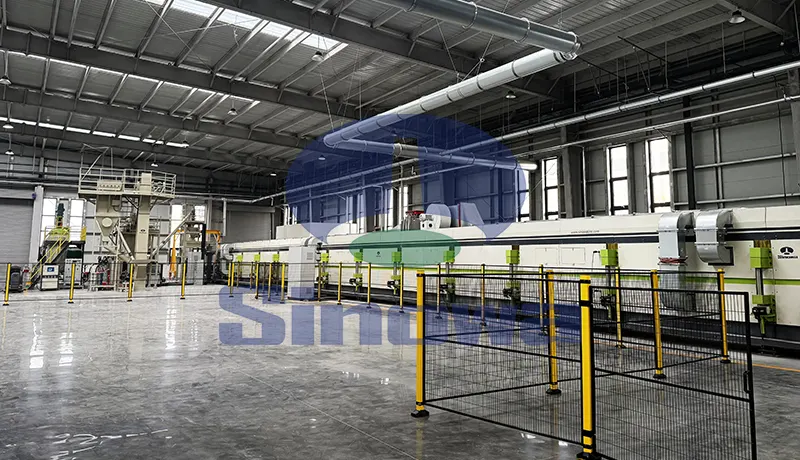
A phenolic insulation board production line serves as the core equipment for manufacturing high-performance thermal insulation building materials. This phenolic insulation panel production line integrates material mixing, foaming, molding and cutting processes to ensure continuous and stable production efficiency. Every operational link of the insulation board production line is precisely calibrated to produce uniform and durable insulation boards. The automated design of the insulation panel production line effectively reduces manual intervention and improves product consistency. Proper maintenance of the phenolic board production line can greatly extend its service life and maintain steady production output. With optimized structural design, the phenolic panel production line adapts to various production demands and delivers high-quality finished products for thermal insulation engineering applications.
-
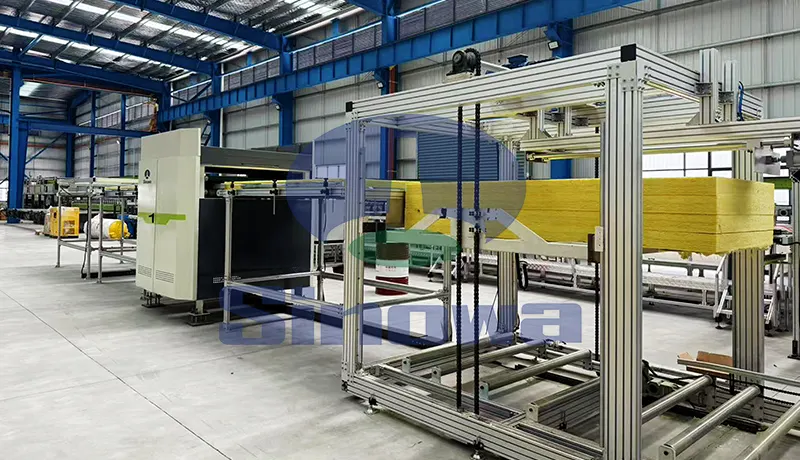
A professional rockwool sandwich panel line serves as the core equipment for producing high-performance building panels. This rockwool sandwich panel production line integrates feeding, laminating and forming processes to ensure stable and efficient production. The well-structured rock wool sandwich panel line can process raw rockwool materials into panels with excellent thermal and sound insulation properties. Operators can adjust the running parameters of the rock wool sandwich panel production line to manufacture panels of different thicknesses and specifications. The automated design of the mineral wool sandwich panel production line greatly reduces manual operation errors and improves product consistency. Regular maintenance of the mineral wool sandwich panel line is essential to sustain long-term operational efficiency and guarantee qualified finished panels for diverse construction applications.