
The cost of a sandwich panel machine varies drastically based on automation levels, production capacity, structural configuration, and auxiliary functional modules.
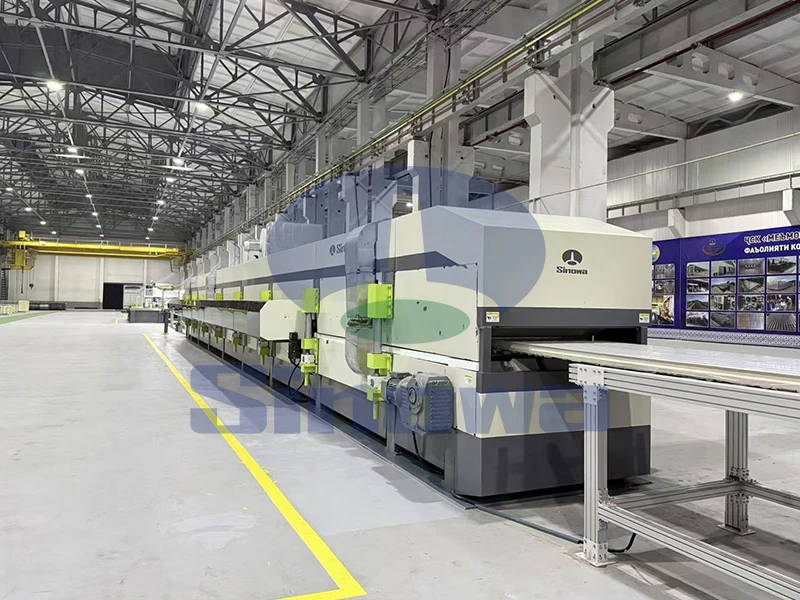
One of the most fundamental factors determining sandwich panel machine investment cost is the overall automation degree of the production line. Entry-level semi-automatic machines feature manual feeding, simple profiling, and independent manual operation of key processes such as foaming and cutting, with fewer integrated components and simpler control systems. These devices are designed for small-batch and low-frequency production demands, requiring regular manual intervention to complete panel molding and finishing work. Their structural simplicity greatly reduces manufacturing and assembly costs, making them a low-threshold choice for startup manufacturers and small-scale processing workshops. In contrast, fully automated production lines integrate continuous feeding, automatic foaming, constant-pressure pressing, intelligent cutting, and finished product stacking into one unified system. Equipped with programmable logic control systems and real-time monitoring modules, they minimize manual participation and ensure consistent production precision. The complex mechanical structure and intelligent electronic accessories of fully automatic lines drive up manufacturing costs significantly, forming a clear cost gap with semi-automatic models.
Production capacity and operational efficiency also exert decisive influences on sandwich panel machine costs. Different machine models are tailored to distinct daily and hourly output requirements, with core differences lying in processing speed, continuous operation stability, and material utilization rate. Low-capacity machines adopt relatively small-scale transmission structures and basic power systems, which can meet conventional low-volume production needs but have limited operating speed and cannot support long-term non-stop operation. Their simple power matching and transmission design lower production and configuration costs effectively. High-efficiency, large-capacity machines, however, adopt enhanced transmission components, high-power stable operating systems, and optimized material conveying structures. These upgrades enable faster panel molding speed, higher finished product yield, and effective reduction of material waste during production. The high-precision mechanical parts and optimized power systems required for high-capacity operation increase manufacturing difficulty and raw material consumption, directly raising the overall equipment investment cost.
The type of sandwich panels produced by the machine is another key variable affecting overall equipment costs, as different core materials require targeted mechanical configurations. Machines dedicated to single-type panel production, such as ordinary foam core sandwich panels, adopt relatively simple foaming and compounding structures with standardized molding processes. Their universal structural design avoids customized component development, controlling manufacturing costs at a moderate level. In comparison, multi-functional machines that can produce rock wool, glass wool, and composite core sandwich panels need to be equipped with adjustable feeding systems, multi-mode foaming devices, and adaptive pressing structures. Different core materials have varying density, hardness, and compounding requirements, forcing equipment manufacturers to design flexible adjustable modules and replaceable functional components. The customized structural design and multi-scene adaptive functions of multi-functional equipment greatly improve production compatibility but also increase component types, assembly complexity, and research and development investment, leading to higher overall equipment costs.
Equipment structural configuration and functional expansion options bring obvious cost differences to sandwich panel machines. Basic standard machines only retain core production functions including feeding, compounding, and cutting, with no additional auxiliary functional modules. Their standardized and simplified structural design reduces redundant component costs and assembly processes, making them cost-effective for manufacturers with single production demands. With the upgrading of production requirements, more extended functions such as automatic deviation correction, surface finishing, precise thickness calibration, and intelligent fault diagnosis have become optional configurations. These extended functions rely on additional sensors, precision adjustment components, and intelligent control modules, which not only improve production accuracy and product consistency but also greatly enrich equipment performance. Each additional functional module corresponds to extra material costs, technical debugging costs, and assembly costs, so machines with complete extended functions are far more costly than basic standard models.
Raw material quality and manufacturing craftsmanship of sandwich panel machine components directly affect equipment pricing and long-term value. Low-cost equipment usually adopts ordinary conventional steel materials and standard ordinary parts, which meet basic production needs but have poor wear resistance, pressure resistance, and structural stability. The simple manufacturing process reduces processing costs, yet the equipment is prone to deformation and wear after long-term operation. High-quality high-end machines use high-strength alloy steel and precision forged parts for key load-bearing and operating components. Adopting fine processing and precision assembly craftsmanship, these components feature stable operation, strong wear resistance, and long service life. Strict quality inspection standards and refined manufacturing processes increase production costs for equipment manufacturers, but such equipment can maintain stable operation for a long time, reduce failure rates, and deliver higher comprehensive use value. The difference in raw material grade and manufacturing craftsmanship forms a stable price gradient in the equipment market.
Installation and commissioning costs constitute an indispensable part of the total investment of sandwich panel machines, varying greatly with equipment complexity. Small semi-automatic machines have simple structures and independent functional modules, which can be installed and debugged quickly through basic manual assembly and circuit connection. The whole process requires fewer human resources and shorter cycle time, with low overall installation and commissioning costs. Large-scale fully automatic continuous production lines involve multi-module linkage operation, including mechanical transmission, electrical control, hydraulic pressure, and foaming systems. The installation process requires professional technical personnel to complete precise docking of each module, circuit debugging, program parameter setting, and trial production verification. The long installation cycle, high professional technical requirements, and complex debugging procedures bring higher labor and technical service costs, which are usually included in the total equipment investment, further widening the overall cost gap between different machine models.
After-sales service and warranty policies are important hidden factors affecting the comprehensive cost of sandwich panel machine investment. Low-priced basic equipment usually provides only basic short-term warranty services, with limited technical support and spare parts guarantee. Users need to bear higher costs for later maintenance, component replacement, and fault troubleshooting. In contrast, mid-to-high-end equipment is matched with complete after-sales service systems, including long-term warranty coverage, regular remote technical guidance, on-site maintenance services, and preferential spare parts supply. Manufacturers need to reserve professional after-sales teams and spare parts inventory, which increases their operational costs and is indirectly reflected in the equipment sales price. Complete after-sales support can effectively reduce equipment downtime and later maintenance risks, lowering the long-term comprehensive operating cost for users and improving the overall investment return of the equipment.
Energy consumption performance of sandwich panel machines brings long-term operational cost differences that cannot be ignored. Traditional low-cost equipment usually adopts relatively backward power systems and transmission designs, with low energy utilization efficiency. Long-term continuous operation will produce higher power consumption, bringing stable daily operational cost pressure for production enterprises. New optimized equipment adopts energy-saving motor systems, efficient transmission structures, and intelligent power regulation modules, which can automatically adjust power output according to production load. This design effectively reduces invalid energy consumption and improves energy utilization efficiency. Although energy-saving optimized equipment has a higher initial purchase cost, it can save a large amount of energy expenditure in long-term mass production. For enterprises with long-term and large-volume production demands, the energy-saving advantage can effectively offset the initial equipment price difference and bring better long-term cost benefits.
Market supply and demand relationship and industry technological iteration also affect the market cost of sandwich panel machines. In periods of stable market demand and sufficient equipment supply, market competition intensifies, prompting manufacturers to optimize cost control and adjust pricing strategies, making overall equipment prices more stable and transparent. When market demand surges or core component supply is tight, the overall market cost of equipment will rise accordingly. In addition, with the continuous iteration of production technology, new equipment with higher precision, stronger stability, and more intelligent functions will replace old models. The old-generation equipment with backward technology will gradually reduce in price due to eliminated performance and insufficient functional advantages, while new technology equipment will maintain a relatively high cost level due to advanced technology and superior performance.
The comprehensive return on investment of sandwich panel machines depends on the matching degree between equipment cost and enterprise production demands. Blindly pursuing low-cost basic equipment may lead to insufficient production capacity, unstable product quality, and frequent equipment failures, increasing long-term comprehensive operating costs. Excessively pursuing high-end full-function equipment will cause resource waste and cost burden for small-batch production. Enterprises need to comprehensively evaluate production scale, product types, long-term development plans, and operational cost budgets. Selecting equipment with appropriate automation level, production capacity, and functional configuration can balance initial investment and long-term operational costs, maximize equipment production efficiency and economic benefits, and achieve the most cost-effective equipment investment.