PU Composite Panel Production Line
Publication Date: Oct 6, 2026
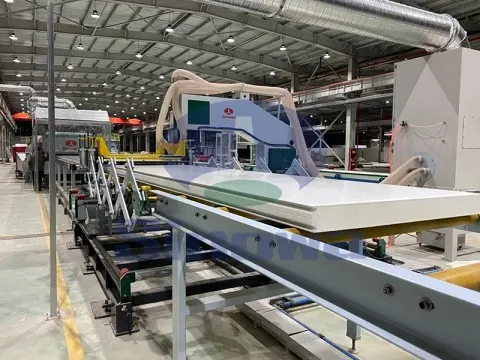
The PU composite panel production line is an automated integrated manufacturing system for polyurethane composite panels. It completes full-process continuous production from raw material feeding and foaming to composite molding and cutting, ensuring stable product quality and high production efficiency for diverse industrial applications.
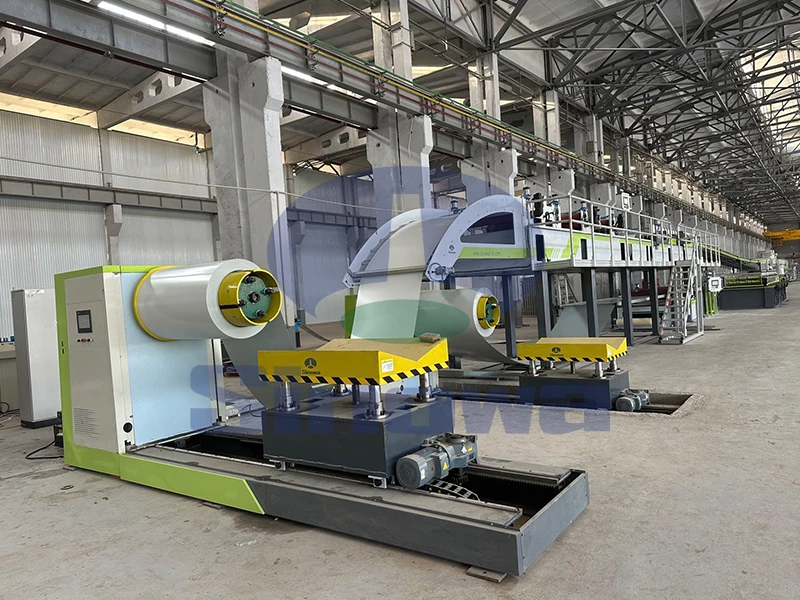
The core operational logic of the PU composite panel production line lies in its synchronized modular operation, which abandons the inefficient segmented processing mode of traditional intermittent equipment. This integrated production system organically connects every production link, including base material pretreatment, chemical raw material mixing, foam molding, composite pressing, constant-temperature curing, fixed-size cutting and finished product output. Each functional module operates in precise coordination under unified intelligent control, eliminating production gaps and manual intervention links in traditional processing. The whole production flow runs continuously and stably, which not only greatly improves the overall production capacity but also avoids product quality fluctuations caused by inconsistent manual operation. By optimizing the matching speed and operating parameters of each unit, the line realizes seamless docking of front and rear processes, laying a solid foundation for large-scale and standardized production of PU composite panels and effectively reducing unnecessary material consumption in the production process.
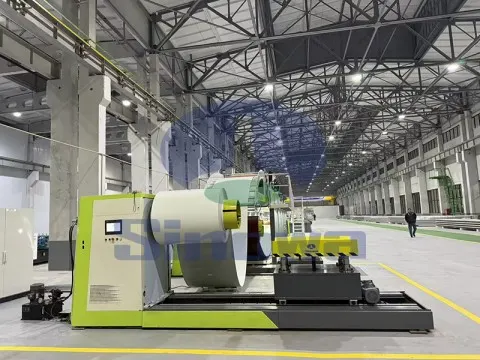
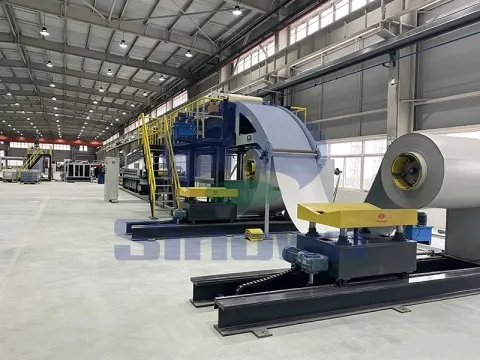
Base material pretreatment is the primary foundational process of the entire PU composite panel production line, which directly determines the bonding firmness and surface quality of finished panels. Before formal composite molding, various surface base materials used for panel production will be sent to the pretreatment unit for systematic processing. The equipment first completes automatic uncoiling and flatting of coiled base materials to eliminate wrinkles, deformation and uneven tension generated during material coiling and storage. Subsequently, the surface cleaning mechanism removes dust, oil stains and fine burrs on the base material surface, thoroughly cleaning impurities that may affect the bonding effect. In addition, the unit can complete fine surface smoothing treatment according to production requirements, making the base material surface flat and uniform. This series of pretreatment operations optimizes the surface state of base materials, enhances the adhesion between base materials and PU foam core layers, and avoids problems such as degumming, bulging and uneven surface of finished panels, ensuring the basic appearance and structural stability of composite panels.
Raw material mixing and foaming is the core process that determines the internal performance of PU composite panels, serving as the key link to form the panel’s heat insulation and structural characteristics. The production line is equipped with a high-precision automatic mixing system, which accurately conveys and mixes polyol, isocyanate and other auxiliary chemical raw materials according to set proportions. Different from traditional manual mixing, the automated mixing device realizes precise proportioning and uniform stirring of raw materials, avoiding performance differences caused by uneven mixing. After mixing, the raw material mixture is evenly sprayed between the upper and lower base materials through a high-efficiency injection structure. Under set temperature and pressure conditions, the mixed materials undergo rapid chemical foaming and polymerization reactions, forming a dense and uniform microporous foam structure. The whole foaming process is automatically controlled in real time, which stably maintains the consistency of foam density and pore structure, endowing the finished panels with excellent thermal insulation, sound insulation and buffer performance, and ensuring the uniformity of internal quality of each batch of products.
Roll forming processing is an indispensable link to shape the surface structure of PU composite panels, realizing the personalized profile molding of base materials. After pretreatment, the flat base materials are sent to the roll forming unit, which is composed of multiple groups of precision rolling dies arranged in order. Through graded rolling and gradual deformation, the flat base materials are processed into various required profile shapes such as flat plates, corrugated plates and special-shaped plates. The rolling parameters and die positions can be flexibly adjusted according to different product specifications and usage scenarios, realizing rapid switching of different panel profiles. The precision rolling technology ensures that the formed base materials have uniform deformation, regular outline and stable size, without edge warping or local deformation. Moreover, the roll forming unit operates synchronously with the front-end pretreatment and back-end foaming composite links, realizing uninterrupted forming production. This continuous forming mode not only improves the dimensional accuracy of panel surface structures but also enriches the product diversity of the production line, meeting the customized molding needs of different industries.
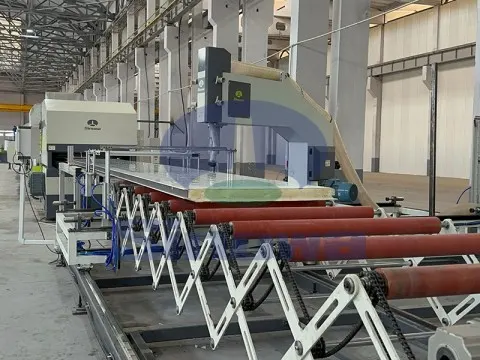
Composite pressing and shaping is a key process to integrate base materials and PU foam core layers into a unified whole, determining the overall structural compactness of composite panels. After the PU foam raw materials are sprayed and initially foamed, the semi-finished panels enter the constant-pressure composite pressing unit. The unit adopts a multi-group pressing roller structure with adjustable pressure and spacing, which can apply uniform and stable pressure on the upper and lower surfaces of the semi-finished panels. This uniform pressure enables the foaming materials to fully fill the gap between the upper and lower base materials, closely bond with the base materials, and eliminate internal gaps and bubbles. At the same time, the pressing process cooperates with real-time thickness calibration to accurately control the overall thickness of the composite panels, ensuring consistent thickness of the whole panel. The adjustable pressure system can adapt to different foam densities and panel thickness specifications, avoiding structural damage caused by excessive pressure or insufficient bonding caused by insufficient pressure. Through precise composite pressing, the base materials and core foam form an integrated stable structure, significantly improving the overall structural strength and compression resistance of the finished panels.
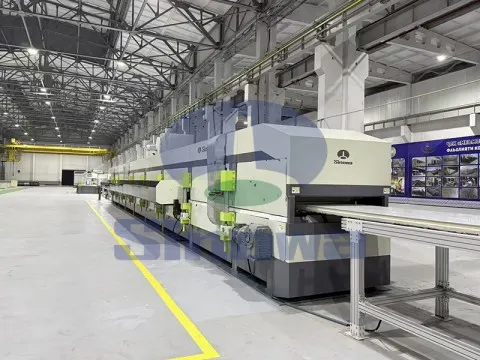
Constant-temperature curing treatment is a crucial process to stabilize the chemical structure and physical performance of PU composite panels, ensuring long-term service stability of products. After composite pressing, the semi-finished panels are transported to the independent curing channel for staged constant-temperature curing. The closed curing environment can stably maintain a suitable reaction temperature, promoting the complete polymerization and curing of the internal PU foam materials, and fully stabilize the microporous structure formed by foaming. The staged curing mode adopts different temperature and time parameters in the early, middle and later stages of curing, which can effectively avoid product defects such as surface cracking and internal loose structure caused by rapid temperature change. During the curing process, the equipment monitors the internal temperature and operating speed of the curing channel in real time, dynamically adjusting parameters according to production speed and product specifications. Sufficient constant-temperature curing makes the chemical properties of PU materials more stable, enhances the bonding strength between layers, and improves the weather resistance and structural durability of composite panels, enabling the products to adapt to various complex service environments.
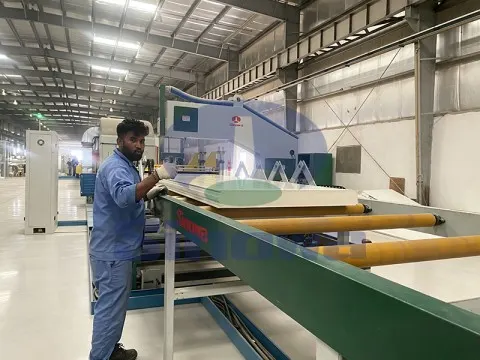
Fixed-length cutting and edge trimming is the finishing processing link of PU composite panel molding, which standardizes the external size and appearance quality of finished products. After completing curing and shaping, the continuous long-strip composite panels are sent to the cutting and trimming unit for automatic fixed-length cutting. The high-precision cutting system can set arbitrary cutting lengths according to customer demand, and completes fast and stable cutting through high-speed cutting tools. The cutting process features smooth incision, no burrs and no deformation of the panel edge, effectively ensuring the dimensional accuracy of single panels. Meanwhile, the matched edge trimming device automatically trims the redundant edge materials on both sides of the panels, correcting the edge deviation generated in the previous processing links. The integrated cutting and trimming process realizes one-time molding of panel size and appearance, replacing traditional manual cutting and finishing. It not only improves the processing efficiency of finished products but also unifies the appearance and size standards of each batch of panels, reducing product differences and improving the overall yield of finished products.
Intelligent control system serves as the brain of the entire PU composite panel production line, realizing unified scheduling and precise control of all production links. The whole production line adopts a centralized PLC intelligent control mode, with a human-computer touch screen interface for intuitive parameter setting and equipment monitoring. Operators can adjust core parameters such as raw material proportioning, foaming temperature, pressing pressure, production speed and cutting length through the interface according to product specifications. The control system supports synchronous linkage operation of all modular units, realizing automatic docking and coordinated operation of feeding, forming, foaming, pressing, curing and cutting links. In the production process, the system can real-time monitor the operating state of each equipment module, automatically identify abnormal parameters and trigger early warning prompts, effectively avoiding equipment failure and product quality problems caused by parameter deviation. In addition, the system has parameter memory and one-key switching functions, which can quickly adapt to the production of different types of composite panels, greatly improving the flexibility and intelligent level of production.
The PU composite panel production line has remarkable production and technical advantages compared with traditional intermittent production equipment. In terms of production efficiency, the fully continuous streamlined operation mode eliminates repeated startup and shutdown and intermediate waiting links, greatly shortens the product molding cycle, and realizes large-scale batch continuous production. In terms of quality control, the whole-process automatic parameter control avoids human operation errors, ensuring consistent internal structure, performance and appearance size of each panel. In terms of production cost, the precise raw material proportioning and closed production mode reduce material waste, and the high degree of automation reduces labor investment, effectively lowering comprehensive production costs. Meanwhile, the modular equipment design makes the production line easy to maintain and debug, with strong operational stability and long service life, which can stably meet the long-term and large-volume production needs of composite panels in various industrial fields.
With the continuous expansion of application scenarios for energy-saving and heat-insulating composite materials, the application value and market adaptability of PU composite panel production lines are constantly improving. The panels produced by this line feature light weight, high strength, excellent heat insulation, sound insulation and fire-retardant performance, and are widely applicable to building thermal insulation, cold chain logistics equipment, industrial workshop enclosure, clean room construction and other fields. The flexible production performance of the line can meet the differentiated production needs of panels with different thicknesses, specifications and surface styles. With the continuous upgrading of industrial manufacturing requirements, the production line is also constantly optimized in terms of energy conservation, environmental protection and intelligent upgrading. Its efficient, stable and flexible production characteristics make it the core preferred equipment for modern composite panel manufacturing, providing reliable technical and equipment support for the high-quality development of the new material industry.
Gallery of PU Composite Panel Production Line
Tags: pu composite panel production line, pu composite panel production line manufacturer, pu composite panel production line supplier, china pu composite panel production line, pu composite panel production line for sale
https://www.sandwichpanelmachinery.com/tags/pu-composite-panel-production-line.html
-
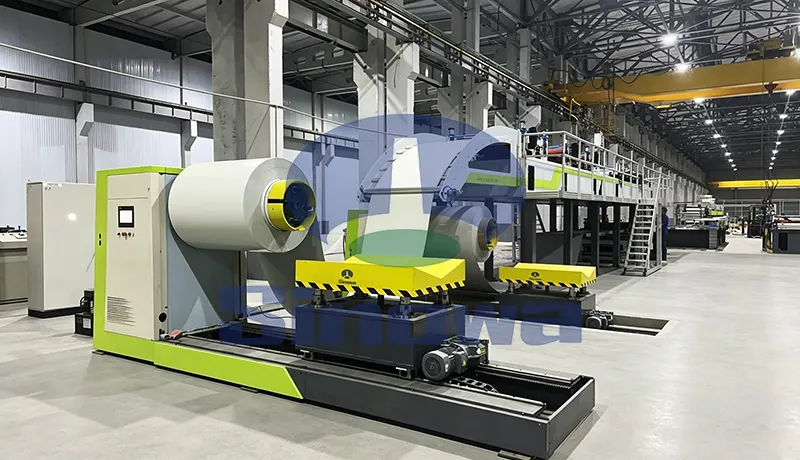
The PU sandwich panel line is a core production setup for making high-performance building insulation panels. This professional PU sandwich panel production line features automated operation to streamline the whole manufacturing process efficiently. Every component of the polyurethane sandwich panel line is precisely calibrated to ensure consistent panel thickness and structural stability. A well-maintained polyurethane sandwich panel production line can greatly boost production efficiency while reducing manual operation errors. The continuous PU sandwich panel line adapts to diverse production demands for different panel sizes and surface styles. With advanced molding technology, the PIR sandwich panel line produces panels with excellent heat preservation and sound insulation properties. Stable running of the PIR sandwich panel production line guarantees reliable product quality for various construction and industrial application scenarios.
-
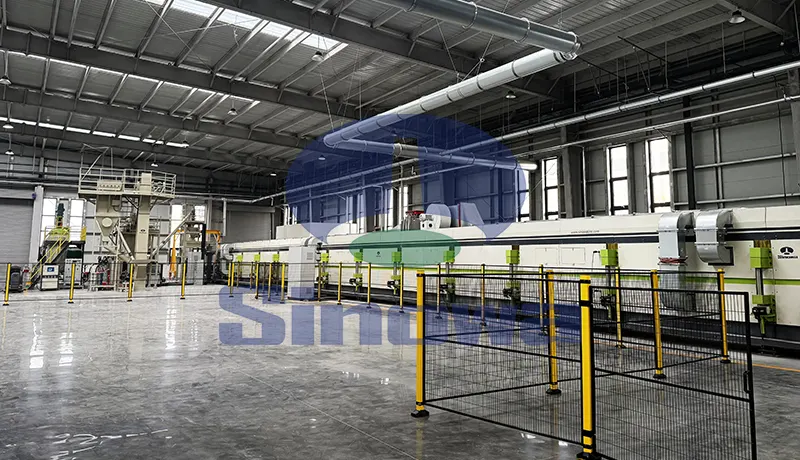
A phenolic insulation board production line serves as the core equipment for manufacturing high-performance thermal insulation building materials. This phenolic insulation panel production line integrates material mixing, foaming, molding and cutting processes to ensure continuous and stable production efficiency. Every operational link of the insulation board production line is precisely calibrated to produce uniform and durable insulation boards. The automated design of the insulation panel production line effectively reduces manual intervention and improves product consistency. Proper maintenance of the phenolic board production line can greatly extend its service life and maintain steady production output. With optimized structural design, the phenolic panel production line adapts to various production demands and delivers high-quality finished products for thermal insulation engineering applications.
-
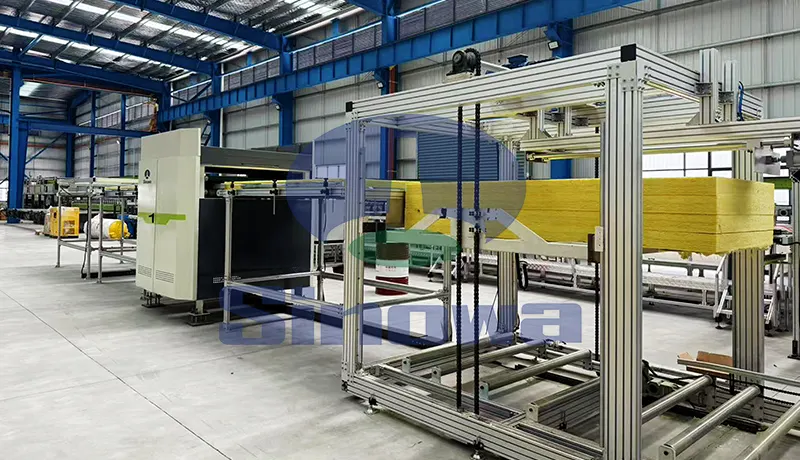
A professional rockwool sandwich panel line serves as the core equipment for producing high-performance building panels. This rockwool sandwich panel production line integrates feeding, laminating and forming processes to ensure stable and efficient production. The well-structured rock wool sandwich panel line can process raw rockwool materials into panels with excellent thermal and sound insulation properties. Operators can adjust the running parameters of the rock wool sandwich panel production line to manufacture panels of different thicknesses and specifications. The automated design of the mineral wool sandwich panel production line greatly reduces manual operation errors and improves product consistency. Regular maintenance of the mineral wool sandwich panel line is essential to sustain long-term operational efficiency and guarantee qualified finished panels for diverse construction applications.