Why Is The Curing Effect Poor On Polyurethane Sandwich Panel Line?
Publication Date: Oct 6, 2026
Poor curing of polyurethane sandwich panels frequently occurs in production, undermining structural stability and service performance. This issue stems from material mismatch, improper process parameters, equipment malfunctions, and environmental interference, with multiple factors interacting to cause defective finished products.
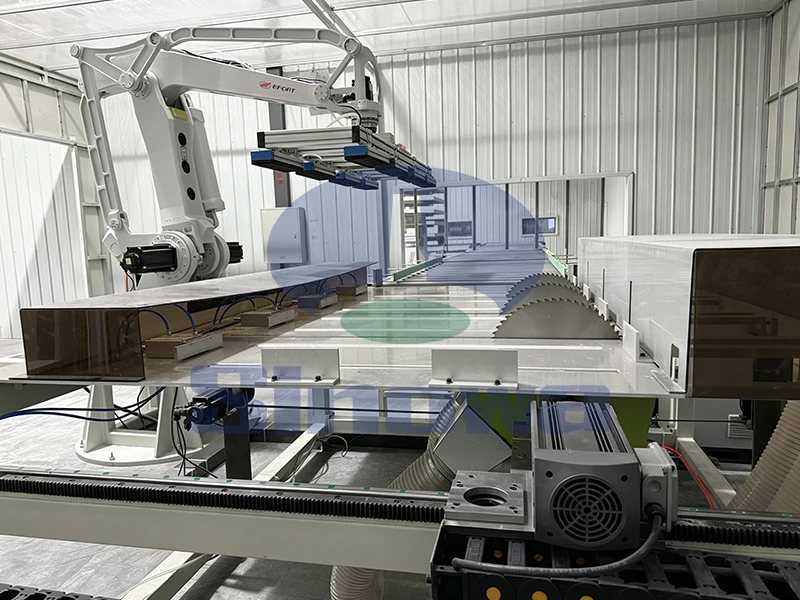
Imprecise ratio of polyurethane raw materials stands as one of the most primary causes of poor curing effects in sandwich panel production. Polyurethane curing relies on the complete chemical reaction between isocyanate and polyol components, and even minor deviations in their proportion can break the chemical balance required for solidification. When the isocyanate content is insufficient, the polyol cannot fully cross-link, leaving abundant unreacted raw materials inside the panel core, which results in incomplete curing, sticky surfaces, and low structural hardness. Conversely, excessive isocyanate leads to redundant reactive groups that fail to participate in effective cross-linking, forming unstable molecular structures that cause panel brittleness, easy cracking, and poor bonding performance. In continuous production lines, long-term operation of dosing equipment may cause minor calibration deviations, cumulative measurement errors, and inconsistent material ratios in different production batches. Additionally, manual parameter adjustment without strict formula verification often triggers ratio imbalance, making the polyurethane foam unable to form a dense and uniform curing structure, and ultimately reducing the overall curing quality of sandwich panels.
Unreasonable production temperature settings severely hinder the normal curing reaction of polyurethane sandwich panels. The curing process of polyurethane foam is a temperature-sensitive chemical reaction that requires a stable and suitable temperature environment to complete molecular cross-linking and foaming solidification. If the production temperature is too low, the molecular activity of polyurethane raw materials decreases significantly, slowing down the reaction rate and failing to achieve sufficient cross-linking within the scheduled production cycle. Low temperature also weakens the volatilization and diffusion efficiency of blowing agents, leading to uneven foam pore structure, loose internal texture, and incomplete curing of both surface and core layers. In contrast, excessively high production temperatures cause the polyurethane reaction to proceed too rapidly, resulting in premature surface crusting. The outer layer solidifies quickly while the internal reaction and foaming are not completed, forming internal voids and loose structures. Moreover, ultra-high temperatures will deactivate partial catalysts in the raw materials, destroy the stability of the reaction system, cause local overheating and micro-cracking inside the panel, and greatly reduce the curing uniformity and structural compactness of polyurethane sandwich panels.
Raw material quality defects and improper storage conditions directly lead to degraded curing effects of polyurethane sandwich panels. The performance of polyurethane raw materials is easily affected by storage time, environmental humidity, and impurity contamination. Long-term storage of isocyanate and polyol will cause gradual component deterioration, reduced reaction activity, and weakened cross-linking ability, making it difficult to form stable curing structures. In addition, raw materials are highly hygroscopic; when stored in a humid environment, moisture will mix into the raw material system. Moisture reacts with isocyanate components, consuming effective reactive substances, generating gaseous by-products, and forming tiny bubbles inside the foam. These bubbles destroy the continuity of the polyurethane curing structure, resulting in hollow defects and poor overall curing. Impurities such as acidic substances, metal ions, and residual grease mixed in raw materials will inhibit the activity of curing catalysts, interfere with the normal progress of cross-linking reactions, and cause inconsistent curing degrees in different areas of the panel. Even qualified raw materials will have reduced reaction stability if stored with unqualified auxiliary materials, ultimately affecting the final curing effect of sandwich panels.
Inadequate mixing quality of polyurethane raw materials is a key factor inducing poor curing performance in continuous production lines. The uniform mixing of isocyanate, polyol, catalysts, and blowing agents is the premise of sufficient and consistent curing reactions. In production, abnormal operation of mixing equipment such as insufficient mixing speed, too short mixing time, and worn mixing components will lead to uneven distribution of various raw material components. Local areas have excessive catalyst content leading to over-fast reaction and premature solidification, while other areas lack effective catalysts and reactive components, resulting in slow reaction and incomplete curing. In addition, residual old materials in the mixing chamber will mix with new raw materials, causing component disorder and breaking the stable reaction system. Insufficient mixing will also make the blowing agent distribute unevenly, leading to inconsistent foaming degrees in different parts of the panel. Partial over-foaming causes loose structures, while under-foaming leads to dense and unreacted areas, making the overall curing state of the sandwich panel extremely uneven and seriously reducing product quality stability.
Surface contamination of panel base materials severely weakens the curing and bonding effect of polyurethane materials. The surface of the metal or non-metal base materials used for sandwich panels is prone to attach dust, oil stains, oxide layers, and release agents during production and storage. These contaminants form a barrier layer on the base material surface, which hinders the wetting and adhesion of polyurethane raw materials on the base material surface. During the curing process, the polyurethane foam cannot form effective mechanical bonding and chemical adhesion with the base material, resulting in incomplete interfacial curing, easy delamination between the core material and the base plate, and reduced overall structural strength. In continuous production, incomplete cleaning of the base material pretreatment equipment and omitted degreasing and dedusting processes will lead to large-area surface contamination of raw materials. Even tiny invisible contaminants will affect the cross-linking reaction of polyurethane at the interface, causing weak curing at the bonding interface, poor overall integration of the sandwich panel, and frequent quality problems such as edge warping and layer separation after finished product molding.
Unstable ambient production environment interferes with the normal curing process of polyurethane sandwich panels. The curing reaction of polyurethane foam is highly dependent on ambient humidity and air flow conditions. Excessively high workshop air humidity will bring a large amount of water vapor into the production environment, which mixes with uncured polyurethane materials and triggers side reactions. These side reactions consume key reactive components, produce gaseous impurities, and form tiny gaps inside the cured foam, reducing the compactness and curing degree of the product. Excessively dry air will accelerate the surface moisture loss of uncured panels, causing rapid surface drying and crusting, which traps unreacted raw materials inside and leads to internal curing failure. In addition, excessive air flow in the workshop will take away surface heat of the panels, causing uneven temperature distribution inside and outside the panels, inconsistent reaction rates, and local incomplete curing. Frequent fluctuations in ambient temperature and humidity in the production workshop will make the polyurethane reaction state unstable in different production periods, resulting in large differences in curing effects between batches of products.
Improper setting of line speed and curing time causes insufficient curing of polyurethane sandwich panels in continuous production. The production line speed matches the curing cycle of polyurethane materials, and each process link including material spraying, foaming, laminating, and shaping requires a fixed reaction time. Excessively fast line speed shortens the foaming and cross-linking time of polyurethane raw materials. Before the molecular cross-linking reaction is fully completed and the foam structure is stabilized, the panels enter the subsequent cutting and stacking processes, resulting in incomplete internal curing, soft core material, and easy deformation of finished products. Conversely, unreasonably slow line speed will cause the polyurethane surface to cure excessively, while the internal reaction is affected by surface solidification and cannot proceed normally, forming a hard outer layer and soft inner layer defective structure. In actual production, frequent line speed adjustments without corresponding curing parameter optimization will break the reaction balance. Meanwhile, insufficient natural curing time after panel molding will lead to secondary deformation and curing attenuation, further worsening the overall curing effect.
Abnormal pressure control of laminating equipment affects the curing molding quality of polyurethane sandwich panels. Stable and uniform laminating pressure is essential for the polyurethane foam to form a dense and uniform curing structure. Insufficient laminating pressure cannot fully fit the base material with the uncured polyurethane foam, resulting in gaps between layers and uneven foam distribution. These gaps make partial areas unable to complete effective cross-linking curing, forming loose defective areas. Excessively high laminating pressure will squeeze out excessive raw materials, destroy the normal foaming and expansion structure of polyurethane, cause excessive compression of the foam layer, block the reaction space of internal raw materials, and lead to incomplete curing. In addition, uneven pressure distribution of the laminating equipment will cause inconsistent curing degrees in different parts of the same panel. The pressure difference makes the foaming and cross-linking reaction unbalanced, resulting in inconsistent hardness, compactness and bonding strength of each area, and greatly reducing the overall quality and service stability of the sandwich panels.
Improper use and failure of auxiliary additives interfere with polyurethane curing reactions. Auxiliary materials such as catalysts, flame retardants, and stabilizers play a key regulatory role in the polyurethane curing process. Excessive or insufficient catalyst dosage will either accelerate the reaction excessively to cause premature curing and internal hollowing or slow down the reaction rate to result in incomplete cross-linking. Some flame retardants contain acidic substances that can neutralize alkaline catalysts, reduce catalytic activity, and inhibit the normal progress of curing reactions. Low-quality additives contain a large number of inert impurities, which cannot participate in the reaction and will be trapped in the foam structure after curing, destroying the compactness and stability of the cured product. In addition, mismatched additive types will conflict with polyurethane main materials, trigger side chemical reactions, consume reactive components, and cause abnormal foaming and curing. Long-term use of failed and deteriorated additives without timely replacement will also lead to unstable reaction systems and consistent poor curing effects of products.
Post-production improper storage and processing methods aggravate poor curing defects of sandwich panels. Although polyurethane panels initially complete preliminary curing on the production line, the molecular cross-linking structure still needs a period of static stabilization to achieve the best performance. Stacking panels too early after production will cause extrusion deformation of uncured internal structures, damage the forming foam framework, and lead to loose curing structures and reduced hardness. Stacking panels in an environment with excessive temperature, humidity or strong air circulation will cause uneven secondary reaction and moisture erosion, resulting in local re-softening and curing failure of the panels. In addition, improper cutting and trimming operations immediately after production will generate external tension on incompletely cured panels, causing internal structural cracking and interfacial delamination. Long-term improper storage will also lead to gradual aging and attenuation of the initial curing structure, further deteriorating the mechanical properties and stability of polyurethane sandwich panels.
Gallery of Polyurethane Sandwich Panel Line
Tags: polyurethane sandwich panel line, polyurethane sandwich panel line manufacturer, polyurethane sandwich panel line supplier, china polyurethane sandwich panel line, polyurethane sandwich panel line for sale
-
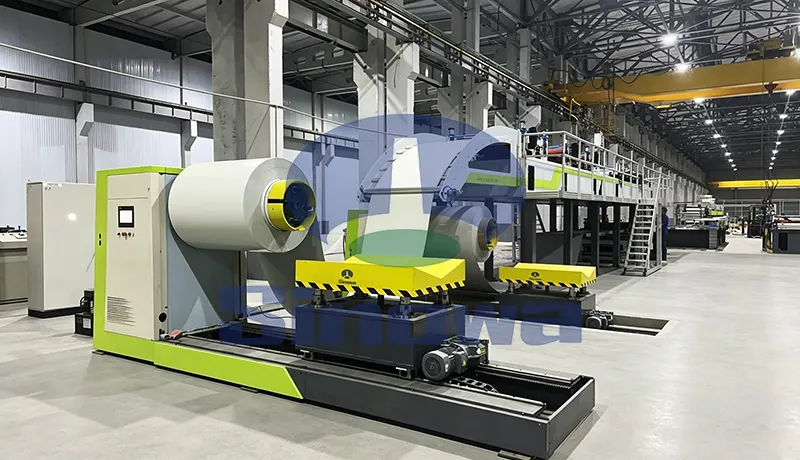
The PU sandwich panel line is a core production setup for making high-performance building insulation panels. This professional PU sandwich panel production line features automated operation to streamline the whole manufacturing process efficiently. Every component of the polyurethane sandwich panel line is precisely calibrated to ensure consistent panel thickness and structural stability. A well-maintained polyurethane sandwich panel production line can greatly boost production efficiency while reducing manual operation errors. The continuous PU sandwich panel line adapts to diverse production demands for different panel sizes and surface styles. With advanced molding technology, the PIR sandwich panel line produces panels with excellent heat preservation and sound insulation properties. Stable running of the PIR sandwich panel production line guarantees reliable product quality for various construction and industrial application scenarios.
-
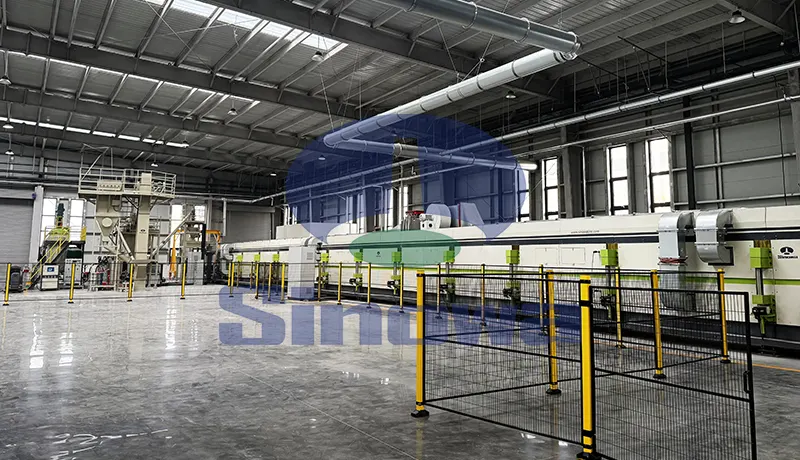
A phenolic insulation board production line serves as the core equipment for manufacturing high-performance thermal insulation building materials. This phenolic insulation panel production line integrates material mixing, foaming, molding and cutting processes to ensure continuous and stable production efficiency. Every operational link of the insulation board production line is precisely calibrated to produce uniform and durable insulation boards. The automated design of the insulation panel production line effectively reduces manual intervention and improves product consistency. Proper maintenance of the phenolic board production line can greatly extend its service life and maintain steady production output. With optimized structural design, the phenolic panel production line adapts to various production demands and delivers high-quality finished products for thermal insulation engineering applications.
-
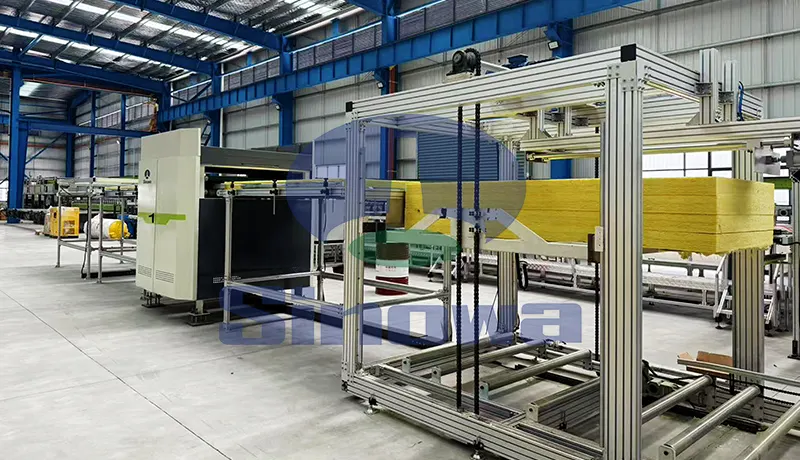
A professional rockwool sandwich panel line serves as the core equipment for producing high-performance building panels. This rockwool sandwich panel production line integrates feeding, laminating and forming processes to ensure stable and efficient production. The well-structured rock wool sandwich panel line can process raw rockwool materials into panels with excellent thermal and sound insulation properties. Operators can adjust the running parameters of the rock wool sandwich panel production line to manufacture panels of different thicknesses and specifications. The automated design of the mineral wool sandwich panel production line greatly reduces manual operation errors and improves product consistency. Regular maintenance of the mineral wool sandwich panel line is essential to sustain long-term operational efficiency and guarantee qualified finished panels for diverse construction applications.