Why Does PU Sandwich Panel Production Line Have Unstable Pouring Speed?
Publication Date: Sep 30, 2026
Unstable pouring speed is a common and troublesome issue in PU sandwich panel production line operation, which disrupts foaming uniformity and panel quality.
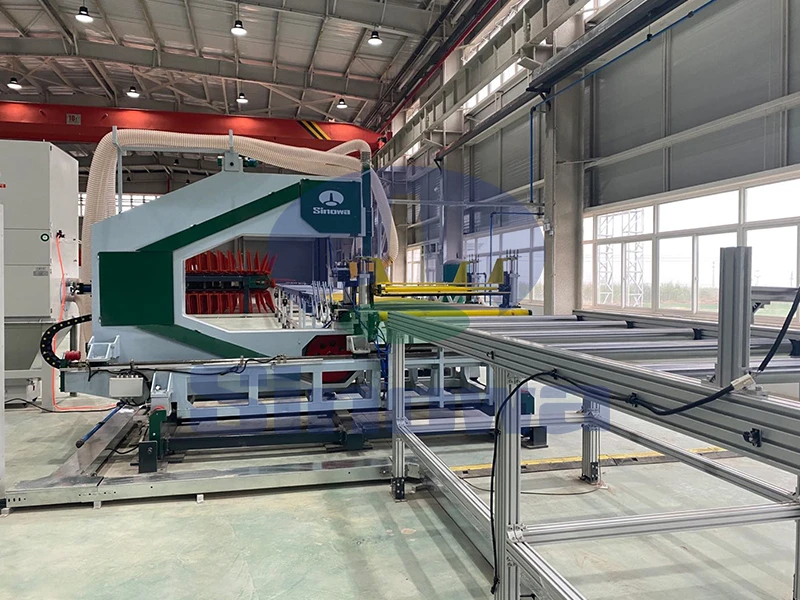
The unstable pouring speed of a PU sandwich panel production line primarily stems from abnormal conditions of the material pumping system, which serves as the core power source for quantitative PU material conveying. In long-term continuous production, the gear pumps and hydraulic pumps equipped in the PU sandwich panel production line are prone to internal component wear, such as gear abrasion and seal aging. These subtle mechanical damages will cause inconsistent pump output pressure, making the material delivery volume fluctuate constantly during pouring. In addition, residual PU solid impurities generated by long-term material circulation will adhere to the pump body inner wall and pipeline, partially blocking the material flow channel. Even minor blockages can greatly interfere with the stable material output of the PU sandwich panel production line, resulting in alternating fast and slow pouring speeds that cannot maintain a constant state. Many production enterprises ignore daily pump system maintenance, leading to gradual accumulation of component wear and blockage problems, which eventually trigger obvious pouring speed instability and affect overall production continuity.
Raw material temperature fluctuation is another key factor inducing unstable pouring speed in the PU sandwich panel production machine. PU pouring materials are highly sensitive to temperature changes, and slight temperature differences will directly alter material viscosity and fluidity. When the ambient temperature or raw material storage temperature drops, PU materials will become more viscous, increasing the flow resistance in pipelines and nozzles of the PU sandwich panel production line. Under the same pump power, the increased resistance will slow down the pouring speed significantly. On the contrary, excessive temperature will reduce material viscosity sharply, making the material flow too fast and causing instantaneous pouring surge. Most production workshops lack constant-temperature material storage and preheating devices, leading to frequent temperature changes of raw materials with environmental shifts. Unregulated material temperature makes the fluid state of PU materials unstable throughout the pouring process, resulting in irregular fluctuations of pouring speed and further causing uneven foaming density of sandwich panels.
Pipeline and filter blockage failures are frequent hidden dangers of pouring speed instability in the PU sandwich panel line. The PU materials used in production contain trace fine particles and impurities, which will gradually deposit on the inner wall of conveying pipelines and filter screens after long-term cyclic operation. As the deposition volume increases, the effective flow area of the pipeline continues to shrink, and the filter screen will be partially blocked. This situation leads to unstable material flow in the conveying link of the PU sandwich panel production line: the initial pouring stage has unobstructed flow with normal speed, while the later stage suffers blocked flow and reduced speed. Moreover, partial pipeline bending and extrusion caused by equipment vibration will also generate local flow resistance differences. These cumulative pipeline problems cannot be eliminated by conventional simple debugging, and long-term neglect will lead to increasingly severe pouring speed fluctuation, bringing frequent quality defects to finished sandwich panels.
Improper pressure parameter setting and control system deviation will directly cause pouring speed disorder in the PU sandwich panel production machinery. The pouring speed of the PU sandwich panel production line is automatically matched and adjusted by the intelligent control system according to the set pressure and flow parameters. If the system pressure threshold is set too low or the flow calibration data is inaccurate, the equipment will fail to maintain stable power output during pouring. In addition, long-term operation will cause drift of internal sensors and controllers of the equipment, resulting in delayed or wrong feedback of flow and pressure signals. When the control system cannot accurately capture the real-time material flow state, it will make frequent misadjustments to pump operating power, leading to sudden changes in pouring speed. Many operators adopt empirical parameter settings without regular professional calibration of the control system, making parameter deviation a persistent cause of unstable pouring speed in daily production.
Air entrainment in the material conveying system is an easily overlooked cause of unstable pouring speed in the PU sandwich panel machine. Loose joints of feeding pipelines, aging sealing rings of material tanks, and incomplete exhaust of the system will lead to air entering the closed conveying pipeline of the PU sandwich panel production line. Mixed air will form bubbles of different sizes in PU materials, which will occupy part of the pipeline flow space during material transportation. When bubbles pass through the pouring nozzle, they will cause instantaneous interruption or surge of material flow. This phenomenon makes the pouring speed present irregular jitter changes, unable to maintain uniform and continuous discharging. Meanwhile, air bubbles will also affect the mixing uniformity of PU materials, not only disrupting pouring stability but also causing hollow holes and uneven foaming inside the sandwich panel, reducing the structural strength and insulation performance of finished products.
Mismatched coordination between line running speed and pouring system is an important external factor of pouring speed instability in the PU sandwich panel production line. The automated production of the PU sandwich panel production line requires precise synchronization between the conveyor line moving speed and the PU material pouring speed to ensure uniform material distribution. If the conveyor line speed is adjusted arbitrarily during production without matching pouring parameter optimization, the original stable pouring rhythm will be broken. For example, accelerated line speed without synchronous increased pouring flow will lead to slow relative pouring speed and insufficient material coverage, while decelerated line speed with unchanged pouring flow will cause excessive local material accumulation. In addition, unstable conveyor line operation caused by transmission component wear will also drive the overall production rhythm to fluctuate, indirectly interfering with the stable operation of the pouring system and resulting in inconsistent actual pouring speed.
Nozzle clogging and abnormal wear will directly affect the pouring stability of the PU sandwich panel production line. The pouring nozzle is the final outlet of PU materials in the PU sandwich panel production line, and its aperture smoothness and integrity determine the uniformity of material discharging. After long-term production, residual cured PU foam will accumulate on the nozzle inner wall, narrowing the effective discharge aperture and causing partial blockage. This situation will slow down the pouring speed and make the discharging volume uneven. At the same time, long-term material scouring will cause eccentric wear and deformation of the nozzle, leading to unbalanced material outflow direction and flow rate. Many production teams only clean the nozzle regularly but ignore the inspection of wear and deformation, resulting in latent nozzle problems that continuously affect pouring speed stability and reduce the yield of high-quality sandwich panels.
Irregular manual operation and insufficient daily maintenance will aggravate the pouring speed instability of the PU sandwich panel manufacturing line. In the daily operation of the PU sandwich panel production line, non-standard operations such as random start-stop of equipment, sudden adjustment of material proportion, and untimely material replenishment will interfere with the stable operating state of the pouring system. Frequent start-stop operations will cause repeated impact on the pump body and pipeline pressure, damaging the stable flow balance of materials. In addition, incomplete daily maintenance work, including neglected lubrication of transmission parts, untimely cleaning of filter impurities, and missing parameter calibration, will lead to continuous accumulation of minor equipment faults. These human factors will gradually amplify the pouring speed fluctuation problem, making the unstable situation more frequent and difficult to adjust in subsequent production.
Material proportion imbalance will indirectly induce pouring speed fluctuation in the PU sandwich panel machinery. The PU materials used for sandwich panel production are composed of multiple components with strict proportion requirements. When the feeding proportion of each component deviates during the operation of the PU sandwich panel production line, the overall fluidity and reaction activity of the mixed materials will change abnormally. Unbalanced proportion will make the mixed materials produce subtle pre-reaction in the conveying pipeline, forming tiny gel particles that increase material flow resistance. The changed fluidity and sporadic gel particles will interfere with the stable material conveying, resulting in fluctuating pouring speed. Moreover, long-term proportion deviation will also accelerate pipeline and nozzle blockage, forming a vicious cycle and further worsening the unstable pouring problem, while also affecting the bonding and heat preservation performance of finished panels.
Timely troubleshooting and standardized maintenance are the fundamental solutions to unstable pouring speed of the PU sandwich panel production line. Enterprises need to establish a complete equipment maintenance mechanism for the PU sandwich panel production line, including regular inspection and replacement of worn pump body parts, thorough cleaning of pipelines and filters, and precise calibration of control system parameters. Meanwhile, it is necessary to equip constant-temperature storage facilities for PU materials to stabilize material fluidity, strengthen the sealing inspection of conveying systems to avoid air entrainment, and standardize operator operation processes. Through systematic equipment maintenance, standardized material management and scientific operation control, the pouring system can maintain a stable operating state, effectively eliminate pouring speed fluctuation faults, and ensure the stable production of high-quality PU sandwich panels.
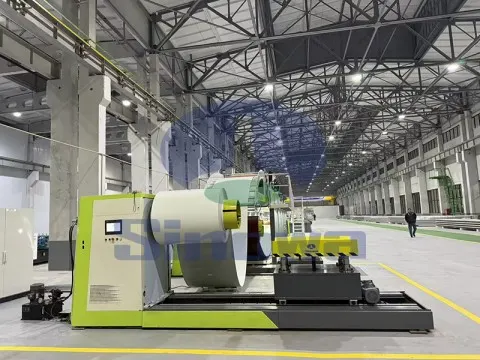
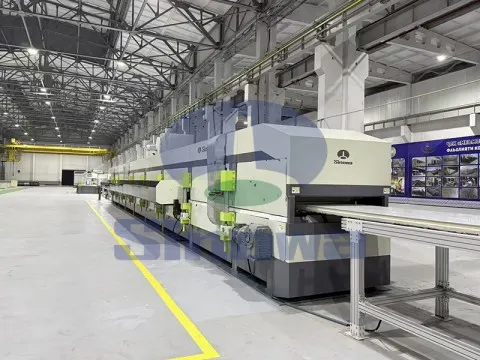
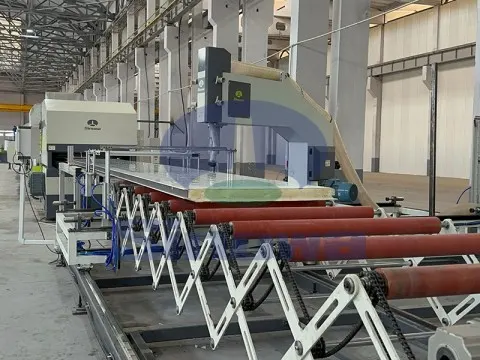
Gallery of PU Sandwich Panel Production Line
Tags: pu sandwich panel production line, pu sandwich panel production line manufacturer, pu sandwich panel production line supplier, china pu sandwich panel production line, pu sandwich panel production line for sale
-
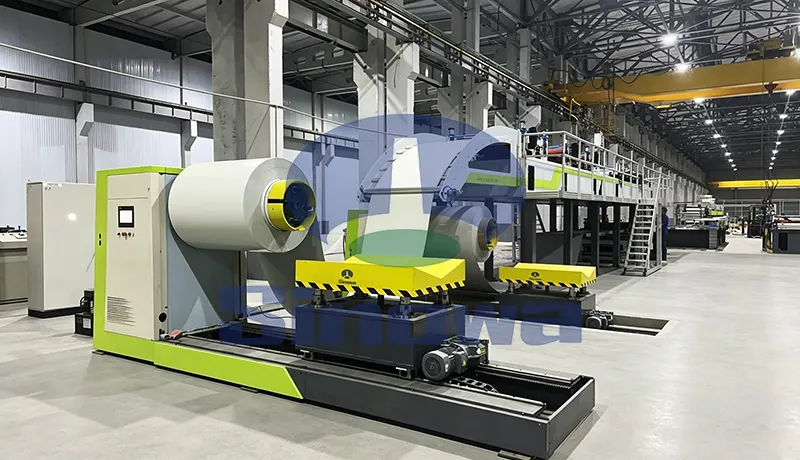
The PU sandwich panel line is a core production setup for making high-performance building insulation panels. This professional PU sandwich panel production line features automated operation to streamline the whole manufacturing process efficiently. Every component of the polyurethane sandwich panel line is precisely calibrated to ensure consistent panel thickness and structural stability. A well-maintained polyurethane sandwich panel production line can greatly boost production efficiency while reducing manual operation errors. The continuous PU sandwich panel line adapts to diverse production demands for different panel sizes and surface styles. With advanced molding technology, the PIR sandwich panel line produces panels with excellent heat preservation and sound insulation properties. Stable running of the PIR sandwich panel production line guarantees reliable product quality for various construction and industrial application scenarios.
-
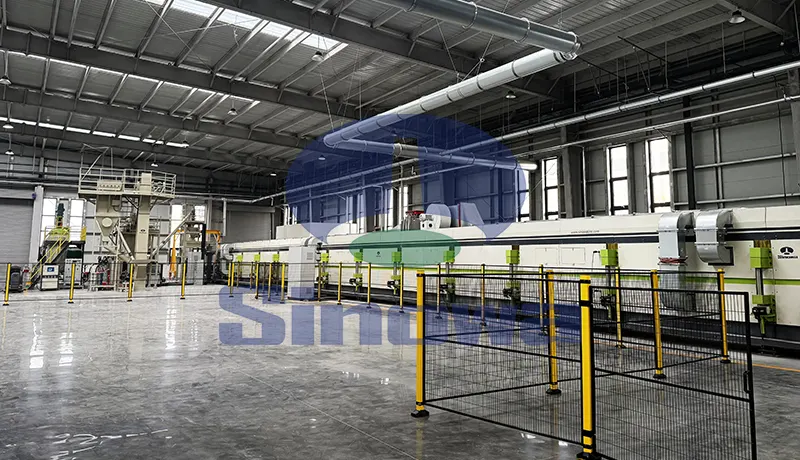
A phenolic insulation board production line serves as the core equipment for manufacturing high-performance thermal insulation building materials. This phenolic insulation panel production line integrates material mixing, foaming, molding and cutting processes to ensure continuous and stable production efficiency. Every operational link of the insulation board production line is precisely calibrated to produce uniform and durable insulation boards. The automated design of the insulation panel production line effectively reduces manual intervention and improves product consistency. Proper maintenance of the phenolic board production line can greatly extend its service life and maintain steady production output. With optimized structural design, the phenolic panel production line adapts to various production demands and delivers high-quality finished products for thermal insulation engineering applications.
-
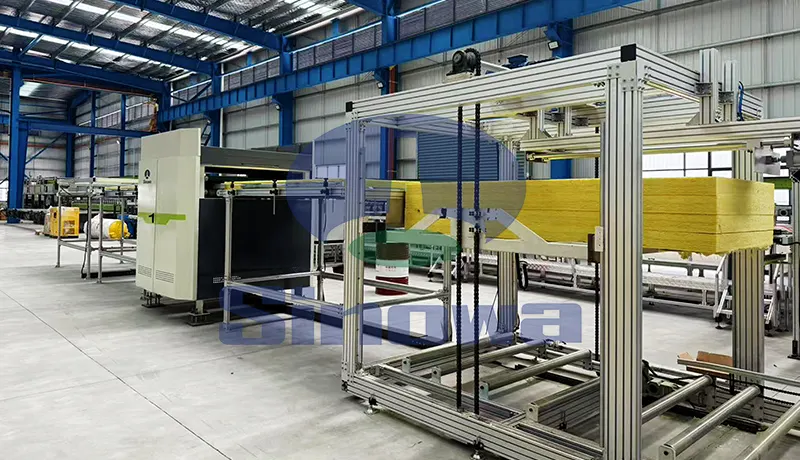
A professional rockwool sandwich panel line serves as the core equipment for producing high-performance building panels. This rockwool sandwich panel production line integrates feeding, laminating and forming processes to ensure stable and efficient production. The well-structured rock wool sandwich panel line can process raw rockwool materials into panels with excellent thermal and sound insulation properties. Operators can adjust the running parameters of the rock wool sandwich panel production line to manufacture panels of different thicknesses and specifications. The automated design of the mineral wool sandwich panel production line greatly reduces manual operation errors and improves product consistency. Regular maintenance of the mineral wool sandwich panel line is essential to sustain long-term operational efficiency and guarantee qualified finished panels for diverse construction applications.