How To Solve Uneven Foaming Density On Polyurethane Sandwich Panel Production Line?
Publication Date: Sep 30, 2026
Uneven foaming density is a common and disruptive defect in polyurethane sandwich panel production.
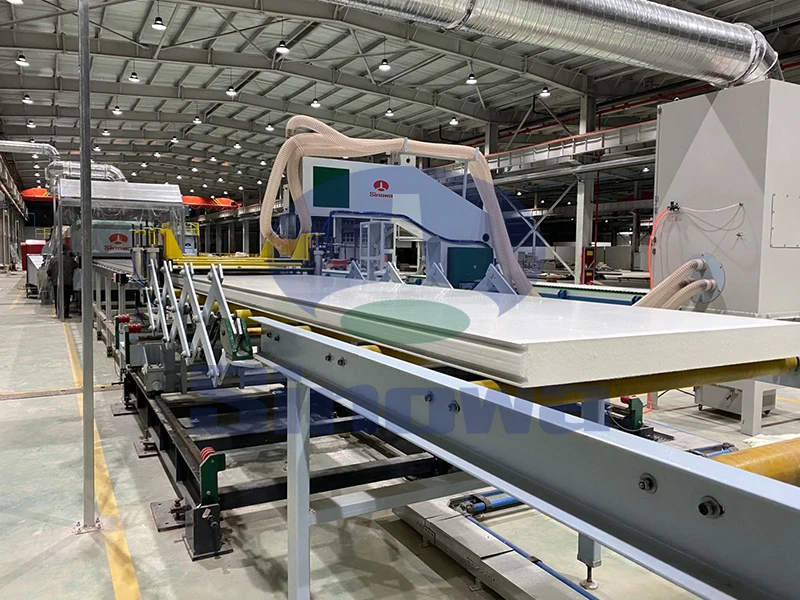
Uneven foaming density manifests as inconsistent hardness, weight, and cellular structure across single polyurethane sandwich panels and batch products, severely undermining the structural stability and thermal insulation performance of finished panels. On the polyurethane sandwich panel production line, this defect mainly appears as overly dense edge foam, loose central foam, localized hard spots, or hollow soft areas, which greatly increases product rejection rates and restricts continuous and efficient production operations. Most density unevenness issues do not stem from single-factor errors but the superposition of subtle deviations in raw material matching, mechanical operation, and production environment. Many manufacturers only conduct superficial adjustments when facing such problems, resulting in recurring defects and unstable production quality. To fundamentally resolve this issue, it is essential to systematically sort out all influencing links of foaming molding on the polyurethane sandwich panel production line, locate deep-seated causes, and implement standardized and precise adjustment measures to achieve uniform and stable foam density for long-term production.
Unstable raw material formulation and poor material uniformity are the primary inducements of uneven foaming density in polyurethane foam products. The foaming reaction of polyurethane sandwich panels relies on the precise matching of polyol, isocyanate, blowing agents, and auxiliary catalysts, and any deviation in proportion will directly break the balance of foaming and gelling reactions. In actual production, slight fluctuations in the feeding ratio of core raw materials often occur due to inaccurate feeding equipment calibration or unstable pump delivery volume. Excessive isocyanate will cause partial excessive cross-linking of the foam matrix, forming dense hard areas, while insufficient blowing agent dosage will reduce gas generation during the reaction, leading to incomplete local foam expansion and overly high density. In addition, uneven mixing of auxiliary materials such as catalysts and surfactants is also a key factor. If surfactants cannot be evenly dispersed in the raw material system, they fail to stabilize tiny foam cells, resulting in cell merging and collapse, which creates alternating dense and loose areas inside the foam. Raw material temperature inconsistency also exacerbates density differences; raw materials with fluctuating temperatures have different reaction activity rates, making the foaming reaction asynchronous on the polyurethane sandwich panel production line and finally forming uneven density distribution.
Defective mixing system operation is a critical mechanical cause of uneven foaming density in production. The mixing station is the core component of the polyurethane sandwich panel production line responsible for blending raw materials, and its mixing uniformity directly determines the consistency of the subsequent foaming reaction. Long-term operation will cause wear on mixing impellers and nozzle blockage by residual cured materials, which reduces the mixing efficiency of raw materials and leads to localized uneven concentration of the mixed slurry. When the mixed raw material slurry enters the panel molding area with inconsistent component distribution, some areas have sufficient reaction components for full foaming, while others lack effective raw material matching, resulting in obvious density differences. Moreover, unreasonable mixing pressure and speed settings will also affect the mixing effect. Excessively high mixing speed leads to excessive air entrainment in the slurry, causing irregular bubble distribution and foam cell collapse during molding; excessively low speed cannot fully disperse raw material components, leaving local material agglomeration. In addition, untimely cleaning of the mixing cavity will lead to residual old materials mixing with new raw materials, interfering with the normal foaming reaction and forming abnormal density areas on the finished sandwich panels.
Unstable production temperature and humidity environment greatly interfere with the foaming molding process of polyurethane sandwich panels. Polyurethane foaming is a temperature-sensitive chemical reaction, and ambient temperature directly affects the reaction rate of raw materials and the expansion state of foam cells. On the polyurethane sandwich panel production line, low workshop temperature will increase the viscosity of the mixed raw material slurry, slow down the foaming reaction speed, and restrict the free expansion of foam, making the overall foam dense and partially uneven. When the temperature is too high, the surface of the foam slurry skins rapidly, while the internal foaming reaction is not completed, resulting in unbalanced internal and external expansion force, local cell rupture, and inconsistent density. Workshop humidity is also an unignorable factor; excessive air moisture will react with isocyanate, generating extra gas and causing irregular foam expansion, forming loose low-density areas, while dry environments will accelerate the volatilization of blowing agents, leading to insufficient local foaming and increased density. Continuous production requires a stable ambient environment, and frequent temperature and humidity fluctuations will make the foaming reaction state unstable, resulting in persistent uneven density defects in batch products.
Unreasonable conveyor and molding pressure parameters will cause physical foaming density differences during panel molding. In the continuous production process of the polyurethane sandwich panel production line, the conveyor belt speed and molding pressure determine the molding thickness and expansion space of the foam layer. If the conveyor speed is unstable, the residence time of the foam slurry in the molding cavity will fluctuate. Slower speed leads to excessive foam expansion and low local density, while faster speed results in incomplete foaming reaction and overly dense foam structure. Molding pressure deviation is more likely to cause regional density differences. Excessive edge sealing pressure squeezes the unformed foam at the panel edges, compressing the foam cell structure before it matures, forming high-density edge areas, while the central foam is less squeezed and has low density, creating obvious edge-center density gaps. In addition, uneven pressure distribution of the upper and lower molding plates will lead to inconsistent compression degrees of different parts of the panel surface, further aggravating the uneven foaming density and affecting the flatness and structural uniformity of finished panels.
Raw material quality fluctuation and improper storage management lay hidden dangers for uneven foaming density. The quality stability of polyurethane raw materials is the foundation of uniform foaming molding, and raw materials with inconsistent activity and purity will lead to completely different foaming effects even with the same formula and process parameters. Some raw materials with insufficient activity require longer reaction time and lower expansion degree, forming dense foam, while high-activity raw materials react violently with excessive expansion, resulting in loose foam structures. Improper raw material storage will also deteriorate performance: long-term exposure to air causes raw material moisture absorption and oxidation, changing the original reaction characteristics; mixed storage of different batches of raw materials leads to inconsistent overall activity of the used materials. In the daily operation of the polyurethane sandwich panel production line, many production teams ignore batch difference detection of raw materials and directly use new and old batches of materials mixed, which makes the foaming reaction state unable to be unified, and finally presents irregular uneven density problems in finished panels.
Precise formula calibration and standardized raw material management are the core measures to solve uneven foaming density. First, production personnel need to regularly calibrate the raw material feeding system of the polyurethane sandwich panel production line to ensure the accurate proportion of polyol, isocyanate, blowing agents, and catalysts, eliminating density deviations caused by feeding errors. According to the ambient temperature changes in the workshop, appropriately adjust the dosage of catalysts and blowing agents to balance the foaming and gelling reaction speed, avoiding asynchronous reaction caused by temperature fluctuation. It is necessary to strictly control the consistency of raw material temperature before feeding, preheat or insulate raw materials to keep their temperature within a stable range, ensuring uniform reaction activity of all raw materials. Meanwhile, standardize raw material storage rules, classify and store different batches of materials, strictly detect the activity and moisture content of incoming materials, and eliminate unqualified raw materials to avoid performance fluctuations affecting foaming uniformity. Regularly test the formula adaptability, fine-tune the auxiliary material ratio according to actual production conditions, and maintain the optimal foaming reaction state.
Regular equipment maintenance and parameter optimization effectively improve foaming mixing uniformity. The mixing system of the polyurethane sandwich panel production line needs daily inspection and regular maintenance: clean the mixing nozzle and cavity before and after production every day to prevent residual material blockage and old material mixing; regularly check the wear degree of mixing impellers and replace worn parts in time to ensure full and uniform raw material mixing. Optimize mixing process parameters according to production rhythm, set scientific mixing speed and pressure, avoid excessive air entrainment or insufficient mixing, and ensure the uniform distribution of all components in the mixed slurry. For the feeding pump system, conduct regular calibration and debugging to stabilize the feeding flow rate and pressure, avoid intermittent feeding and flow fluctuation, and ensure the continuity and stability of raw material supply. In addition, regularly check the operating state of the conveyor system to keep the transmission speed stable, eliminate speed jitter, and ensure consistent foaming time of the foam slurry in the molding cavity.
Stabilizing production environment and optimizing molding process parameters eliminate physical density differences. Build a constant temperature and humidity production environment for the polyurethane sandwich panel production line, configure professional temperature and humidity adjustment equipment, control the workshop temperature and humidity within a stable range, reduce the interference of environmental changes on the foaming reaction, and ensure synchronous and consistent foam expansion and curing. Optimize the molding pressure system, adjust the pressure balance of the upper and lower molding plates and edge sealing components, eliminate excessive edge squeezing pressure, make each position of the panel bear uniform molding pressure, and avoid edge high-density defects caused by uneven pressure. According to the target thickness of finished panels, match the optimal conveyor speed and molding gap to ensure that the foam has sufficient and stable expansion space and curing time, so that the internal cell structure of the foam is uniform and dense. Establish real-time parameter monitoring mechanism, track the changes of temperature, pressure, and speed during production, and adjust parameters timely once slight deviations are found to prevent cumulative defects.
Perfect daily quality inspection and standardized operation management consolidate the effect of uniform foaming production. Formulate a complete production operation specification for the polyurethane sandwich panel production line, standardize the operation steps of feeding, mixing, molding, and curing, and avoid uneven foaming caused by human operation errors. Strengthen the skill training of production personnel, enable operators to master the judgment methods of foaming density defects and parameter adjustment skills, and deal with abnormal situations in production timely. Arrange special personnel to conduct real-time sampling inspection of finished panels, detect the density of different parts of panels regularly, track the density change rule, and feed back abnormal data to the process team for parameter optimization and adjustment. Establish production defect records, summarize the causes and solutions of uneven density problems, form a mature troubleshooting mechanism, and avoid repeated occurrence of similar defects. Standardized daily management can effectively stabilize the long-term production quality, ensure that the foam density of each batch of polyurethane sandwich panels is uniform and stable, and improve the overall yield and production efficiency of products.
Gallery of Polyurethane Sandwich Panel Production Line
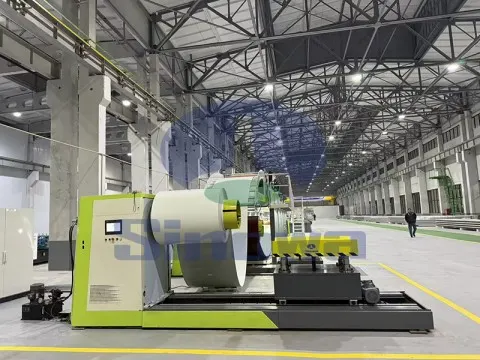
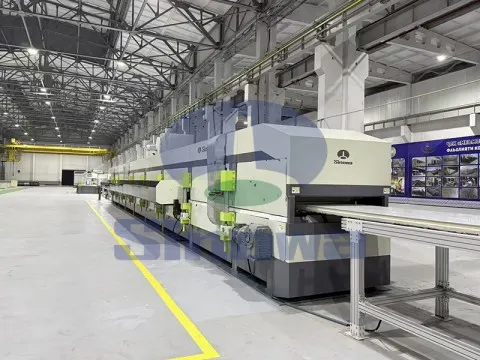
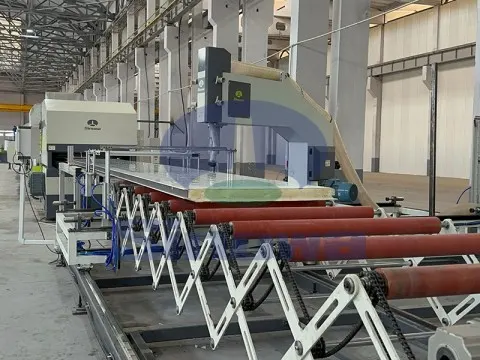
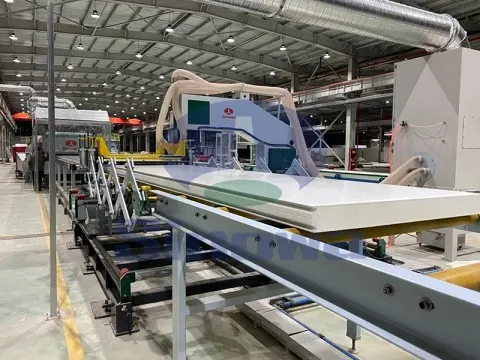
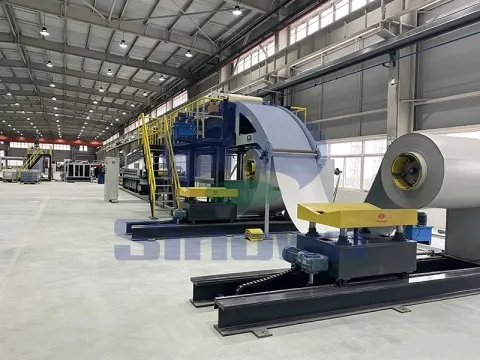
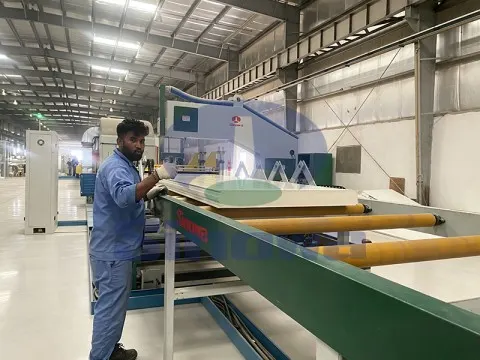
Tags: polyurethane sandwich panel production line, polyurethane sandwich panel production line manufacturer, polyurethane sandwich panel production line supplier, china polyurethane sandwich panel production line, polyurethane sandwich panel production line for sale
-
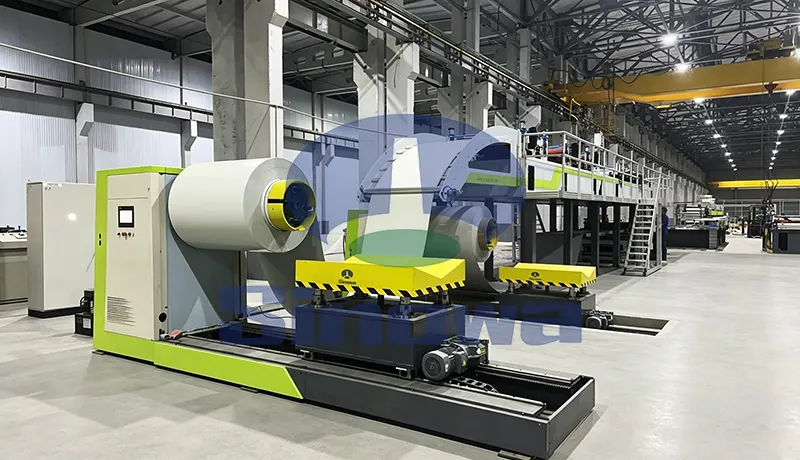
The PU sandwich panel line is a core production setup for making high-performance building insulation panels. This professional PU sandwich panel production line features automated operation to streamline the whole manufacturing process efficiently. Every component of the polyurethane sandwich panel line is precisely calibrated to ensure consistent panel thickness and structural stability. A well-maintained polyurethane sandwich panel production line can greatly boost production efficiency while reducing manual operation errors. The continuous PU sandwich panel line adapts to diverse production demands for different panel sizes and surface styles. With advanced molding technology, the PIR sandwich panel line produces panels with excellent heat preservation and sound insulation properties. Stable running of the PIR sandwich panel production line guarantees reliable product quality for various construction and industrial application scenarios.
-
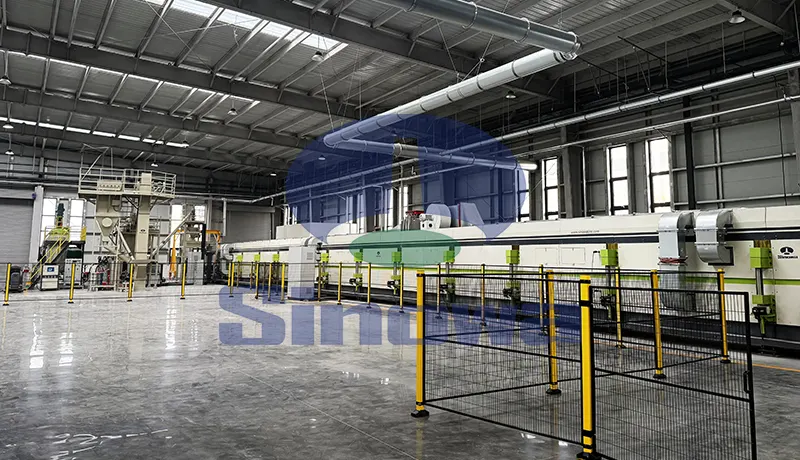
A phenolic insulation board production line serves as the core equipment for manufacturing high-performance thermal insulation building materials. This phenolic insulation panel production line integrates material mixing, foaming, molding and cutting processes to ensure continuous and stable production efficiency. Every operational link of the insulation board production line is precisely calibrated to produce uniform and durable insulation boards. The automated design of the insulation panel production line effectively reduces manual intervention and improves product consistency. Proper maintenance of the phenolic board production line can greatly extend its service life and maintain steady production output. With optimized structural design, the phenolic panel production line adapts to various production demands and delivers high-quality finished products for thermal insulation engineering applications.
-
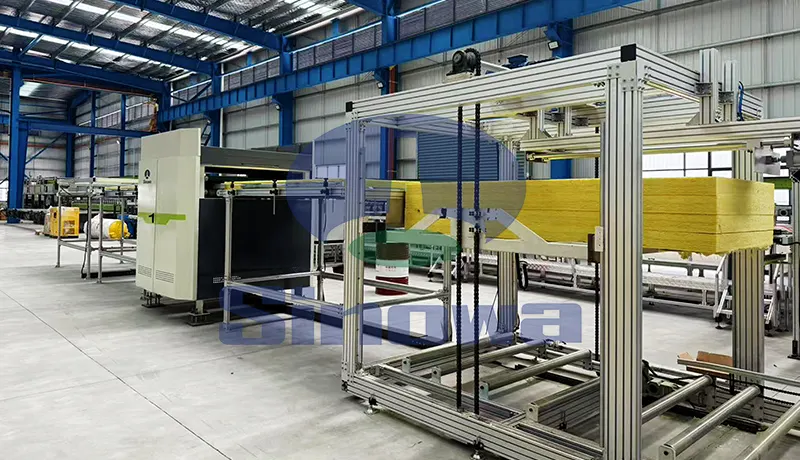
A professional rockwool sandwich panel line serves as the core equipment for producing high-performance building panels. This rockwool sandwich panel production line integrates feeding, laminating and forming processes to ensure stable and efficient production. The well-structured rock wool sandwich panel line can process raw rockwool materials into panels with excellent thermal and sound insulation properties. Operators can adjust the running parameters of the rock wool sandwich panel production line to manufacture panels of different thicknesses and specifications. The automated design of the mineral wool sandwich panel production line greatly reduces manual operation errors and improves product consistency. Regular maintenance of the mineral wool sandwich panel line is essential to sustain long-term operational efficiency and guarantee qualified finished panels for diverse construction applications.