Why Does The Polyurethane Sandwich Panel Production Line Produce Delaminated Panels?
Publication Date: Sep 30, 2026
Polyurethane sandwich panel delamination, the separation between outer facing sheets and PU foam cores, is a common production defect.
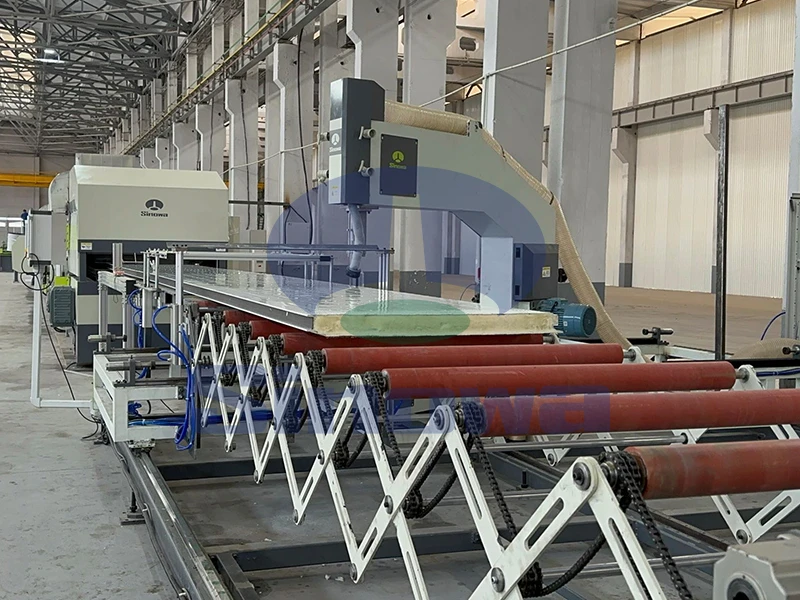
Improper raw material proportioning is one of the most fundamental causes of delamination in polyurethane sandwich panels during production. The synthesis and bonding performance of polyurethane foam rely on the precise stoichiometric ratio between isocyanate and polyol components, and any deviation from the optimal mixing proportion will directly damage the interfacial bonding effect. When the isocyanate content is insufficient, the cross-linking reaction of the polyurethane system cannot be fully completed, resulting in low foam density, poor structural compactness, and extremely weak adhesion between the foam core and the panel facings. In contrast, excessive isocyanate will cause residual active components inside the foam, which will gradually react with moisture in the air after panel forming, producing tiny bubbles at the bonding interface and slowly separating the facings from the core layer. In continuous production lines, long-term operation of dosing equipment may cause minor calibration drift, leading to subtle proportion deviations that are difficult to detect in real time. These tiny errors accumulate in mass production, forming widespread local delamination defects. Meanwhile, unstable activity of raw materials caused by improper storage will also affect the mixing reaction effect. Raw materials exposed to humid environments will absorb moisture in advance, which destroys the original reaction balance during foaming, reduces interfacial adhesion, and ultimately induces delamination problems in finished panels.
Abnormal laminating pressure and unstable equipment operation are important mechanical causes of sandwich panel delamination. The continuous laminating process needs uniform and stable pressure to ensure that the newly foamed polyurethane core is closely attached to the upper and lower facings and forms a tight composite structure. Insufficient laminating pressure will lead to loose fitting between the foam and facings, failing to eliminate tiny gaps at the bonding interface. These gaps become weak points for interface separation, and even minor external stress will trigger delamination. Excessively high pressure is also harmful, as it will squeeze the uncured foam excessively, destroy the uniform foaming structure, cause local foam density distortion, and generate internal residual stress inside the panel. After the panel is formed and cooled, the residual stress will be gradually released, pulling the bonding interface apart and causing delamination. In addition, the pressure uniformity of the laminating equipment is crucial. Long-term operation will cause wear of the laminating belt, uneven tension of the transmission system, and deviation of the pressure roller gap, resulting in inconsistent pressure on different areas of the panel surface. Local under-pressure or over-pressure areas will form unstable bonding areas. Meanwhile, the asynchronous operating speed of the front and rear conveyor equipment will cause tensile or shear stress on the uncured composite panel, damaging the initial bonding interface and laying hidden dangers for delamination of finished panels.
Insufficient curing time and unreasonable production line speed matching are common process defects that induce panel delamination. The polyurethane foam needs a certain period of static curing after foaming and laminating to complete the molecular cross-linking reaction and form stable bonding strength. In order to improve production efficiency, many production lines will blindly increase the operating speed, resulting in the panels leaving the laminating and curing area before the foam cross-linking reaction is fully completed. At this time, the bonding strength between the foam core and facings is not up to standard, and the interface is still in a semi-cured unstable state. In the subsequent cutting, stacking and handling processes, slight external force will cause separation of the bonding interface, forming delamination defects. Even if no obvious defects are found in the short term after production, the uncured residual active components inside the foam will continue to react slowly. Affected by environmental temperature and humidity changes during storage and transportation, the insufficiently cured interface will gradually peel off. In addition, the mismatch between line speed and curing temperature will also affect the curing effect. When the line speed increases, the material passing time shortens, and if the curing temperature is not adjusted synchronously, the effective curing time will be further compressed, resulting in a large number of semi-cured panels. Long-term high-speed and non-standard operation will form a batch of delamination defective products, seriously affecting the overall yield of production.
Moisture interference in the production environment and raw materials is a hidden but persistent cause of sandwich panel delamination. Polyurethane raw materials are extremely sensitive to moisture, and moisture will trigger side reactions during the foaming process, destroying the normal cross-linking structure of the foam. Trace moisture mixed in polyol or isocyanate will react with active components to generate carbon dioxide gas, forming tiny closed pores at the bonding interface between foam and facings. These pores isolate the molecular bonding between the two materials, greatly reducing the interface adhesion. Excessive environmental humidity will also cause the surface of the panel facings to absorb moisture and form a water film. The water film reduces the surface energy of the facings, making it difficult for the foaming material to wet the substrate effectively, resulting in weak bonding. In continuous production workshops with poor dehumidification conditions, the humidity fluctuation in the air is obvious, especially in rainy seasons or humid areas. A large amount of water vapor in the air will continuously adhere to the surface of raw materials and semi-finished panels. In addition, unclosed raw material storage containers will cause moisture absorption and deterioration of polyurethane materials. The moisture-induced micro-defects at the bonding interface will not show up immediately after production, but will gradually expand with the extension of storage time, eventually leading to large-area delamination of the panel.
Defects in foaming system parameters and uneven material distribution will directly lead to inconsistent bonding quality and local delamination. The continuous foaming process of polyurethane sandwich panels requires uniform feeding and stable foaming pressure to ensure the uniform density and structural consistency of the foam core. Blockage or uneven discharge of the foaming nozzle will cause unstable material output, resulting in partial lack of material or excessive accumulation of foaming materials on the panel section. The insufficient foaming area has thin foam thickness and low density, and the bonding force with the facings is seriously insufficient, which is prone to delamination. The excessive accumulation area will cause excessive local expansion of the foam, resulting in uneven stress on the bonding interface. Meanwhile, unreasonable setting of foaming pressure will affect the infiltration effect of the material. Too low foaming pressure makes the mixed material unable to fully penetrate the tiny gaps on the facing surface, resulting in mechanical bonding failure; too high pressure will cause the material to splash and separate, destroying the continuity of the bonding layer. In addition, the uneven stirring speed of the raw material mixing system will lead to incomplete mixing of isocyanate and polyol, forming local material segregation. The segregated areas cannot complete effective cross-linking and curing, forming weak bonding zones inside the panel, which will peel off under slight external force and form local delamination defects.
Improper post-production handling and storage management will aggravate potential delamination defects of panels. Many delamination problems that are not obvious when leaving the factory are actually induced or expanded by non-standard post-production operations. The newly produced polyurethane sandwich panels have not completely stabilized their internal structure and bonding strength, and the interface bonding is still in a fragile state. If the panels are cut, trimmed or stacked immediately after leaving the production line, the cutting force and stacking pressure will generate shear and tensile stress on the uncured bonding interface, causing invisible micro-separation. These micro-defects will gradually expand under the influence of external environmental changes, forming obvious delamination over time. In terms of storage, uneven ground of the storage area will cause the stacked panels to be stressed unevenly, resulting in local warping and interface separation. Long-term exposure to high temperature, high humidity or alternating cold and hot environments will cause inconsistent thermal expansion and contraction coefficients between the metal facings and PU foam core. The repeated stretching and extrusion of the two materials will continuously consume the interface bonding force, leading to fatigue failure of the bonding layer and eventual delamination. In addition, improper handling such as violent hoisting and collision during transportation will also damage the bonding interface and induce panel delamination.
Aging and failure of production line equipment will lead to long-term unstable production quality and continuous delamination defects. The long-term continuous operation of polyurethane sandwich panel production lines will cause aging and wear of key equipment components, which will affect the accuracy and stability of the entire production process. The dosing system, which has been used for a long time, will have inaccurate metering due to component wear, resulting in continuous deviation of raw material proportioning and unstable foaming reaction effects. The temperature control system will have slow response and inaccurate temperature sensing due to aging sensors, unable to maintain a constant production temperature, resulting in insufficient or excessive foam curing. The transmission and laminating system will have problems such as loose belts, worn pressure rollers and unstable operating speed after long-term operation, leading to uneven laminating pressure and asynchronous transmission speed, damaging the panel bonding structure. Most importantly, regular equipment maintenance and calibration are often ignored in daily production. Minor equipment faults are not repaired in time, and parameter deviations are not corrected, resulting in defective production conditions existing for a long time. Batch delamination defects will continue to occur, forming a vicious cycle of unstable product quality and seriously affecting production efficiency and product qualification rate.
Unstandardized operational techniques and insufficient staff proficiency are human factors that cannot be ignored for panel delamination defects. The production of polyurethane sandwich panels involves multiple complex parameter adjustments and process operations, which require standardized and professional operation. New or inexperienced operators often fail to accurately adjust production parameters according to environmental changes and raw material states. For example, they cannot timely adjust temperature, pressure and line speed parameters when raw material activity and ambient humidity change, resulting in mismatched process conditions and poor bonding effects. In daily operation, irregular raw material feeding, incomplete equipment debugging before production, and unreasonable parameter adjustment during operation will all affect the foaming and composite quality of panels. In addition, insufficient daily quality inspection awareness will lead to failure in timely detection of early micro-delamination defects and abnormal process parameters. Minor problems in the production process are not corrected in time, which gradually expand into large-area batch delamination defects. Meanwhile, irregular staff operation habits such as random stacking of semi-finished products and disorderly equipment operation will also destroy the unstable bonding structure of panels in the production process, increasing the probability of delamination defects.
Gallery of Polyurethane Sandwich Panel Production Line
Tags: polyurethane sandwich panel production line, polyurethane sandwich panel production line manufacturer, polyurethane sandwich panel production line supplier, china polyurethane sandwich panel production line, polyurethane sandwich panel production line for sale
-
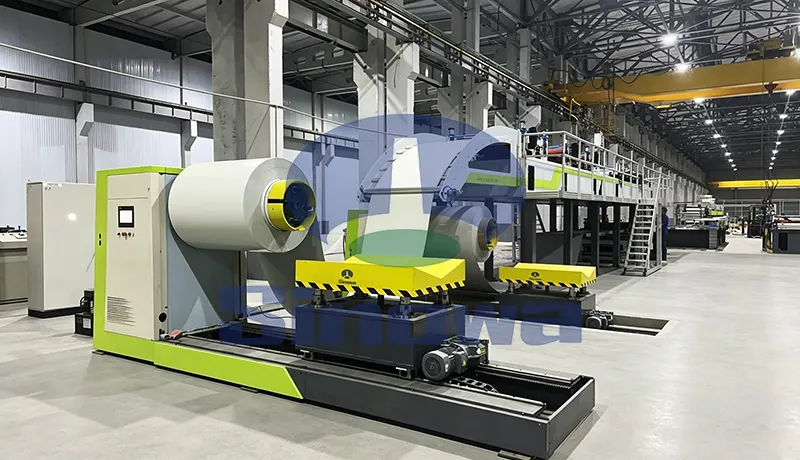
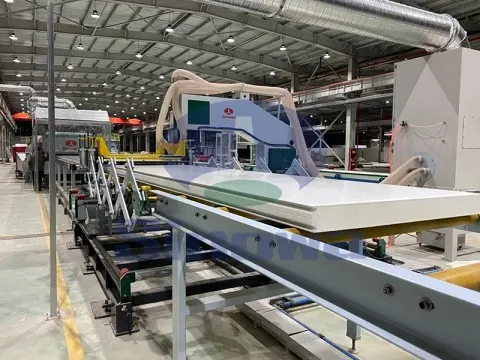
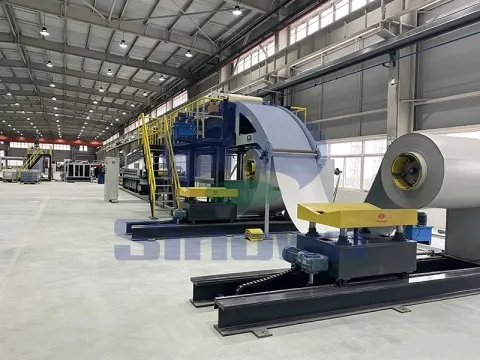
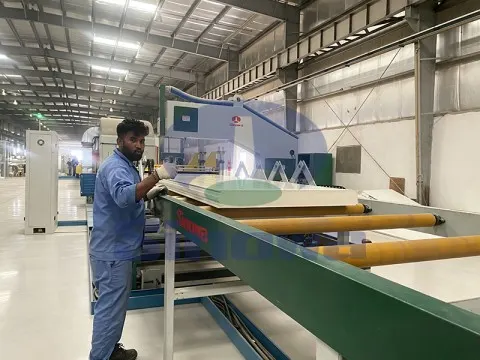
The PU sandwich panel line is a core production setup for making high-performance building insulation panels. This professional PU sandwich panel production line features automated operation to streamline the whole manufacturing process efficiently. Every component of the polyurethane sandwich panel line is precisely calibrated to ensure consistent panel thickness and structural stability. A well-maintained polyurethane sandwich panel production line can greatly boost production efficiency while reducing manual operation errors. The continuous PU sandwich panel line adapts to diverse production demands for different panel sizes and surface styles. With advanced molding technology, the PIR sandwich panel line produces panels with excellent heat preservation and sound insulation properties. Stable running of the PIR sandwich panel production line guarantees reliable product quality for various construction and industrial application scenarios.
-
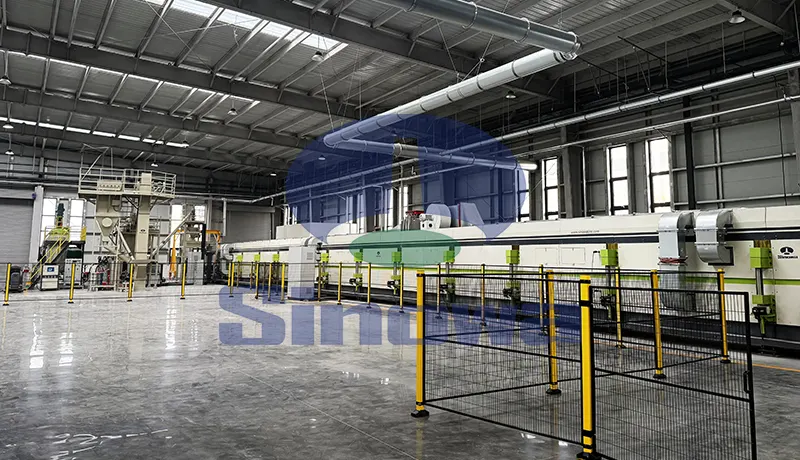
A phenolic insulation board production line serves as the core equipment for manufacturing high-performance thermal insulation building materials. This phenolic insulation panel production line integrates material mixing, foaming, molding and cutting processes to ensure continuous and stable production efficiency. Every operational link of the insulation board production line is precisely calibrated to produce uniform and durable insulation boards. The automated design of the insulation panel production line effectively reduces manual intervention and improves product consistency. Proper maintenance of the phenolic board production line can greatly extend its service life and maintain steady production output. With optimized structural design, the phenolic panel production line adapts to various production demands and delivers high-quality finished products for thermal insulation engineering applications.
-
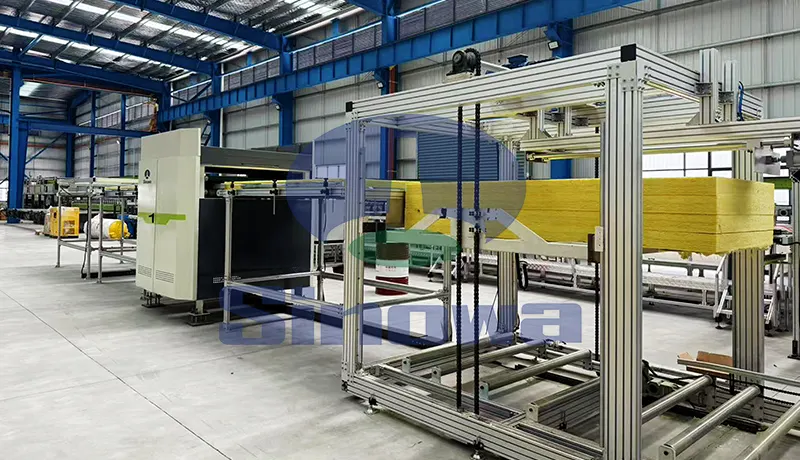
A professional rockwool sandwich panel line serves as the core equipment for producing high-performance building panels. This rockwool sandwich panel production line integrates feeding, laminating and forming processes to ensure stable and efficient production. The well-structured rock wool sandwich panel line can process raw rockwool materials into panels with excellent thermal and sound insulation properties. Operators can adjust the running parameters of the rock wool sandwich panel production line to manufacture panels of different thicknesses and specifications. The automated design of the mineral wool sandwich panel production line greatly reduces manual operation errors and improves product consistency. Regular maintenance of the mineral wool sandwich panel line is essential to sustain long-term operational efficiency and guarantee qualified finished panels for diverse construction applications.