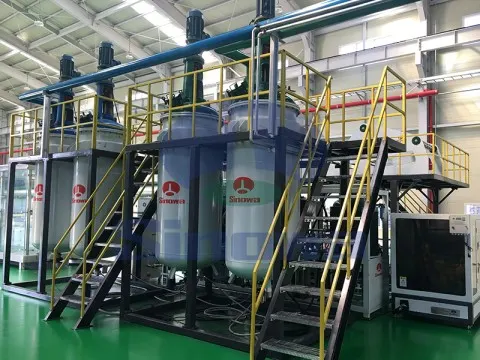
Insulation Sandwich Panel Machinery
Insulation Sandwich Panel Machinery. Fully automatic continuous line for PU, PIR, phenolic, rock wool insulated wall & roof panels. Stable operation, custom solution.
Insulation sandwich panel machinery refers to a full set of automated industrial equipment designed for continuous manufacturing of composite insulation panels, which integrate rigid surface layers and lightweight thermal insulation core materials into a single high-performance building component. This integrated production system streamlines multiple complex manufacturing procedures into a seamless linear workflow, covering raw material unwinding, surface pretreatment, core material filling, gluing, composite pressing, thermal curing, fixed-length cutting, and finished product stacking. Widely adopted in modern construction, cold chain logistics, and industrial enclosure manufacturing, the insulation panel production line stands out for its high production efficiency, stable product consistency, and flexible parameter adjustment capabilities. It eliminates the inhomogeneous structural and thermal performance defects caused by manual semi-automatic production, realizing large-scale, standardized output of insulation panels that balance thermal insulation, structural rigidity, and weather resistance. As the demand for energy-saving building materials continues to rise globally, this specialized insulation board production line has become core supporting equipment for the upgrading of the composite panel manufacturing industry.
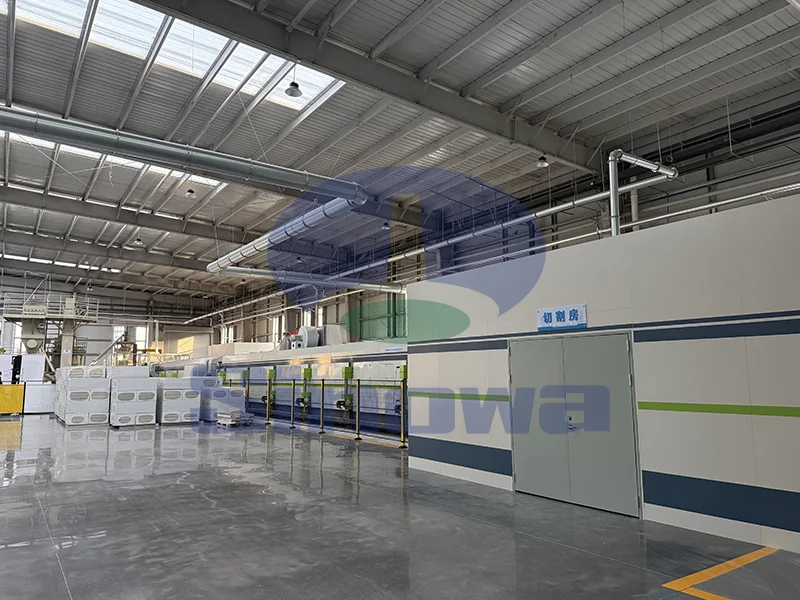
The overall structural design of insulation sandwich panel production machinery follows a modular and integrated layout, with each functional unit closely interconnected to form a synchronized continuous production system. The complete production line consists of multiple independent yet coordinated functional modules, including raw material conveying and unwinding units, surface layer leveling and forming units, core material processing and feeding units, precise gluing systems, composite pressing and molding units, constant-temperature curing units, high-precision cutting units, and automatic finished product handling units. Each module is equipped with independent power transmission and fine-tuning components, and the entire line operates under a unified intelligent control logic to ensure consistent operating speed and process coordination across all links. The linear layout optimizes production space utilization while avoiding material dislocation, layer separation, and dimensional deviation problems that often occur in segmented production. The modular structure also facilitates daily maintenance and partial equipment upgrading, allowing manufacturers to adjust individual functional units according to production demands without overhauling the entire production line, which greatly improves the operational flexibility and service life of the equipment.
Raw material pretreatment and feeding systems serve as the initial core links of insulation sandwich panel production line, laying a solid foundation for subsequent composite molding and stable product quality. For metal surface materials, the equipment is fitted with automatic unwinding and leveling devices that smoothly release coiled raw materials while eliminating surface wrinkles, deformation, and uneven tension generated during coiling and storage. Meanwhile, the surface pretreatment mechanism conducts subtle cleaning and surface activation treatment to remove dust, oil stains, and oxide layers, effectively enhancing the bonding adhesion between the surface layer and core materials. For thermal insulation core materials such as polyurethane, rock wool, and polystyrene, the specialized feeding system realizes quantitative, uniform, and continuous material supply. It precisely controls the feeding volume and distribution density of core materials according to preset production parameters, preventing local material accumulation or shortage. The synchronous speed matching between surface material feeding and core material conveying ensures the overall uniformity of the composite structure, avoiding inconsistent insulation performance and structural strength of finished panels caused by uneven raw material distribution.
Gluing and composite pressing processes are the key functional stages that determine the structural integrity and service durability of sandwich panels, and the mechanical system achieves high-precision and high-stability processing in these links. The automatic gluing unit adopts a uniform spraying or roller coating mode, which can evenly apply adhesive materials on the inner surfaces of upper and lower surface layers and the contact surfaces of core materials. The system intelligently adjusts glue application thickness and density according to different material characteristics and panel specifications, ensuring full coverage of bonding surfaces without excess glue overflow or local glue shortage. After gluing, the materials are immediately sent to the composite pressing unit, which uses a multi-group pressure roller structure to apply uniform and stable pressure on the layered composite materials. The pressure control system maintains constant pressure throughout the pressing process, enabling tight fitting between surface layers and core materials to eliminate internal gaps and hollow layers. This precise pressing technology effectively improves the overall structural compactness of the panel, enhances the bonding firmness between layers, and avoids delamination and cracking failures during the long-term service of finished products.
Thermal curing and constant-temperature shaping systems are essential for stabilizing the structural performance and thermal insulation attributes of finished sandwich panels, constituting the core temperature control module of the entire machinery. After composite pressing, the semi-finished panels enter the closed constant-temperature curing channel, where the insulation sandwich panel equipment creates a stable and uniform temperature environment through circulating heating and temperature intelligent regulation. The continuous and balanced heat distribution promotes the full curing and chemical stabilization of adhesives and foamed core materials, enabling the core material structure to form a dense and uniform thermal insulation layer and ensuring the adhesive reaches optimal bonding strength. The curing system is designed with multi-stage temperature adjustment logic, which can adapt to the curing requirements of different core materials and adhesive formulas, avoiding quality problems such as incomplete curing caused by low temperature or material aging and deformation caused by excessive temperature. Meanwhile, the slow cooling and shaping function after curing fixes the overall structure of the panel, eliminates internal stress generated during pressing and heating, and further improves the flatness and dimensional stability of finished products.
High-precision fixed-length cutting and edge trimming units endow insulation sandwich panel manufacturing machinery with the ability to produce standardized finished products with accurate dimensions. After completing curing and shaping, the continuous long strip of composite panels is transmitted to the cutting unit at a constant synchronous speed. The advanced numerical control cutting system accurately identifies preset length parameters and drives high-speed cutting tools to complete fixed-length cutting in an instant. The cutting mechanism is equipped with anti-deformation auxiliary positioning devices, which can firmly fix the panel during cutting to prevent position deviation and section deformation, ensuring smooth and flat cutting sections without burrs or cracks. In addition, the edge trimming function can automatically trim the uneven edges on both sides of the panel to ensure consistent overall width and neat edge structure. The entire cutting and trimming process operates in full synchronization with the front-end production speed, realizing uninterrupted continuous cutting without pausing the production line. This automated precision processing mode greatly improves the dimensional accuracy and appearance uniformity of finished panels, meeting the standardized assembly requirements of subsequent construction and installation.
Automatic conveying and stacking systems realize the intelligent finishing and efficient collection of finished products, completing the final link of the automated production cycle. After cutting and trimming, qualified finished panels are stably transported to the finished product platform through the multi-stage conveying device with adjustable speed. The conveying system adopts flexible transmission design to avoid scratch, collision and extrusion damage to the panel surface during transportation. The intelligent stacking unit automatically identifies the position and quantity of finished panels, and completes orderly stacking and arrangement according to preset stacking specifications. It can adjust stacking height and arrangement mode according to different panel sizes and production batches, realizing neat and standardized storage of finished products. The whole process replaces traditional manual carrying and stacking, greatly reducing labor investment while avoiding panel damage and placement disorder caused by manual operation. The integrated finishing system effectively improves production efficiency, realizes seamless connection between production and finished product storage, and lays a foundation for rapid subsequent packaging and transportation.
The operational flexibility of insulation sandwich panel making machinery is reflected in its strong adaptability to diverse product specifications and material types, meeting the personalized production needs of different application scenarios. The equipment’s core operating parameters, including panel thickness, width, length, core material density, and glue application volume, can be quickly and accurately adjusted through the central control system. Operators can switch production formulas with simple parameter setting operations to manufacture insulation panels with different thermal insulation performance and structural strength. The machinery is compatible with multiple mainstream insulation core materials, including polyurethane foam, polyisocyanurate, rock wool, and polystyrene, and can match different metal and non-metal surface layer materials. This wide material compatibility enables a single production line to meet the manufacturing demands of panels for architectural enclosure, cold storage insulation, transportation equipment, and industrial purification engineering. The rapid parameter switching function shortens the product model change cycle, avoids long-term equipment shutdown and debugging, and significantly improves the flexible production capacity and market adaptability of manufacturing enterprises.
Intelligent control and automatic synchronization technology are the core advantages of modern insulation sandwich panel production equipment, which promote the realization of high-efficiency and low-consumption production. The entire production line is controlled by a centralized intelligent system, which uniformly monitors and coordinates the operating speed, working status, and parameter indicators of all functional units. The system realizes synchronous linkage of raw material feeding, pressing, curing, cutting, and conveying speeds, effectively avoiding production rhythm disorder and product quality fluctuations caused by asynchronous operation of individual units. Equipped with real-time data monitoring modules, the machinery can automatically collect and analyze key production data such as processing temperature, pressing pressure, running speed, and material consumption during operation. When abnormal parameter fluctuations or potential equipment failures occur, the system will trigger real-time early warning and automatic protection mechanisms to reduce defective product rate and equipment failure loss. The visualized operation interface simplifies the production operation process, reduces the technical threshold for equipment operation, and improves the overall intelligence and controllability of the production process.
Energy-saving performance and operational stability are important design highlights of advanced insulation sandwich panel manufacturing equipment, which help manufacturers reduce production costs and improve production sustainability. In terms of energy consumption control, the equipment adopts optimized heating circulation systems and variable-frequency speed regulation technology. The constant-temperature curing system realizes precise temperature control and heat circulation utilization, reducing ineffective heat loss and improving thermal energy utilization efficiency. The variable-frequency driving devices of each transmission unit automatically adjust operating power according to production load, avoiding long-term high-power idle operation and effectively reducing electric energy consumption. In terms of operational stability, the mechanical structure adopts high-strength wear-resistant materials and precision processing technology, which can maintain stable operating accuracy under long-term continuous working conditions. The optimized transmission and matching structure reduces mechanical vibration and friction loss during operation, lowering equipment wear and failure frequency. Stable and low-energy operation not only reduces the daily operation and maintenance costs of the equipment but also ensures the long-term consistent quality of mass-produced panels, bringing stable economic benefits to production enterprises.
The application value of insulation sandwich panel line spans multiple industrial fields, providing key equipment support for the development of energy-saving and lightweight composite building materials. In the construction industry, the machinery produces high-performance insulation panels widely used in factory workshops, purification workshops, temporary buildings, and building exterior wall insulation systems, providing excellent thermal insulation, sound insulation, and weather resistance for building enclosures. In the cold chain logistics field, the precision composite panels manufactured by the equipment are applied to cold storage walls, roofs, and refrigerated vehicle compartments, relying on their low thermal conductivity to reduce cold air loss and improve the energy-saving effect of cold chain equipment. In addition, the equipment’s flexible production capacity also meets the lightweight and high-strength material demands of industrial equipment enclosures, outdoor facility insulation, and special engineering buildings. By realizing large-scale and standardized production of high-quality insulation panels, the machinery effectively promotes the popularization of energy-saving building materials, accelerates the transformation and upgrading of the composite panel manufacturing industry, and responds to the industry’s development trend of high efficiency, energy conservation, and environmental protection.
The future development trend of insulation sandwich panel manufacturing line focuses on intelligent upgrading, green production, and high-precision customization to adapt to the increasingly diverse market demands and industrial upgrading requirements. With the continuous progress of industrial intelligent technology, the equipment will further realize unmanned intelligent production, including automatic raw material identification, intelligent formula matching, real-time quality self-inspection, and automatic fault diagnosis and repair, which will further reduce manual intervention and improve production precision and efficiency. In terms of green manufacturing, the new generation of machinery will optimize the material utilization rate, reduce adhesive and raw material waste during production, and adopt more environmentally friendly and low-consumption operation modes to realize clean production. In addition, the insulated panel line will develop towards higher customization accuracy, realizing micro-adjustment of panel performance indicators and personalized production of special-shaped panels. These upgrading directions will further expand the application scope of insulation sandwich panels and make the machinery a more core and competitive intelligent equipment in the field of energy-saving building material manufacturing.
Tags: insulation sandwich panel machinery, insulation sandwich panel machinery manufacturer, insulation sandwich panel machinery supplier, china insulation sandwich panel machinery, insulation sandwich panel machinery for sale
Related Informations
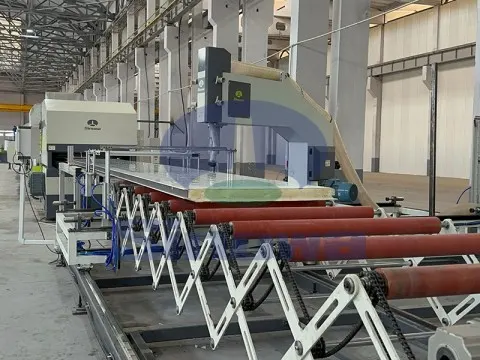
How To Improve Thermal Insulation Panels Performance Of PU Sandwich Panel Production Machine?
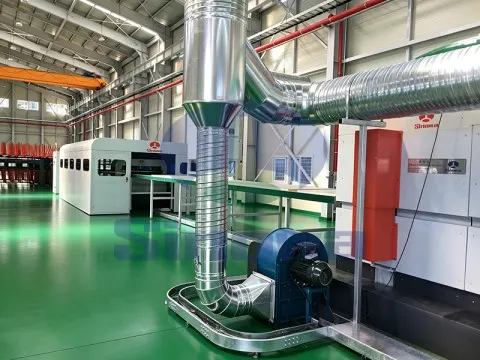
Why Does The Phenolic Insulation Panel Production Line Have Insufficient Curing Degree?