Why Does The Phenolic Insulation Panel Production Line Have Insufficient Curing Degree?
Publication Date: Oct 8, 2026
Insufficient curing of phenolic insulation panels stems from flawed temperature control, improper process parameters, raw material issues, equipment faults and unstable production environments in manufacturing lines.
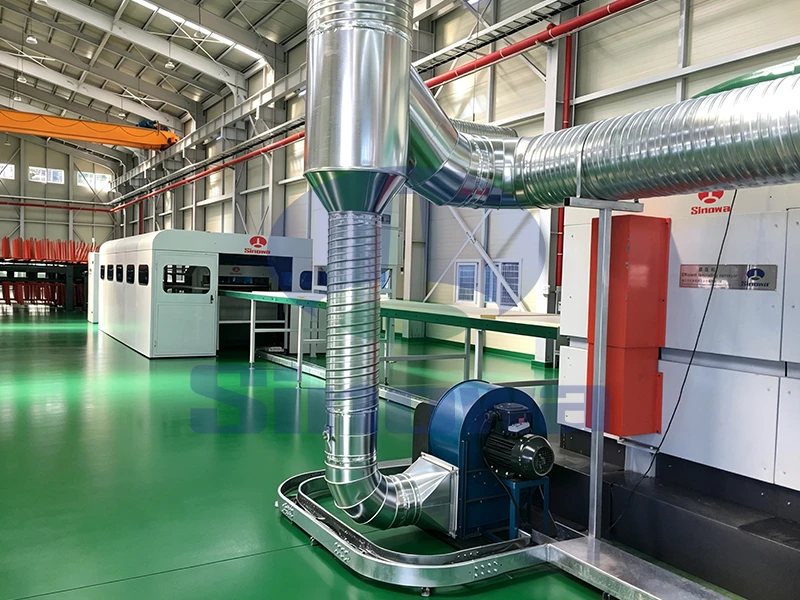
Improper curing temperature setting and unstable thermal control are the most prevalent causes of insufficient curing in phenolic insulation panel production. Phenolic resin relies on continuous and stable thermal input to complete cross-linking reactions, which form the stable molecular structure of finished panels. Many insulation panel production lines fail to maintain consistent oven temperatures due to long-term equipment operation and uncalibrated thermal sensors. Sensors may produce inaccurate temperature readings, leading operators to set lower temperatures than the actual reaction requirement. Even minor temperature deviations can slow down resin cross-linking significantly, leaving partial molecular chains unbonded. Additionally, uneven heat distribution inside curing ovens creates hot and cold zones across panel surfaces. Panels staying in low-temperature areas cannot gain enough heat to finish curing, resulting in inconsistent hardness, poor structural stability and residual sticky surfaces. Long-term operation also causes aging of heating components, reducing thermal output efficiency and further worsening insufficient curing problems in mass production.
Inadequate and unreasonable curing time configuration is another key factor triggering incomplete curing. The curing process of phenolic insulation panels follows a strict time-temperature coupling mechanism, where sufficient duration is essential for thorough molecular cross-linking even with standard temperature levels. In actual production, many manufacturers shorten curing time blindly to boost output efficiency, disrupting the complete reaction cycle of phenolic resin. Thickened insulation panels require longer heat penetration time to ensure inner-layer curing, yet uniform production time settings fail to match thickness changes, leaving inner resin uncured while surface layers appear qualified. Moreover, frequent line speed adjustments in flexible production lead to unstable material residence time in curing equipment. Faster line speeds reduce thermal exposure time, making it impossible for phenolic resin to complete full cross-linking. Unlike surface curing defects caused by temperature issues, time-induced insufficient curing often hides inside panel cores, which is hard to detect through superficial inspection and seriously undermines the long-term service performance of finished products.
Unqualified raw material properties and mismatched ingredient ratios directly hinder full curing of phenolic insulation panels. The curing activity of phenolic resin itself varies with raw material formulation, and subtle changes in resin viscosity, active ingredient content and curing agent activity will affect reaction efficiency. If phenolic resin raw materials are stored for an excessively long time, their active components will gradually volatilize and deactivate, reducing cross-linking reactivity during production. Meanwhile, improper proportioning between resin and curing agent breaks the chemical balance required for curing. Insufficient curing agent cannot provide enough catalytic conditions for molecular cross-linking, while excessive curing agent will dilute resin concentration and hinder effective reaction bonding. In addition, impure auxiliary materials containing moisture and impurities will interfere with thermal reactions, consume partial heat energy and disrupt the continuous curing process. Raw material batch fluctuations without targeted process adjustment will lead to large-area insufficient curing in continuous phenolic board production lines.
Unstable production environment conditions greatly affect the curing effect of phenolic insulation panels. Humidity is the most influential environmental factor in workshop production. High ambient humidity makes raw materials absorb moisture in the air, and the moisture retained in panel blanks will vaporize during heating curing, forming tiny gaps inside the panels and blocking molecular cross-linking. Excessively dry environments also cause problems by leading to rapid surface dehydration of panels, forming a hardened surface layer that prevents internal heat transmission and traps uncured resin inside. Besides, unstable workshop temperature and frequent air circulation interfere with the constant-temperature curing environment of ovens. Cold air intrusion through frequently opened workshop doors or poor equipment sealing reduces local curing temperature, causing inconsistent curing degrees of different batches of products. Long-term unregulated environmental control makes curing reactions always in an unstable state, resulting in persistent insufficient curing defects in production.
Faulty pressing pressure control leads to incomplete curing of phenolic insulation panels in integrated production processes. The pressing and curing stages of phenolic panels are closely linked, and stable pressing pressure ensures tight bonding and uniform reaction of internal resin molecules. In practical operation, hydraulic pressing systems often have uneven pressure output due to oil pressure fluctuation and component wear. Local low-pressure areas appear on panel surfaces, where resin molecules cannot be tightly extruded and cross-linked effectively. Tiny voids formed by insufficient pressure isolate molecular contact, hindering the progress of curing reactions. Moreover, inconsistent pressure holding time fails to lock the curing reaction state in time, causing partial cross-linked molecular structures to rebound and separate after pressure relief. Residual gaps inside finished panels not only reduce curing degree but also lower product density and mechanical strength, bringing hidden dangers to product quality stability.
Equipment aging and daily maintenance deficiencies are latent causes of long-term insufficient curing problems. Core curing equipment such as ovens, heating pipelines and pressing devices will gradually age after long-term continuous operation. Heating pipeline scaling and internal dust accumulation reduce heat conduction efficiency, making actual heat output lower than the set standard. Aging sealing components of curing equipment cause heat leakage, failing to maintain the closed constant-temperature environment required for curing. In addition, residual cured resin debris and foreign matter attached to equipment surfaces will affect the flatness and contact uniformity of panels during processing. These tiny barriers lead to uneven local heat and pressure transmission, forming partial uncured areas on panels. Irregular equipment inspection and incomplete daily maintenance make minor equipment defects accumulate continuously, eventually evolving into large-scale curing insufficient problems in phenolic insulation panel production lines.
Unscientific production operation and parameter adjustment habits exacerbate insufficient curing issues. Many production operators lack systematic process cognition and adopt empirical operation instead of standardized parameter setting. When replacing raw material batches or adjusting panel specifications, they fail to synchronously optimize curing temperature, time and pressure parameters according to material characteristics and product thickness. Blind parameter matching makes the curing process unable to adapt to production changes. In addition, improper blank pretreatment operations affect curing effects. Unclean raw material surface treatment and residual processing impurities will isolate resin cross-linking reactions. Frequent sudden start-stop of production lines also causes repeated temperature and pressure fluctuations in the curing stage, interrupting continuous molecular cross-linking and making the curing reaction incomplete and discontinuous.
Uneven material feeding and blank laying affect the overall curing uniformity of phenolic insulation panels. In continuous phenolic insulation board production lines, automatic feeding system deviations often lead to uneven blank thickness and inconsistent material density in different panel areas. Overly thin local areas heat up rapidly and complete curing in advance, while thick areas have slow heat penetration and cannot obtain sufficient thermal energy for full curing. Irregular manual laying and offset mechanical positioning cause overlapping or gaps between blanks, resulting in inconsistent thermal and pressure bearing conditions of different product parts. Meanwhile, excessive single-batch feeding quantity increases the thermal load of curing equipment, making the equipment unable to provide stable and sufficient heat for all products in a short time. Partial products are in a low-energy reaction state for a long time, forming universal insufficient curing defects.
Improper post-curing treatment processes fail to compensate for incomplete primary curing reactions. The primary curing of phenolic insulation panels in production lines often has residual uncross-linked molecular chains, which require reasonable post-curing conditioning to complete secondary reactions. Many production processes omit or shorten the post-curing stage to save production cycles. Finished panels are stacked and packaged immediately after primary curing, and the residual heat inside cannot support continuous molecular reaction. Uncooled rapid stacking also causes heat accumulation and local damp heat environments, which destroy the initially formed cross-linked structures and aggravate insufficient curing. In addition, unreasonable post-curing temperature and time setting cannot provide mild and stable reaction conditions for residual active molecules, making it impossible to improve curing degree and resulting in poor dimensional stability and easy deformation of finished panels.
Lack of real-time process monitoring and quality correction mechanisms leads to persistent insufficient curing problems in production. Most production lines rely on regular manual sampling inspection instead of real-time monitoring of curing parameters and product states. Minor parameter drifts and local curing defects in the production process cannot be detected and adjusted in a timely manner, resulting in continuous production of unqualified products. The absence of dynamic parameter adjustment mechanisms makes the curing process unable to adapt to subtle changes in raw materials, environment and equipment state. When multiple minor unfavorable factors overlap, the curing degree of products drops significantly. In addition, incomplete defect analysis and summary after quality problems make enterprises fail to form targeted improvement measures, leading to repeated occurrence of insufficient curing defects and affecting the overall qualification rate of phenolic insulation panel production.
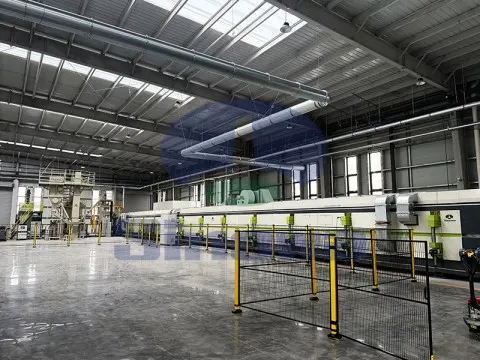
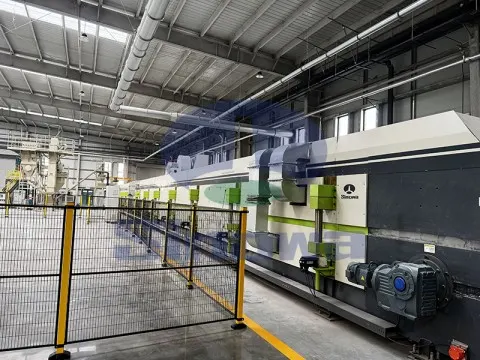
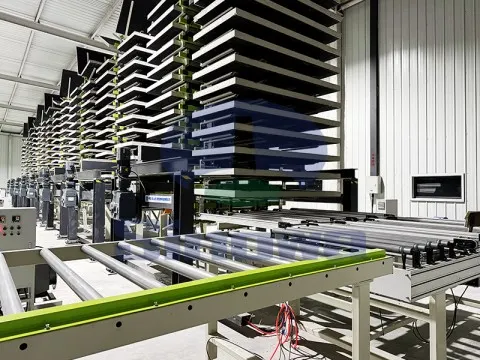
Gallery of Phenolic Insulation Panel Production Line
Tags: phenolic insulation panel production line, phenolic insulation panel production line manufacturer, phenolic insulation panel production line supplier, china phenolic insulation panel production line, phenolic insulation panel production line for sale
-
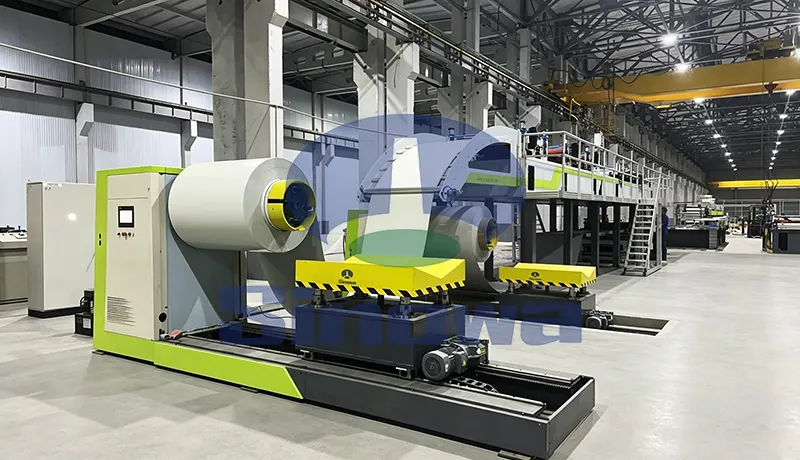
The PU sandwich panel line is a core production setup for making high-performance building insulation panels. This professional PU sandwich panel production line features automated operation to streamline the whole manufacturing process efficiently. Every component of the polyurethane sandwich panel line is precisely calibrated to ensure consistent panel thickness and structural stability. A well-maintained polyurethane sandwich panel production line can greatly boost production efficiency while reducing manual operation errors. The continuous PU sandwich panel line adapts to diverse production demands for different panel sizes and surface styles. With advanced molding technology, the PIR sandwich panel line produces panels with excellent heat preservation and sound insulation properties. Stable running of the PIR sandwich panel production line guarantees reliable product quality for various construction and industrial application scenarios.
-
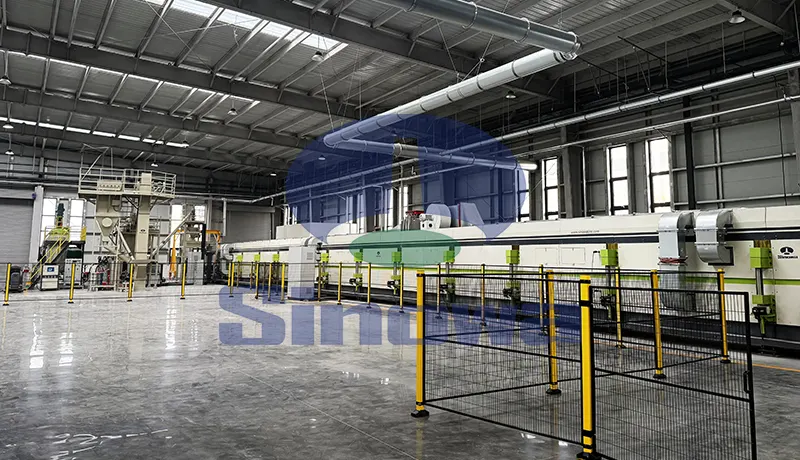
A phenolic insulation board production line serves as the core equipment for manufacturing high-performance thermal insulation building materials. This phenolic insulation panel production line integrates material mixing, foaming, molding and cutting processes to ensure continuous and stable production efficiency. Every operational link of the insulation board production line is precisely calibrated to produce uniform and durable insulation boards. The automated design of the insulation panel production line effectively reduces manual intervention and improves product consistency. Proper maintenance of the phenolic board production line can greatly extend its service life and maintain steady production output. With optimized structural design, the phenolic panel production line adapts to various production demands and delivers high-quality finished products for thermal insulation engineering applications.
-
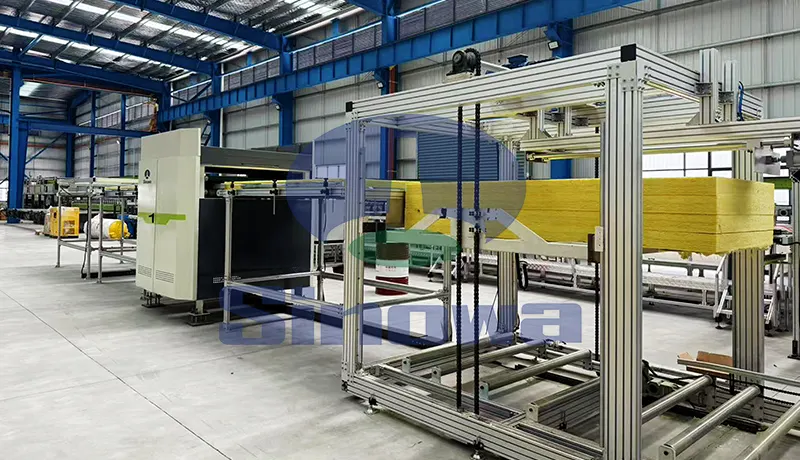
A professional rockwool sandwich panel line serves as the core equipment for producing high-performance building panels. This rockwool sandwich panel production line integrates feeding, laminating and forming processes to ensure stable and efficient production. The well-structured rock wool sandwich panel line can process raw rockwool materials into panels with excellent thermal and sound insulation properties. Operators can adjust the running parameters of the rock wool sandwich panel production line to manufacture panels of different thicknesses and specifications. The automated design of the mineral wool sandwich panel production line greatly reduces manual operation errors and improves product consistency. Regular maintenance of the mineral wool sandwich panel line is essential to sustain long-term operational efficiency and guarantee qualified finished panels for diverse construction applications.