How To Adjust The Foaming Speed Of Phenolic Insulation Board Production Line?
Publication Date: Oct 8, 2026
This guide explains practical, effective methods to adjust phenolic insulation board production line foaming speed, stabilizing foam quality and improving manufacturing consistency.
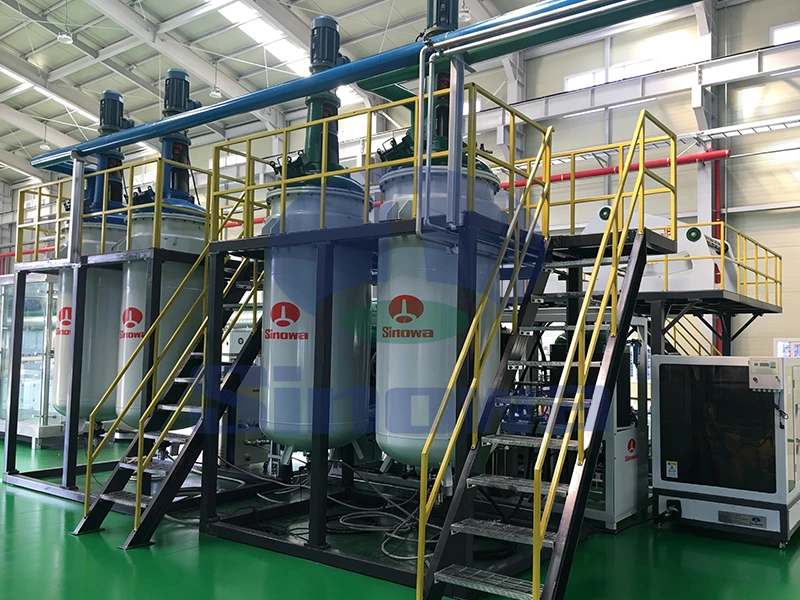
Adjusting the foaming speed of a phenolic insulation board production line starts with understanding the core correlation between raw material status and foaming reaction efficiency. Phenolic foam formation relies on the synergistic reaction of phenolic resin, foaming agents, curing agents and auxiliary modifiers, where the activity of each raw material directly dictates how fast the foam expands and cures. Before making any equipment adjustments, operators need to inspect the overall state of raw materials, including material viscosity, uniformity of mixed components, and real-time activity of foaming additives. Slightly high material viscosity will slow down molecular movement and delay foaming speed, while uneven mixing leads to inconsistent local reaction rates, causing partial over-foaming or under-foaming. By pre-adjusting raw material mixing uniformity and maintaining stable viscosity through auxiliary temperature control, manufacturers can lay a stable foundation for precise foaming speed regulation, avoiding drastic speed fluctuations caused by raw material variations during formal production.
Precise calibration of the raw material metering system is a key step in fine-tuning foaming speed on phenolic board production lines. Automated metering devices control the feeding volume of each raw material component, and tiny deviations in feeding proportion will directly change the foaming reaction rate. Excessive foaming agent dosage accelerates foam expansion and raises foaming speed rapidly, while insufficient dosage slows down the expansion process and reduces overall production efficiency. Operators need to regularly calibrate the metering pump parameters and inverter settings to ensure continuous and stable feeding of all materials. It is essential to test the metering accuracy under low, medium and high production loads respectively, as different operating loads will affect pump operation efficiency and material output stability. Standardizing metering calibration cycles effectively eliminates foaming speed deviations caused by inaccurate material proportioning, ensuring consistent reaction speed in each production batch.
Production line conveying speed coordination plays an indispensable role in regulating integral foaming speed and final board quality. The foaming process of phenolic insulation boards requires a fixed reaction residence time in the forming and curing zone, and the conveying speed directly determines how long the mixed raw materials stay in the foaming area. When the conveying speed is too fast, the materials cannot complete sufficient foaming and curing within the effective zone, resulting in incomplete foam pore formation and low board compactness. Conversely, an excessively slow conveying speed leads to over-foaming, causing oversized foam pores, reduced structural strength and even surface bulging defects. Operators need to match the conveying speed with the inherent foaming reaction cycle of phenolic materials, making gradual fine adjustments rather than one-step drastic changes to maintain balanced foaming progress throughout the production process.
Temperature parameter adjustment is one of the most intuitive and efficient ways to control phenolic foaming speed. Temperature affects both raw material viscosity and chemical reaction activity of foaming components. Appropriately increasing the system temperature can reduce raw material viscosity, accelerate molecular diffusion and chemical cross-linking reactions, thereby improving foaming speed and shortening reaction cycle. Lowering the temperature will inhibit molecular activity, slow down foam expansion and curing speed, and extend the forming cycle. However, temperature adjustment must be controlled within a reasonable range, as excessive high temperature will cause violent instantaneous foaming, leading to uneven foam pore structure and unstable board size. Operators need to adjust the heating system parameters in real time according to production status, maintaining constant and uniform temperature in the foaming working area to realize stable and controllable foaming speed.
Foaming system pressure regulation effectively optimizes the expansion rate and uniformity of phenolic foam, indirectly adjusting the overall foaming speed of the production line. The internal pressure of the closed foaming and forming zone restricts the expansion space of foam bubbles, and stable pressure environment ensures synchronous growth of all foam pores. Too low system pressure leads to rapid unrestricted expansion of foam, resulting in ultra-fast local foaming speed and irregular pore shapes. Excessively high pressure will suppress bubble expansion, slow down the overall foaming progress, and make the finished board overly dense with reduced thermal insulation performance. Operators need to fine-tune the pressure control unit according to the target board thickness and foam density requirements, keeping the pressure stable during the entire foaming reaction process to avoid speed fluctuations caused by pressure mutation.
PLC control system parameter optimization is the core of intelligent and precise foaming speed adjustment for modern phenolic board production lines. The PLC system integrates and coordinates the operating data of metering, conveying, heating and pressure modules, realizing unified regulation of the entire foaming process. By modifying the system’s built-in operation parameters, operators can accurately adjust the matching degree of each functional unit, thereby stably controlling the overall foaming speed. For example, optimizing the linkage parameters of metering pumps and conveying motors can realize synchronous adjustment of material feeding and line operation speed, avoiding foaming speed disorder caused by asynchronous equipment operation. Regularly updating and correcting PLC data parameters according to long-term production data can continuously improve the accuracy of foaming speed control and reduce batch quality differences.
Regular maintenance and calibration of foaming equipment components ensure long-term stable foaming speed control accuracy. Key components such as metering pumps, delivery hoses, heating sensors and pressure detectors will experience performance attenuation after long-term operation, which affects foaming speed stability. Blocked or aging delivery hoses will cause unstable material delivery volume, leading to fluctuating foaming speed. Drifted temperature and pressure sensors will feed back inaccurate data, resulting in wrong parameter adjustments and unqualified foaming status. Establishing a regular equipment maintenance mechanism to clean blocked pipelines, replace aging parts and calibrate detection sensors can eliminate equipment failure factors that affect foaming speed, maintaining consistent and reliable production operation status.
Gradual debugging and batch testing are necessary processes to confirm the rationality of foaming speed adjustment. After modifying any equipment or process parameters, drastic full-line production switching is not recommended. Operators should conduct small-batch trial production first, observe the real-time foaming state, foam pore uniformity, and surface flatness of trial boards, and judge whether the adjusted foaming speed meets production requirements. If problems such as too fast foaming leading to bubble cracking or too slow foaming leading to incomplete forming occur, fine-tune the corresponding parameters in a targeted manner. Repeating trial production and parameter optimization can lock the optimal foaming speed matching scheme, ensuring stable quality of subsequent mass production.
Matching foaming speed with subsequent curing process parameters is crucial to ensure overall production line coordination and finished product quality. Foaming speed determines the initial forming state of phenolic foam, while the curing process fixes the final structure and performance of the insulation board. If the foaming speed is increased without adjusting the curing temperature and time accordingly, the initially formed foam structure cannot be fully solidified, resulting in easy deformation and poor dimensional stability of finished boards. If the foaming speed is reduced while maintaining the original high-intensity curing parameters, excessive curing will occur, leading to brittle board texture and reduced toughness. Reasonably linking foaming speed with curing process parameters to form a matched process system can maximize production efficiency while guaranteeing product quality.
Accumulating production data and summarizing adjustment rules help form a standardized foaming speed regulation system for long-term production optimization. Different production environments, raw material batches and product specifications require matched foaming speeds. Recording parameter settings, foaming states and finished product quality data of each adjustment operation can help operators summarize accurate adjustment rules for different production conditions. With the continuous accumulation of data, the production team can quickly formulate targeted adjustment schemes when facing production state changes, avoiding repeated debugging and parameter trial and error. This standardized adjustment mode not only improves the precision and efficiency of foaming speed control, but also stabilizes the overall production quality of phenolic insulation boards and reduces production loss caused by process instability.
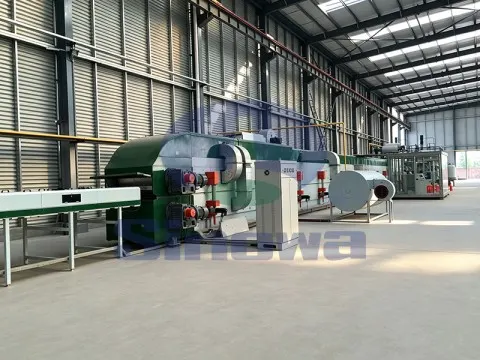
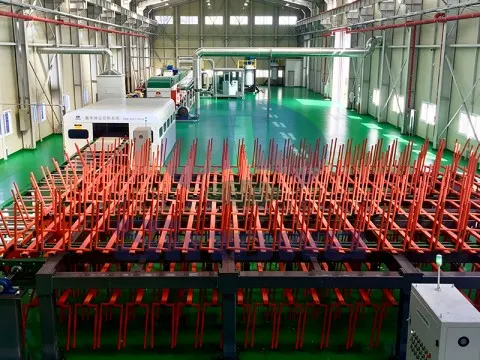
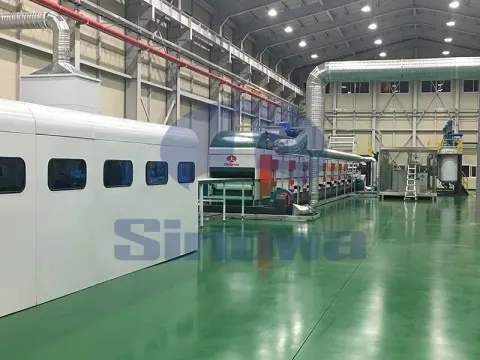
Gallery of Phenolic Insulation Board Production Line
Tags: phenolic insulation board production line, phenolic insulation board production line manufacturer, phenolic insulation board production line supplier, china phenolic insulation board production line, phenolic insulation board production line for sale
-
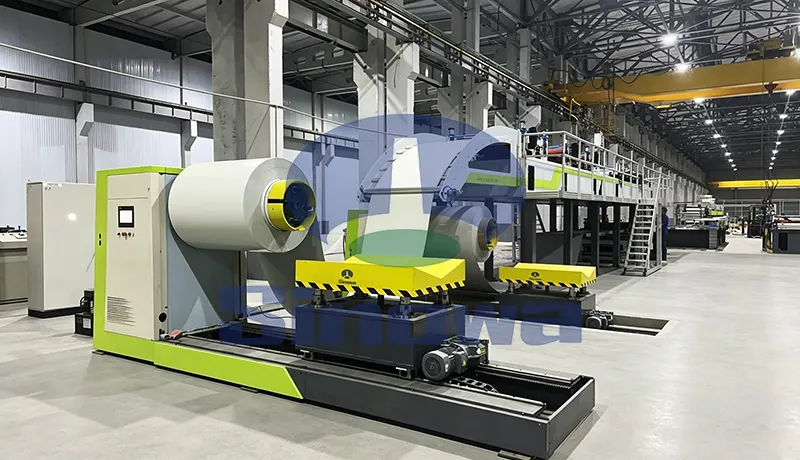
The PU sandwich panel line is a core production setup for making high-performance building insulation panels. This professional PU sandwich panel production line features automated operation to streamline the whole manufacturing process efficiently. Every component of the polyurethane sandwich panel line is precisely calibrated to ensure consistent panel thickness and structural stability. A well-maintained polyurethane sandwich panel production line can greatly boost production efficiency while reducing manual operation errors. The continuous PU sandwich panel line adapts to diverse production demands for different panel sizes and surface styles. With advanced molding technology, the PIR sandwich panel line produces panels with excellent heat preservation and sound insulation properties. Stable running of the PIR sandwich panel production line guarantees reliable product quality for various construction and industrial application scenarios.
-
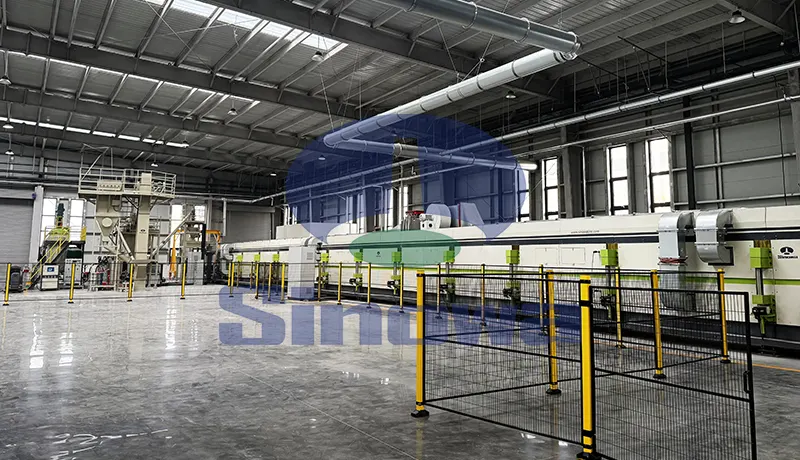
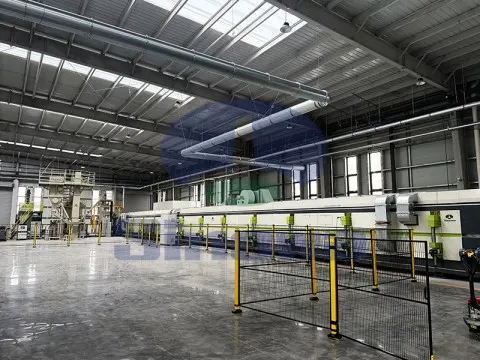
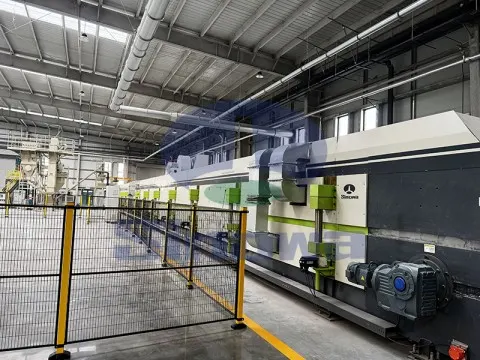
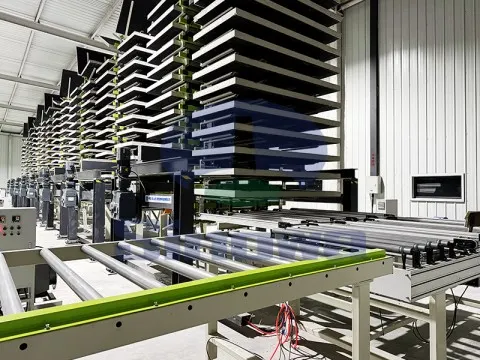
A phenolic insulation board production line serves as the core equipment for manufacturing high-performance thermal insulation building materials. This phenolic insulation panel production line integrates material mixing, foaming, molding and cutting processes to ensure continuous and stable production efficiency. Every operational link of the insulation board production line is precisely calibrated to produce uniform and durable insulation boards. The automated design of the insulation panel production line effectively reduces manual intervention and improves product consistency. Proper maintenance of the phenolic board production line can greatly extend its service life and maintain steady production output. With optimized structural design, the phenolic panel production line adapts to various production demands and delivers high-quality finished products for thermal insulation engineering applications.
-
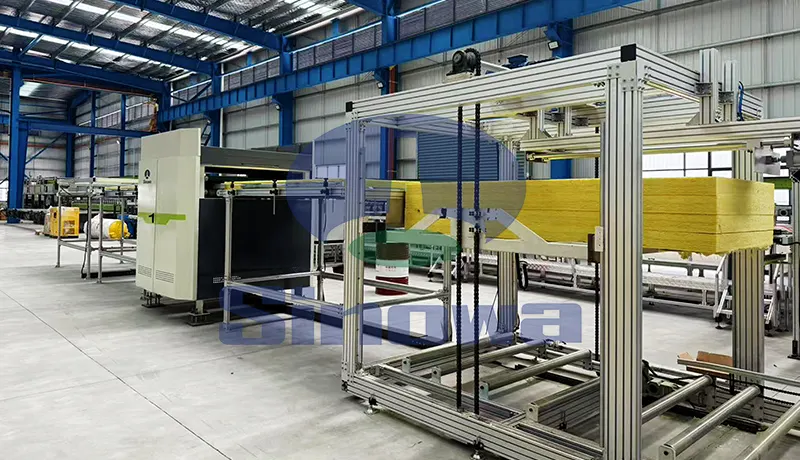
A professional rockwool sandwich panel line serves as the core equipment for producing high-performance building panels. This rockwool sandwich panel production line integrates feeding, laminating and forming processes to ensure stable and efficient production. The well-structured rock wool sandwich panel line can process raw rockwool materials into panels with excellent thermal and sound insulation properties. Operators can adjust the running parameters of the rock wool sandwich panel production line to manufacture panels of different thicknesses and specifications. The automated design of the mineral wool sandwich panel production line greatly reduces manual operation errors and improves product consistency. Regular maintenance of the mineral wool sandwich panel line is essential to sustain long-term operational efficiency and guarantee qualified finished panels for diverse construction applications.