What Causes Roller Jamming In Mineral Wool Sandwich Panel Production Line?
Publication Date: Oct 8, 2026
Roller jamming in mineral wool sandwich panel lines stems from mechanical wear, material irregularities, operational errors, poor lubrication, static buildup and system synchronization failures during production.
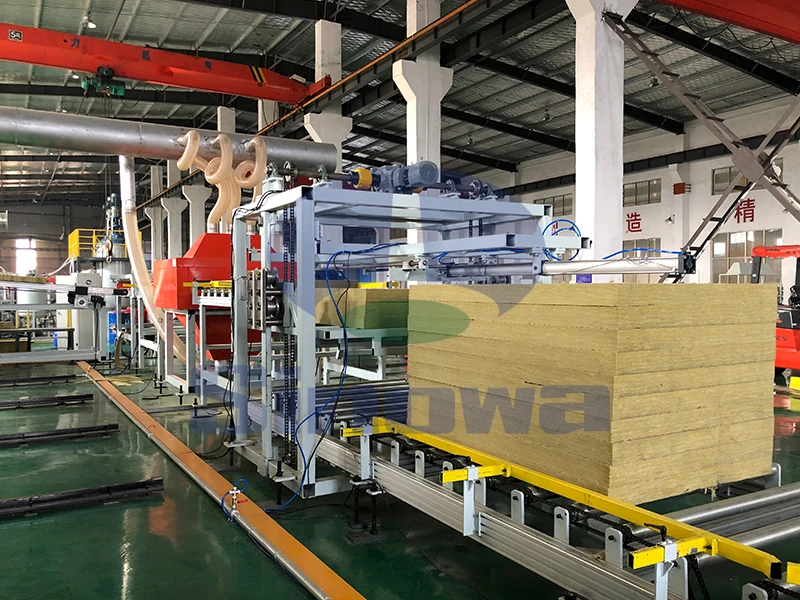
Mechanical component wear and damage stand as the most prevalent cause of roller jamming in mineral wool sandwich panel production lines. The rollers, bearings and transmission parts operate continuously under long-term mechanical pressure and friction during panel forming, pressing and conveying processes. Over extended production cycles, roller surfaces gradually wear thin, developing uneven textures, scratches or indentations that disrupt smooth material movement. Bearings inside roller assemblies often suffer from internal abrasion and gap enlargement after prolonged high-load operation, leading to unsteady roller rotation and slight radial runout. Loose or worn connecting components between drive shafts and rollers further exacerbate operational instability, making rollers prone to stalling or locking up when passing through mineral wool and metal sheet composite materials. Even minor mechanical deformations can accumulate over time, causing gradual material accumulation at roller gaps and eventually triggering complete jamming that halts production flow.
Improper roller gap adjustment is a frequent operational issue that directly induces roller jamming incidents in daily production. Mineral wool sandwich panels require precise gap matching between upper and lower rollers to adapt to the fixed thickness of composite raw materials. When production parameters are casually modified without accurate calibration, excessively narrow roller gaps will generate excessive extrusion force on the mineral wool core and metal surface sheets. The soft, fibrous mineral wool material is easily squeezed and extruded outward from both sides of the roller gap, forming thick material accumulations that wedge between roller surfaces and equipment frames. Conversely, uneven gap spacing across different roller groups leads to inconsistent material conveying speed, causing partial material wrinkling, stacking and dislocation during transmission. These irregular material stacks cannot pass through the roller system smoothly and will quickly block roller operation, resulting in persistent jamming problems.
Abnormal raw material quality and irregular feeding states are key external factors contributing to roller jamming. Mineral wool core materials often have inconsistent density, fiber uniformity and overall flatness due to pre-production processing differences. Loose mineral wool fibers are prone to shedding during rolling and conveying, with fine fibers accumulating on roller surfaces and gradually forming thick fiber layers that increase roller surface friction. Unevenly cut mineral wool blanks, oversized raw material dimensions or irregular edge burrs will cause material deviation during feeding, making the material tilt and jam at the roller inlet. In addition, inconsistent tension of the upper and lower metal veneers leads to asynchronous material advancement, causing local folding and overlapping of composite materials in the roller working area. The stacked composite materials exceed the roller system’s bearing and conveying capacity, directly causing roller stalling and jamming during continuous production.
Inadequate and irregular lubrication maintenance severely undermines roller system stability and triggers jamming failures. The roller transmission system relies on stable lubrication to reduce friction between rotating parts and ensure flexible operation. Long-term lack of lubricant supplementation leads to dry friction between bearings, drive gears and connecting shafts, generating massive heat and accelerating component wear. Degraded or contaminated lubricant containing dust, mineral wool fiber debris and metal impurities loses its lubricating and heat-dissipating effects, instead increasing internal component friction and causing unsmooth roller rotation. Many production sites adopt irregular lubrication cycles, with excessive lubricant injection leading to lubricant overflow. The overflowing lubricant adheres to roller surfaces, easily bonding with floating mineral wool fibers in the air to form sticky dirt deposits. These hard-to-clean deposits change roller surface flatness, hinder material conveying and gradually induce roller jamming during continuous operation.
Static electricity accumulation and surface adhesion problems commonly cause intermittent roller jamming in dry production environments. The high-speed friction between mineral wool fibers, metal sheets and roller surfaces during production continuously generates static electricity. In low-humidity production workshops, static charges cannot dissipate effectively and accumulate rapidly on roller surfaces and composite materials. The static force tightly adsorbs lightweight mineral wool fibers and tiny dust particles onto roller surfaces, forming uneven adhesive layers. As production continues, these adsorbed impurities keep accumulating, reducing roller surface smoothness and changing the friction coefficient between rollers and materials. Adsorbed mineral wool fibers also easily bond with passing composite panels, causing material sticking and incomplete separation from rollers. The stuck materials fail to advance normally and will curl and stack at roller gaps, eventually blocking roller rotation and causing jamming, which frequently occurs in high-speed continuous production scenarios.
Transmission system synchronization failure is a critical hidden cause of systemic roller jamming in production lines. A complete mineral wool sandwich panel production line consists of multiple groups of driving rollers, pressing rollers and conveying rollers, which need to maintain strict speed and rhythm synchronization. Malfunctions in transmission components such as universal couplings, drive belts and gear sets will lead to inconsistent operating speeds among different roller groups. When front-end feeding rollers run faster than rear-end forming rollers, incoming materials cannot be discharged in time, resulting in continuous material accumulation in the roller working area. In contrast, lagging front-end roller speed causes material tension fluctuations, leading to material deviation and wrinkling. Minor synchronization errors that are ignored in daily production will gradually amplify, forming large-area material stacking and dislocation. This systemic disorder cannot be eliminated by simple adjustment and will repeatedly trigger roller jamming until the transmission system is fully calibrated.
Dust and debris accumulation inside roller gaps and equipment gaps is an easily overlooked cause of chronic roller jamming. Mineral wool processing produces a large number of fine floating fibers and tiny debris throughout the production process. These lightweight impurities easily drift into narrow gaps between rollers, between rollers and equipment brackets, and inside bearing assemblies. In daily production cleaning, most sites only clean surface dirt while ignoring deep gap debris accumulation. Over time, compacted mineral wool debris fills the roller movement gaps, restricting the flexible rotation of rollers. The accumulated debris also increases friction resistance during roller operation, making the equipment unable to maintain stable operating speed. When the accumulated debris reaches a certain thickness, it will directly block the roller’s operating stroke, causing jamming. Long-term accumulation will also lead to debris hardening, making subsequent cleaning difficult and causing recurring jamming failures.
Overload operation and unreasonable production parameter setting induce frequent roller jamming in high-yield production modes. Many production sites pursue output by long-term over-speed operation or over-thick material processing beyond the conventional bearing range of the roller system. High-speed operation increases the instantaneous friction and load of rollers, bearings and transmission parts, easily causing component fatigue deformation and rotational lag. Processing ultra-thick composite materials increases the extrusion force between rollers and materials, making mineral wool cores prone to severe compression deformation and outward overflow. Meanwhile, unreasonable parameter matching such as mismatched roller pressure and conveying speed will break the stable state of material transmission. Excessive roller pressure crushes mineral wool fibers to produce more debris, while insufficient pressure causes material sliding and stacking. These unreasonable operating states all disrupt normal material conveying and directly trigger roller jamming during continuous overload production.
Component loosening and structural deformation caused by long-term equipment vibration trigger irregular roller jamming. The roller system generates continuous vibration during high-load reciprocating operation, and long-term unattenuated vibration will gradually loosen fixed bolts, positioning parts and support structures of roller assemblies. Loose positioning parts cause roller offset and inclination, making the parallelism between upper and lower rollers deviate from the standard state. Inclined rollers produce uneven extrusion force on materials, leading to one-sided material accumulation and jamming at the deviated end. Long-term vibration also causes slight structural deformation of roller support frames, changing the original stable operating track of rollers. Minor structural deformations are difficult to detect in daily inspections, but they continuously affect material conveying stability, causing intermittent jamming problems that seriously interfere with continuous production progress.
Defective daily maintenance and inspection mechanisms lead to recurrent roller jamming failures. Most roller jamming problems do not occur suddenly but evolve from minor hidden dangers accumulated over time. Incomplete daily inspection work often misses early faults such as slight roller wear, insufficient lubrication, tiny debris accumulation and minor transmission synchronization deviations. Delayed maintenance allows small faults to continue deteriorating and eventually evolve into serious jamming failures. Irregular equipment maintenance cycles, disorderly replacement of worn parts and unprofessional parameter calibration also fail to keep the roller system in optimal operating condition. In addition, improper shutdown and startup operations such as sudden emergency stops during material conveying cause instantaneous material stacking and roller locking, leaving hidden dangers for subsequent production and leading to repeated jamming incidents.
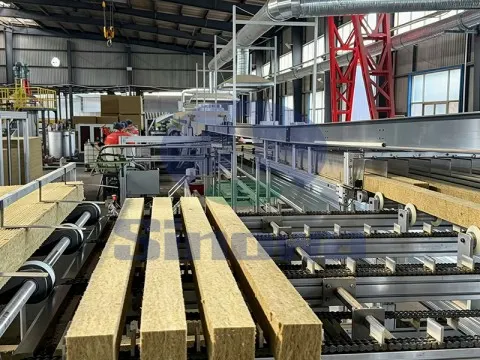
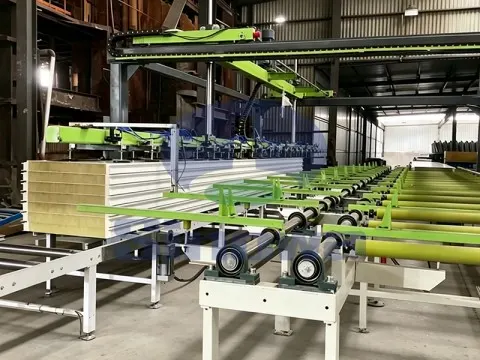
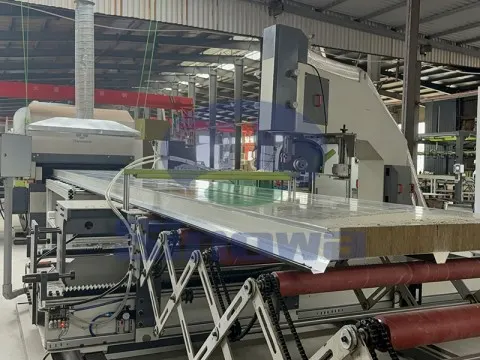
Gallery of Mineral Wool Sandwich Panel Production Line
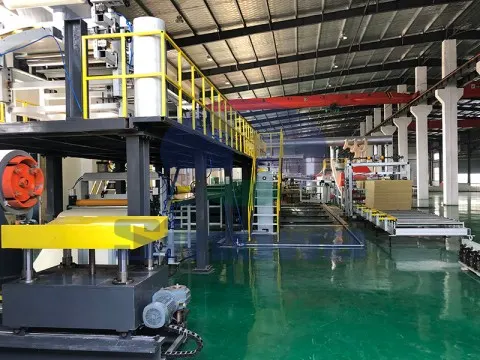
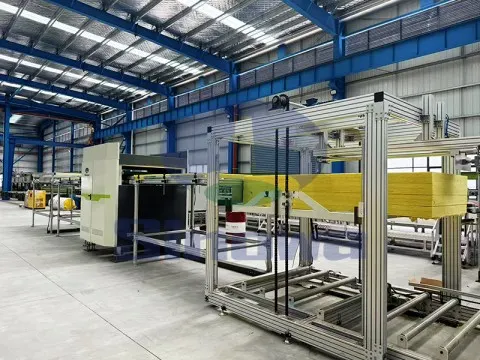
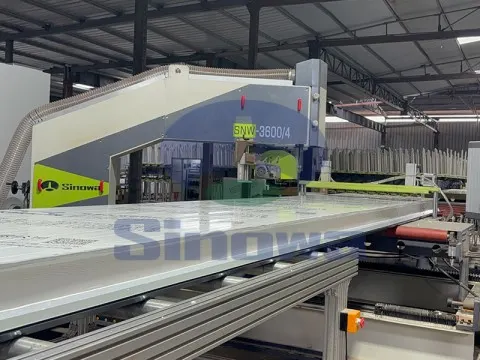
Tags: mineral wool sandwich panel production line, mineral wool sandwich panel production line manufacturer, mineral wool sandwich panel production line supplier, china mineral wool sandwich panel production line, mineral wool sandwich panel production line for sale
-
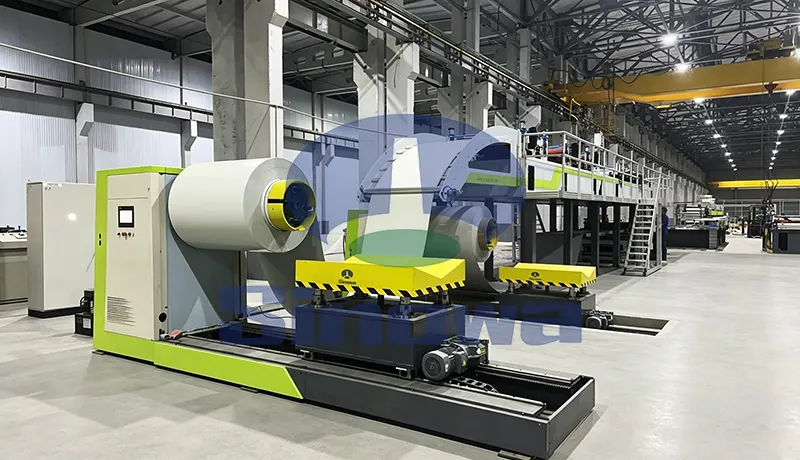
The PU sandwich panel line is a core production setup for making high-performance building insulation panels. This professional PU sandwich panel production line features automated operation to streamline the whole manufacturing process efficiently. Every component of the polyurethane sandwich panel line is precisely calibrated to ensure consistent panel thickness and structural stability. A well-maintained polyurethane sandwich panel production line can greatly boost production efficiency while reducing manual operation errors. The continuous PU sandwich panel line adapts to diverse production demands for different panel sizes and surface styles. With advanced molding technology, the PIR sandwich panel line produces panels with excellent heat preservation and sound insulation properties. Stable running of the PIR sandwich panel production line guarantees reliable product quality for various construction and industrial application scenarios.
-
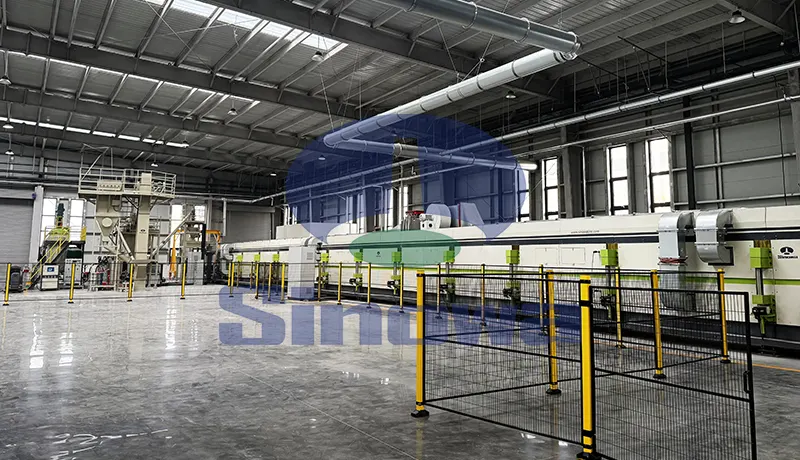
A phenolic insulation board production line serves as the core equipment for manufacturing high-performance thermal insulation building materials. This phenolic insulation panel production line integrates material mixing, foaming, molding and cutting processes to ensure continuous and stable production efficiency. Every operational link of the insulation board production line is precisely calibrated to produce uniform and durable insulation boards. The automated design of the insulation panel production line effectively reduces manual intervention and improves product consistency. Proper maintenance of the phenolic board production line can greatly extend its service life and maintain steady production output. With optimized structural design, the phenolic panel production line adapts to various production demands and delivers high-quality finished products for thermal insulation engineering applications.
-
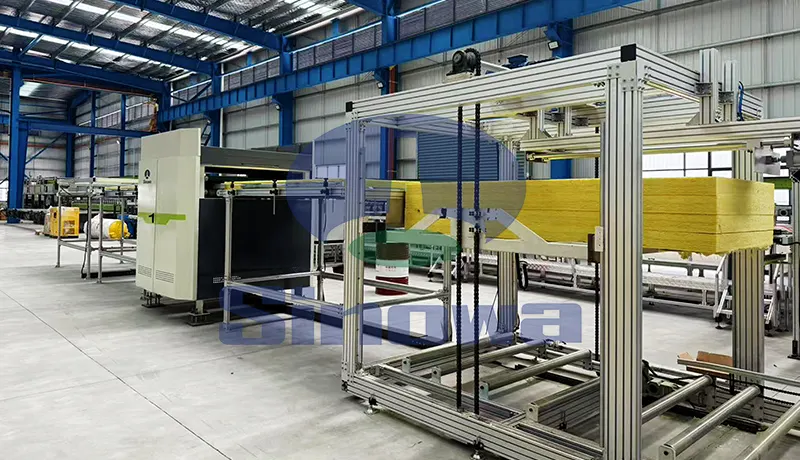
A professional rockwool sandwich panel line serves as the core equipment for producing high-performance building panels. This rockwool sandwich panel production line integrates feeding, laminating and forming processes to ensure stable and efficient production. The well-structured rock wool sandwich panel line can process raw rockwool materials into panels with excellent thermal and sound insulation properties. Operators can adjust the running parameters of the rock wool sandwich panel production line to manufacture panels of different thicknesses and specifications. The automated design of the mineral wool sandwich panel production line greatly reduces manual operation errors and improves product consistency. Regular maintenance of the mineral wool sandwich panel line is essential to sustain long-term operational efficiency and guarantee qualified finished panels for diverse construction applications.