How To Replace Wearing Parts Of Rock Wool Sandwich Panel Production Line?
Publication Date: Oct 8, 2026
This guide explains practical steps to replace worn parts on rock wool sandwich panel production lines, ensuring stable operation, consistent product quality and reduced machine downtime effectively.
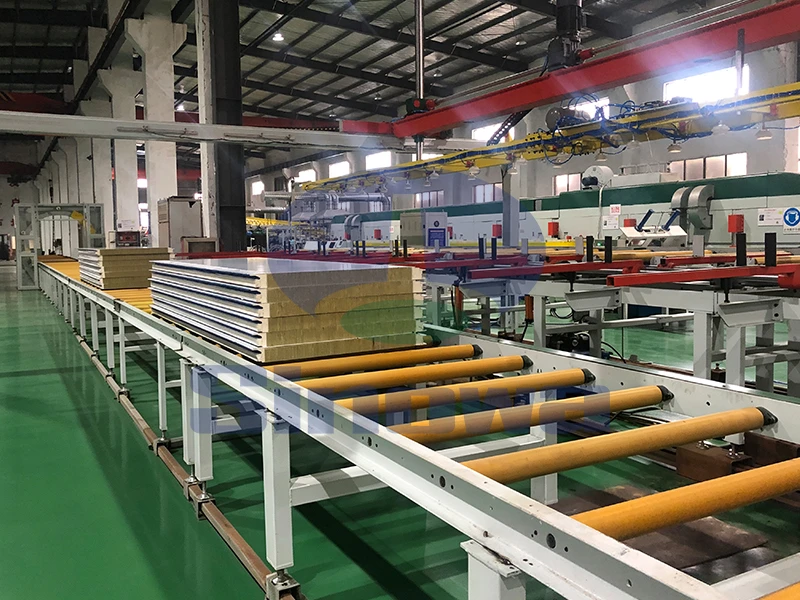
Regular replacement of wearing parts is the core of maintaining the long-term stable operation of rock wool sandwich panel production lines. This type of production line operates continuously under high-load mechanical friction, material impact and repeated extrusion, making key moving and contact components prone to gradual wear, aging and deformation over time. Common wearing parts in the production system include transmission bearings, sealing gaskets, cardan shaft components, roller surface liners, glue spraying nozzles and cutting blade assemblies. These tiny worn components will not cause sudden equipment failure in the early stage, but they will gradually affect the synchronization of each production link, lead to uneven rock wool core laying, inconsistent panel pressing tightness and unsmooth material conveying. Timely identification and replacement of these vulnerable parts can effectively avoid production deviation, reduce product defective rate and extend the overall service life of the production line, which is crucial for daily stable industrial production.
Before carrying out any wearing parts replacement work, standardized pre-operation preparation and safety locking procedures must be completed first to eliminate potential construction risks. First, completely stop all operating units of the production line, including raw material uncoiling, fiber paving, composite pressing and finished product conveying systems, and cut off the main power supply and auxiliary gas and circuit systems to prevent accidental startup during maintenance. After power off, wait for a certain period of time to ensure that all mechanical transmission parts completely stop running and the equipment temperature drops to a safe range, avoiding scalding or mechanical clamping injuries. Next, prepare matched professional disassembly tools, cleaning supplies and new replacement parts with consistent specifications. It is necessary to carefully check the integrity and appearance of new parts to exclude defective products with deformation, cracks or unqualified sizes, so as to ensure that the replacement parts can fit the equipment structure perfectly and operate normally after installation.
Accurate wear inspection and component confirmation is the key premise of precise replacement, which avoids blind disassembly and unnecessary part replacement. Operators need to conduct a comprehensive inspection of all vulnerable parts of the production line according to the daily operation status of the equipment. For transmission parts such as bearings and cardan shafts, check for abnormal noise, jitter during operation and flexible rotation degree, and observe whether there is obvious abrasion gap or loose fit. For sealing components such as gaskets and sealing rings, focus on checking aging, cracking, oil leakage and dust leakage phenomena, which are typical signs of failure. For contact parts such as roller liners and cutting blades, check surface wear degree, flatness and cutting sharpness to confirm whether there are grooves, deformation and passivation problems. After inspection, record all worn parts, sort them according to wear degree and impact on production, and formulate a targeted replacement sequence to prioritize replacing severely damaged parts that affect production efficiency.
The formal disassembly of worn parts needs to follow the equipment structural logic to avoid damage to adjacent intact components. During disassembly, operate in the reverse order of the equipment assembly process, and fix the connected mechanical components first to prevent displacement and collision during part removal. For bolt-fixed wearing parts, loosen the fasteners evenly in diagonal sequence to avoid single-side stress causing component deformation, and place all disassembled bolts, washers and fasteners in a classified manner for subsequent reinstallation. When disassembling precision transmission parts such as bearings and shaft sleeves, use special disassembly tools to avoid hard prying and knocking, which may scratch the installation base and affect the later assembly accuracy. After removing the worn parts, thoroughly clean the installation base and fitting gaps to remove residual lubricating oil, rock wool dust, adhesive residues and metal debris, and keep the installation position dry and clean to provide a good foundation for new parts installation.
The installation of new wearing parts requires strict fitting calibration to ensure the coordination accuracy of each component. Before installation, apply a proper amount of high-quality lubricant to the friction parts of rotating and transmission components such as new bearings and cardan shaft cross shafts to reduce early friction loss during operation. During the installation process, ensure that the parts are installed in the correct direction and position, and avoid reverse installation or offset assembly. For sealing parts such as gaskets, ensure flat placement without distortion, folding and offset, so as to guarantee the sealing effect and prevent later dust infiltration and liquid leakage. After the parts are in place, tighten the fasteners evenly with standard torque to avoid excessive tightening causing component extrusion deformation or insufficient tightening leading to loose operation. For transmission linkage parts, manually rotate and debug after installation to check whether the operation is flexible and free of jamming and abnormal resistance.
After the replacement of core wearing parts, linkage debugging of the production line unit is required to verify the installation effect. First, conduct no-load test operation of a single replaced unit, run the equipment at low speed for a certain period of time, and observe the operation status of new parts, including whether there is abnormal noise, vibration, heating and offset operation. For the updated cutting blade and roller liner parts, check the operation flatness and matching gap to ensure stable material conveying and accurate cutting size. For sealing and transmission parts, monitor the sealing performance and transmission synchronization to confirm no leakage and stable power transmission. After the single unit runs normally, start the whole production line for joint debugging, adjust the operation speed and matching parameters of each link appropriately to ensure that the feeding, paving, pressing and cutting processes are coordinated and consistent without stagnation and deviation.
Different types of wearing parts have unique replacement details and key points that need targeted control to ensure long-term stable operation. For easily worn nozzle components of the glue spraying system, in addition to replacing worn and blocked nozzles, it is necessary to clean the glue pipeline to eliminate residual condensed glue, prevent repeated blockage of new nozzles, and adjust the glue spraying pressure and uniformity after installation. For cutting tool parts, after replacing passivated blades, calibrate the cutting horizontal height and gap to ensure flat and neat incision of rock wool sandwich panels without burrs and uneven edges. For transmission bearing parts, after replacement, recheck the lubrication state regularly, supplement lubricating oil in time, and avoid dry friction causing rapid wear of new parts. Targeted optimization according to part characteristics can effectively improve replacement quality and prolong the service cycle of new parts.
Post-replacement maintenance and operation monitoring are essential to consolidate the replacement effect and avoid secondary failure. Within 24 hours after part replacement, strengthen the real-time monitoring of the production line operation state, focus on the temperature change, operation noise and fitting tightness of the replaced parts, and stop the machine in time for adjustment if abnormal conditions are found. Make detailed maintenance records, mark the replacement time, part type and operation state of new wearing parts, and establish a complete equipment maintenance file. In daily production, appropriately reduce the instantaneous load of the equipment in the initial operation stage of new parts, so that the new components can run in adaptively, reducing the failure rate caused by poor fitting in the early stage. Regularly check the fastening state of fasteners and the wear degree of new parts to realize early detection and early processing of potential problems.
Scientific replacement of wearing parts can effectively improve the comprehensive operation efficiency of rock wool sandwich panel production lines. Worn and aging parts are important factors leading to low production efficiency and unstable product quality. Standardized replacement operations can eliminate equipment operation hidden dangers, ensure the continuity and stability of the production process, and significantly reduce unplanned downtime caused by equipment failure. Stable equipment operation can make the rock wool core laying more uniform, the composite pressing more compact, and the finished panel size and performance more consistent, effectively improving the yield of finished products. In addition, standardized regular replacement and maintenance can avoid excessive wear of parts leading to damage of adjacent high-precision components, reduce later large-scale maintenance costs and equipment loss, and create stable production benefits for long-term industrial operation.
Formulating a reasonable wearing parts replacement cycle is the fundamental guarantee for long-term stable operation of the production line. Combined with the daily operation load, production duration and working environment of the rock wool sandwich panel production line, summarize the wear rule of each vulnerable part, and formulate a personalized regular inspection and replacement plan. For parts with fast wear such as cutting blades and glue nozzles, arrange frequent inspection and timely replacement; for transmission and sealing parts with relatively slow wear, implement periodic batch replacement. Adhering to the combination of daily inspection and regular replacement can completely change the passive maintenance mode of waiting for equipment failure, realize active equipment maintenance, effectively extend the service life of the whole production line, and maintain efficient and stable production operation for a long time.
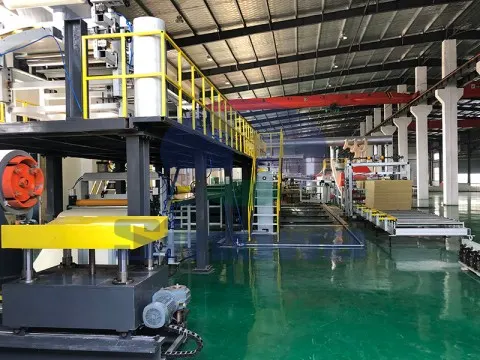
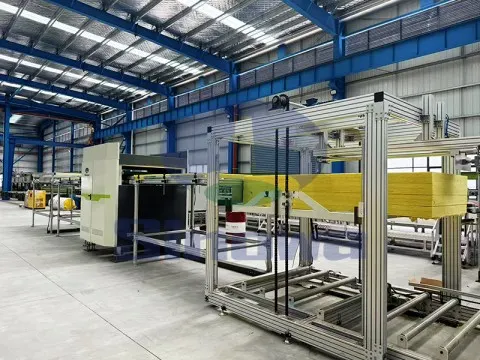
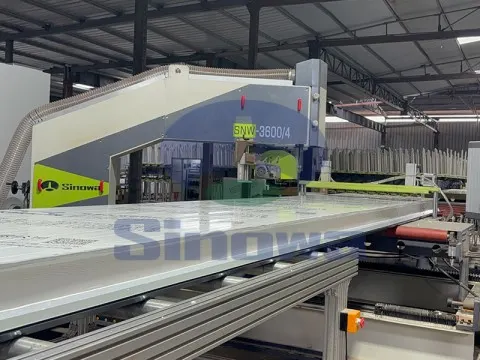
Gallery of Rock Wool Sandwich Panel Production Line
Tags: rock wool sandwich panel production line, rock wool sandwich panel production line manufacturer, rock wool sandwich panel production line supplier, china rock wool sandwich panel production line, rock wool sandwich panel production line for sale
-
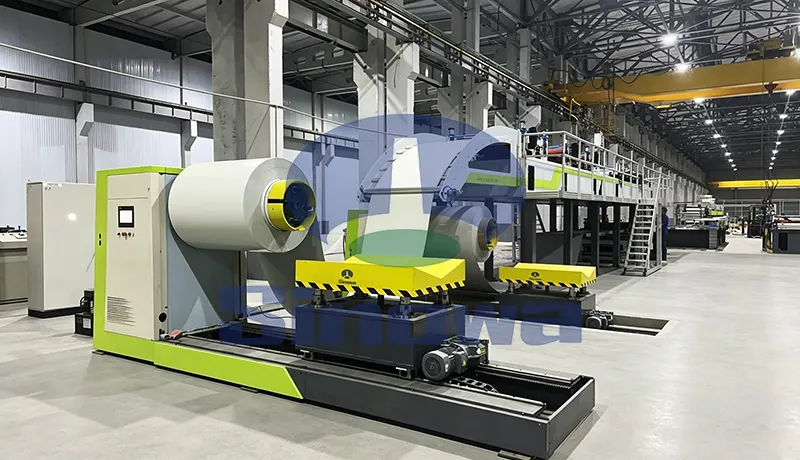
The PU sandwich panel line is a core production setup for making high-performance building insulation panels. This professional PU sandwich panel production line features automated operation to streamline the whole manufacturing process efficiently. Every component of the polyurethane sandwich panel line is precisely calibrated to ensure consistent panel thickness and structural stability. A well-maintained polyurethane sandwich panel production line can greatly boost production efficiency while reducing manual operation errors. The continuous PU sandwich panel line adapts to diverse production demands for different panel sizes and surface styles. With advanced molding technology, the PIR sandwich panel line produces panels with excellent heat preservation and sound insulation properties. Stable running of the PIR sandwich panel production line guarantees reliable product quality for various construction and industrial application scenarios.
-
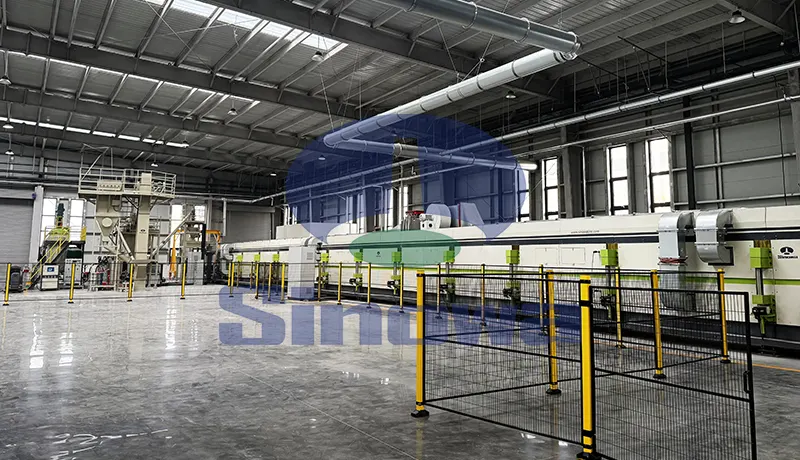
A phenolic insulation board production line serves as the core equipment for manufacturing high-performance thermal insulation building materials. This phenolic insulation panel production line integrates material mixing, foaming, molding and cutting processes to ensure continuous and stable production efficiency. Every operational link of the insulation board production line is precisely calibrated to produce uniform and durable insulation boards. The automated design of the insulation panel production line effectively reduces manual intervention and improves product consistency. Proper maintenance of the phenolic board production line can greatly extend its service life and maintain steady production output. With optimized structural design, the phenolic panel production line adapts to various production demands and delivers high-quality finished products for thermal insulation engineering applications.
-
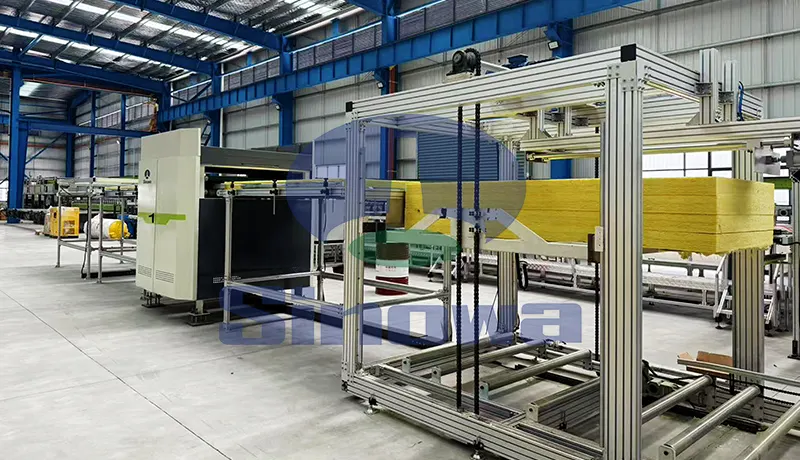
A professional rockwool sandwich panel line serves as the core equipment for producing high-performance building panels. This rockwool sandwich panel production line integrates feeding, laminating and forming processes to ensure stable and efficient production. The well-structured rock wool sandwich panel line can process raw rockwool materials into panels with excellent thermal and sound insulation properties. Operators can adjust the running parameters of the rock wool sandwich panel production line to manufacture panels of different thicknesses and specifications. The automated design of the mineral wool sandwich panel production line greatly reduces manual operation errors and improves product consistency. Regular maintenance of the mineral wool sandwich panel line is essential to sustain long-term operational efficiency and guarantee qualified finished panels for diverse construction applications.