Why Do Phenolic Boards From Production Line Have Serious Hollow Pores?
Publication Date: Oct 7, 2026
Hollow pores are a prevalent structural defect in mass-produced phenolic boards, severely undermining their compactness and mechanical stability.
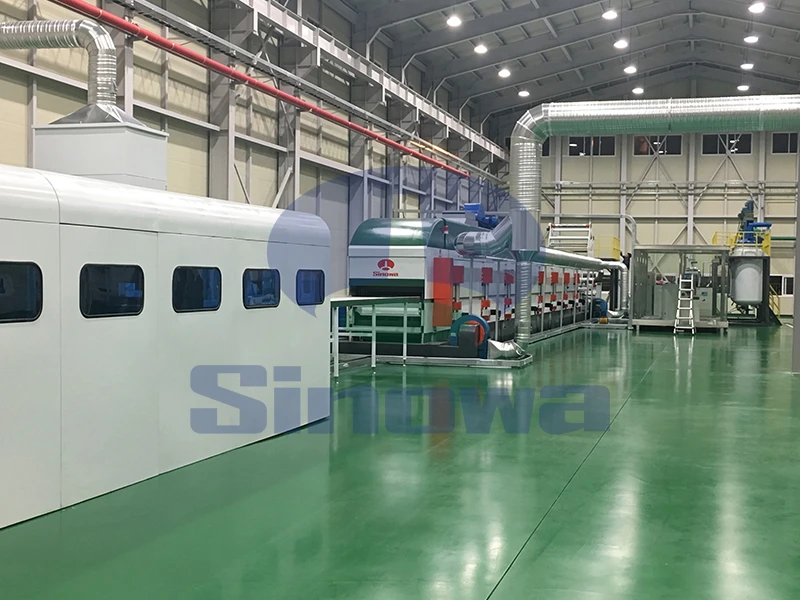
The improper formulation and quality of phenolic resin raw materials are the primary inducement of hollow pore formation in phenolic boards. Phenolic resin serves as the core bonding component of the boards, and its viscosity, curing activity, and volatile content directly determine the compactness of the final product. In continuous production lines, if the resin viscosity is too high, it will lose fluidity rapidly during the mixing and molding process, failing to fully fill the gaps between reinforcing fibers or fillers. This leaves tiny unfilled spaces inside the board that evolve into hollow pores after curing. Conversely, excessively low resin viscosity leads to severe resin runoff during hot pressing, resulting in insufficient adhesive filling in local areas and forming irregular hollow structures. Additionally, unreacted phenol, formaldehyde, and residual solvents in unqualified phenolic resin will generate a large amount of volatile gas during high-temperature curing. These gases cannot escape smoothly in a closed molding environment and are sealed inside the board, forming isolated hollow pores of varying sizes, which are the most common internal defects in mass-produced phenolic boards.
Inadequate raw material pretreatment is another key factor triggering serious hollow pores in phenolic boards. Before formal molding, reinforcing materials such as glass fiber cloth, wood powder, and inorganic fillers used in phenolic boards often absorb moisture and adhere to tiny dust and impurities during storage and transportation. In standardized production processes, complete drying and purification pretreatment is required to eliminate surface attachments and internal moisture. However, in continuous line production, accelerated operating rhythms often lead to incomplete pretreatment. Residual moisture inside the raw materials vaporizes instantly under high-temperature hot pressing conditions, producing water vapor that accumulates inside the board. The cured resin matrix cannot allow gas penetration, so the trapped water vapor forms stable hollow pores. Meanwhile, tiny impurities on the surface of fillers and fibers will isolate the bonding interface between resin and raw materials, destroying the uniform bonding structure. Local debonding areas will gradually expand into hollow pores during the curing and molding process, and this defect is more prominent in large-batch continuous production due to uneven pretreatment quality of raw materials.
Unreasonable glue coating and mixing processes greatly aggravate the hollow pore defects of phenolic boards on the production line. Uniform mixing of phenolic resin and reinforcing fillers is the premise of producing compact boards. In automated production lines, mechanical stirring and glue spraying systems undertake the mixing and gluing work, but parameter mismatches will cause uneven glue distribution. If the stirring speed is too low or the stirring time is insufficient, resin and fillers cannot be fully fused, resulting in partial areas with excessive resin and partial areas with severe resin deficiency. Resin-deficient areas form natural hollow gaps after molding, while excessive resin areas produce more volatile gas during curing to form pores. In addition, uneven glue coating thickness on the surface of reinforcing materials will lead to inconsistent curing speeds in different parts of the board. The rapidly cured surface resin forms a dense shell first, locking the uncured internal resin and volatile gas. The internal gas expands with temperature and cannot escape, eventually forming large-area hollow pores inside the board, which seriously affects the overall structural uniformity of the product.
Abnormal hot pressing parameters are the main technical cause of mass hollow pores in phenolic board production. Hot pressing is the core molding process of phenolic boards, and temperature, pressure, and holding time jointly determine the discharge of internal gas and the curing state of resin. Excessively high hot pressing temperature will cause the phenolic resin to cure too quickly. The surface layer of the board solidifies in a short time, while the internal resin is still in the reaction stage and continuously generates volatile gas. The rapidly formed cured layer blocks the gas discharge channel, and the trapped gas expands to form hollow pores. On the contrary, if the hot pressing temperature is too low, the resin curing reaction is incomplete, the internal bonding structure is loose, and the gaps between raw materials cannot be fully filled, leaving permanent tiny hollow pores. Insufficient hot pressing pressure cannot compact the mixed raw materials effectively, failing to eliminate the natural gaps between fillers and fibers. Meanwhile, too short pressure holding time does not allow enough time for internal gas to escape completely, making residual gas stay inside the board and form hollow pore defects after cooling and shaping.
Defective exhaust operation in the hot pressing process is easily overlooked but a critical cause of hollow pores in phenolic boards. The continuous production line is equipped with fixed exhaust procedures to discharge volatile gas and air trapped in the board raw materials during hot pressing. Standard production requires multiple intermittent pressure relief and exhaust operations in the early stage of hot pressing to ensure smooth gas discharge. In actual mass production, to improve production efficiency, many operations simplify or omit the exhaust links, leading to a large amount of air and reaction gas remaining inside the board. These gases are compressed in the high-pressure and high-temperature environment and cannot be discharged. After the resin is completely cured, the compressed gas forms closed hollow pores of different sizes inside the board. In addition, mismatched exhaust time and frequency will also cause defects. Too short single exhaust time cannot completely discharge internal gas, while too long exhaust interval leads to premature local curing of the board, blocking subsequent exhaust channels and eventually forming dense hollow pore groups inside the product.
Unstable production line operation and mechanical equipment failures induce frequent hollow pore defects in phenolic boards. Automated continuous production relies on the stable operation of mixing machines, glue coating devices, and hot pressing equipment. Minor equipment abnormalities will be amplified in mass production and lead to batch defects. For example, unstable operation of the stirring equipment will cause intermittent uneven mixing of resin and fillers, resulting in local resin shortage and pore formation. The aging of the hot press plate leads to uneven heating of the board surface, causing inconsistent curing speeds in different areas. The partially rapidly cured area seals gas, while the slowly cured area has loose structures, forming a large number of hollow pores. In addition, inaccurate feeding and cutting positioning of the production line will lead to uneven raw material stacking thickness. The over-thick parts cannot be fully compacted during hot pressing, and internal gaps cannot be eliminated, eventually evolving into hollow pores that affect product quality consistency.
Improper cooling and post-processing procedures after hot pressing will further exacerbate hollow pore problems in phenolic boards. After hot pressing and curing, phenolic boards need a gradual cooling and shaping process to ensure stable internal structure. Rapid forced cooling immediately after hot pressing will cause drastic temperature difference between the board surface and the interior. The surface resin shrinks rapidly and solidifies, while the internal temperature drops slowly, and the residual trace gas continues to expand. The expanding internal gas cannot break through the solidified surface layer, thus forming new hollow pores inside the board. Meanwhile, unreasonable stacking and handling in the post-processing stage will cause uneven stress on the newly molded boards. The uncured micro gaps inside the board are squeezed and deformed, forming irregular hollow pore structures. In continuous production, the unified rapid cooling mode and standardized stacking operations often ignore the subtle structural changes of boards in the cooling stage, resulting in a high proportion of hollow pore defects in finished products.
Material matching errors in composite formula design are an inherent cause of persistent hollow pores in phenolic boards. The performance and structural compactness of phenolic boards depend on the reasonable matching of resin, reinforcing fibers, and functional fillers. Unreasonable formula ratio will destroy the compatibility between materials and produce structural gaps. Excessive addition of inorganic fillers will reduce the bonding performance of phenolic resin, as the resin cannot wrap all filler particles completely, leaving gaps between particles that form hollow pores after curing. Too many short-cut fibers will cause chaotic internal arrangement, produce overlapping gaps, and hinder the flow and filling of resin. In addition, the particle size mismatch of fillers will lead to poor stacking density. Large-particle fillers form large gaps, while small-particle fillers cannot fill the gaps completely, resulting in a loose internal structure. These formula-induced structural gaps cannot be completely eliminated by conventional pressing processes, thus forming inherent hollow pore defects in mass-produced phenolic boards.
Environmental condition fluctuations in the production workshop affect the internal structure molding of phenolic boards and induce hollow pores. The temperature and humidity of the production environment have a direct impact on the state of raw materials and the curing reaction effect. In a high-humidity workshop environment, raw materials such as fibers and fillers will continuously absorb moisture in the air even after pretreatment, increasing the internal moisture content of the mixed materials. These extra moistures vaporize during hot pressing and form trapped gas pores. Excessively high workshop temperature will cause the phenolic resin to pre-cure before molding, reducing fluidity and making it unable to fill tiny gaps. Excessively low temperature will slow down the resin reaction speed, prolong the curing cycle, and lead to insufficient bonding compaction. In continuous production, frequent fluctuations of workshop environmental parameters without real-time adjustment of production processes will lead to unstable product quality and a large number of hollow pore defects in batches of phenolic boards.
Effective control of hollow pore defects in phenolic boards requires systematic optimization covering raw materials, processes, equipment, and environment. Targeted improvements should be made according to different defect causes: strictly controlling resin quality and formula ratio to reduce volatile content and improve material compatibility, optimizing pretreatment processes to eliminate raw material moisture and impurities, adjusting hot pressing temperature, pressure and exhaust parameters to ensure full gas discharge and complete resin curing, maintaining stable operation of production equipment to avoid mechanical errors, and standardizing cooling and post-processing operations. Only by realizing full-process refined control can the hollow pore problem of mass-produced phenolic boards be fundamentally solved, improving product compactness, structural stability and overall production qualification rate.
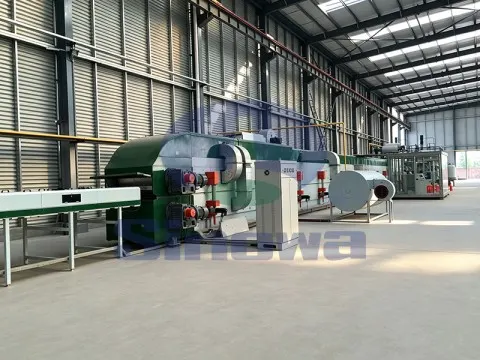
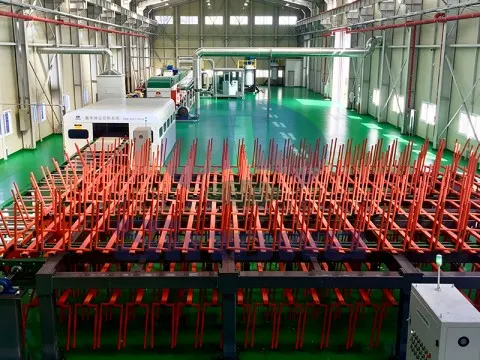
Gallery of Phenolic Boards Production Line
Tags: phenolic boards production line, phenolic boards production line manufacturer, phenolic boards production line supplier, china phenolic boards production line, phenolic boards production line for sale
-
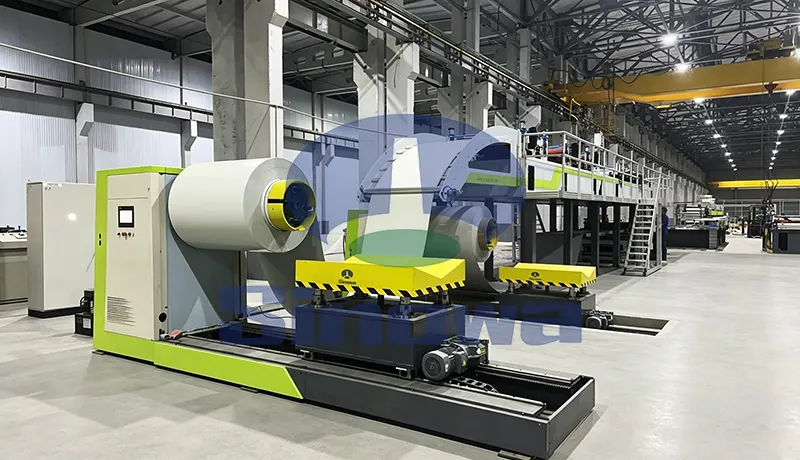
The PU sandwich panel line is a core production setup for making high-performance building insulation panels. This professional PU sandwich panel production line features automated operation to streamline the whole manufacturing process efficiently. Every component of the polyurethane sandwich panel line is precisely calibrated to ensure consistent panel thickness and structural stability. A well-maintained polyurethane sandwich panel production line can greatly boost production efficiency while reducing manual operation errors. The continuous PU sandwich panel line adapts to diverse production demands for different panel sizes and surface styles. With advanced molding technology, the PIR sandwich panel line produces panels with excellent heat preservation and sound insulation properties. Stable running of the PIR sandwich panel production line guarantees reliable product quality for various construction and industrial application scenarios.
-
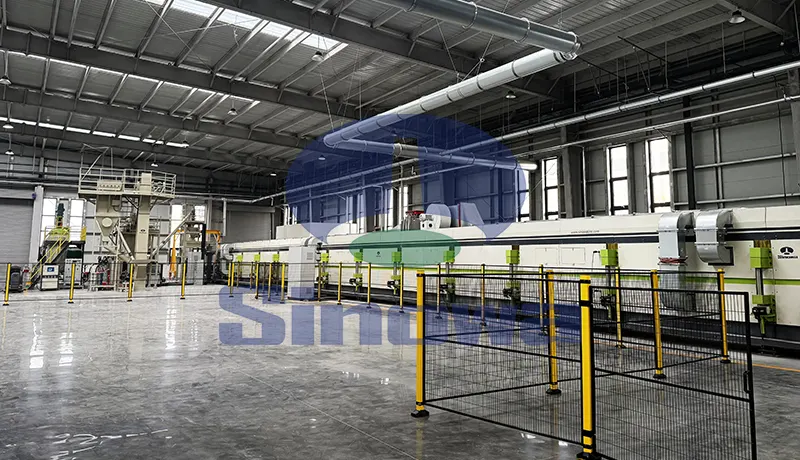
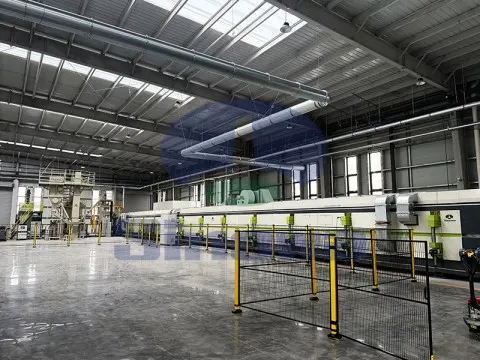
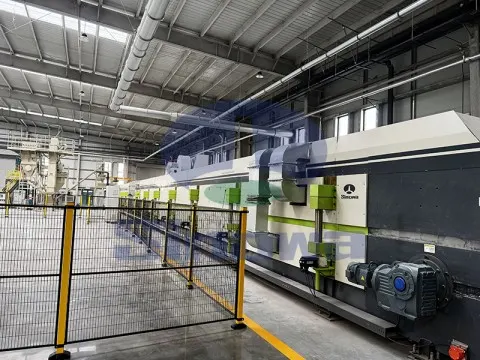
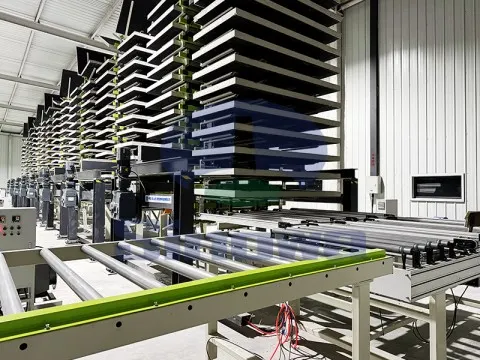
A phenolic insulation board production line serves as the core equipment for manufacturing high-performance thermal insulation building materials. This phenolic insulation panel production line integrates material mixing, foaming, molding and cutting processes to ensure continuous and stable production efficiency. Every operational link of the insulation board production line is precisely calibrated to produce uniform and durable insulation boards. The automated design of the insulation panel production line effectively reduces manual intervention and improves product consistency. Proper maintenance of the phenolic board production line can greatly extend its service life and maintain steady production output. With optimized structural design, the phenolic panel production line adapts to various production demands and delivers high-quality finished products for thermal insulation engineering applications.
-
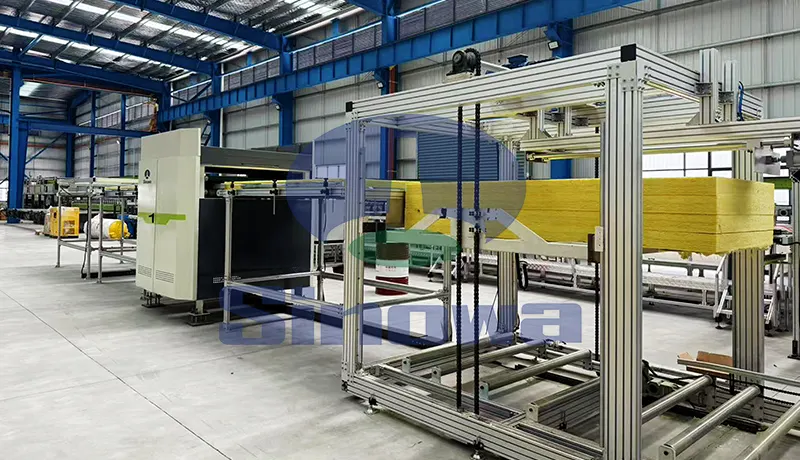
A professional rockwool sandwich panel line serves as the core equipment for producing high-performance building panels. This rockwool sandwich panel production line integrates feeding, laminating and forming processes to ensure stable and efficient production. The well-structured rock wool sandwich panel line can process raw rockwool materials into panels with excellent thermal and sound insulation properties. Operators can adjust the running parameters of the rock wool sandwich panel production line to manufacture panels of different thicknesses and specifications. The automated design of the mineral wool sandwich panel production line greatly reduces manual operation errors and improves product consistency. Regular maintenance of the mineral wool sandwich panel line is essential to sustain long-term operational efficiency and guarantee qualified finished panels for diverse construction applications.