What Power Supply Is Required For PU Sandwich Panel Production Line?
Publication Date: Oct 7, 2026
PU sandwich panel production lines rely on standardized industrial power supplies to ensure stable automated operation.
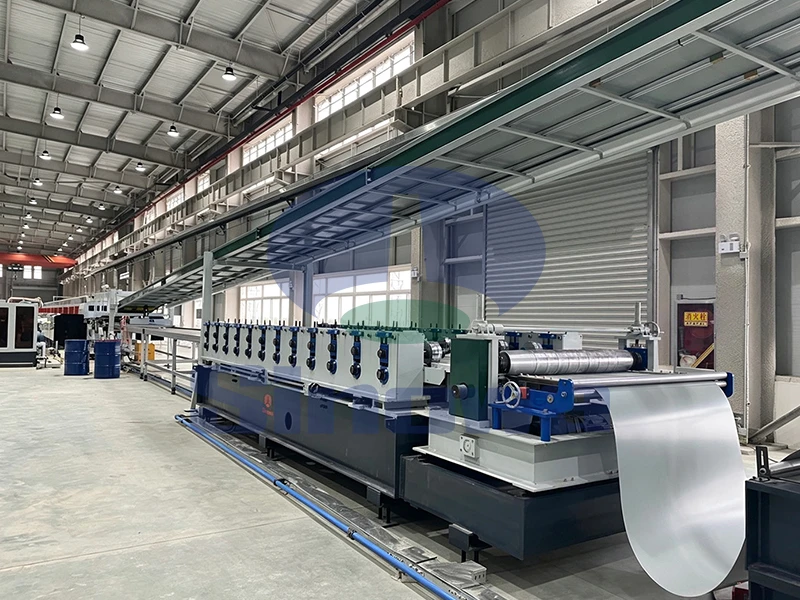
The power supply configuration for a PU sandwich panel production line serves as the core foundation for continuous, stable and high-efficiency manufacturing operations, directly affecting equipment running accuracy, production consistency and operational safety. Unlike ordinary civilian power systems, this industrial production equipment requires specialized three-phase alternating current power supply with matched voltage levels, frequency parameters and power load capacity to adapt to the collaborative operation of multiple functional modules. The overall power demand of the production line varies significantly based on automation degree, production speed and functional configuration, with basic semi-automatic lines having lower load requirements and fully automated continuous production lines needing larger power reserve. Reasonable power supply matching can effectively avoid equipment stalling, parameter deviation and component aging caused by unstable power, while optimizing energy utilization efficiency and reducing unnecessary operational consumption throughout the production process.
Three-phase power structure is the mandatory basic configuration for all formal PU sandwich panel lines, which fundamentally differentiates industrial production power from single-phase civilian power sources. Single-phase power supply cannot meet the high torque and stable driving demand of large mechanical equipment, nor can it support the long-term continuous operation of heating, foaming and forming systems in panel production. The three-phase power structure provides balanced voltage output and stable current transmission, ensuring that each functional unit of the production line obtains uniform power support during synchronous operation. This balanced power output effectively reduces equipment vibration and operational noise caused by unbalanced current, and avoids local overheating of circuit components. For PU sandwich panel production, the three-phase power system undertakes the power supply of core mechanical structures including feeding rollers, pressing equipment and transmission systems, and also provides basic power guarantee for auxiliary systems such as material mixing and cutting devices, laying a stable foundation for standardized panel molding.
Voltage level matching is a key link in the power supply configuration of PU sandwich panel production lines, with mainstream industrial voltage specifications applicable to this equipment covering multiple mature levels. The most widely adopted voltage parameter for conventional continuous production lines is 380V three-phase alternating current, which is perfectly adapted to the power consumption characteristics of medium and large automated panel production equipment. Some customized production lines configured for special production environments also support 415V voltage input to meet the operational requirements of high-load extended working conditions. In addition to the main power supply voltage, the production line is equipped with independent low-voltage control circuits, adopting 220V and 24V voltage levels respectively. The 220V voltage is mainly used for auxiliary electrical components such as display screens, detection sensors and ventilation heat dissipation devices, while the 24V safe low voltage is applied to core control systems including PLC programming modules and signal transmission components, effectively ensuring the safety and accuracy of equipment operation and avoiding circuit failures caused by voltage mismatch.
Power frequency parameters are fixed core indicators for the stable operation of PU sandwich panel production lines, and frequency deviation will directly interfere with equipment operating frequency and production precision. The standard power frequency adapted to most panel production equipment is 50Hz, which matches the mechanical operating rhythm of rolling, pressing and foaming processes in PU panel production. Stable frequency output ensures the consistent operating speed of transmission motors and synchronous operation of each process link, preventing uneven panel thickness, inconsistent foaming density and dimensional deviation caused by speed fluctuation. For production equipment used in special regional environments, individual frequency adaptation can be realized through professional power modulation equipment to ensure the compatibility between power supply frequency and equipment operating parameters. Maintaining constant frequency stability is particularly critical for continuous production lines, as long-term frequency fluctuation will not only reduce product qualification rate but also accelerate the wear of motor bearings and transmission parts, increasing equipment maintenance costs.
Total power load capacity determines the maximum operating efficiency and functional expandability of the PU sandwich panel production line, with load standards varying greatly with equipment configuration differences. Basic semi-automatic discontinuous production lines, which only complete simple plate pressing and foaming molding processes, have a relatively low total power load, meeting production demands within a small power range. Standard fully automated continuous production lines, integrating automatic feeding, continuous foaming, constant-temperature pressing, fixed-length cutting and automatic stacking functions, have a significantly increased total power load, requiring sufficient power reserve to support synchronous operation of multiple modules. It is worth noting that the heating system of the production line is the main high-power consumption unit, and the total power load will increase substantially when matching electric heating auxiliary equipment. Reasonable power load reservation needs to consider both conventional operating power consumption and instantaneous peak power consumption during equipment startup and process switching, to avoid tripping and equipment shutdown caused by insufficient instantaneous power.
The power supply demand of core functional modules of PU sandwich panel production lines has distinct hierarchical characteristics, and each module has independent power consumption rules and matching requirements. The mechanical transmission module composed of main drive motors and conveyor structures is responsible for material conveying and plate forming transmission, with stable and continuous power consumption and high requirements for current stability. The PU foaming and mixing module needs instantaneous high-power support in the material mixing and injection stage to ensure uniform mixing of polyurethane raw materials and stable foaming reaction. The constant-temperature pressing module maintains continuous power consumption through the heating and temperature control system to stabilize the molding temperature of sandwich panels and avoid foaming failure caused by temperature fluctuation. The post-processing modules such as cutting and trimming work intermittently, with fluctuating power consumption and low continuous load demand. Hierarchical power supply configuration can realize targeted power supply for each module, improve power utilization efficiency and reduce energy waste.
Auxiliary system power supply configuration is an indispensable part of the overall power scheme of PU sandwich panel production lines, supporting the safe and orderly operation of core production processes. The pneumatic auxiliary system matched with the production line needs stable power support to maintain the normal operation of air pressure regulating equipment, ensuring that the air pressure required for panel pressing and shaping is kept within a stable range. The cooling and heat dissipation system operates continuously during equipment production, relying on stable power supply to drive cooling fans and circulating heat dissipation equipment, avoiding equipment failure caused by overheating of high-power components. The safety protection system including emergency stop devices, alarm prompts and circuit monitoring equipment uses independent low-voltage power supply to ensure that the protection function can be triggered normally in case of equipment abnormality. In addition, the lighting and inspection auxiliary equipment in the production area also needs matched power supply, providing basic guarantee for daily equipment inspection and maintenance work.
Power supply stability optimization configuration is crucial to prolong the service life of PU sandwich panel production lines and maintain long-term stable production. Industrial power supply for production lines needs to be equipped with professional voltage stabilization and current limiting devices to resist external power fluctuation interference, avoid equipment parameter disorder caused by instantaneous voltage surge or drop, and ensure consistent production quality of each batch of panels. Independent circuit distribution design is required for high-power and low-power modules to prevent mutual interference between high-power mechanical operation and low-power control signal transmission, avoiding signal delay and control failure. Meanwhile, the power circuit of the production line needs to be equipped with perfect overload, short circuit and leakage protection devices, which can quickly cut off the power supply in case of circuit abnormality, effectively protecting mechanical equipment and electrical components from damage. Regular power circuit detection and parameter calibration can further maintain the stability of the power supply system and reduce equipment failure rates.
Power supply adaptation adjustment needs to be carried out according to the actual production scale and equipment matching situation of PU sandwich panel production lines. Small-scale production lines with low daily output and single product type can appropriately reduce power load reserve on the premise of meeting basic operation requirements to save energy consumption and production costs. Large-scale batch production lines with high automation and fast production speed need to increase power redundancy configuration to cope with long-term high-load continuous operation and frequent equipment startup and switching. When upgrading production line functions or adding new processing modules, the overall power supply parameters and load capacity need to be rechecked and adjusted in a timely manner to ensure that the power system can adapt to the upgraded equipment operation requirements. Flexible power supply adjustment can not only meet diversified production demands but also avoid resource waste caused by excessive power configuration.
Scientific power supply management and daily maintenance can effectively maintain the long-term efficient operation of PU sandwich panel production line power systems. In daily production operation, staff need to standardize equipment startup and shutdown procedures, avoid frequent instantaneous startup of high-power equipment that causes impact on the power circuit, and reduce circuit aging speed. Regularly clean the dust and dirt on power distribution cabinets, voltage stabilization equipment and circuit interfaces to prevent poor contact and heat dissipation blockage caused by dust accumulation, which affects power transmission efficiency. Regularly detect circuit aging degree, wire bearing capacity and protection device sensitivity, and replace aging electrical components in a timely manner to eliminate potential safety hazards. Reasonable production scheduling should be adopted to avoid simultaneous full-load operation of all high-power modules for a long time, balance power load distribution, reduce peak power consumption pressure, and realize safe, energy-saving and stable operation of the production line power supply system.
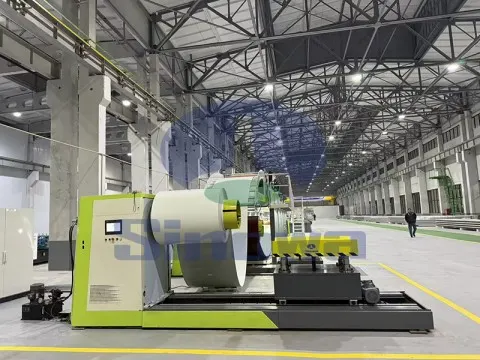
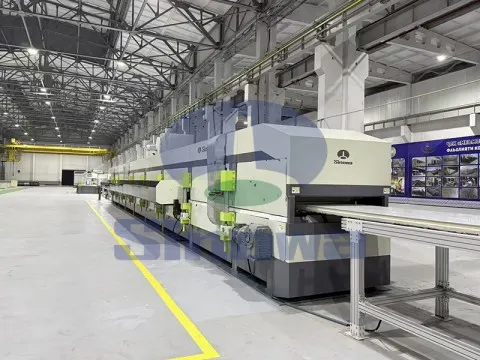
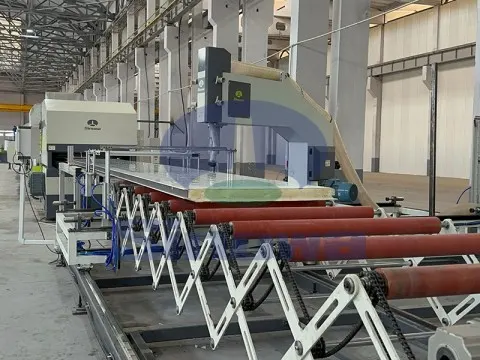
Gallery of PU Sandwich Panel Production Line
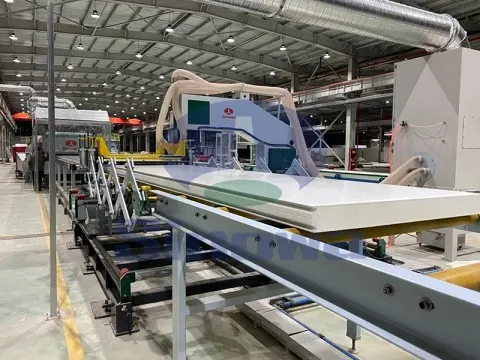
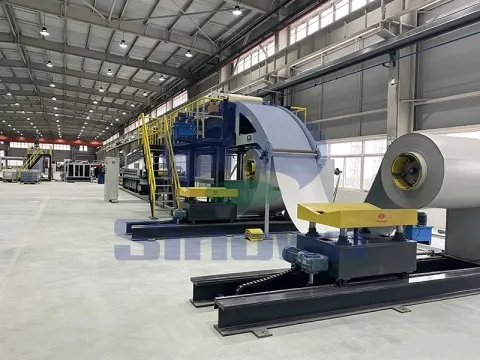
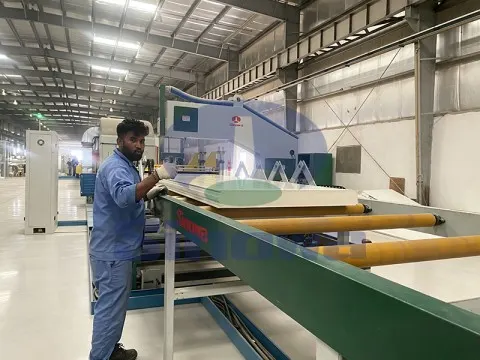
Tags: pu sandwich panel production line, pu sandwich panel production line manufacturer, pu sandwich panel production line supplier, china pu sandwich panel production line, pu sandwich panel production line for sale
-
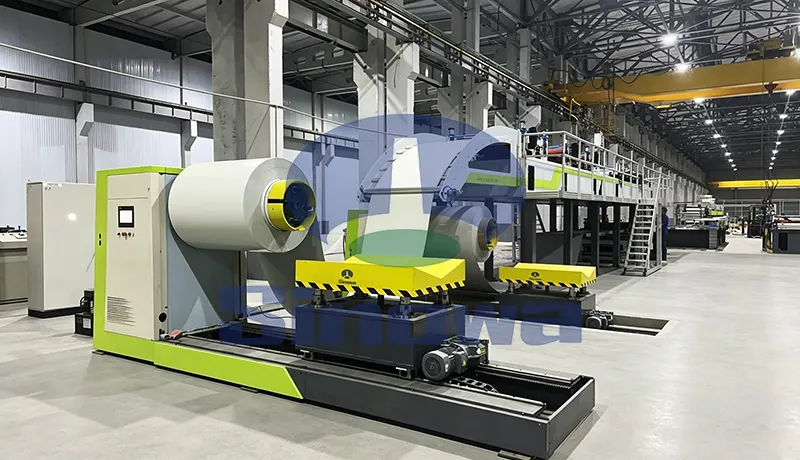
The PU sandwich panel line is a core production setup for making high-performance building insulation panels. This professional PU sandwich panel production line features automated operation to streamline the whole manufacturing process efficiently. Every component of the polyurethane sandwich panel line is precisely calibrated to ensure consistent panel thickness and structural stability. A well-maintained polyurethane sandwich panel production line can greatly boost production efficiency while reducing manual operation errors. The continuous PU sandwich panel line adapts to diverse production demands for different panel sizes and surface styles. With advanced molding technology, the PIR sandwich panel line produces panels with excellent heat preservation and sound insulation properties. Stable running of the PIR sandwich panel production line guarantees reliable product quality for various construction and industrial application scenarios.
-
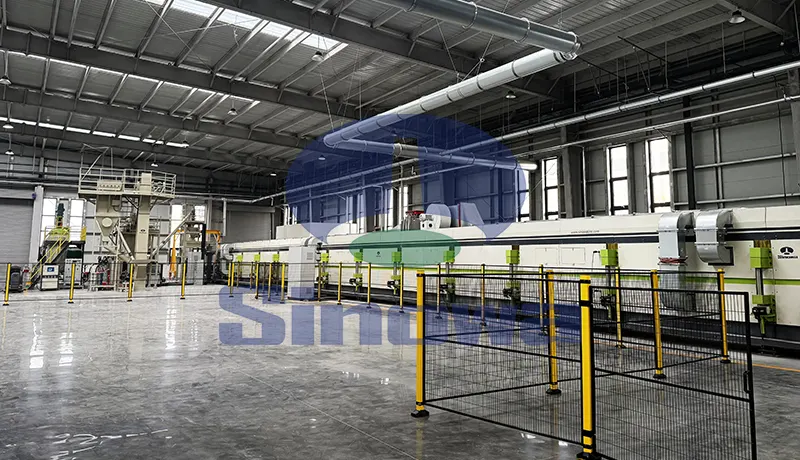
A phenolic insulation board production line serves as the core equipment for manufacturing high-performance thermal insulation building materials. This phenolic insulation panel production line integrates material mixing, foaming, molding and cutting processes to ensure continuous and stable production efficiency. Every operational link of the insulation board production line is precisely calibrated to produce uniform and durable insulation boards. The automated design of the insulation panel production line effectively reduces manual intervention and improves product consistency. Proper maintenance of the phenolic board production line can greatly extend its service life and maintain steady production output. With optimized structural design, the phenolic panel production line adapts to various production demands and delivers high-quality finished products for thermal insulation engineering applications.
-
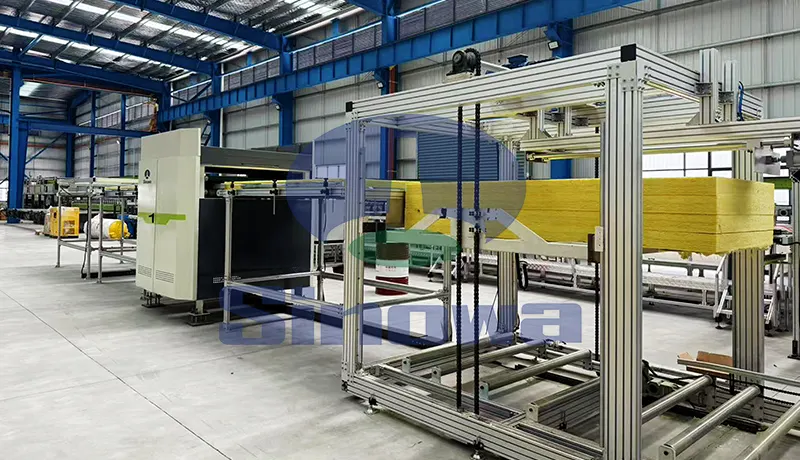
A professional rockwool sandwich panel line serves as the core equipment for producing high-performance building panels. This rockwool sandwich panel production line integrates feeding, laminating and forming processes to ensure stable and efficient production. The well-structured rock wool sandwich panel line can process raw rockwool materials into panels with excellent thermal and sound insulation properties. Operators can adjust the running parameters of the rock wool sandwich panel production line to manufacture panels of different thicknesses and specifications. The automated design of the mineral wool sandwich panel production line greatly reduces manual operation errors and improves product consistency. Regular maintenance of the mineral wool sandwich panel line is essential to sustain long-term operational efficiency and guarantee qualified finished panels for diverse construction applications.