
PU sandwich panel line production speed refers to the continuous operational rate of manufacturing insulated panels, measured by linear meters per minute. It varies with equipment configuration, panel specifications, and process parameters, determining overall production efficiency and output capacity in industrial manufacturing.
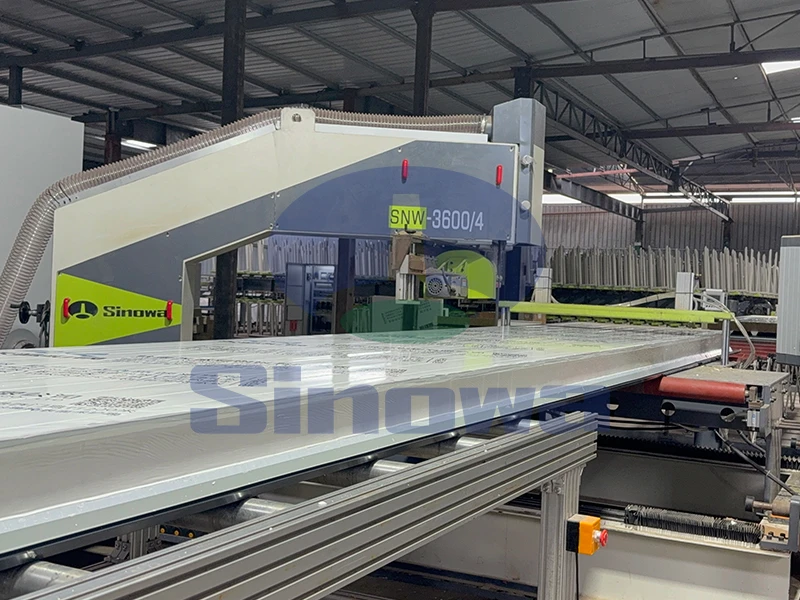
The production speed of a PU sandwich panel line is primarily defined as the linear distance of finished panels manufactured per minute during continuous operation, serving as the core indicator of the line’s operational efficiency. In general industrial applications, standard continuous PU sandwich panel lines maintain a stable running speed ranging from 4 to 12 meters per minute, while optimized high-performance configurations can reach higher operational rates for thin-specification panels. This speed range is not fixed and fluctuates dynamically based on multiple internal and external production factors that shape the entire manufacturing workflow. Unlike intermittent production equipment, continuous PU panel lines rely on synchronized operation of multiple functional units, so their speed is a comprehensive reflection of overall line coordination rather than the performance of a single machine module. Even minor mismatches in operational speed between different processing sections will restrict the overall production rate and affect product forming quality consistency.
Panel thickness is one of the most decisive factors affecting the production speed of PU sandwich panel lines. Thin PU sandwich panels with a core thickness below 50 millimeters feature a fast foam curing reaction and short molding cycle, allowing the production line to operate at a relatively high and stable speed. Under standardized operational conditions, such thin panels can support line speeds close to the upper limit of conventional equipment configurations. In contrast, thick panels with core thickness exceeding 100 millimeters require longer time for PU foam expansion, penetration, and complete curing between two metal surface layers. Insufficient curing time caused by excessive line speed will lead to incomplete foam molding, loose core structure, and poor bonding performance between core materials and surface plates. Therefore, production lines must reduce operational speed appropriately for thick panels to ensure full chemical reaction and structural stability, resulting in a noticeable drop in linear production efficiency.
The curing system configuration of the production line directly restricts the maximum sustainable production speed of PU sandwich panels. The core curing process relies on the combined effect of the self-exothermic reaction of PU materials and the external constant-temperature heating system of the laminating equipment. Traditional basic curing units with single-zone heating can only provide limited and uneven temperature control, requiring a slower line speed to guarantee thorough curing of PU foam. Modern upgraded lines adopt multi-zone temperature zoning control technology, which forms a gradual and stable temperature field in the curing channel. This optimized thermal environment accelerates the molecular reaction and solidification of PU materials, effectively shortening the required curing time. Lines equipped with longer curing pressing sections can maintain higher running speeds because panels stay in the constant-temperature molding area long enough to complete curing even at faster linear movement rates, balancing speed and product quality perfectly.
Synchronization accuracy of the full-line control system plays a vital role in stabilizing and improving PU sandwich panel production speed. A complete PU panel production process includes decoiling, roll forming, PU material injection, laminating curing, fixed-length cutting, and stacking, all of which need precise speed matching. Advanced production lines adopt PLC centralized frequency conversion control systems, which realize automatic speed adjustment and synchronous operation of all functional modules. The system can preset multiple operational speed modes and automatically switch parameters according to different panel specifications, avoiding speed mismatches between the front-end feeding forming process and the back-end curing cutting process. Without precise synchronous control, local speed deviation will cause panel wrinkling, material accumulation, or tensile deformation, forcing the entire line to reduce speed or suspend operation for adjustment, greatly lowering average effective production speed.
PU material formula characteristics significantly influence the adjustable range of production line speed. Different formulations of polyol and isocyanate composites have distinct reaction rates, expansion speeds, and curing cycles. Fast-reaction PU formulas can complete foaming and solidification in a short time, adapting to high-speed line operation and supporting the production line to maintain a higher linear speed without quality defects. Slow-reaction formulas, usually used for high-density and high-strength panel products, require a longer reaction cycle to form a compact and stable core structure. Running such materials at an excessively fast line speed will result in insufficient foaming, uneven core density, and weakened bonding strength. Production technicians need to match the optimal line speed according to material reaction characteristics to ensure both production efficiency and product structural performance.
Surface material types and feeding stability also affect the actual production speed of PU sandwich panel lines. Common surface materials include various metal coil plates with different hardness, ductility, and surface flatness. Thin and flexible metal coils have good forming adaptability and can cooperate with high-speed roll forming and continuous feeding, enabling the line to maintain efficient operation. Harder or thicker surface plates require slower roll forming speed to avoid plate deformation, surface scratches, or forming errors during processing. In addition, stable coil feeding without jitter, deviation, or pause is the premise of continuous high-speed production. Unstable feeding will cause intermittent production stagnation, reduce the overall effective operational time of the line, and lower the average production speed calculated in actual industrial production.
Operational speed differences between continuous and discontinuous PU sandwich panel lines are extremely obvious in industrial production. Continuous production lines are designed for uninterrupted cyclic operation, with all processing links connected seamlessly, achieving linear production speeds of 4 to 12 meters per minute for conventional panels. This type of line focuses on long-term stable high-speed operation and is suitable for large-scale batch production. Discontinuous lines adopt intermittent batch processing, with independent molding and curing cycles for each panel. Although their instantaneous operating speed of a single process may be high, the frequent start-stop, mold closing, and material replacement processes consume a lot of time, resulting in a much lower average comprehensive production speed than continuous lines. Most discontinuous lines are only suitable for small-batch and multi-specification customized production scenarios.
Daily effective production speed and actual output of PU sandwich panel lines are affected by equipment maintenance status. Well-maintained production lines with regular lubrication, component inspection, and system calibration can maintain stable high-speed operation for a long time, with minimal speed fluctuation and almost no unexpected shutdowns. Wear and aging of key components such as drive motors, conveyor belts, and servo governors will lead to reduced transmission accuracy and delayed speed response, forcing the line to run at a reduced speed to ensure operational stability. In addition, blocked material injection systems or inaccurate temperature control components will affect the molding process, requiring speed reduction for production adjustment. Regular equipment maintenance effectively guarantees the sustained high-speed production capacity of the line.
Production speed adjustment and optimization strategies help maximize the operational efficiency of PU sandwich panel lines. In actual production, speed parameters cannot be blindly increased, and dynamic matching with multiple process parameters is required. Technicians can optimize the speed range by adjusting curing temperature zones, material injection volume, and feeding synchronization parameters according to panel thickness and material formulas. For thin conventional panels, the line speed can be appropriately increased within the quality allowable range to improve unit output. For thick or special-performance panels, graded speed reduction is adopted to avoid quality risks caused by insufficient curing. Reasonable speed matching optimization can eliminate invalid operational time, balance production efficiency and product qualification rate, and realize the optimal economic benefit of production line operation.
The future development trend of PU sandwich panel line production speed focuses on intelligent and adaptive high-efficiency operation. With the upgrading of industrial automation technology, modern production lines are gradually equipped with intelligent sensing and automatic parameter adjustment systems. These systems can monitor panel molding status, material reaction progress, and line operational stability in real time, and automatically fine-tune the production speed without manual intervention. This intelligent adjustment mode breaks through the limitation of fixed speed operation, realizing faster production for standard products and stable production for special specifications. While continuously improving linear production speed, the new technology also ensures consistent product quality, further enhancing the overall production capacity and market adaptability of PU sandwich panel manufacturing equipment.