Continuous Foam Phenolic Panel Line
Publication Date: Sep 27, 2026
The continuous foam phenolic panel line is an automated integrated manufacturing system designed for mass production of high-performance phenolic foam panels. It integrates chemical foaming, composite molding and precision processing to produce consistent insulation panels with stable structural and functional properties.
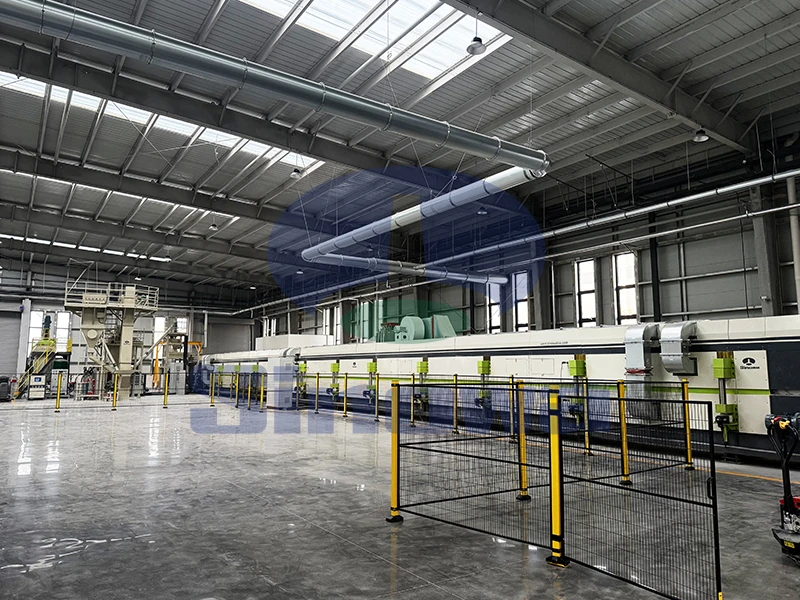
The continuous foam phenolic panel line stands out as a sophisticated automated production system tailored for the standardized manufacturing of phenolic foam composite panels, leveraging integrated chemical reaction and mechanical processing technologies. Unlike intermittent production equipment, this continuous line realizes uninterrupted material feeding, foaming, molding and finishing, eliminating production discontinuity and product inconsistency caused by batch operation. Its core working logic focuses on matching the unique thermosetting reaction characteristics of phenolic resin, controlling each production link through integrated mechanical and electrical systems. The whole production process runs stably in a closed and controllable environment, which effectively avoids external interference to the foaming and curing process, laying a solid foundation for the uniform pore structure and stable performance of finished panels. This production mode not only greatly improves production efficiency but also optimizes the overall uniformity of product quality, making it suitable for large-scale and standardized panel manufacturing scenarios.
Raw material pretreatment and accurate batching constitute the primary foundational stage of the entire production line operation, directly affecting the subsequent foaming effect and panel quality. The system is equipped with sealed storage and automatic metering modules for phenolic resin, foaming agents, curing agents and various functional additives. All raw materials are transported through closed pipelines to avoid contamination and component loss during transmission. The precision metering device dynamically adjusts the proportion of each raw material according to the preset production parameters, ensuring the consistency of material formula in the continuous production process. Before mixing, the raw materials are subjected to constant temperature pretreatment to stabilize their physical and chemical activity, eliminating the performance difference caused by ambient temperature fluctuation. Scientific batching and pretreatment lay a precise material foundation for uniform foaming, preventing quality defects such as uneven pore size and insufficient curing of phenolic foam cores.
The core mixing and continuous foaming system is the key functional unit that determines the internal structure of phenolic foam panels. After precise batching, all liquid raw materials are transported to the high-speed mixing chamber for full homogeneous blending, realizing the uniform fusion of resin, foaming components and functional additives. The fully mixed colloid is continuously injected into the closed foaming channel through a constant-pressure conveying device. In the temperature-controlled channel, the phenolic resin triggers cross-linking polymerization under the action of catalysts, while the low-boiling foaming agent vaporizes steadily to form a large number of tiny and dense bubbles. The continuous propulsion of materials makes the foaming reaction proceed synchronously and stably, forming a uniform closed-cell foam structure inside the core material. This controllable continuous foaming mode avoids the bubble aggregation and collapse problems existing in traditional batch foaming, ensuring the compact and stable internal structure of the panel core layer.
Surface substrate unwinding and pretreatment processes ensure the composite bonding quality of phenolic sandwich panels. The production line is equipped with automatic unwinding and leveling modules suitable for various flexible and rigid surface substrates, which can smoothly release coiled substrates and eliminate wrinkles, warping and surface tension unevenness. The built-in deviation correction system monitors the substrate operation track in real time during continuous operation, automatically fine-tuning the feeding position to keep the substrate aligned accurately. In addition, the substrate surface is cleaned and micro-treated by professional pretreatment devices to remove dust, oil stains and oxide layers, increasing the surface roughness and adhesive activity. Effective substrate pretreatment enhances the interfacial adhesion between the surface layer and phenolic foam core, preventing delamination and peeling of the panel during subsequent use and improving the overall structural firmness of the composite panel.
Online composite pressing and preliminary shaping are critical links to realize the integrated molding of phenolic panels. After the foaming colloid is evenly laid on the lower substrate, the upper and lower surface layers are clamped and positioned by the automatic pressing mechanism. The continuous pressing system adopts segmented pressure regulation technology, matching different pressure values according to the foaming expansion state of phenolic materials in different stages. The stable pressing force makes the foam core fully fit and bond with the surface substrate, and preliminarily shapes the overall thickness and flatness of the panel. The whole pressing process is carried out synchronously with material transmission, realizing dynamic composite molding without stopping production. Reasonable pressure control not only ensures the tight combination of layers but also avoids excessive extrusion leading to bubble rupture and structural damage of the foam core, maintaining the integrity of the closed-cell structure and the flat appearance of the panel.
Constant temperature curing and thermal setting processes stabilize the physical and chemical properties of phenolic foam panels. After composite pressing, the semi-finished panels enter the constant temperature curing channel with adjustable temperature gradient. The internal temperature of the channel is precisely controlled to provide a stable reaction environment for the continuous cross-linking and curing of phenolic resin. The segmented temperature setting mode enables the panel to complete gradual curing from the inside to the outside, which effectively relieves the internal stress generated during foaming and molding. With the completion of the curing reaction, the phenolic foam forms a stable three-dimensional network structure, and the bonding performance between the core layer and the surface layer is further strengthened. The continuous curing design ensures that each panel obtains consistent curing degree, avoiding quality differences such as insufficient surface curing and excessive internal curing, and greatly improving the dimensional stability and structural durability of finished products.
Cooling shaping and fixed-length cutting processes realize the standardized sizing of finished panels. After high-temperature curing, the panels are transported to the circulating cooling system for gradual cooling treatment. The uniform air circulation cooling mode reduces the panel temperature steadily, effectively preventing panel deformation, warping and cracking caused by rapid temperature change. After full cooling and shaping, the panels maintain stable dimensional accuracy and flat surface state. Subsequently, the automatic tracking and cutting system carries out fixed-length cutting according to preset dimensional parameters. The high-precision cutting tool ensures smooth and neat cutting sections without burrs or collapses. The online real-time sizing and cutting function adapts to diversified length requirements, realizing flexible production on the basis of continuous operation and improving the standardization degree of finished panel products.
Edge trimming, surface finishing and dust removal processes optimize the overall appearance and application performance of phenolic panels. After fixed-length cutting, the production line automatically completes edge trimming treatment on the four sides of the panel to remove residual leftover materials and irregular edges, making the overall outline of the panel regular and uniform. The surface finishing module fine-treats the panel surface to eliminate minor scratches and uneven marks generated in the production process. At the same time, the high-efficiency dust removal system thoroughly cleans the foam debris and floating dust on the surface and edges of the panel, ensuring the cleanness of the finished product surface. These refined post-processing procedures eliminate minor appearance defects in continuous production, improve the overall finish of the panel, and avoid hidden troubles such as dust accumulation affecting subsequent installation and use effects.
Automatic stacking and offline packaging systems improve the intelligent and efficient level of the entire production line. After finishing processing, the qualified panels are automatically transported to the stacking station through the conveying system. The intelligent stacking device accurately arranges and stacks panels according to fixed specifications, maintaining neat stacking posture and consistent spacing, which saves manual sorting costs and avoids panel damage caused by manual handling. The matched offline packaging mechanism can complete integral wrapping and protection of stacked panels, effectively preventing surface friction damage, moisture and dust pollution during storage and transportation. The whole process from finished product output to packaging and storage realizes automated operation, which simplifies the production workflow, reduces human error, and improves the overall production efficiency and product preservation quality.
The integrated control system serves as the intelligent core to ensure the stable and efficient operation of the continuous foam phenolic panel line. The centralized control platform uniformly monitors and adjusts all links including raw material batching, foaming temperature, pressing pressure, curing time and cutting size. It supports real-time data collection and parameter feedback of the production process, automatically correcting parameter deviations caused by equipment operation fluctuation. The system is equipped with overload protection and abnormal alarm functions, which can timely identify and early warn of equipment failure and process abnormality, ensuring the safety and continuity of production. The intelligent control mode realizes precise linkage of each functional module, maintains long-term stable operation of the production line, and guarantees the continuous output of high-quality and high-consistency phenolic foam panels.
Gallery of Continuous Foam Phenolic Panel Line
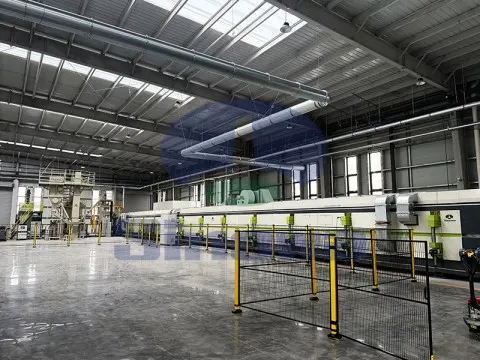
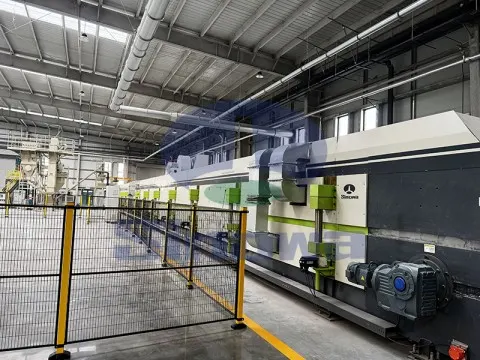
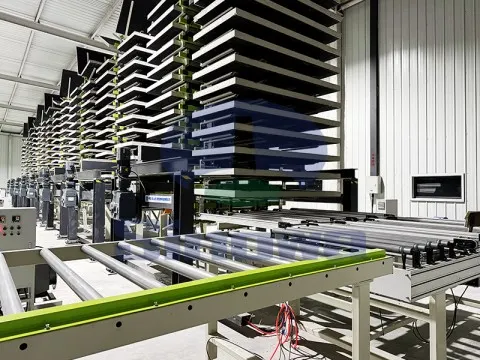
Tags: continuous foam phenolic panel line, continuous foam phenolic panel line manufacturer, continuous foam phenolic panel line supplier, china continuous foam phenolic panel line, continuous foam phenolic panel line for sale
https://www.sandwichpanelmachinery.com/tags/continuous-foam-phenolic-panel-line.html
-
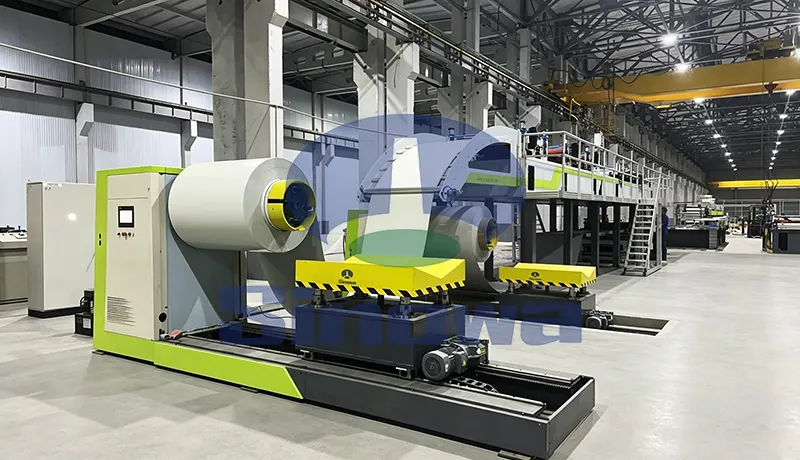
The PU sandwich panel line is a core production setup for making high-performance building insulation panels. This professional PU sandwich panel production line features automated operation to streamline the whole manufacturing process efficiently. Every component of the polyurethane sandwich panel line is precisely calibrated to ensure consistent panel thickness and structural stability. A well-maintained polyurethane sandwich panel production line can greatly boost production efficiency while reducing manual operation errors. The continuous PU sandwich panel line adapts to diverse production demands for different panel sizes and surface styles. With advanced molding technology, the PIR sandwich panel line produces panels with excellent heat preservation and sound insulation properties. Stable running of the PIR sandwich panel production line guarantees reliable product quality for various construction and industrial application scenarios.
-
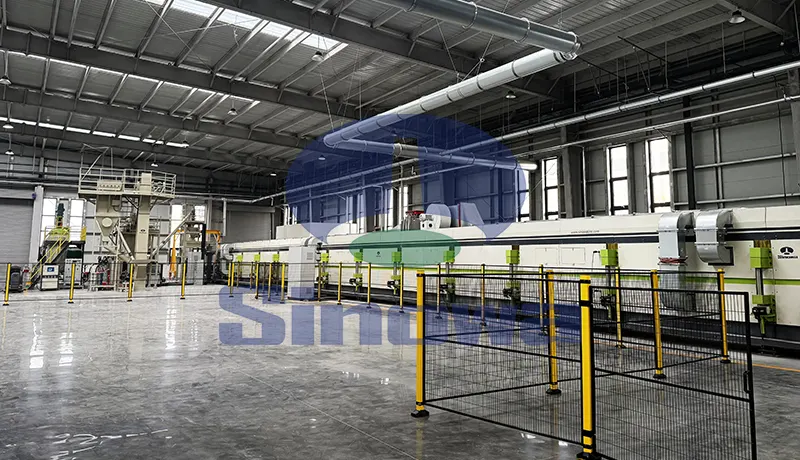
A phenolic insulation board production line serves as the core equipment for manufacturing high-performance thermal insulation building materials. This phenolic insulation panel production line integrates material mixing, foaming, molding and cutting processes to ensure continuous and stable production efficiency. Every operational link of the insulation board production line is precisely calibrated to produce uniform and durable insulation boards. The automated design of the insulation panel production line effectively reduces manual intervention and improves product consistency. Proper maintenance of the phenolic board production line can greatly extend its service life and maintain steady production output. With optimized structural design, the phenolic panel production line adapts to various production demands and delivers high-quality finished products for thermal insulation engineering applications.
-
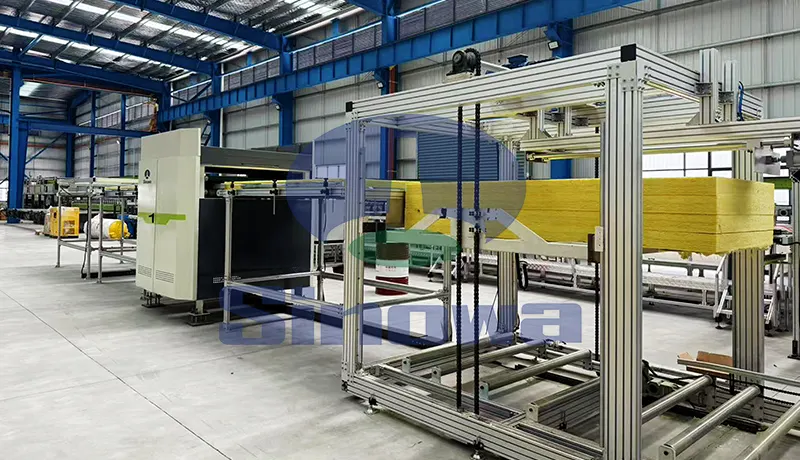
A professional rockwool sandwich panel line serves as the core equipment for producing high-performance building panels. This rockwool sandwich panel production line integrates feeding, laminating and forming processes to ensure stable and efficient production. The well-structured rock wool sandwich panel line can process raw rockwool materials into panels with excellent thermal and sound insulation properties. Operators can adjust the running parameters of the rock wool sandwich panel production line to manufacture panels of different thicknesses and specifications. The automated design of the mineral wool sandwich panel production line greatly reduces manual operation errors and improves product consistency. Regular maintenance of the mineral wool sandwich panel line is essential to sustain long-term operational efficiency and guarantee qualified finished panels for diverse construction applications.